The world of homemade condiments extends far beyond traditional tomato-based preparations. Among the most intriguing and versatile options is a smooth, creamy sauce that combines the heat of serrano peppers with the richness of peanut butter. This distinctive preparation represents a culinary bridge between Mexican traditions and innovative flavor combinations that challenge conventional salsa expectations. The result is a condiment that offers depth, creaminess, and a surprising complexity that elevates both everyday meals and special gatherings.
Historical Context and Cultural Significance
Peanut-based salsas hold a special place in Mexican culinary traditions, particularly in specific regions where these ingredients have been combined for generations. The use of peanuts in Mexican cuisine dates back centuries, with preparations like salsa macha representing an established tradition in areas such as Veracruz. Salsa macha, a fiery condiment featuring small dried chiles, garlic, and oil combined with peanuts, demonstrates how peanuts have long been valued for adding richness and body to traditional sauces. This historical precedent shows that incorporating peanuts into chile-based preparations is not entirely novel but rather a refinement of established culinary practices.
Family recipes often carry their own unique histories and adaptations. Some generational recipes featuring serrano peppers and peanut butter have evolved organically within families, with each generation adding subtle modifications while maintaining the core essence of the dish. These adaptations reflect how home cooks customize recipes to suit their preferences for heat level, texture, and overall flavor intensity. What begins as a single family recipe sometimes becomes a treasured tradition passed through multiple generations, each iteration strengthening the emotional and culinary connection to the dish.
Understanding the Core Components
Creating an exceptional peanut butter and serrano pepper salsa requires understanding how each ingredient contributes to the final product. The foundation of this condiment relies on a careful balance of heat, creaminess, and savory depth.
The Role of Serrano Peppers
Serrano peppers serve as the primary source of heat and fresh pepper flavor in this preparation. These medium-sized chiles offer a sharp, bright spiciness that can range from moderately hot to quite intense, depending on individual pepper variation and seed removal. The decision to remove seeds and ribs before cooking allows cooks to control the final heat level while retaining the pepper’s characteristic fruity undertones. Fresh serrano peppers contribute both flavor and color to the finished condiment, providing the visual appeal and authentic chile presence that defines the preparation.
Peanut Butter as the Binding Agent
Peanut butter transforms this salsa from a traditional chunky preparation into a luxuriously smooth, creamy condiment. Natural, unsalted, sugar-free peanut butter works best, as it allows other flavors to shine without competing sweetness or additives. The peanut butter acts as both a flavor component and a structural element, creating the emulsion that gives this salsa its signature velvety texture. As the peanut butter blends with the cooked vegetables and oil, it creates a unified sauce that clings beautifully to chips, spreads easily on sandwiches, and drizzles elegantly over prepared dishes.
Aromatic Elements and Supporting Ingredients
Onions and garlic form the aromatic base that provides savory foundation notes. When gently cooked in oil before blending, these vegetables mellow and develop subtle sweetness while maintaining their characteristic pungency. Vegetable bouillon concentrate adds umami depth and savory complexity, enhancing the overall satisfaction of each bite. Quality oil—whether avocado or grapeseed—provides the medium for gentle cooking and serves as part of the emulsion that creates the sauce’s smooth consistency.
The Preparation Process: From Raw Ingredients to Finished Condiment
Creating this peanut butter serrano salsa follows a straightforward yet precise methodology that honors traditional cooking techniques while producing modern results.
Initial Ingredient Preparation
Begin by preparing your ingredients with minimal complexity. Peel and quarter a medium white onion, separating it into individual layers for even cooking. Smash approximately 12 to 14 garlic cloves and remove their papery skins. Halve your serrano chiles lengthwise and carefully remove seeds and ribs—this step is crucial for controlling final heat levels. Keep all prepped ingredients easily accessible before beginning the cooking process.
The Cooking Phase
Heat approximately 2 cups of avocado or grapeseed oil in a large skillet over medium heat. Once the oil reaches the appropriate temperature, carefully add the separated onion layers, allowing them to cook until they become translucent and tender. Add the smashed garlic cloves, stirring occasionally to ensure even cooking without browning. After the onions and garlic begin to soften, introduce the halved serrano chiles and continue cooking for several minutes until all ingredients are very tender and begin to release their oils into the cooking medium. This cooking process typically requires 8 to 10 minutes total.
Blending for Optimal Texture
Transfer the hot cooked vegetables and oil into a blender, working in batches if necessary. Add 2 tablespoons of unsalted, sugar-free creamy peanut butter along with 1 teaspoon of vegetable bouillon concentrate and half a teaspoon of kosher salt. Begin blending on low speed, gradually increasing to medium or high as the ingredients begin to combine. Slowly pour the reserved cooking oil into the blender while it continues to run—this gradual incorporation creates proper emulsification, resulting in a luxuriously smooth sauce rather than a separated mixture. Continue blending until the salsa reaches your desired texture, whether that means silky smooth or with slight texture variation.
Customization and Texture Variations
One of the greatest strengths of this preparation is its flexibility. The recipe adapts beautifully to individual preferences without requiring significant modifications.
Heat Level Adjustment: Those preferring milder preparations can remove all serrano seeds and ribs before cooking, or simply use fewer peppers. Conversely, heat-lovers can retain seeds for increased intensity or add additional peppers. The heat level remains entirely customizable without compromising the sauce’s fundamental character.
Texture Preferences: Some cooks prefer a completely smooth, pourable salsa ideal for spreading or drizzling, while others enjoy slight texture variation that provides subtle bite. The blending duration determines final texture—brief blending creates a chunkier consistency with visible pepper pieces, while extended blending produces ultimate smoothness. This flexibility allows the same recipe to serve multiple purposes across different meal contexts.
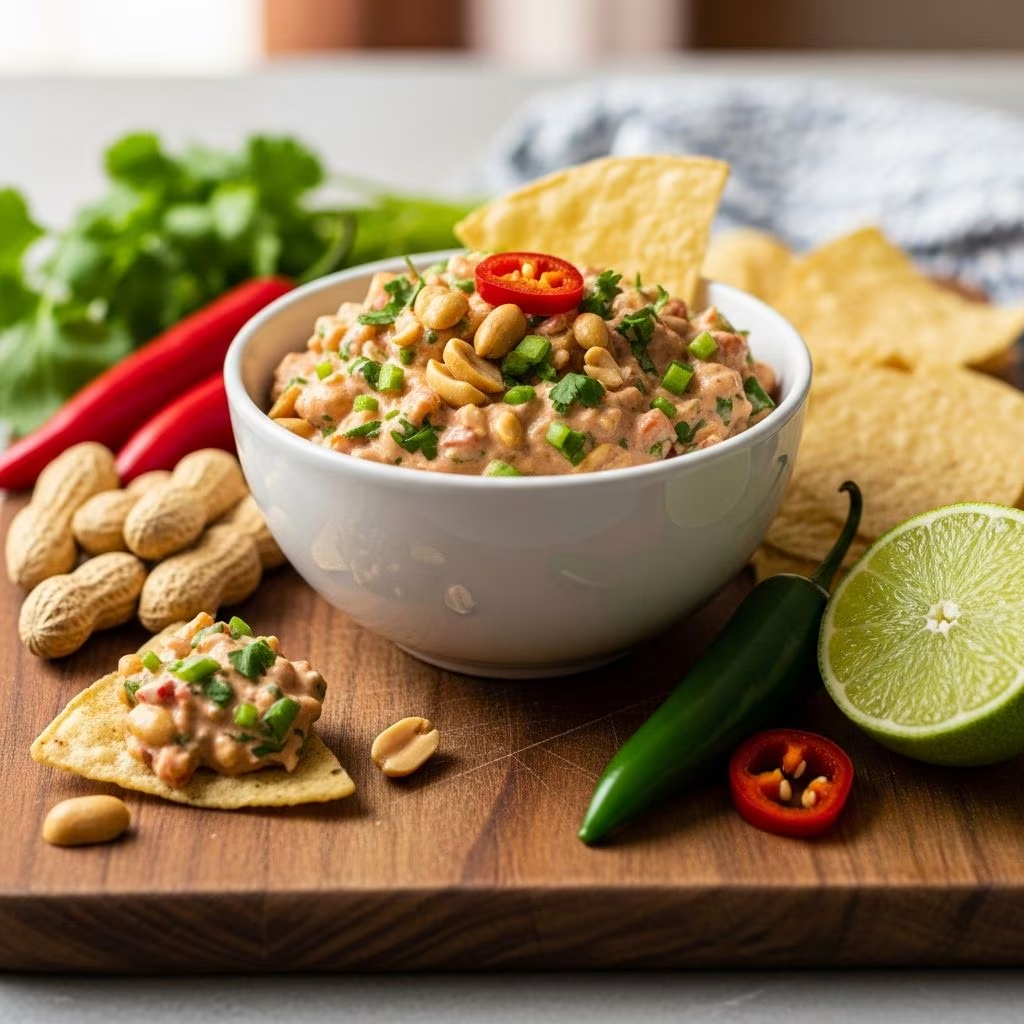
Optional Garnish Considerations: Many preparations benefit from a final topping of chopped salted, dry-roasted peanuts. This garnish adds textural contrast, reinforces the peanut flavor notes, and provides visual interest to the finished dish.
Storage and Shelf Life
Properly stored, this peanut butter serrano salsa maintains excellent quality for approximately two weeks when kept refrigerated in an airtight container. The blend of peanut butter and cooked vegetables creates a stable emulsion that resists separation and spoilage better than fresh tomato-based preparations. Allow the salsa to cool to room temperature before transferring to storage containers to prevent condensation and premature spoilage.
Versatile Applications Beyond Traditional Dipping
The smooth, creamy texture of peanut butter serrano salsa extends its usefulness far beyond traditional chip dipping. The condiment spreads beautifully on sandwiches, providing a sophisticated alternative to mayonnaise or mustard. Drizzle it over prepared nachos for added depth and richness, or use it as a unique topping for tacos, where its creamy consistency clings evenly to fillings. The salsa also works wonderfully as a sauce for grilled vegetables, a complement to roasted proteins, or even as a surprising element in composed salads where its nutty, savory character adds complexity to green preparations.
The emulsified nature of this preparation—created by the combination of peanut butter and oil—means it maintains its consistency across various applications without separating or becoming watery. This stability allows for creative culinary applications that might not work with traditional watery salsas.
Related Peanut-Based Condiment Traditions
Understanding the broader landscape of peanut-enhanced salsas helps contextualize this preparation within Mexican culinary traditions. Salsa macha, particularly popular in Veracruz, combines dried serrano, árbol, or comapa chiles with garlic, roasted peanuts, and oil to create a fierce, fiery condiment. This preparation begins with small dried chiles gently fried in oil until aromatic, then combines with roasted peanuts to create a smooth sauce with complex flavor development.
Salsa de cacahuates (peanut salsa), deeply rooted in southern Mexican states, represents another significant tradition featuring peanut-based salsas. These preparations typically combine just four ingredients—oil, peanuts, garlic, and dried chiles—blended with water to achieve creamy consistency without requiring peanut butter. The simplicity of this approach demonstrates how peanuts alone can create luxurious texture and satisfying depth when properly combined.
Modern variations continue to explore peanut integration, with innovative cooks combining peanut butter with tomatoes, cilantro, lime juice, and spices to create fusion preparations that honor traditional Mexican flavors while introducing unexpected ingredients and global influences.
Nutritional Considerations
This peanut butter serrano salsa provides nutritional value extending beyond simple flavoring. Peanuts contain protein, healthy fats, and various vitamins and minerals that contribute to nutritional content. Serrano peppers provide vitamin C and capsaicin, the compound responsible for their heat. Garlic offers sulfur compounds studied for potential health benefits, while the oil contributes fat-soluble vitamin absorption. Using natural peanut butter without added sugars or hydrogenated oils maximizes nutritional value while maintaining authentic taste.
Frequently Asked Questions
Can I use different types of nuts instead of peanuts?
While peanut butter provides the traditional foundation for this salsa, adventurous cooks can experiment with almond butter, cashew butter, or tahini for alternative nutty profiles. Each substitution introduces distinct flavor characteristics—cashew butter provides milder sweetness, almond butter offers earthier notes, and tahini contributes subtle sesame nuance.
What oil works best for this preparation?
Avocado oil and grapeseed oil both provide excellent results due to their neutral flavors and high smoke points. Extra-virgin olive oil can substitute in cooler applications, though its stronger flavor may compete with the other ingredients.
How can I reduce the spiciness for sensitive palates?
Remove all serrano seeds and white ribs before cooking, as these contain most of the capsaicin. Alternatively, reduce the total number of peppers used, or substitute jalapeños for serrano peppers to provide mild heat without intense spiciness.
Does this salsa freeze well?
While not traditionally frozen, the emulsified nature of peanut butter salsa allows freezing in ice cube trays for convenient portioning. Thaw completely at room temperature before serving, and stir gently to recombine any separated components.
What makes this different from regular tomato salsa?
This preparation eliminates tomatoes entirely, instead relying on serrano peppers, peanuts, and aromatics for flavor development. The result offers creamier texture, different flavor profile, and greater versatility for applications beyond traditional chip dipping.
References
- This Salsa’s Secret Ingredient is Peanut Butter | Genius Recipes — Food52. 2024. https://www.youtube.com/watch?v=oNV3-TVEeLs
- Salsa Guille (Salsa with Peanut Butter and Serrano Chile) — Parade. 2024. https://parade.com/food/salsa-guille-peanut-butter-serrano-salsa
- Peanut Chipotle Salsa — Gimme Some Oven. 2024. https://www.gimmesomeoven.com/peanut-chipotle-salsa/
- Spicy Peanut Garlic Salsa — Hot Rod’s Recipes. 2024. https://www.hotrodsrecipes.com/spicy-peanut-garlic-salsa/
- Salsa Macha – Peanut Butter & Co — Peanut Butter & Co. 2024. https://ilovepeanutbutter.com/blogs/recipes/salsa-macha
- Salsa de Cacahuates (Peanut Salsa) — Muy Delish. 2024. https://www.muydelish.com/salsa-de-cacahuate-peanut-salsa/