Fine dining experiences often feature dishes that appear complicated but rely on surprisingly straightforward techniques and quality ingredients. One such example is the aromatic pasta preparation featuring saffron-enriched cream sauce—a dish that demonstrates how a few premium components can elevate an ordinary dinner into something truly memorable. This recipe provides home cooks with the opportunity to experience restaurant-caliber cuisine without requiring advanced culinary skills or hours spent in the kitchen.
Understanding Saffron: The Golden Spice That Transforms Dishes
Saffron stands as one of the world’s most precious and expensive spices, derived from the delicate stigmas of the Crocus sativus flower. Each bloom produces only three tiny threads, which must be hand-harvested, explaining why saffron commands premium prices in global markets. Beyond its hefty cost, saffron delivers distinctive benefits to culinary preparations: it imparts a warm, slightly sweet and earthy flavor profile while simultaneously contributing a luminous golden-orange hue that creates visual appeal on the plate.
The spice’s transformative properties extend to both flavor and aesthetics. When saffron threads steep in hot water, they gradually release their essence, creating what cooks refer to as “saffron water”—a liquid that captures both the color and flavor compounds. This infused liquid becomes the foundation for building depth in cream-based sauces, allowing the spice’s characteristics to distribute evenly throughout the dish rather than appearing in concentrated bursts.
Essential Components for Your Saffron Pasta Masterpiece
Creating this dish requires thoughtful ingredient selection. Unlike some recipes that compensate for mediocre components through elaborate techniques, this preparation showcases quality at every stage. Here’s what you’ll need:
- Wide ribbon pasta varieties such as pappardelle or tagliatelle (approximately 8-10 ounces)
- Premium saffron threads (½ to 1 teaspoon, depending on desired intensity)
- High-quality unsalted or lightly salted butter (3-4 tablespoons)
- Heavy or single cream (½ to ⅔ cup)
- Dry white wine or quality chicken broth (⅓ cup)
- Fresh garlic cloves (1-3, finely minced)
- Freshly grated Parmigiano-Reggiano cheese
- Sea salt and cracked black pepper
- Fresh lemon juice for brightness
- Optional: crushed red pepper flakes or Aleppo chili pepper for subtle heat
The choice between heavy cream and single/light cream influences the final texture. While heavy cream creates an exceptionally luxurious mouthfeel, single cream results in a lighter sauce that allows the saffron’s delicate notes to shine more prominently. Many experienced cooks prefer single cream for this specific preparation, finding that heavy cream becomes overly thick once cheese is incorporated.
Preparation Phase: Building Flavor Foundations
Success in this dish begins well before any cooking occurs. The initial preparation phase requires attention to detail but minimal active time. Start by placing your saffron threads into a small bowl—crushing them gently between your fingers or using a mortar and pestle helps break down the threads and accelerate flavor extraction. Pour approximately ¼ to ⅓ cup of boiling water over the threads and allow them to steep for 5-10 minutes while you attend to other preparation tasks.
During this steeping period, mince your garlic finely, ensuring consistent size for even cooking and flavor distribution. If using fresh shallots, dice them into small pieces. Measure out your wine or broth and have your cream accessible. Grating your cheese in advance ensures you won’t be fumbling with equipment during the crucial sauce-assembly phase. This mise en place approach—organizing all ingredients before cooking begins—prevents common mistakes and allows you to focus on technique rather than frantically gathering components.
The Cooking Sequence: Timing and Technique
Begin by bringing a large pot of generously salted water to a rolling boil. The water should taste pleasantly salty, similar to sea water, as this is your primary seasoning opportunity for the pasta. Add your chosen pasta and cook according to package directions, but aim for slightly firmer pasta than you might prefer eating plain—this ensures the final product, after tossing with sauce, achieves the perfect al dente texture. Preserve approximately ¼ to ½ cup of starchy pasta cooking water before draining, as this liquid serves a crucial emulsification function in the sauce.
While the pasta cooks, begin building your sauce. Heat a large skillet over medium heat and add the butter. Once it begins foaming and smells nutty (taking approximately 2-3 minutes), add your minced garlic. The key is preventing the garlic from browning, which would introduce unpleasant bitter notes. Stir continuously for just 60-90 seconds until fragrant, then add your wine or broth. Allow this to reduce for 1-2 minutes, letting the alcohol cook off and the liquid concentrate slightly.
Emulsifying the Sauce: The Critical Step
This stage separates adequate sauce from exceptional sauce. Rather than dumping all remaining butter into the pan at once, add it in three separate portions, whisking thoroughly between additions. This gradual incorporation allows the fat and liquid to properly emulsify, creating a silky, cohesive sauce rather than a greasy, broken preparation. The whisking action—performed energetically but not frantically—helps bond the fat and water molecules into a stable emulsion.
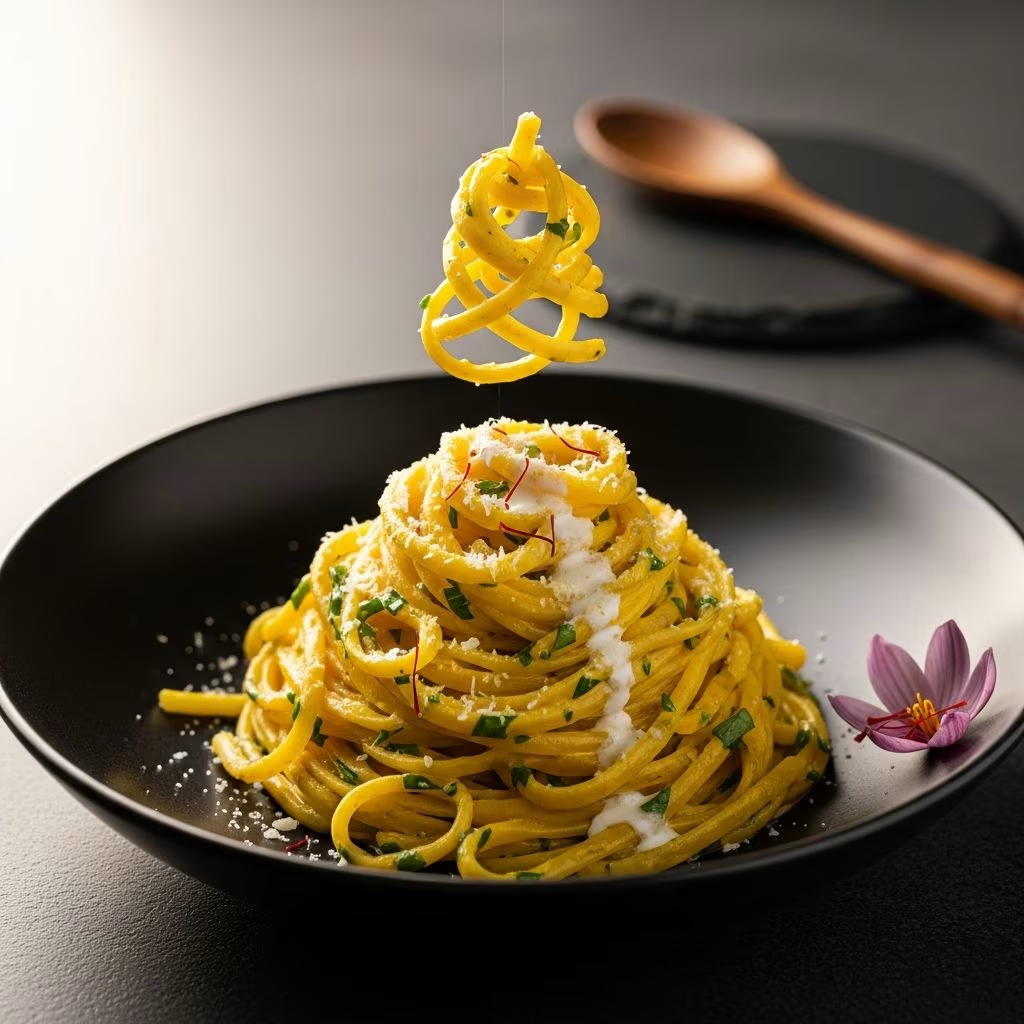
After the butter is fully incorporated and the sauce appears glossy and homogeneous, pour in your steeped saffron and its liquid, including all the threads. Simmer for 2-3 minutes, allowing the flavors to meld and intensify. The sauce at this point should display a warm golden-orange hue and carry a subtle but unmistakable saffron aroma.
Finishing Touches: Cream, Cheese, and Balance
Lower your heat and add the cream, stirring gently. Allow this to reach a very gentle simmer—you want tiny bubbles breaking the surface, not an aggressive rolling boil that might cause the cream to separate or break. Now comes the final butter component in the form of Parmigiano-Reggiano. Add the grated cheese in two or three portions, allowing each to melt and incorporate before adding the next. This gradual approach prevents the cheese from clumping and ensures even distribution throughout the sauce.
Taste your sauce at this stage and adjust seasonings. Fresh lemon juice—approximately 1 to 2 teaspoons—adds brightness that cuts through the richness and makes the saffron notes pop from the background. This is your moment to assess salt and pepper levels, adding more as needed. If your sauce appears too thick, whisk in a tablespoon or two of reserved pasta water until the consistency reaches your preference.
Bringing It All Together: The Final Assembly
Drain your cooked pasta and immediately add it to the saffron cream sauce, gently tossing to coat each strand evenly. Allow the pasta and sauce to cook together for 1-2 minutes, continuing to stir gently. This brief cooking time permits the pasta to absorb some sauce flavors while the starch in the pasta helps further thicken the sauce to the ideal consistency. If the mixture appears too thick, add additional pasta water a tablespoon at a time until you achieve the desired consistency—the sauce should flow slightly on the plate without appearing watery.
Divide the finished pasta into serving bowls or plates immediately, as the sauce will continue to set as it cools. A light garnish of additional saffron threads provides an elegant presentation touch, while a whisper of freshly cracked black pepper and optional Aleppo chili pepper adds visual contrast and a subtle flavor layer.
Variations and Creative Adaptations
While this recipe shines in its simplicity, several variations allow for personalization based on dietary preferences or ingredient availability. The wine can be entirely replaced with vegetable or chicken broth for an alcohol-free version that sacrifices none of the depth. Some cooks incorporate minced shallots for additional aromatic complexity, while others add crushed garlic for more pronounced garlic flavor.
Protein additions transform this elegant side dish into a complete meal. Grilled or sautéed shrimp represents the classic pairing, but seared scallops, pan-roasted chicken breast, or even sautéed wild mushrooms work beautifully. Simply prepare your protein separately and toss it into the finished pasta just before serving. A handful of fresh herbs—such as chives, parsley, or tarragon—scattered over the top adds brightness and textural interest.
Storage and Make-Ahead Considerations
This dish reaches its peak when served immediately after preparation, but leftovers keep refrigerated for up to two days in an airtight container. Reheating requires gentle warming over low heat with the addition of a splash of cream or pasta water to restore the sauce’s original silky consistency. The saffron flavor actually deepens slightly overnight, making day-two portions quite delicious despite the texture adjustment required during reheating.
The saffron infusion can be prepared hours in advance, allowing the spice to develop even more fully. The sauce components can be assembled up to the point of adding the pasta, then finished fresh when guests arrive—a strategy that works well for entertaining.
Why This Dish Impresses at the Table
Several factors contribute to this recipe’s success in home kitchens. The total preparation and cooking time rarely exceeds 30 minutes, making it viable for weeknight dinners despite its elegant appearance. The ingredient list remains short and mostly consists of pantry staples, with saffron representing the sole specialty ingredient. Most importantly, the result looks and tastes like you’ve spent significantly more time and effort than you actually have, creating that satisfying disconnect between effort and impact that every home cook treasures.
References
- Saffron Production and Characteristics — International Organization for Standardization (ISO). 2023. https://www.iso.org/standard/73495.html
- Emulsification Techniques in Culinary Preparation — Serious Eats / J. Kenji López-Alt. 2023-06-15. https://www.seriouseats.com/
- Pasta Water Starch and Sauce Coating — Food Science Institute, University of California. 2022. https://www.ucdavis.edu/