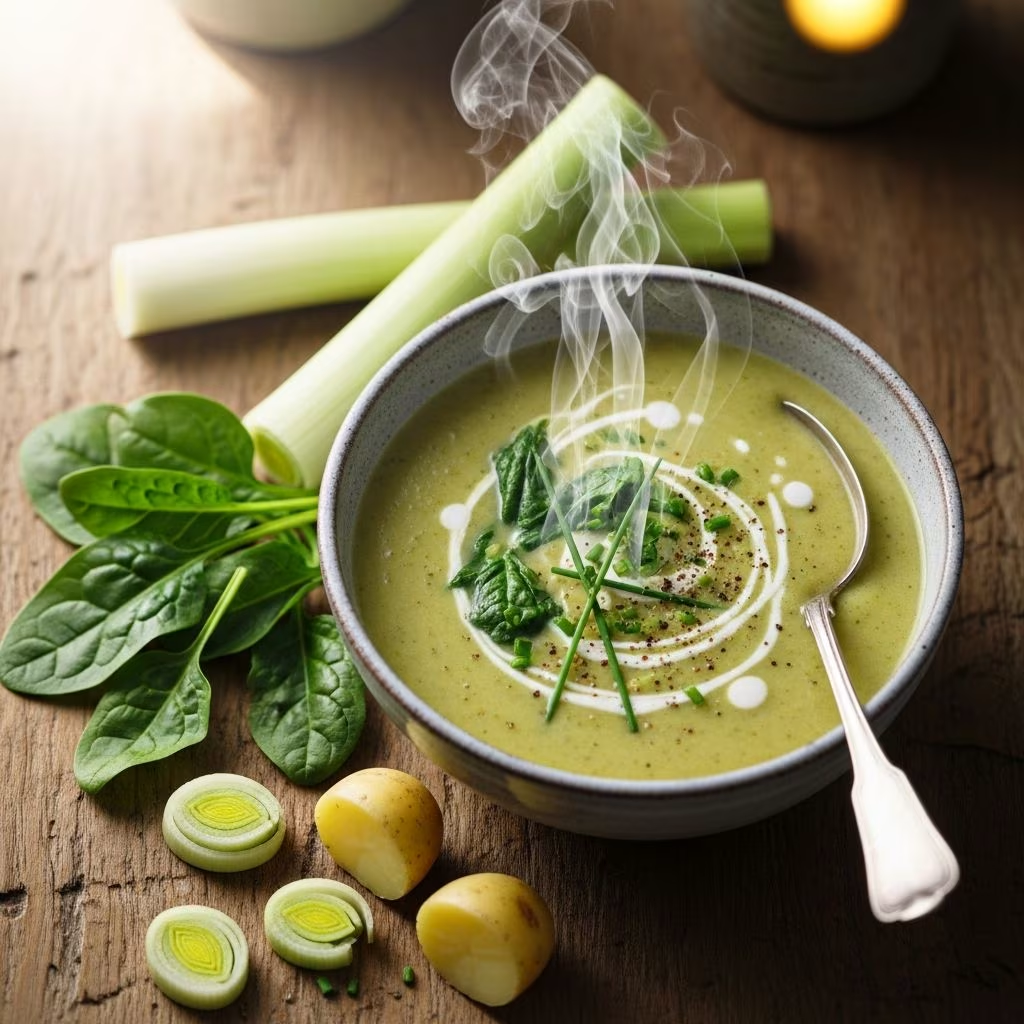
Creating a velvety soup that brings together humble vegetables into something truly memorable requires understanding the interplay of flavors and textures. This guide explores how to transform potatoes, leeks, and fresh spinach into a sophisticated dish that works equally well as a light lunch or an elegant first course for dinner.
Understanding Your Core Ingredients
The foundation of this soup rests on three principal vegetables, each bringing its own character to the final dish. Leeks provide a subtle onion-like flavor that’s milder and more refined than their pungent cousins, offering a sophisticated backbone to the broth. Potatoes serve dual purposes: they add natural creaminess through their starch content when blended, and they provide heartiness that transforms soup into a satisfying meal. Fresh spinach contributes vibrant color, nutritional depth, and a slightly earthy counterpoint that balances the richness of the other ingredients.
Leeks require special attention during preparation. The white and light green portions are the primary edible parts, while the dark green tops can flavor the broth if reserved separately. Their layered structure traps soil between the rings, making thorough rinsing essential. The best technique involves cutting leeks lengthwise and running cold water between the layers to eliminate hidden grit.
Selecting and Preparing Your Vegetables
Potatoes: Type and Treatment
Different potato varieties yield different results. Starchy potatoes like russets create a naturally thicker, creamier texture when broken down during blending, requiring less added cream or dairy. Waxy varieties maintain their shape better throughout cooking, ideal if you prefer a chunkier soup. Yellow potatoes offer a middle ground, providing moderate starch while keeping some structure intact. Most recipes benefit from cubing potatoes into uniform pieces roughly three-quarters of an inch across, ensuring even cooking throughout the simmering process.
The decision to peel potatoes before cooking is largely personal preference. Thin-skinned yellow varieties can be left unpeeled for added nutrition and rustic charm. Russets typically benefit from peeling for a smoother final texture.
Leek Preparation Strategy
After thoroughly cleaning, slice leeks into thin half-moons, approximately one-quarter inch thick. This cut maximizes the surface area available for caramelization during the initial sauté, developing deeper flavors. Some recipes call for cooking leek pieces until they achieve light golden coloring, a technique that heightens their natural sweetness through the Maillard reaction.
Spinach Handling
Fresh baby spinach wilts almost instantaneously when introduced to hot broth. Add spinach near the end of cooking to preserve its vibrant green color and prevent overcooking, which can create an unappealing darkened appearance and muddy flavor.
Building Flavor Through Layered Cooking
Professional soup-making relies on developing flavors through deliberate, sequential cooking steps rather than simply combining ingredients. Begin by heating a cooking fat—butter, olive oil, or a combination—in a substantial pot or Dutch oven. Add prepared leeks and allow them to soften, taking 5-7 minutes over medium heat. This foundational step transforms raw leek sharpness into mellow sweetness.
Once leeks become translucent and begin showing light caramelization at the edges, introduce minced garlic, stirring constantly for 30-60 seconds. This prevents garlic from burning while releasing its aromatic compounds. Following quickly behind, add your prepared potatoes and a generous pinch of salt, which helps draw out moisture and seasons the vegetables as they cook.
Allow the potato mixture to cook without added liquid for several minutes, stirring frequently. This technique—called sweating vegetables—concentrates flavors before introducing broth. The small amount of liquid released by the potatoes themselves creates steam that softens them gradually, beginning the extraction of starch that will eventually provide creaminess.
Broth Selection and Cooking Method
The choice between vegetable broth, chicken broth, and bone broth significantly influences the final flavor profile. Vegetable broth provides a neutral canvas that lets potato and leek shine. Chicken broth adds subtle savory depth. Bone broth contributes collagen and minerals that enhance body and mouthfeel. Most recipes call for 6 cups of liquid, though personal preference regarding soup thickness should guide the final amount.
Bring broth to a rolling boil, then immediately reduce heat to maintain a gentle simmer. Vigorous boiling can break down potatoes too quickly and create a murky, unpleasant appearance. Tender, intact potatoes indicate readiness—typically 10-15 minutes at a simmer, depending on cube size. Potatoes ready for blending should break apart easily when pressed against the pot side with a spoon but shouldn’t have already disintegrated.
Aromatics and Seasoning Elements
Traditional herbs enhance without overpowering. Fresh thyme sprigs contribute earthy, slightly minty notes that complement potato and leek beautifully. Bay leaves add subtle depth but should be removed before blending or serving, as their strong flavor becomes unpleasant when pulverized. Dried thyme, rosemary, or a combination of both can substitute for fresh varieties, though amounts should be reduced—typically one teaspoon of dried herbs replaces one tablespoon of fresh.
Salt and pepper require careful handling. Season vegetables during the initial sauté to enhance their flavors through the cooking process. Taste the finished soup before final seasoning, as broth often contains salt that concentrates during cooking.
Achieving the Perfect Creamy Texture
Creaminess can be achieved through multiple methods, each offering distinct advantages:
- Potato starch blending: Thoroughly pureeing potatoes releases starch that naturally thickens the soup, creating richness without added cream. An immersion blender proves most effective, allowing you to achieve desired consistency from completely smooth to partially chunky.
- Heavy cream addition: Half to one cup of heavy cream stirred in just before serving creates indulgent richness. Add gradually, tasting as you go to find your preference point.
- Milk or half-and-half: Lower-fat options reduce calories while maintaining creaminess. Skim milk, as used in lighter preparations, still contributes body when potatoes are thoroughly blended.
- Combination approach: Many cooks blend potatoes thoroughly for natural creaminess, then add modest amounts of cream for finishing richness.
Spinach Integration and Final Steps
Remove herb stems before adding spinach. Stir spinach into the hot soup in batches, allowing each handful to wilt before adding more. This prevents large clumps of uncooked greens and ensures even distribution. The heat of the soup wilts spinach completely within 30-60 seconds.
If blending the entire soup, add spinach before pureeing to distribute color evenly throughout. If maintaining a chunky texture, add spinach last to preserve its leafy structure. For partially pureed soups, blend the base mixture first, then stir in spinach just before serving.
Optional Flavor Enhancements and Variations
Parmesan cheese stirred into the finished soup adds nutty, savory complexity. Crispy bacon crumbles provide textural contrast and smoky richness. Fresh herbs like chives, parsley, or tarragon scattered over bowls add brightness and visual appeal. White pepper instead of black pepper preserves the soup’s light color while providing heat.
Some variations incorporate additional vegetables: finely diced celery during the initial sauté adds dimension, while cauliflower florets create extra texture and subtle sweetness. Rice cooked in the broth provides heartiness and distinct mouthfeel, transforming soup into something closer to a complete meal.
Cooking Method Considerations
Traditional stovetop preparation offers maximum control and typically requires 30-40 minutes from start to finish. For faster results, pressure cookers reduce cooking time to approximately 15-20 minutes including prep. The Instant Pot method involves sautéing vegetables in the pot itself before pressure cooking, streamlining cleanup while maintaining flavor development.
Storage and Make-Ahead Strategy
This soup stores well in refrigerator containers for 3-4 days and freezes beautifully for up to three months. Cool completely before refrigerating or freezing to prevent condensation and bacterial growth. Freeze in portion-sized containers for convenient single servings. Reheat gently on the stovetop, stirring occasionally and adding additional broth if the soup has thickened during storage. Avoid boiling, which can cause cream-based soups to separate.
Serving Suggestions and Presentation
Warm bowls before serving by filling them with hot water, then emptying just before ladling soup. This keeps the dish at proper temperature longer. Fresh cracked pepper, a drizzle of quality olive oil, crispy bread crumbles, or a dollop of sour cream add visual interest and textural complexity. A grilled cheese sandwich, crusty bread, or simple green salad rounds out a complete meal.
Common Questions About Potato Leek Spinach Soup
Can I make this soup entirely dairy-free?
Yes. Skip cream entirely or replace it with full-fat coconut milk or cashew cream for richness. Thoroughly blending potatoes creates natural creaminess without dairy.
What’s the best way to reheat frozen soup?
Thaw in the refrigerator overnight, then reheat gently on the stovetop over medium-low heat, stirring frequently. Or reheat directly from frozen on low heat, stirring occasionally and breaking apart as it thaws.
How can I make this recipe vegan?
Use vegetable broth, olive oil instead of butter, and plant-based cream alternatives. The combination of thoroughly blended potatoes and coconut milk or cashew cream provides excellent richness.
Can I prepare ingredients in advance?
Clean and chop vegetables up to one day ahead, storing them separately in sealed containers. Cook the complete soup no more than four days before serving.
What should I do if my soup is too thick?
Add additional broth, milk, or water gradually while stirring until reaching desired consistency. Start with quarter-cup increments to avoid over-thinning.
Nutritional Considerations
This soup provides significant nutritional value through its ingredient profile. Potatoes offer complex carbohydrates, fiber (especially with skins intact), and essential minerals including potassium and manganese. Leeks contain prebiotics that support digestive health and provide vitamin K for bone health. Spinach delivers iron, calcium, and abundant antioxidants. When prepared with cream or full-fat milk, the soup provides fat-soluble vitamin absorption. Lighter versions using skim milk or plant-based alternatives reduce calorie density while maintaining nutritional benefits.
This versatile, elegant soup adapts to various preferences and dietary requirements while maintaining its essential character: a warming, nourishing dish that celebrates simple ingredients prepared with intention and care.
References
- Creamy Potato, Leek, and Spinach Soup — The International Kitchen. https://www.theinternationalkitchen.com/recipes/creamy-potato-leek-and-spinach-soup/
- Instant Pot Potato Leek Soup with Spinach and Parmesan — Yay for Food. https://www.yayforfood.com/recipes/instant-pot-potato-leek-soup-spinach-parmesan/
- Healthy, Hearty, Potato, Leek & Spinach Soup — Jewtalian’s Recipes. https://jewtaliansrecipes.com/2011/12/27/healthy-hearty-potato-leek-spinach-soup/
- Potato, Leek & Spinach Soup with Rice — Tinned Tomatoes. https://www.tinnedtomatoes.com/2011/01/potato-leek-spinach-soup-with-rice.html
- Spinach Cauliflower Potato Leek Soup — All Types of Bowls. https://alltypesofbowls.com/recipes/spinach-cauliflower-potato-leek-soup