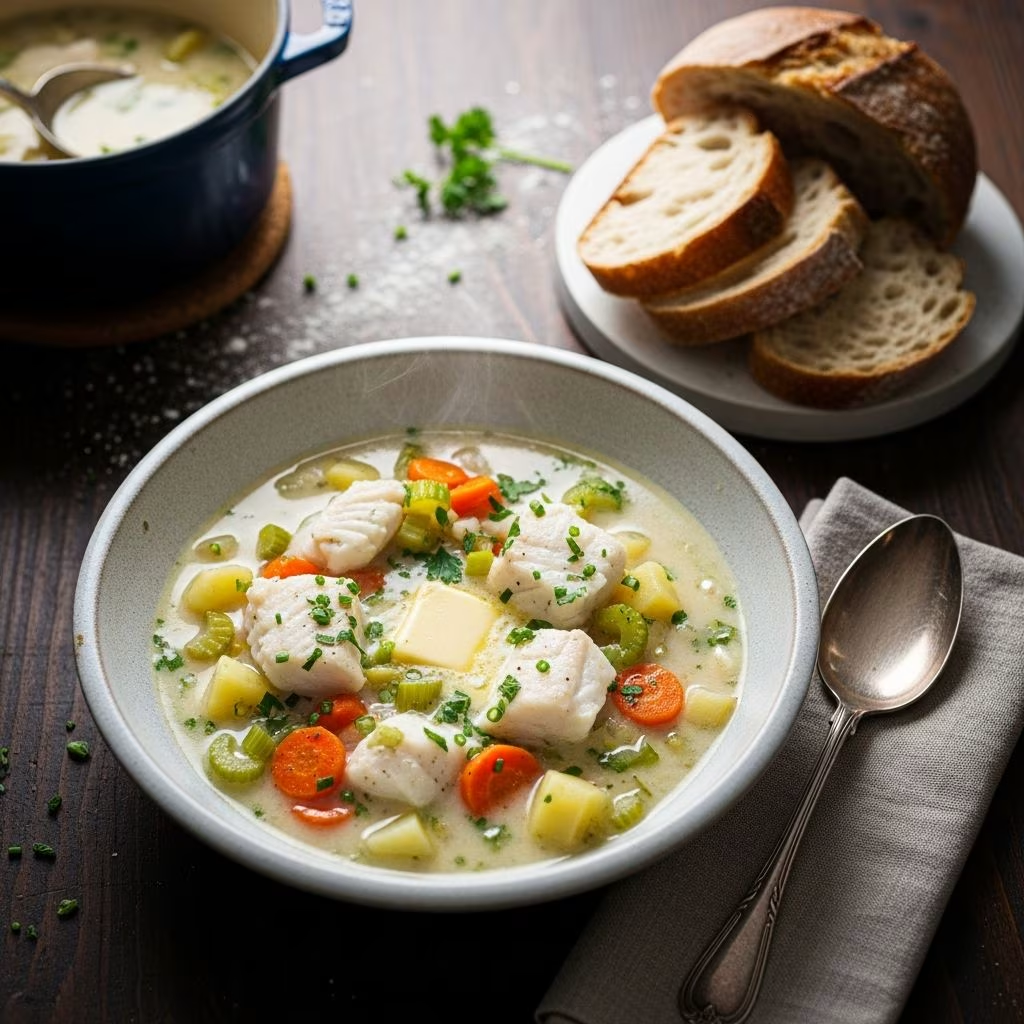
Halibut chowder stands out as a comforting seafood dish that combines tender fish chunks with creamy broth and hearty vegetables. This staple in coastal cuisines offers a perfect balance of flavors, making it ideal for family dinners or special gatherings. Drawing from traditional methods, this guide provides everything needed to craft an exceptional version at home.
Why Choose Halibut for Chowder
Halibut’s firm, mild flesh holds up beautifully during simmering, preventing it from breaking apart in the pot. Unlike more delicate fish, it absorbs broth flavors without becoming mushy. Fresh or thawed frozen halibut works well; ensure it’s patted dry and cut into uniform 1-inch pieces for even cooking.
Nutritionally, halibut provides high-quality protein, omega-3 fatty acids, and essential minerals like selenium and magnesium. A typical serving supports heart health and muscle repair, pairing excellently with nutrient-dense potatoes and vegetables in chowder.
Essential Ingredients Breakdown
Building a great chowder starts with quality components. Core elements include halibut, potatoes, onions, and a creamy base, enhanced by aromatics and seasonings.
- Halibut: 1-2 pounds, fresh or thawed, cut into cubes. Alaskan varieties offer superior texture.
- Potatoes: 1-2 pounds Yukon gold or similar, diced small for quick cooking and creaminess.
- Aromatics: Onions, celery, carrots, garlic—finely chopped for base flavor.
- Dairy: Heavy cream, milk, or evaporated milk for richness; butter for sautéing.
- Broth: Chicken, vegetable, or clam juice—6-8 cups for depth.
- Enhancers: Bacon for smokiness, herbs like thyme or bay leaf, spices such as paprika or nutmeg.
| Ingredient | Quantity (Serves 6-8) | Role |
|---|---|---|
| Halibut | 1.5 lbs | Primary protein, mild flavor |
| Potatoes | 1.5 lbs | Heartiness and thickening |
| Onion/Celery/Carrots | 1 each medium | Aromatic base (mirepoix) |
| Heavy Cream/Milk | 1-2 cups total | Creamy texture |
| Bacon (optional) | 4 slices | Smoky depth |
Step-by-Step Cooking Method
Prepare ingredients mise en place for smooth execution. Use a large pot or Dutch oven over medium heat.
Sauté Base: Melt 2-3 tbsp butter or render 4 sliced bacon strips. Add diced onion, celery, carrot; cook 5-7 minutes until softened. Stir in minced garlic and spices like ½ tsp paprika or nutmeg for 30 seconds.
Build Broth: Sprinkle 2-3 tbsp flour over veggies, stirring 2-3 minutes to form roux. Gradually whisk in 6-8 cups broth, tomatoes if using, bay leaf, and thyme. Bring to boil, then simmer.
Add Potatoes: Dice potatoes into ½-inch cubes; add to pot. Simmer uncovered 8-10 minutes until tender but firm.
Incorporate Dairy and Fish: Stir in 1 cup cream and 1 cup milk. Add halibut cubes; simmer 5 minutes until fish flakes easily. Avoid overcooking to keep texture.
Finish and Season: Taste; adjust salt, pepper, and optional red pepper flakes. Garnish with parsley or scallions.
Total time: 45-60 minutes. Yields 8 servings.
Flavor Variations to Try
Customize your chowder for different tastes or dietary needs.
- Smoky Bacon Version: Use bacon fat base with chicken stock for robust flavor.
- Tomato-Infused: Add stewed tomatoes for tanginess and color.
- Dairy-Free: Swap cream for coconut milk; use veggie broth.
- Spicy Kick: Include red pepper flakes or cayenne post-simmer.
- Clam Addition: Mix in canned clams with clam juice for seafood medley.
Pro Tips for Perfection
- Chill halibut before adding to maintain firmness.
- Simmer gently to prevent curdling dairy.
- Use waxy potatoes to avoid mushiness.
- Thicken naturally with potato starch; minimal flour needed.
- Rest 5 minutes off heat for flavors to meld.
Nutrition and Health Benefits
A 1.5-cup serving offers approximately 350-450 calories, 25g protein, 20g fat (mostly healthy), and 30g carbs. Rich in vitamin D from halibut, potassium from potatoes, and antioxidants from veggies. Low-carb adaptations possible by reducing potatoes.
| Nutrient | Per Serving | % Daily Value |
|---|---|---|
| Protein | 25g | 50% |
| Omega-3s | 500mg | 30% |
| Calories | 400 | 20% |
| Fiber | 4g | 15% |
Supports immune function and reduces inflammation, per general seafood nutrition data.
Storage and Reheating Guidelines
Store in airtight containers up to 3 days in fridge or 2 months frozen. Reheat gently on stovetop with splash of milk to restore creaminess. Do not boil.
Pairing Suggestions
Serve with crusty bread, green salad, or oyster crackers. Wines: Chardonnay or Sauvignon Blanc complement seafood notes.
Frequently Asked Questions
Can I use frozen halibut?
Yes, thaw overnight in fridge or under cold water. Pat dry before cooking.
Is this chowder gluten-free?
Omit flour or use cornstarch; check broth labels.
How do I make it thicker?
Mash some potatoes or simmer longer uncovered.
Substitute for halibut?
Cod or pollock work; adjust cook time for flakiness.
Dairy-free options?
Coconut cream and plant milk yield creamy results.
Conclusion: Your New Go-To Recipe
Halibut chowder delivers warmth and satisfaction with minimal effort. Experiment with these guidelines for personalized perfection every time.
References
- J & J Alaskan Halibut Chowder — Norbert’s Kitchen. 2023. https://www.norbertskitchen.com/alaskan-halibut-chowder/
- How to Make Hearty Halibut Chowder — Allrecipes (YouTube Transcript). 2014-10-15. https://www.youtube.com/watch?v=zceB6uowqjM
- One-Pot Creamy Halibut Chowder — Marley’s Menu. 2023. https://marleysmenu.com/halibut-chowder/
- Halibut Chowder — Eat Drink Breathe. 2022. https://www.eatdrinkbreathe.com/halibut-chowder/
- The Best Halibut Chowder Recipe — Wild for Salmon. 2024. https://wildforsalmon.com/blogs/recipes/the-best-halibut-chowder-recipe