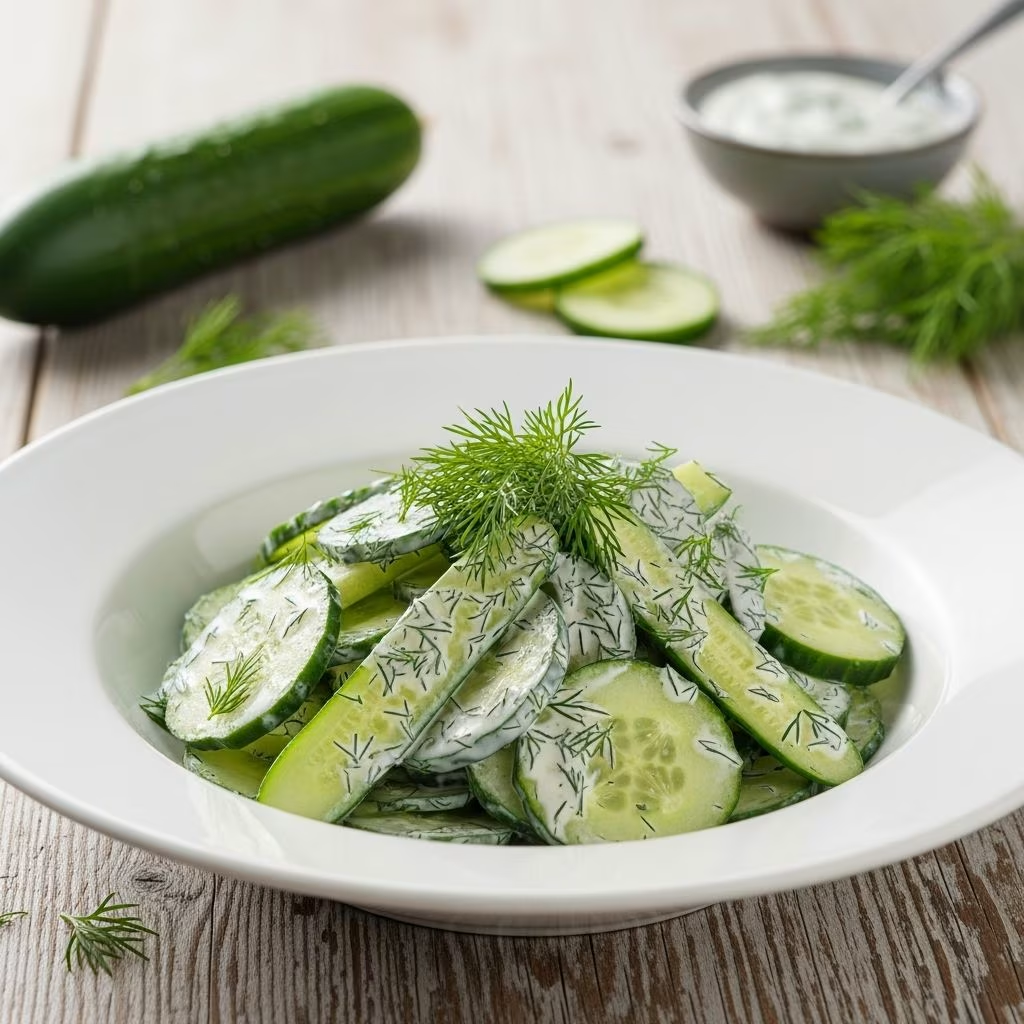
Experience the crisp, cooling essence of Gurkensalat, a timeless German side dish that balances creamy textures with bright, tangy notes. Thinly sliced cucumbers mingle with a velvety sour cream dressing infused with fresh dill and vinegar, creating a salad that’s both light and satisfying. This recipe, rooted in traditional European cuisine, comes together in minutes and shines as a companion to grilled meats, schnitzel, or fresh breads.
The Charm of Traditional Gurkensalat
Gurkensalat holds a special place in German culinary heritage, often served during warm months to cut through richer dishes. Its simplicity belies its bold flavors—crunchy cucumbers provide hydration and freshness, while the dressing adds a subtle creaminess without heaviness. Families across Germany prepare it for gatherings, picnics, and everyday meals, appreciating how it refreshes the palate.
Unlike heavier salads, Gurkensalat emphasizes quality ingredients over complexity. English cucumbers, with their thin skins and minimal seeds, are ideal for uniform slicing and maximum crunch. The dish’s versatility allows adaptations, from creamy versions to lighter vinaigrette styles, catering to various tastes.
Essential Ingredients for Perfect Gurkensalat
Gathering the right components ensures your salad captures authentic taste. Focus on fresh produce and full-fat dairy for the best results.
- 2 English cucumbers: Seedless and crisp, they slice thinly without excess water.
- ½ cup sour cream: Provides richness and tang; full-fat yields creamier texture.
- 1 small red onion or shallot: Adds mild sharpness; slice paper-thin.
- 2 tablespoons fresh dill, chopped: The signature herb for aromatic lift.
- 2 tablespoons white vinegar: Balances sweetness and cuts through creaminess.
- 1-1½ teaspoons sugar: Rounds out flavors subtly.
- Salt and black pepper: To taste, enhancing all elements.
Optional additions like minced garlic, parsley, or a touch of mustard introduce nuanced variations while staying true to roots.
Step-by-Step Guide to Making Gurkensalat
Preparation is straightforward, taking about 15 minutes plus chilling time. Patience with slicing and marinating elevates the dish.
- Prepare the vegetables: Wash cucumbers thoroughly. Using a mandoline or sharp knife, slice into ⅛-inch rounds. Thinly slice onion similarly. Pat slices dry with paper towels to prevent sogginess.
- Mix the dressing: In a bowl, whisk sour cream, vinegar, sugar, dill, salt, and pepper until smooth. Taste and adjust seasoning—aim for tangy balance.
- Combine and toss: Add cucumber and onion slices to the dressing. Gently fold to coat evenly, ensuring every piece glistens.
- Chill thoroughly: Cover and refrigerate for at least 1-4 hours, or overnight. This allows flavors to meld and cucumbers to soften slightly while retaining crunch.
- Serve fresh: Garnish with extra dill before plating. Best enjoyed cold.
Pro tip: For ultra-crisp results, salt cucumber slices lightly and let drain in a colander for 20 minutes before dressing.
Variations to Suit Every Palate
While the creamy classic reigns supreme, experiment with these twists inspired by regional preferences.
| Variation | Key Changes | Best For |
|---|---|---|
| Vinegar-Oil Version | Replace sour cream with ½ cup oil + ¼ cup vinegar; omit dairy. | Vegan diets, lighter meals. |
| Yogurt Refresh | Swap half sour cream for Greek yogurt; add lemon zest. | Health-conscious eaters. |
| Mustard Kick | Stir in ½ tsp Dijon mustard; use apple cider vinegar. | Bold flavor lovers. |
| Herb Medley | Mix dill with chives, parsley, or garlic. | Garden-fresh twists. |
These adaptations maintain the dish’s refreshing core while broadening appeal. In Germany, both creamy and vinaigrette styles coexist, reflecting diverse traditions.
Pairing Gurkensalat with Main Dishes
This salad’s cool profile complements hearty fare beautifully. Serve alongside:
- Grilled sausages or bratwurst for picnic vibes.
- Crispy schnitzel or pork cutlets to balance fried textures.
- Roasted chicken or fish for light summer dinners.
- Potato salad or fresh breads at barbecues.
Its low calorie count (around 60-80 per serving) makes it ideal for buffets, where it provides hydration amid heavier options.
Nutritional Profile and Health Benefits
Gurkensalat is a smart choice for wellness-focused meals. A typical serving offers:
- Calories: 60-70
- Carbs: 6g, mostly from natural sugars.
- Protein: 1-2g
- Fat: 4g, from healthy sour cream sources.
- Vitamin C: 4-5mg (boosted by cucumbers).
- Fiber: 1g for gentle digestion.
Cucumbers hydrate (95% water), while dill provides antioxidants. Opt for low-fat dairy to reduce calories further. It’s naturally gluten-free and vegetarian.
Storage, Make-Ahead, and Troubleshooting
Storage: Keeps in an airtight container in the fridge for 2-3 days. Drain excess liquid before serving; avoid freezing, as cucumbers wilt.
Make-Ahead: Prepare up to 24 hours in advance—flavors intensify beautifully.
Common Issues:
- Too watery? Salt and drain slices first.
- Not tangy enough? Increase vinegar incrementally.
- Lacking crunch? Use fresher cucumbers and shorter chill time.
Frequently Asked Questions (FAQs)
Can I use regular cucumbers? Yes, but peel them to remove wax and seeds for better texture.
Is Gurkensalat dairy-free possible? Absolutely—substitute with vegan sour cream or oil-vinegar dressing.
How long does it last? Up to 3 days refrigerated; stir before serving.
Best cucumber variety? English or Persian for thin skins and fewer seeds.
Can I add protein? Top with feta, nuts, or chickpeas for a heartier salad.
Dill substitute? Dried dill (1 tsp per tbsp fresh) or tarragon works.
Expert Tips for Elevating Your Gurkensalat
To achieve restaurant-quality results:
- Invest in a mandoline for uniform, whisper-thin slices.
- Source fresh dill from farmers’ markets for peak aroma.
- Experiment with vinegar types—white wine adds elegance.
- Let it sit overnight for deeper infusion.
- Serve in a chilled bowl to maintain crispness.
This dish embodies summer simplicity, transforming humble ingredients into something extraordinary. Whether for a casual lunch or festive spread, Gurkensalat delivers reliable refreshment.
References
- German Cucumber Salad — The Recipe Critic. 2023-06-15. https://therecipecritic.com/german-cucumber-salad/
- German Cucumber Salad — The Blond Cook. 2022-07-20. https://theblondcook.com/german-cucumber-salad/
- German Cucumber Salad Recipe — Plated Cravings. 2021-05-10. https://platedcravings.com/german-cucumber-salad-recipe/
- Creamy German Cucumber Salad — German Girl in America. 2020-08-05. https://germangirlinamerica.com/creamy-german-cucumber-salad/
- Gurkensalat (Creamy German Cucumber Salad) — Maple + Mango. 2023-04-12. https://www.mapleandmango.com/gurkensalat-german-cucumber-salad/