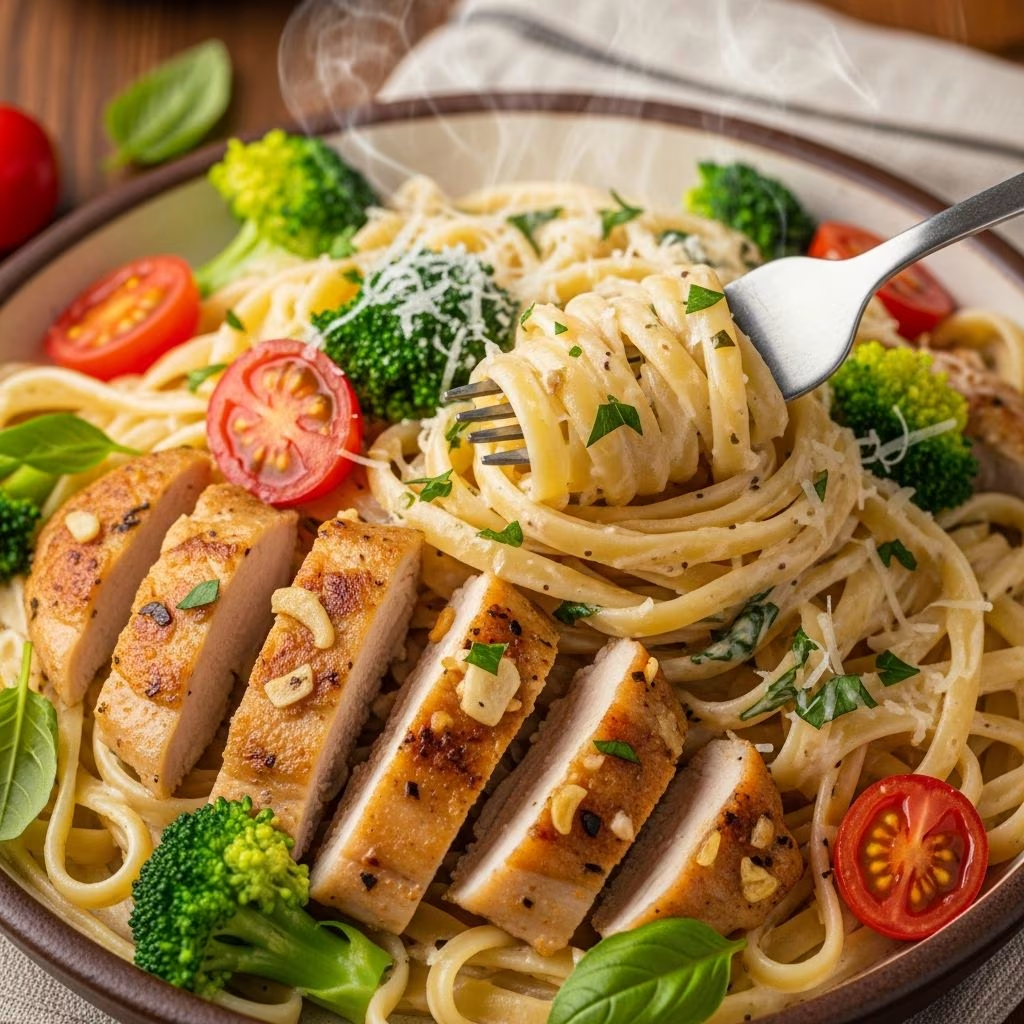
Creamy garlic chicken pasta represents one of the most versatile and satisfying dishes in home cooking, combining simple pantry staples with elegant presentation suitable for both family dinners and entertaining guests. This dish transcends the traditional boundaries of everyday meals by delivering restaurant-quality flavor without requiring advanced culinary skills or an extensive ingredient list. The beauty of this preparation lies in its straightforward construction: tender chicken pieces, carefully cooked pasta, and a luxurious sauce built from garlic, cream, and cheese that harmonizes all components into a cohesive whole.
Understanding the Fundamentals of This Versatile Dish
Creamy garlic chicken pasta belongs to the category of contemporary comfort foods that has become a staple in modern households. Unlike its distant cousin, traditional Alfredo sauce, this preparation distinguishes itself through the prominent role garlic plays in defining the overall flavor profile. The sauce achieves its distinctive character by layering multiple dimensions of taste: the sharp, pungent notes of fresh garlic that have been gently cooked to mellow their intensity, the subtle richness of butter and cream, and the nutty, umami qualities provided by Parmesan cheese.
The dish appeals to home cooks for several compelling reasons. First, the total preparation time rarely exceeds thirty minutes, making it suitable for weeknight cooking when time constraints are significant. Second, the ingredient requirements remain minimal and accessible, with most items readily available in standard grocery stores or already present in typical kitchen pantries. Third, the recipe demonstrates remarkable flexibility, accommodating various dietary preferences and allowing for creative additions without compromising the integrity of the dish.
Essential Ingredients and Their Selection Criteria
Success in preparing creamy garlic chicken pasta begins with understanding the role each ingredient plays and recognizing quality markers when shopping. The foundation consists of several key components that work in concert to create the finished dish.
Protein Selection and Preparation
Chicken serves as the primary protein, and the choice of cut significantly influences both cooking time and texture. Boneless, skinless chicken breasts represent the most common selection, offering lean meat that cooks relatively quickly and absorbs the surrounding flavors readily. When selecting chicken breasts, choose pieces that display uniform thickness and appear fresh with a pale pink color. Thicker breasts benefit from a technique called butterflying, where the cook carefully cuts horizontally through the meat to create thinner, more evenly-sized portions that cook uniformly and reduce overall cooking time.
Proper seasoning of the chicken occurs before cooking and should include at minimum salt and freshly ground black pepper applied generously to all surfaces. Some preparations incorporate dried herbs such as rosemary or thyme, which add complexity without requiring additional cooking steps. The chicken should reach an internal temperature of 165°F (74°C) before consuming, ensuring food safety while maintaining moisture content.
Pasta Shape and Type Considerations
The pasta selection extends beyond mere preference to encompass functional considerations. Penne pasta emerged as the preferred choice for many cooks because its tubular shape naturally traps sauce within and around each piece, delivering concentrated flavor in every bite. However, alternative shapes including rotini, fettuccine, spaghetti, and angel hair all perform adequately, each offering slightly different textural experiences. The key factor involves choosing a shape that can adequately hold sauce rather than allowing it to slide off smooth surfaces.
The cooking method for pasta follows standard practice: bring salted water to a rolling boil, add pasta, and cook according to package directions until achieving al dente texture (tender but retaining slight firmness when bitten). Reserving approximately one-quarter cup of pasta cooking water before draining provides liquid for adjusting sauce consistency during final assembly, a technique that prevents the finished dish from becoming either too thick or excessively thin.
Dairy Components and Flavor Builders
Butter, cream, and Parmesan cheese form the trinity that creates the sauce’s luxurious character. Unsalted butter allows the cook to control sodium levels precisely and works best when used fresh rather than from packages that have been open for extended periods. Heavy cream, also called heavy whipping cream, provides the sauce’s richness and helps achieve the desired thickness. Using room-temperature cream prevents shocking the pan and helps the sauce incorporate smoothly without breaking or becoming grainy.
Parmesan cheese should be freshly grated rather than pre-shredded from containers, as the latter contains anti-caking agents that prevent smooth melting and can create gritty texture in the finished sauce. The cheese contributes both flavor intensity and a pleasant umami quality that elevates the entire dish. Approximately one-half cup of freshly grated Parmesan provides adequate seasoning without overwhelming other flavors.
The Aromatic Heart of the Dish
Garlic commands the spotlight in this preparation, and proper handling ensures it delivers maximum impact. Fresh garlic cloves, typically six to eight depending on desired intensity, should be minced finely just before cooking to preserve volatile aromatics. Minced shallots, while optional, add subtle sweetness and complexity that complements the garlic’s pungency. Garlic powder serves as an acceptable alternative only when fresh garlic is unavailable, though it cannot fully replicate the brightness of freshly minced cloves.
Building Depth with Broth and Stock
Chicken broth or stock serves as the liquid foundation for the sauce, providing both volume and savory depth. Low-sodium varieties allow better flavor control, preventing the final dish from becoming oversalted. Approximately one cup of broth combines with the cream to create a sauce with the proper consistency and flavor balance. The broth performs double duty by deglazing the pan, lifting flavorful browned bits from the bottom, while also reducing slightly as the sauce simmers, concentrating flavors.
Execution Techniques and Step-by-Step Methodology
Understanding the proper sequence and techniques transforms ingredient preparation into a cohesive finished dish. The cooking process divides logically into distinct phases that build upon one another.
Initial Chicken Preparation and Cooking
Begin by patting the prepared chicken pieces dry with paper towels, a critical step that ensures proper browning when the meat contacts the hot cooking surface. Moisture on the surface inhibits browning through a process called steaming, preventing the development of flavorful browned crust.
Heat a large skillet over medium-high heat until quite hot, then add a combination of olive oil and butter. The oil raises the smoke point of the butter, preventing burning while allowing the butter’s flavor to develop. Once the butter foams and the oil shimmers, carefully place the seasoned chicken in the pan without moving it for several minutes. This restraint allows the bottom surface to develop a golden-brown crust through the Maillard reaction, a chemical process that creates complex flavors.
After approximately four to five minutes, flip the chicken and cook the second side for three to four additional minutes until the internal temperature reaches the safe target of 165°F. Remove the cooked chicken to a clean cutting board and allow it to rest briefly before slicing into bite-sized pieces.
Pasta Preparation Timing
While the chicken cooks, bring a large pot of generously salted water to a rolling boil and add the pasta. Cooking the pasta independently rather than in the sauce allows better control over texture and prevents overcooking. Stir occasionally to prevent sticking, and cook until the pasta reaches the al dente stage—tender but retaining a slight firmness. Before draining, reserve pasta water as insurance for adjusting sauce consistency later.
Sauce Development and Flavor Building
Using the same skillet that cooked the chicken, melt additional butter over medium heat. The browned bits left on the pan from cooking the chicken contribute significant flavor to the developing sauce. Add the minced garlic and optional shallots, cooking gently for approximately one minute while stirring frequently. This brief cooking mellows the garlic’s raw bite without allowing it to darken or burn, which would introduce bitterness.
Pour in the chicken broth, using a wooden spoon to scrape and dissolve the flavorful browned bits from the bottom of the pan. This deglazing step concentrates and distributes all the fond throughout the sauce base. Allow the mixture to come to a simmer, then add the warmed cream, stirring gently to combine. The mixture will begin to thicken as it simmers for approximately three to four minutes.
Final Assembly and Integration
Add the sliced chicken back to the sauce along with the cooked and drained pasta. Stir gently to coat all components with the sauce. Remove the pan from heat and stir in the freshly grated Parmesan cheese, stirring until completely melted and incorporated. If the sauce appears too thick, add reserved pasta water one tablespoon at a time until achieving the desired consistency.
Taste and adjust seasonings as needed, recognizing that Parmesan cheese contributes saltiness that may require less additional salt than anticipated. A small pinch of freshly ground black pepper and perhaps a tiny squeeze of fresh lemon juice can brighten flavors if desired.
Nutritional Considerations and Dietary Modifications
A standard serving of creamy garlic chicken pasta contains approximately 450-550 calories depending on exact ingredient quantities and portion size. The dish provides substantial protein from both the chicken and dairy components, making it satisfying and conducive to maintaining satiety between meals.
For those managing carbohydrate intake, substituting traditional pasta with lower-carbohydrate alternatives such as legume-based pastas or vegetable noodles adapts the recipe without compromising the essential character. The sauce and protein components remain unchanged, making such modifications straightforward.
Gluten-free preparations require only substituting regular pasta with certified gluten-free varieties, which now perform admirably in most applications. The sauce contains no gluten-containing ingredients by default, making this a simple substitution for individuals managing celiac disease or gluten sensitivity.
Enhancement Possibilities and Creative Variations
While the classic preparation delivers excellent results, creative cooks can enhance the dish through strategic additions. Incorporating fresh spinach or roasted vegetables such as mushrooms or sun-dried tomatoes adds nutritional value and textural interest. Fresh herbs such as parsley, basil, or thyme scattered over the finished dish provide brightness and visual appeal.
Some preparations include a sneaky vegetable that blends seamlessly into the pasta, such as finely diced zucchini or roasted red peppers pureed into the sauce. These additions boost nutritional content without dramatically altering the flavor profile.
Frequently Asked Questions
Can I prepare this dish in advance?
The completed dish stores well in an airtight container in the refrigerator for three to four days. Reheat gently on the stovetop over low heat, adding a small splash of milk or broth to restore the sauce’s silky consistency if it has thickened excessively during storage.
What if my sauce becomes too thick?
This represents the most common concern in sauce preparation. Simply add reserved pasta water or additional broth in small increments while stirring gently until achieving the desired consistency. The sauce will continue thickening slightly as it cools.
Can I use pre-cooked rotisserie chicken?
Yes, this convenient substitution works excellently. Shred or cut the rotisserie chicken into bite-sized pieces and add it directly to the finished sauce, reducing the overall cooking time to approximately fifteen minutes from start to finish.
What is the best way to store leftover portions?
Allow the dish to cool to room temperature before transferring to airtight containers for refrigerator storage. Do not leave the prepared dish sitting at room temperature for more than two hours, as this allows bacterial growth.
Can I freeze this dish for later consumption?
The creamy sauce does not freeze particularly well, as the dairy components can separate and create grainy texture upon thawing. If freezing is necessary, freeze the cooked chicken and pasta separately from the sauce, then prepare fresh sauce when ready to serve.
Professional Tips for Excellence
Several practices distinguish home preparations from rushed versions. Allowing adequate time for the chicken to develop a golden crust improves the final flavor profile dramatically. Using room-temperature cream prevents the sauce from breaking or becoming grainy. Adding cheese after removing the pan from direct heat preserves its texture and prevents it from becoming stringy or developing off-flavors from excessive heating.
Tasting and adjusting seasonings before serving ensures optimal results. Remember that flavors intensify as the dish sits, so slight underseasoning during preparation often results in better balance after a few minutes.
References
- Creamy One Pot Garlic Chicken Pasta Recipe — Delicious Little Bites. 2024. https://deliciouslittlebites.com/garlic-chicken-pasta/
- Creamy Garlic Chicken Pasta — Cooking and Cussing. 2024. https://cookingandcussing.com/creamy-garlic-chicken-pasta/
- Creamy Garlic Chicken Pasta (Easy 20-Minute Recipe) — Laura Fuentes. 2024. https://www.laurafuentes.com/creamy-garlic-chicken-pasta/
- Creamy Garlic Chicken Pasta – Rich, Saucy, and Made for Penne — Noble Pig. 2024. https://noblepig.com/creamy-garlic-chicken-pasta/
- Creamy Garlic Parmesan Chicken Pasta — I Am Homesteader. 2024. https://iamhomesteader.com/garlic-parmesan-chicken-pasta/