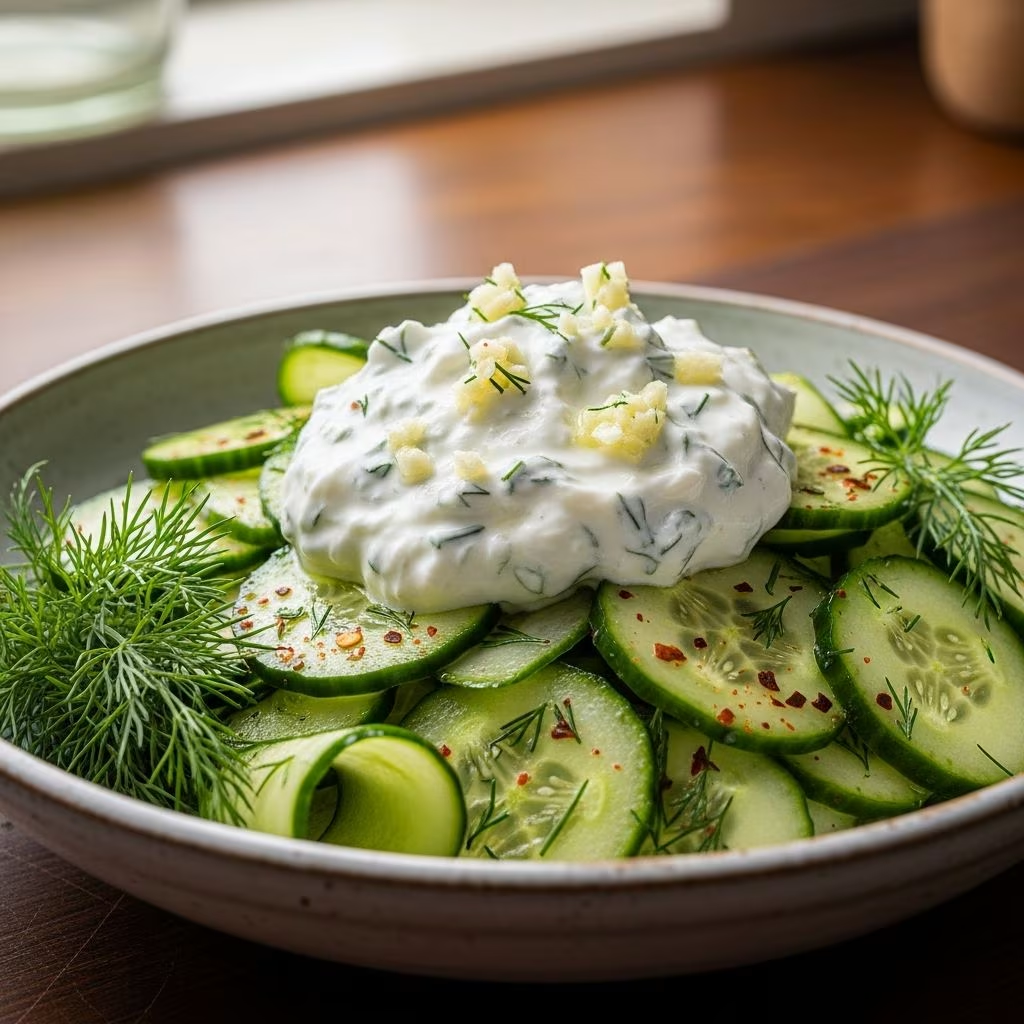
There’s something undeniably appealing about a salad that comes together quickly yet delivers sophisticated flavors. A cucumber salad topped with a garlicky dill yogurt dressing represents the perfect marriage of simplicity and culinary appeal. This dish celebrates the natural crispness of cucumbers while introducing creamy textures and herbaceous notes that make it a standout addition to any table. Whether you’re preparing a casual weeknight dinner or hosting a summer gathering, this recipe offers flexibility without compromising on taste.
Understanding the Core Components
The foundation of this dish rests on three essential elements: fresh cucumbers, a yogurt-based dressing, and aromatic herbs. Each component plays a specific role in creating a harmonious final dish. Cucumbers provide the structural foundation and refreshing quality that makes this salad so appealing during warm months. The yogurt-based dressing introduces creaminess while keeping the overall dish light and nutritionally balanced. Fresh dill acts as the flavor bridge, connecting the cool crispness of cucumbers with the tangy richness of the dressing.
Selecting and Preparing Cucumbers
The type of cucumber you choose significantly impacts both texture and flavor. English cucumbers, also known as seedless or hothouse cucumbers, offer superior quality for salads compared to their standard counterparts. These varieties contain fewer seeds and have a thinner skin, resulting in a more pleasant eating experience. When selecting cucumbers, look for specimens that are firm to the touch without soft spots, and choose those with a vibrant green color indicating freshness.
Preparation methods vary depending on your texture preferences and the specific cucumber variety. Some recipes call for peeling and seeding cucumbers to eliminate excess moisture, while others embrace the skin for added texture and nutritional value. Slicing cucumbers into thin, uniform pieces ensures even dressing distribution and creates a more refined presentation. Whether you opt for half-circles, thin coins, or longer strips, consistency in sizing helps the final dish maintain structural integrity and visual appeal.
A helpful technique involves lightly salting cucumber slices and allowing them to rest for 15-20 minutes before final assembly. This process, called crisping, draws out excess moisture and concentrates the vegetable’s natural flavors. After the resting period, gently pat the cucumber slices dry with paper towels to prevent a watery dressing from diluting the flavor profile.
The Yogurt Foundation
Greek yogurt has become the preferred base for modern cucumber salads, replacing traditional sour cream and mayonnaise-based dressings. This cultured dairy product offers tanginess similar to buttermilk while delivering a creamier texture with fewer calories. The probiotic content in yogurt provides digestive benefits, making this salad both delicious and nutritionally advantageous.
Full-fat Greek yogurt creates the richest, most luxurious dressing, though non-fat varieties work perfectly well for those monitoring caloric intake. The choice depends on your dietary preferences and how intensely creamy you want the final dressing to be. When selecting yogurt, ensure it’s plain and unsweetened, as flavored varieties can introduce unwanted sweetness that clashes with the savory elements of the salad.
Building the Perfect Dressing
Creating a balanced dressing requires thoughtful consideration of acidic, aromatic, and flavorful components. The dressing should coat the cucumbers evenly while maintaining its structural integrity, neither running off the vegetables nor becoming overly thick.
Acidic Elements
Acidity plays a crucial role in brightening flavors and preventing the dressing from becoming one-dimensional. Fresh lemon juice provides both brightness and complexity, though alternatives like white wine vinegar or apple cider vinegar offer different flavor profiles. The type of vinegar you select subtly shifts the dressing’s character: red wine vinegar adds earthiness, white wine vinegar brings delicate floral notes, and apple cider vinegar introduces subtle sweetness.
The proportion of acid to yogurt requires careful balance. Too little acid results in a one-note creamy dressing, while excessive acidity overpowers the yogurt’s subtle tang. Most recipes achieve optimal balance with one to two tablespoons of acidic liquid per cup of yogurt, though personal preference should guide final adjustments.
Garlic and Aromatics
Garlic transforms a simple yogurt dressing into something distinctly flavorful. When combining raw garlic with other ingredients, consider using garlic powder or pre-minced garlic rather than fresh cloves when raw onions are also present in the salad. This prevents an overwhelming raw garlic bite that might overpower the dish’s delicate balance. Some recipes incorporate both fresh minced garlic and garlic powder to create layered garlic complexity without harshness.
Fresh dill serves as the signature herb, contributing distinctive anise-like notes that distinguish this salad from countless variations. The quantity of dill should be generous—approximately one-quarter to one-half cup of freshly chopped fronds creates the characteristic herbaceous profile without tasting overly botanical. Remove thick dill stems before chopping, as they can become woody and unpleasant when consumed.
Optional Flavor Enhancers
While classic recipes stick to the fundamentals, several additions can personalize the dressing to suit specific preferences:
- A small amount of honey adds subtle sweetness that balances the acidity without making the dressing dessert-like
- Extra-virgin olive oil introduces richness and helps create a more cohesive emulsion
- Freshly cracked black pepper adds subtle heat and complexity
- Fresh lemon zest brightens the dressing with concentrated citrus flavor
Assembly and Flavor Development
Combining Ingredients
The order in which you combine ingredients affects the final dressing’s texture and flavor development. Begin by whisking together the yogurt base with acidic components, creating a smooth foundation. Add garlic, salt, and pepper next, allowing these seasonings to distribute evenly throughout the yogurt. Finally, fold in fresh dill gently to preserve the herb’s fresh character and prevent it from becoming bruised or discolored.
Once the dressing is complete, add the prepared cucumbers and any additional vegetables like thinly sliced red onion. Toss gently but thoroughly to ensure every cucumber piece receives an even coating of dressing. The salad reaches optimal flavor development after resting in the refrigerator for at least 30 minutes, allowing the various components to meld together harmoniously.
Temperature and Timing
This salad’s refreshing qualities are best preserved by serving it chilled. The cooling process also helps the dressing cling to the cucumber slices more effectively. If preparing ahead, store the salad in an airtight container in the refrigerator for up to 24 hours, though the texture remains superior when consumed within 12 hours of assembly. The cucumber slices gradually release moisture over time, which can make the salad watery if stored too long.
Variations and Customizations
While the classic recipe offers timeless appeal, several variations accommodate different taste preferences and dietary requirements:
| Variation | Key Changes | Best For |
|---|---|---|
| Mediterranean Style | Add red onion, tomatoes, and kalamata olives; substitute feta for some yogurt | Outdoor gatherings and Mediterranean-inspired menus |
| Asian-Inspired | Replace dill with cilantro; add rice vinegar and sesame oil | Asian cuisine pairings and alternative flavor profiles |
| Herb-Forward | Combine dill with fresh mint or parsley for complex herbaceousness | Those seeking more pronounced herb flavors |
| Creamy Lighter Version | Replace half the yogurt with low-fat milk or buttermilk | Lower-calorie options without sacrificing creaminess |
Serving Suggestions and Pairings
This versatile salad functions effectively as a standalone dish or as a supporting component in larger meals. Serve it alongside grilled proteins like chicken, fish, or lamb, where its cool, refreshing qualities provide textural and temperature contrast. The salad also works wonderfully as a base for open-faced sandwiches or as a topping for grilled fish.
For vegetarian gatherings, this salad pairs beautifully with grain-based dishes like couscous, quinoa, or farro. The cool, creamy elements complement warm grains while providing textural variety. During casual summer barbecues, this salad sits comfortably alongside traditional sides, offering a lighter alternative to heavier mayonnaise-based preparations.
Nutritional Considerations
Cucumbers contain approximately 95 percent water, making them exceptionally low in calories while delivering hydration and essential minerals. Greek yogurt contributes protein and probiotics that support digestive health. When prepared with minimal added fats, this salad offers a genuinely nutritious option that doesn’t sacrifice flavor or satisfaction.
The overall caloric content depends on specific yogurt selection and additional ingredients. Using non-fat Greek yogurt and limiting added oils creates a dish containing approximately 40-60 calories per serving, while recipes incorporating full-fat yogurt and olive oil range from 80-120 calories per serving. These numbers make the salad an excellent choice for those seeking lighter meal options.
Common Preparation Mistakes to Avoid
- Using warm ingredients for a salad meant to be refreshing and chilled
- Over-whisking the dressing, which can break the yogurt and create a watery consistency
- Adding salt directly to the dressing without tasting first, as salt concentration can be difficult to adjust later
- Cutting cucumbers too thickly, which creates an uneven eating experience and hinders dressing absorption
- Failing to remove excess moisture from cucumbers, resulting in a watery final dish
Frequently Asked Questions
Can I prepare this salad in advance?
Yes, this salad can be prepared several hours ahead, though optimal texture is maintained when consumed within 12 hours. Store it in an airtight container in the refrigerator to prevent moisture loss and preserve freshness.
What can I substitute for fresh dill?
Fresh mint, parsley, or a combination of these herbs work as suitable alternatives. Each substitution creates a different flavor profile, so experiment to discover your preferred combination.
Is this salad suitable for dietary restrictions?
This recipe is naturally gluten-free and can easily accommodate vegetarian and vegan diets by substituting dairy yogurt with coconut or cashew-based alternatives.
How long does this salad keep?
Properly stored in an airtight container, this salad maintains quality for up to 24 hours, though the best texture and flavor are achieved when consumed within 12 hours of preparation.
Can I use regular yogurt instead of Greek yogurt?
Regular yogurt can be used, though the dressing will be thinner. Strain regular yogurt through cheesecloth for 30 minutes to remove excess whey before using in this recipe.
References
- Creamy Cucumber Salad — The Mediterranean Dish. 2024. https://www.themediterraneandish.com/creamy-cucumber-salad/
- Cucumber Salad Recipe with Dill Yogurt Dressing — Cookin Canuck. 2024. https://www.cookincanuck.com/cucumber-salad-recipe-yogurt-dressing/
- Creamy Cucumber Salad with Yogurt and Dill — Bowl of Delicious. 2024. https://www.bowlofdelicious.com/creamy-cucumber-salad/
- Creamy Cucumber Salad with Greek Yogurt and Fresh Dill — Fancy Fule Eats. 2024. https://fancifuleats.com/creamy-cucumber-salad-with-greek-yogurt-and-fresh-dill/
- Cucumber Salad with Garlic-Dill Yogurt Sauce — Seek Satiation. 2016. https://seeksatiation.com/2016/07/16/cucumber-salad-with-garlic-dill-yogurt-sauce/