Looking for a dish that combines bold Louisiana flavors with the comfort of creamy pasta? Cajun cream pasta delivers restaurant-quality results in under 30 minutes, making it an ideal choice for busy weeknights or casual entertaining. This versatile dish features a rich, spiced sauce that pairs beautifully with various proteins and pasta shapes, allowing you to customize it based on what you have available in your kitchen.
Understanding the Foundation of Cajun Flavors
Cajun cuisine draws its character from a distinctive blend of spices and cooking techniques originating from Louisiana. The foundation of any authentic Cajun pasta begins with mastering the core spice profile. Rather than relying on pre-made seasoning blends, understanding individual components allows you to adjust heat levels and intensity to suit your preferences.
The essential spices that define Cajun flavor include smoked paprika, which provides depth and a subtle smoky undertone, cayenne pepper for heat, dried oregano and thyme for herbal complexity, and garlic powder and onion powder for aromatic background notes. When these elements combine in the right proportions, they create the signature bold taste that makes Cajun dishes so memorable and craveable.
Essential Ingredients for Your Sauce
The success of creamy Cajun pasta relies on quality ingredients and proper proportions. Start with unsalted butter as your base—this gives you control over the final salt content and ensures a clean, pure butter flavor. Fresh minced garlic provides superior taste compared to pre-minced varieties, as fresh garlic releases more flavorful oils when heated.
Heavy cream forms the backbone of your sauce, creating that luxurious mouthfeel that makes this dish so satisfying. When selecting cream, look for versions without additives or thickeners that might affect how the sauce comes together. Full-fat cream works best, as lower-fat alternatives can separate or break during cooking.
Parmesan cheese should be freshly grated rather than pre-shredded. Pre-grated cheeses contain anti-caking agents that prevent smooth melting and can result in a grainy, separated sauce rather than a silky emulsion. Incorporating high-quality tomato products—either crushed tomatoes, diced tomatoes, or tomato paste—adds acidity that balances the richness and prevents palate fatigue.
Consider these ingredient additions for enhanced flavor:
- Red pepper flakes for extra heat
- Sun-dried tomatoes for concentrated flavor and slight sweetness
- Fresh or dried basil for herbal notes
- White wine or chicken broth for added depth
- Optional proteins such as shrimp, chicken, or smoked sausage
Selecting the Right Pasta Shape
While the sauce deserves attention, pasta selection impacts the overall eating experience. Longer, thinner pastas like fettuccine, linguine, or spaghetti work exceptionally well because they trap sauce in their strands, delivering flavor in each bite. Bowtie pasta offers interesting texture contrasts, while penne and rotini provide surface area for sauce cling.
Cooking pasta properly ensures the best results. Bring salted water to a rolling boil before adding pasta, and stir occasionally to prevent sticking. Cook until al dente—meaning the pasta still has a slight firmness when bitten—rather than soft. Reserve approximately half a cup of starchy pasta water before draining, as this liquid becomes valuable for adjusting sauce consistency later if needed.
Step-by-Step Sauce Preparation
Begin by melting butter in a large skillet over medium heat. Once melted and foaming, add minced garlic and sauté for 30 to 60 seconds until fragrant—this short cooking time prevents garlic from browning and developing bitter flavors. If using diced onions or bell peppers, add them at this stage and cook until softened, approximately 3 to 5 minutes.
Next, incorporate your tomato product, whether paste, crushed tomatoes, or diced pieces. Allow this to cook for about two minutes, which helps concentrate flavors and removes the raw taste. This brief cooking step is crucial—it ensures the tomato flavor integrates into the sauce rather than tasting separate or jarring.
The critical phase involves adding heavy cream. Pour it in gradually while whisking constantly to create an emulsion. Adding cream all at once can result in temperature shock that causes separation. Once cream is incorporated and the mixture reaches a gentle simmer, add your Cajun spice blend. If using individual spices rather than a prepared blend, combine them in a small bowl first to ensure even distribution.
As the sauce simmers, it will gradually thicken. Maintain low to medium heat—excessive heat can cause cream to break and cheese to become grainy or separate. Stir frequently and watch for small bubbles breaking the surface, indicating proper simmering temperature. When the sauce reaches your desired thickness, fold in freshly grated Parmesan cheese, stirring until completely melted and incorporated.
Cooking Techniques and Temperature Control
Temperature management separates amateur cooks from successful ones when making creamy sauces. Never allow the sauce to reach a rolling boil once cream is added, as high temperatures cause dairy to curdle. The ideal state is a gentle simmer with occasional bubbles rising to the surface.
If your sauce becomes too thick while waiting for pasta, thin it with reserved pasta water—add just a tablespoon at a time and stir well. The starch in pasta water helps maintain the sauce’s texture and promotes better adhesion to the cooked pasta. Conversely, if the sauce seems too thin after adding cheese, allow it to simmer for another minute or two, but avoid overcooking which toughens the cream.
Protein Options and Flavor Variations
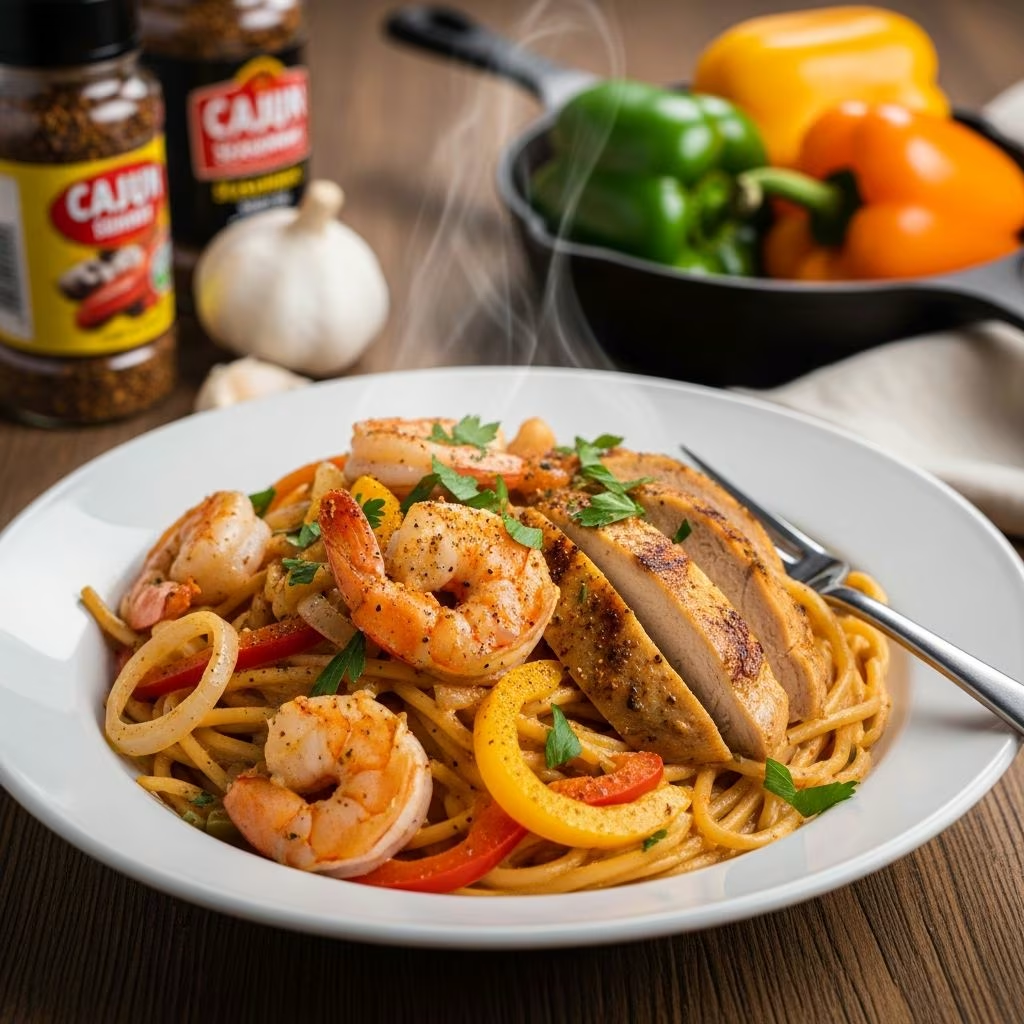
One of Cajun cream pasta’s greatest strengths is its flexibility with proteins. Boneless, skinless chicken breasts work wonderfully when cut into bite-sized pieces or left as whole breasts and sliced after cooking. Season chicken with half your Cajun spice blend before pan-searing in the skillet, then remove and set aside before building the sauce.
Shrimp offers a quick-cooking alternative that requires only three to four minutes per side before adding to the finished sauce. Pan-seared smoked sausage provides depth and smokiness that complements the spice blend beautifully. For vegetarian versions, focus on increasing vegetable components—add mushrooms, zucchini, sun-dried tomatoes, and additional bell peppers for substance and nutrition.
Combining Elements and Final Plating
Once your sauce reaches the desired consistency and your pasta is al dente, combine them in the skillet. Add the cooked pasta to the sauce and toss gently but thoroughly to coat every strand. If using proteins, add them at this stage and toss again to distribute evenly. Allow the combined dish to simmer together for one additional minute, which helps flavors meld.
For serving, garnish with fresh parsley, additional grated Parmesan cheese, and a light sprinkle of red pepper flakes for those who enjoy extra heat. A final grind of black pepper adds complexity and encourages flavors to shine. Serve immediately while the pasta retains heat and the sauce maintains its silky texture.
Storage and Make-Ahead Strategies
Leftover Cajun cream pasta stores well in airtight containers in the refrigerator for three to four days. Reheat gently in a skillet over low heat, adding a splash of cream or pasta water if the sauce has thickened considerably. The dish also freezes acceptably for up to two months, though the sauce texture may change slightly upon thawing.
For efficient meal prep, prepare the spice blend in advance and store it in an airtight container. Cook pasta ahead and toss with a touch of olive oil to prevent sticking. Then on busy nights, the sauce comes together in 15 minutes or less, and combining everything takes just moments.
Troubleshooting Common Issues
Should your sauce separate or appear grainy after adding cheese, this indicates the temperature was too high. Remove the skillet from heat and allow it to cool for a minute, then whisk in a tablespoon of cold cream while stirring vigorously. This often restores smoothness.
If the sauce tastes flat or one-dimensional, it likely needs more salt or additional Cajun spices. Add either in small increments, tasting after each addition. Remember that Parmesan cheese contributes saltiness, so consider this when adjusting seasoning.
Overly thick sauce suggests the cooking time was too long or heat was too high. Simply whisk in pasta water a tablespoon at a time until reaching the desired consistency. Thin sauce typically needs more simmering time or perhaps a bit more Parmesan cheese for body.
Complementary Side Dishes and Beverages
Serve Cajun cream pasta alongside crusty bread for soaking up extra sauce, or a fresh green salad with vinaigrette to cut through richness. Garlic bread complements the flavors beautifully and appeals to all diners.
Beverage pairings enhance the dining experience—crisp white wines like Sauvignon Blanc or Pinot Grigio balance the spice and creaminess, while lighter beers offer refreshing contrast. Iced tea with lemon provides a non-alcoholic option that suits the flavor profile perfectly.
Frequently Asked Questions
Can I make this dish dairy-free?
Yes, substitute heavy cream with canned full-fat coconut milk or cashew cream, and use dairy-free Parmesan alternatives. The sauce will taste slightly different but remains flavorful and creamy.
How much heat should the finished dish have?
Cajun cream pasta should offer noticeable spice without overwhelming heat. Start with the base spice blend recommended, taste, then adjust cayenne or red pepper flakes upward if you prefer more intensity.
What pasta cooks fastest?
Thinner pastas like angel hair or spaghetti cook in 8 to 10 minutes, while thicker shapes like penne or rigatoni may need 12 to 14 minutes. Always follow package directions and test for doneness a minute before the suggested time.
Can I prepare this in a slow cooker?
Slow cooking works for the protein but isn’t ideal for the sauce, as extended gentle heat can cause creaminess to break down. Cook proteins in the slow cooker if desired, then prepare the sauce on the stovetop and combine just before serving.
How do I prevent the sauce from becoming too thick?
Watch the sauce carefully while simmering, and use reserved pasta water to thin as needed. Avoid cooking at high temperatures, which causes rapid liquid evaporation.
References
- Foods of Jane – Creamy Cajun Pasta — Foods of Jane. https://www.foodsofjane.com/recipes/creamy-cajun-pasta
- Creamy Cajun Pasta with Sausage and Shrimp — CookWithCi. https://watchciwork.com/creamy-cajun-pasta/
- Creamy Cajun Chicken Pasta — Sugar Spun Run. https://sugarspunrun.com/cajun-chicken-penne-pasta/
- Creamy Cajun Chicken Pasta — Natasha’s Kitchen. https://natashaskitchen.com/creamy-cajun-chicken-pasta/
- One Pot Creamy Cajun Chicken Pasta — Budget Bytes. https://www.budgetbytes.com/one-pot-creamy-cajun-chicken-pasta/