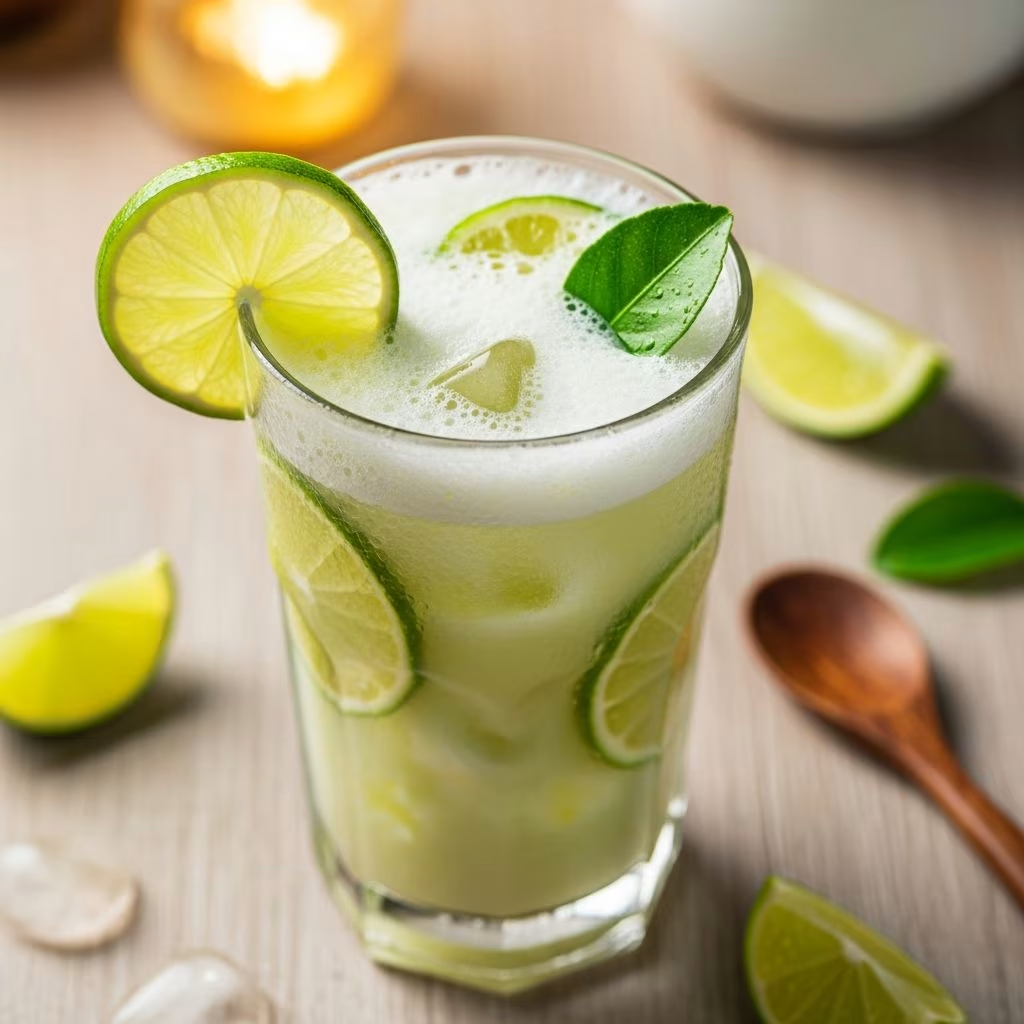
Experience the unique fusion of tart citrus and velvety sweetness in creamy Brazilian limeade, a beloved drink that captivates with its frothy texture and bold flavors. Unlike standard lemonades, this version incorporates entire limes blended into a smooth mixture, delivering an intense citrus punch balanced by rich condensed milk.
The Allure of Brazilian Limeade
Brazilian limeade, often called limonada suica or Swiss lemonade, stands out for its preparation method using whole fruits rather than just juice. This technique infuses the drink with essential oils from the peels, enhancing aroma and taste. Originating from Brazil’s vibrant street food culture, it has gained global popularity for its simplicity and cooling properties during warm weather.
The drink’s appeal lies in its versatility: serve it at barbecues, beach gatherings, or casual dinners. Its creamy profile comes from sweetened condensed milk, which not only sweetens but also creates a luxurious mouthfeel without needing additional thickeners.
Essential Ingredients for Authentic Flavor
Gathering the right components ensures success. Focus on quality to maximize freshness and taste.
- Fresh limes: Select 4-6 medium-sized, vibrant green limes. Their juiciness and thin skins contribute to the best results. Avoid overly large or dry ones to prevent bitterness.
- Sweetened condensed milk: One 14-ounce can provides creaminess and sweetness. This pantry staple is key to the drink’s signature texture.
- Cold water: About 4-6 cups chills the mixture instantly and dilutes for perfect balance.
- Granulated sugar: 1/4 to 1/2 cup adjusts sweetness, especially if limes are tart.
- Ice: Generous amounts for serving create a slushy consistency.
Optional additions like mint leaves or coconut water can elevate the drink with herbal notes or tropical undertones.
Step-by-Step Preparation Method
Creating Brazilian limeade requires minimal equipment: a blender and fine-mesh strainer. The process takes under 10 minutes.
- Prepare the limes: Rinse thoroughly under cool water. Trim ends and quarter each lime, keeping peels intact for full flavor extraction.
- Blend the base: Combine quartered limes, cold water, condensed milk, and sugar in a blender. Pulse for 10-15 seconds until mostly smooth. Avoid over-blending to prevent bitter oils from the pith.
- Strain for smoothness: Pour through a strainer into a pitcher, pressing lightly on solids to extract liquid without forcing pulp through. Discard remnants.
- Chill and serve: Add ice directly to the pitcher or glasses. Stir and pour for immediate enjoyment.
For a frothier version, return strained liquid to the blender with ice and pulse briefly.
Ingredient Variations and Customizations
Adapt the recipe to preferences or available items. Here’s a comparison of popular twists:
| Variation | Key Change | Flavor Profile | Best For |
|---|---|---|---|
| Classic Lime | Whole limes + condensed milk | Tart, creamy, citrus-forward | Everyday refreshment |
| Lemon Twist | Seedless lemons instead of limes | Milder, brighter citrus | Those preferring less tang |
| Coconut Infusion | Add coconut water for half the plain water | Tropical, nutty sweetness | Beach-themed parties |
| Mint Burst | Blend in fresh mint sprigs | Herbal, cooling | Summer barbecues |
| Low-Sugar | Reduce sugar, use more condensed milk | Balanced natural sweetness | Health-conscious servings |
These options maintain the drink’s essence while allowing personalization. Test small batches to fine-tune ratios.
Pro Tips for Perfect Results Every Time
- Lime selection matters: Opt for firm, heavy limes indicating high juice content. Room-temperature blending yields better incorporation.
- Control bitterness: Limit blend time to 15 seconds max. Remove thick white pith if limes are pithy.
- Straining technique: Use a fine mesh for silkiness; tap strainer sides gently to aid flow without pressing pulp.
- Scaling up: Double ingredients for crowds, but blend in batches to avoid overflow.
- Storage advice: Best fresh, but refrigerate up to 24 hours. Stir before serving as separation may occur.
Serve in chilled glasses rimmed with sugar or lime zest for an elegant touch.
Nutritional Profile and Serving Suggestions
A standard 8-ounce serving offers approximately 150-200 calories, primarily from condensed milk’s sugars and fats. It provides vitamin C from limes (about 20% daily value) and small amounts of calcium.
- Pair with grilled meats for contrast.
- Complement spicy dishes to cut heat.
- Ideal alongside tropical fruits or light salads.
For dietary adjustments, substitute condensed milk with coconut cream and a natural sweetener like honey.
Common Mistakes to Avoid
Even simple recipes have pitfalls. Steer clear of these for optimal taste:
- Over-blending: Introduces bitterness from peel oils.
- Skipping the strain: Results in gritty texture.
- Warm water use: Prevents frothy chill.
- Poor lime quality: Dry fruits lead to weak flavor.
Taste after straining and adjust sweetness incrementally.
Frequently Asked Questions
Why is it called Brazilian lemonade if it uses limes?
The name reflects Brazilian tradition, where “lemonade” broadly means citrus drinks. Limes provide the signature tartness.
Can I make it without a blender?
Juice limes manually and mix with other ingredients, shaking vigorously with ice. Texture won’t be as creamy.
Is it dairy-free possible?
Yes, use coconut or almond condensed milk alternatives for a vegan version.
How long does it last in the fridge?
Up to one day; skim foam if it forms and stir well.
Can I freeze it?
Pour into ice cube trays for slushies or blended frozen treats later.
Pairing Ideas for Entertaining
Elevate gatherings with themed pairings:
- BBQ feasts: Matches smoky flavors with acidity.
- Picnics: Packs easily in thermoses.
- Dessert chaser: Cleanses palate after rich sweets.
Experiment with alcohol infusions like rum or vodka for adult versions, adding post-straining.
Health Benefits and Mindful Enjoyment
Beyond refreshment, limes supply antioxidants and hydration support. The creaminess satisfies sweet cravings healthily in moderation. Opt for organic limes to minimize pesticides.
Track portions if monitoring sugar intake, as condensed milk contributes significantly.
References
- Brazilian Lemonade Recipe — Brazilian Kitchen Abroad. 2023-06-15. https://braziliankitchenabroad.com/brazilian-lemonade/
- Brazilian Lemonade — Budget Bytes. 2024-05-20. https://www.budgetbytes.com/brazilian-lemonade/
- Best Brazilian Lemonade Recipe — Delish. 2023-07-10. https://www.delish.com/cooking/a42589/brazilian-lemonade-recipe/
- Brazilian Lemonade — The Recipe Critic. 2024-02-28. https://therecipecritic.com/brazilian-lemonade/
- Tropical Brazilian Lemonade (Limonada Suiça) — Little Nomads Recipes. 2023-11-05. https://littlenomadsrecipes.com/brazilian-lemonade/