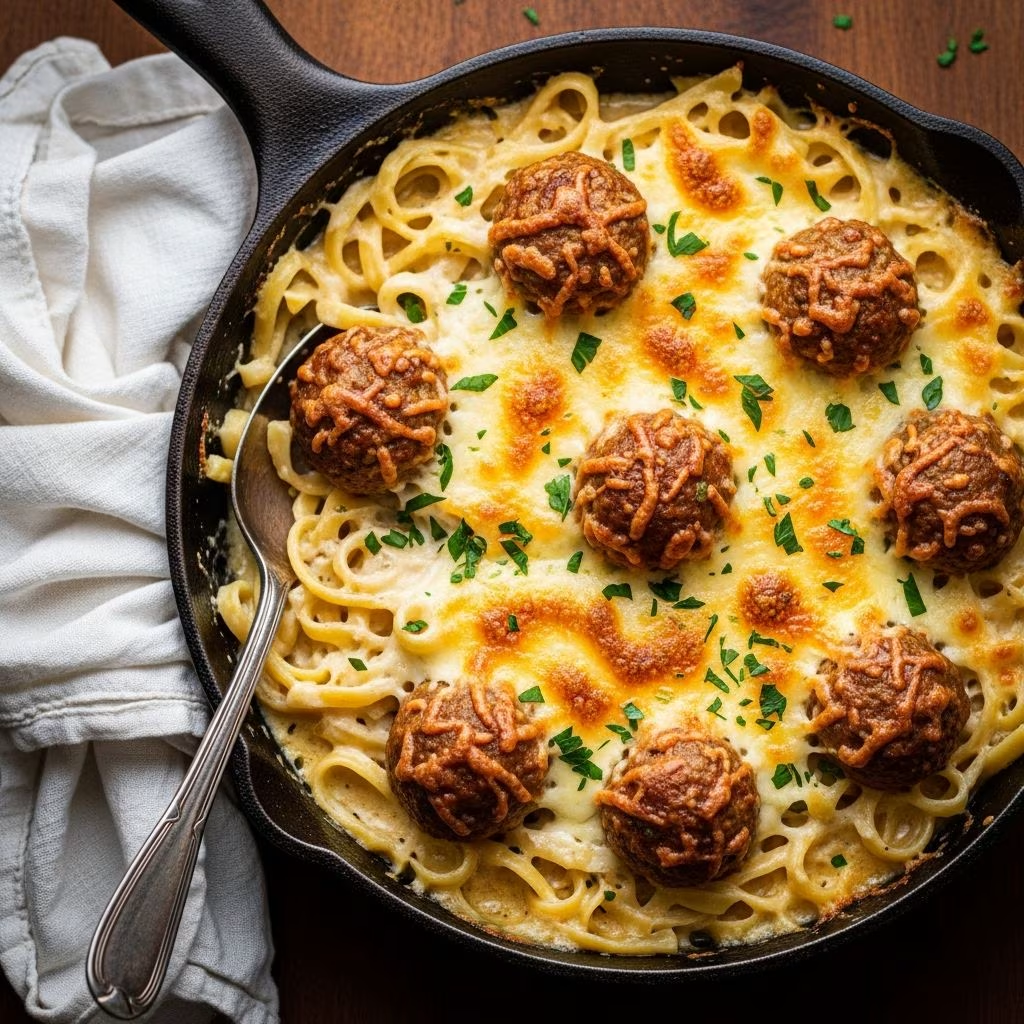
Weeknight cooking doesn’t have to be complicated or time-consuming. When you’re juggling work, family obligations, and everything else life throws your way, a meal that comes together in minimal time with straightforward ingredients becomes a lifesaver. The creamy Alfredo meatball bake delivers exactly that—comfort food that satisfies hungry family members without keeping you stuck in the kitchen for hours.
This casserole represents the evolution of convenient home cooking. By combining the richness of Alfredo sauce with hearty frozen meatballs and tender pasta, all baked together in a single dish, you create a meal that feels both indulgent and achievable on even the busiest evenings. The beauty of this approach lies not just in the flavor, but in the streamlined preparation process that eliminates traditional steps like boiling pasta separately or monitoring multiple pots on the stovetop.
Why This Recipe Works for Modern Families
The success of this casserole hinges on its fundamental simplicity. Unlike recipes that require mise en place—careful preparation and organization of ingredients—this dish operates on a different philosophy. You gather your components, combine them in a baking dish, and let your oven handle the cooking process while you attend to other tasks.
This approach transforms dinner preparation into something manageable rather than stressful. Parents managing children’s schedules, professionals with demanding work hours, or anyone experiencing a particularly hectic day can still put a nourishing meal on the table. The recipe respects your time while delivering results that taste like you spent considerably more effort than you actually did.
Essential Ingredients and Their Roles
Every ingredient in this recipe serves a specific purpose, and understanding these roles helps you make informed substitutions or adjustments:
- Frozen Meatballs: These provide protein and substance to the dish. Choosing fully-cooked varieties ensures they heat through properly without releasing excessive grease. Pre-cooked meatballs also simplify the cooking process significantly, as you bypass the need to monitor their internal temperature. Thawing them beforehand allows more even heating throughout the baking process.
- Uncooked Pasta: The pasta cooks directly in the sauce, absorbing flavors while becoming tender. This unorthodox approach—skipping the traditional boiling step—works because the liquid content of the sauce and the steam created inside the covered dish provide sufficient moisture for proper cooking. Selecting pasta shapes with cooking times around seven to eight minutes ensures the timing aligns perfectly with the casserole’s baking schedule.
- Alfredo Sauce: This ingredient creates the creamy base that distinguishes this casserole from tomato-based alternatives. Refrigerated varieties offer convenience without sacrificing quality, though homemade Alfredo can certainly be used if time allows. The sauce coats the pasta and meatballs while preventing the dish from becoming dry during the baking process.
- Frozen Broccoli: Vegetable inclusion adds nutritional value and textural contrast. Frozen broccoli works particularly well because it requires no additional prep—no washing, chopping, or blanching. As it thaws during baking, it releases moisture that contributes to the overall cooking process.
- Cheese Topping: A final layer of melted cheese adds richness and visual appeal. The cheese creates a golden crust that provides textural interest and enhances the overall eating experience.
Preparation and Execution
Getting Your Workspace Ready
Before beginning, preheat your oven to the appropriate temperature—typically around 375 to 425 degrees Fahrenheit, depending on your specific recipe variation. Select a baking dish that’s appropriately sized; a 9-by-13-inch dish accommodates standard recipe quantities comfortably. Apply nonstick cooking spray or a light coating of oil to prevent sticking.
Combining Your Components
Pour the Alfredo sauce into your prepared baking dish and add the uncooked pasta and thawed meatballs directly to the sauce. Include frozen broccoli florets as well. Stir everything together thoroughly, ensuring the pasta gets submerged in the sauce as much as possible. At this stage, the mixture will appear quite wet and soupy—this is exactly what should happen. The liquid-to-pasta ratio might seem excessive, but the pasta absorbs tremendous amounts of liquid as it cooks, and steam retention in the covered dish contributes significantly to the cooking process.
The Covered Baking Phase
Cover your baking dish tightly with aluminum foil, creating a complete seal. This seal is critical because it traps steam inside the dish, which cooks the pasta through gentle, moist heat. Without a proper seal, steam escapes, liquid evaporates too quickly, and you’re left with undercooked, crunchy pasta instead of tender noodles.
Bake the covered casserole for approximately 35 to 40 minutes. The exact timing depends on several variables: your oven’s actual temperature (many ovens run hotter or cooler than their displayed settings), the type of baking dish you’re using (glass and ceramic retain heat differently than metal), and the size of your pasta pieces.
Checking for Doneness
After the initial baking period, carefully remove the foil and stir the casserole gently. Taste a small piece of pasta to assess its texture. The pasta should be tender but still possess some structural integrity—what chefs call al dente. If the pasta still feels hard or gritty, cover the dish again and continue baking for five to ten additional minutes before checking again.
Adding the Cheese Topping
Once the pasta reaches the desired tenderness, remove the foil completely and distribute shredded mozzarella cheese, Italian blend cheese, or your preferred melting cheese evenly across the surface. Return the uncovered casserole to the oven for five to ten minutes, until the cheese becomes bubbly and develops a light golden color. Watch carefully during this final phase—the pasta is nearly done, and you want melted cheese without overcooking the noodles into a mushy consistency.
Customization and Flexibility
While the basic recipe provides excellent results, it welcomes modifications based on your preferences and pantry contents. Consider these adjustments:
| Component | Original Option | Alternative Ideas |
|---|---|---|
| Meatballs | Frozen beef meatballs | Italian sausage meatballs, chicken meatballs, or turkey meatballs |
| Pasta Shape | Rotini or penne | Bow-tie pasta, elbow macaroni, or small shells |
| Vegetables | Frozen broccoli | Frozen spinach, sun-dried tomatoes, mushrooms, or bell peppers |
| Cheese Topping | Mozzarella | Parmesan blend, fontina, or gruyere |
| Sauce Flavor | Traditional Alfredo | Garlic Alfredo, sun-dried tomato Alfredo, or pesto cream sauce |
Scaling for Different Household Sizes
The recipe provided typically serves six to eight people comfortably. For smaller households, simply halve all ingredient quantities and transfer the mixture to an 8-inch square baking dish. The baking time will decrease slightly—begin checking the pasta around 25 to 30 minutes into the baking process. Conversely, if you’re cooking for a larger gathering, increase ingredient quantities proportionally and use a larger baking vessel, extending the covered baking time accordingly.
Complementary Side Dishes
Although this casserole provides substantial nutrition and satisfaction on its own, thoughtfully selected sides enhance the overall meal experience:
- Fresh Green Salad: The acidity and freshness of a vinaigrette-dressed salad balance the richness of the creamy casserole. Consider a simple mixed green salad with lemon vinaigrette or a Caesar salad for more pronounced flavor.
- Garlic Bread: Crispy, buttery garlic bread provides textural contrast and absorbs any sauce left on plates. Many bakeries sell quality pre-made versions that require only heating.
- Roasted Vegetables: Additional roasted vegetables like Brussels sprouts, asparagus, or bell peppers add color and nutritional diversity to the plate without competing with the casserole’s flavors.
- Steamed Vegetables: Simple steamed carrots, green beans, or cauliflower offer lightness and prevent the meal from feeling too heavy.
Storage and Reheating Instructions
Properly stored, this casserole maintains quality for three to four days in the refrigerator. Allow it to cool to room temperature before transferring to an airtight container. To reheat, place a portion in a microwave-safe dish, cover loosely with a damp paper towel, and heat for two to three minutes, stirring halfway through. Alternatively, reheat the entire casserole in a 350-degree oven, covered with foil, for about 20 minutes.
This casserole also freezes successfully for up to two months. Allow it to cool completely, then transfer to a freezer-safe container with an airtight seal. Thaw overnight in the refrigerator before reheating using the methods described above. Thawed casserole may require slightly longer reheating time than refrigerated portions.
Troubleshooting Common Issues
Watery Casserole
If your finished casserole seems too saucy, the foil seal may not have been tight enough, allowing excess evaporation. For future attempts, ensure the foil covers the dish completely and is pressed firmly around the edges. Additionally, verify that your pasta has a cooking time of seven to eight minutes; longer-cooking pasta varieties require extended baking times.
Crunchy or Undercooked Pasta
This typically results from insufficient moisture or steam. Check that you’re using enough sauce and that the foil seal is complete. If using frozen vegetables or other moisture-releasing ingredients, they may require slight adjustments to liquid ratios.
Mushy or Overcooked Pasta
Pasta that becomes gummy indicates overcooking. Reduce the baking time for future attempts by five to ten minutes. Remember that the final cheese-melting phase adds additional cooking time to the pasta, so stop the first baking phase earlier if needed.
Frequently Asked Questions
Can I use fresh meatballs instead of frozen?
Fresh raw meatballs can be used, but they require pre-cooking. Raw meatballs release excessive grease into the dish and may not cook through evenly by the time the pasta finishes. Brown fresh meatballs on the stovetop before adding them to the casserole.
What if I don’t have Alfredo sauce?
You can substitute cream-based sauces, including homemade Alfredo made from butter, cream, and Parmesan cheese. Pesto-based cream sauces or other light pasta sauces also work, though cooking times may vary slightly.
Can I prepare this dish in advance?
Yes, you can assemble the casserole several hours or even one day ahead, cover it tightly with foil, and refrigerate until ready to bake. Add approximately five to ten minutes to the baking time when cooking from cold.
Is this recipe suitable for dietary restrictions?
The basic recipe can be adapted for various dietary needs. Gluten-free pasta works well with adjusted cooking times. Dairy-free Alfredo sauce options exist, though results vary. Vegetarian versions substitute plant-based meatballs for traditional varieties.
The Appeal of Simple, Effective Cooking
This creamy Alfredo meatball bake represents a fundamental truth about modern home cooking: efficiency and excellent flavor don’t have to be mutually exclusive. By embracing convenience ingredients like frozen meatballs and pre-made Alfredo sauce, you’re not cutting corners on quality—you’re making intelligent choices about where to invest your limited time and energy.
The result is a meal that nourishes your family, tastes delicious, and respects your time. In our increasingly busy world, that combination might be the most valuable ingredient of all.
References
- Dump and Bake Meatball Casserole: 5 Ingredients, No Boiling — The Seasoned Mom. Accessed April 2026. https://www.theseasonedmom.com/dump-and-bake-meatball-casserole/
- No-Peek Alfredo Meatball Casserole Recipe — All Recipes via Dailymotion. Accessed April 2026. https://www.dailymotion.com/video/x9wgrl4