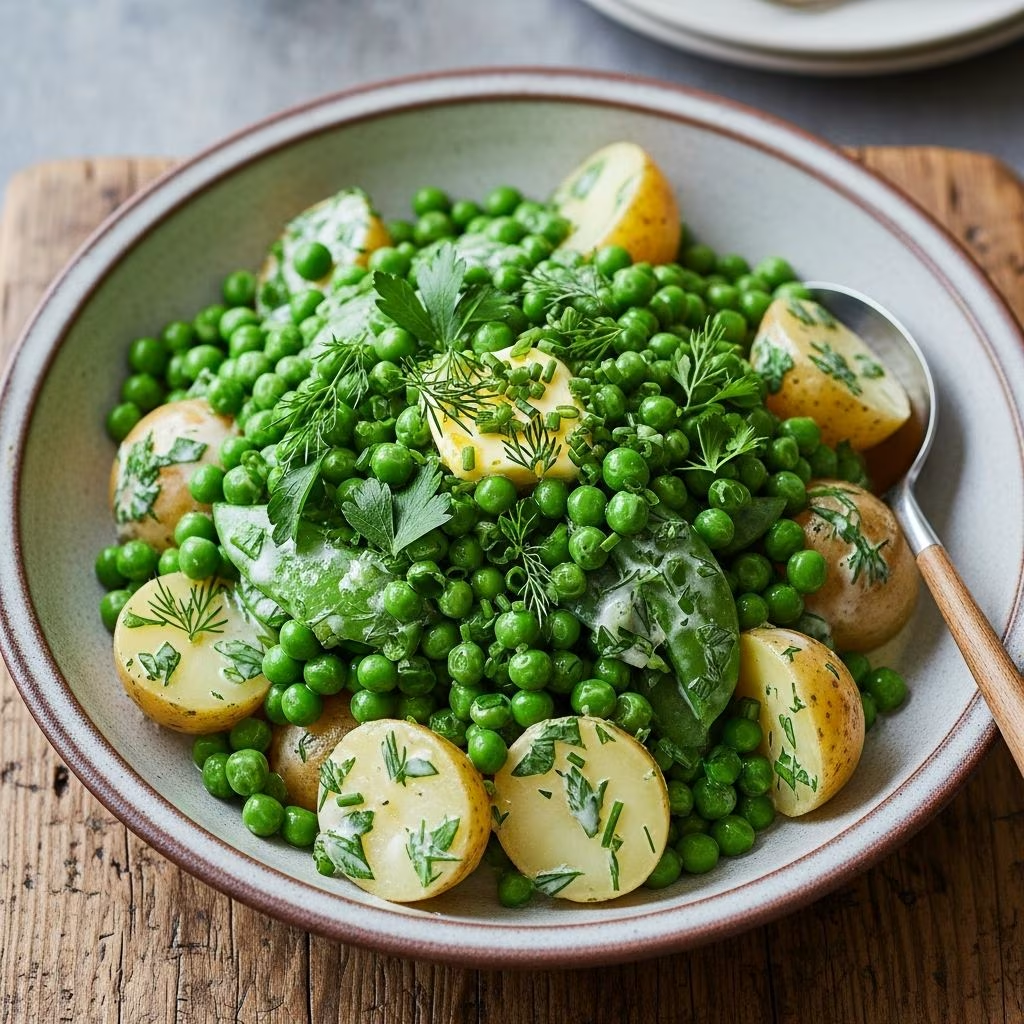
This cherished dish brings together the earthy freshness of new potatoes and the sweet burst of peas, all coated in a luscious cream sauce. It’s a staple that evokes home-cooked meals from generations past, offering simplicity and flavor in every bite. Whether you’re preparing a weeknight dinner or a festive spread, this recipe delivers warmth and satisfaction with minimal effort.
Why This Dish Captures Hearts
Creamy peas and new potatoes stand out for their nostalgic appeal. New potatoes, with their thin, delicate skins, cook quickly and retain a firm yet tender texture. Paired with peas—fresh from the garden or conveniently frozen—they provide a pop of color and natural sweetness. The creamy sauce, made from basic pantry staples like butter, flour, and milk, ties everything together into a cohesive, indulgent side.
Nutritionally, it’s balanced: potatoes offer potassium and vitamin C, while peas contribute fiber, protein, and vitamins A and K. This makes it a wholesome choice that feels indulgent without excess calories when portioned mindfully. Home cooks love it for its versatility—adaptable to dietary needs and always a crowd-pleaser.
Essential Ingredients for Success
Gathering the right components ensures a flawless result. Focus on quality for the best taste.
- New or baby potatoes: 1 to 1.5 pounds, preferably red or white varieties. Their small size means no peeling needed; just scrub clean and halve if larger than bite-sized.
- Peas: 1 to 2 cups, fresh shelled or frozen. Frozen peas are a year-round hero, retaining nutrients through quick blanching.
- Butter: 2 to 6 tablespoons, unsalted for control over seasoning. It forms the roux base.
- Flour: 2 to 6 tablespoons all-purpose, to thicken the sauce without lumps.
- Milk: 1 to 3 cups, whole or 2% for creaminess; add half-and-half or cream for extra richness.
- Seasonings: Salt (1/2 to 3/4 teaspoon), black pepper, and optional onion or garlic for depth.
Optional add-ins like pearl onions, bacon crumbles, or herbs elevate the dish without complicating prep.
Step-by-Step Cooking Guide
Preparation takes about 30 minutes, serving 4-6 as a side. Follow these steps for perfection.
Prep the potatoes: Wash 1 pound baby potatoes. Halve larger ones. Place in a saucepan, cover with cold water, add salt, and boil for 10-15 minutes until fork-tender but not mushy. Drain and set aside.
Cook the peas: In another pot, boil water (add a pinch of sugar for frozen peas). Add 1-2 cups peas and cook 3-5 minutes until bright green and tender. Drain and reserve with potatoes.
Make the sauce: In a large skillet or saucepan, melt 4 tablespoons butter over medium heat. Stir in 1/4 cup flour, salt, and pepper; whisk 1-2 minutes to cook out the raw flour taste, forming a smooth roux.
Build creaminess: Gradually whisk in 2 cups milk (warm it first to prevent lumps). Cook, stirring constantly, 5-10 minutes until thickened to a gravy-like consistency. Taste and adjust seasoning.
Combine and finish: Add potatoes and peas to the sauce. Stir gently over low heat 2-3 minutes to coat evenly. If too thick, splash in more milk. Serve hot.
Pro tip: Use a whisk relentlessly during sauce-making to avoid clumps. Patience here yields silky results.
Customizing Your Creamy Creation
Adapt this base recipe to preferences or pantry items for endless variety.
| Variation | Key Changes | Why It Works |
|---|---|---|
| Vegan Twist | Use plant-based butter, flour, and oat/almond milk. Add nutritional yeast for cheesiness. | Maintains creaminess while being dairy-free. |
| Herbed Edition | Stir in fresh dill, chives, or parsley; minced garlic in roux. | Brightens flavors, perfect for spring meals. |
| Meaty Boost | Top with crispy bacon or ham bits; pearl onions for texture. | Adds savory crunch and heartiness. |
| Cheesy Upgrade | Mix in 1/2 cup shredded cheddar or parmesan at end. | Transforms into a richer casserole vibe. |
| Low-Carb Swap | Replace potatoes with cauliflower florets. | Keeps the comfort without the starch. |
These tweaks keep the dish exciting across seasons and diets.
Pairing Perfection: What to Serve With
This side shines alongside proteins and mains.
- Roast meats: Baked ham, grilled chicken, or pot roast— the sauce cuts through richness.
- Fish and seafood: Pan-seared salmon or cod; peas complement briny notes.
- Vegetarian mains: Quinoa-stuffed peppers or lentil loaf for balanced plates.
- Holiday spreads: Turkey dinner, Easter lamb— a must for potlucks.
For a full meal, add a crisp green salad and crusty bread to sop up sauce. Wine pairing: Chardonnay or light Pinot Noir enhances creaminess.
Storage, Reheating, and Make-Ahead Tips
Leftovers keep well, making it ideal for batch cooking.
- Fridge: Store in airtight container up to 4 days. Sauce may thicken; thin with milk on reheat.
- Freezer: Portion into bags, freeze up to 2 months. Thaw overnight, reheat gently to avoid separation.
- Reheat: Stovetop low heat with splash of milk, stirring often. Microwave in covered dish, stirring midway.
- Make-ahead: Prep components separately; assemble and sauce day-of for best texture.
Avoid boiling leftovers—simmer preserves creaminess.
Common Mistakes and Fixes
Even simple recipes trip up novices. Here’s how to sidestep pitfalls.
- Lumpy sauce: Whisk vigorously; use room-temp milk. Fix by straining.
- Soggy veggies: Don’t overcook—test with fork. Undercook slightly if adding to hot sauce.
- Bland taste: Season roux and sauce generously. Fresh pepper elevates.
- Too thick/thin: Adjust milk incrementally. Simmer longer to thicken.
Practice makes perfect; start small to master the sauce.
Nutritional Snapshot
Per serving (1/6 recipe, approx.): 250 calories, 10g fat, 35g carbs, 8g protein, 4g fiber. Values vary by milk type and portions. It’s a moderate-carb side rich in veggies.
Frequently Asked Questions
Can I use canned peas?
Yes, but drain and rinse well to reduce sodium. Fresh or frozen yield better texture.
Are new potatoes necessary?
They’re ideal for tenderness, but any small waxy potato works. Avoid russets—they get mealy.
How do I make it gluten-free?
Swap flour for 1:1 gluten-free blend or cornstarch slurry.
What’s the best milk substitute?
Half-and-half for luxury; evaporate milk for lower fat creaminess.
Can this be a main dish?
Absolutely—add cooked chicken or tofu for protein punch.
Historical Roots and Modern Appeal
This dish traces to farm kitchens where spring peas and early potatoes were abundant. White sauce techniques from 19th-century cookbooks formalized it. Today, it thrives in comfort food revivals, bridging old-world simplicity with contemporary ease. Social media buzzes with garden-to-table versions, proving its timeless draw.
Experiment confidently—its forgiving nature welcomes creativity. Share your twists and enjoy the cozy results.
References
- Creamed Peas With New Potatoes — My Country Table. N/A. https://mycountrytable.com/creamed-peas-new-potatoes/
- Creamed Peas and New Potatoes — Seasons and Suppers. N/A. https://www.seasonsandsuppers.ca/creamed-garden-peas-and-new-potatoes/
- CREAMED PEAS WITH NEW POTATOES AND PEARL ONIONS — Grandma Honey’s House. 2024-06-01. https://grandmahoneyshouse.com/2024/06/creamed-peas-with-new-potatoes-and-pearl-onions/
- Creamed Peas and Potatoes — Vegetable Recipes. N/A. https://vegetablerecipes.com/creamed-peas-and-potatoes/
- Creamed Peas and Potatoes — Favorite Family Recipes. N/A. https://www.favfamilyrecipes.com/creamy-potatoes-peas/
- Old-fashioned Creamed Potatoes and Peas — Tastes Better From Scratch. N/A. https://tastesbetterfromscratch.com/creamy-red-potatoes-and-peas/