Understanding the Fusion Concept Behind This Dish
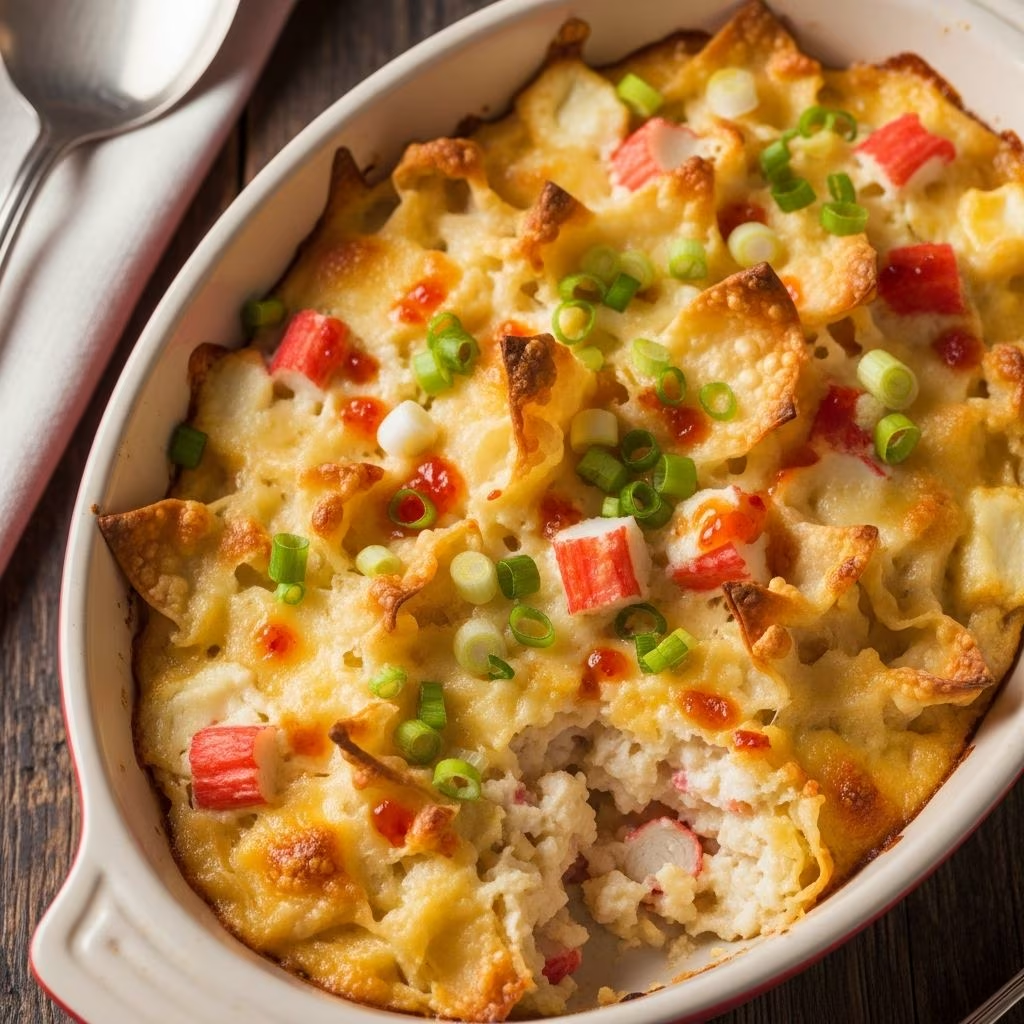
Crab rangoon represents a beloved appetizer found in many Asian-American restaurants, featuring crispy wonton wrappers filled with creamy crab and cheese. The casserole adaptation takes these cherished flavors and reimagines them as a hearty, baked main course that serves multiple people with minimal effort. By combining pasta, creamy dairy components, and the signature crab filling seasoning, this casserole delivers restaurant-quality taste in a family-friendly format that can feed a crowd efficiently.
This transformation from bite-sized appetizer to substantial casserole represents modern home cooking’s practical approach to making restaurant favorites accessible for weeknight dinners. The result is a warm, comforting dish that satisfies those who love the original crab rangoon while offering more substance and versatility than the traditional version.
Essential Components for Building Flavor
The foundation of an exceptional crab rangoon casserole rests on several key ingredient categories that work together to create depth and complexity. Understanding each component helps home cooks make informed substitutions and adjustments based on their preferences and dietary needs.
The Creamy Base Architecture
The casserole’s richness comes from a combination of dairy products that create a luxurious binding sauce. Softened cream cheese serves as the primary thickening agent, providing a tangy backdrop that complements the seafood. Sour cream adds subtle acidity that brightens the overall flavor profile, while mayonnaise contributes richness and helps create a smooth, cohesive texture throughout the dish. Together, these three components form an emulsion that coats the pasta and creates the casserole’s signature creamy quality.
The proportions matter significantly—using cream cheese at room temperature ensures smooth mixing without lumps or streaks of undissolved cheese. Many recipes employ approximately equal parts of these three dairy elements, though some variations adjust the ratio based on desired creaminess and tang levels.
Cheese Layering Strategy
Beyond the creamy base, melted mozzarella cheese provides additional richness and creates appealing browning on the casserole’s surface during baking. Some preparations include parmesan cheese mixed into panko breadcrumbs for the topping, adding a savory, nutty dimension and textural contrast. The choice between freshly shredded cheese and pre-shredded varieties affects melting speed and final texture, with freshly shredded cheese generally producing superior results.
Protein Source Considerations
Traditional crab rangoon appetizers typically use imitation crab meat, which remains the most accessible and economical option for casserole preparation. Imitation crab provides consistent texture and mild flavor that doesn’t overpower other components. However, high-quality lump crab meat offers a more premium option for special occasions, delivering a sweeter, more delicate seafood taste. The choice depends on budget, availability, and desired flavor intensity. Regardless of selection, thoroughly inspect the crab meat for shell fragments and chop or break it into small, evenly distributed pieces.
Pasta Selection and Preparation
Different pasta shapes work well in this casserole, though certain choices provide better texture and sauce cling. Penne pasta’s tube shape naturally holds the creamy sauce within its ridges and hollow center. Egg noodles offer a more tender, delicate texture that absorbs flavors quickly. Some cooks prefer bowtie or spiral pasta for their ability to trap sauce particles. The critical preparation step involves cooking pasta to just under al dente consistency—essentially one to two minutes less than package directions recommend. This ensures the pasta won’t become mushy during the baking phase when residual heat continues the cooking process.
Flavor Profile Development Through Strategic Seasonings
The defining character of crab rangoon casserole comes from Asian-inspired seasonings that create the distinctive taste profile recognizable to fans of the original appetizer. These flavoring agents require thoughtful application to avoid overwhelming the delicate seafood and dairy components.
Soy sauce provides umami depth and a subtle saltiness that enhances overall savory qualities. Worcestershire sauce adds complexity with its fermented, slightly tangy character. Garlic powder delivers aromatic notes without the texture of minced fresh garlic, which could create an uneven distribution. Fresh green onions contribute bright, mild onion flavor and visual appeal with their green color flecks throughout the casserole. Some variations incorporate sriracha or other spicy elements for those preferring additional heat, though this represents an optional personalization rather than a traditional component.
The seasoning strategy involves adding these elements gradually to the creamy base before incorporating the pasta and crab, allowing flavors to develop evenly throughout the mixture. Tasting at this stage permits adjustment before baking, ensuring the final casserole achieves desired seasoning levels.
Textural Contrast Elements
While the creamy pasta base provides luxurious smoothness, successful casseroles incorporate contrasting textures that create interest with each bite. Crushed wonton strips or pita chips scattered across the top provide satisfying crunch. These toppings also develop appealing golden-brown color during baking, signaling the casserole has reached proper doneness.
Some preparations include panko breadcrumbs mixed with melted butter and parmesan cheese as an alternative topping option. This combination toasts beautifully under the broiler, creating a crispy layer that crackles pleasantly when served. The topping serves multiple purposes—adding textural interest, providing visual appeal, and offering flavor contrast to the creamy layers below.
Preparation Methodology and Timing
Successful casserole preparation follows a logical sequence that ensures all components are ready for assembly at appropriate moments.
Initial Setup and Ingredient Preparation
- Preheat the oven to the appropriate temperature (typically between 350°F and 375°F depending on recipe variation) before beginning any preparation
- Prepare a 9×13-inch baking dish by lightly greasing with butter or cooking spray
- Bring a large pot of generously salted water to a vigorous boil for pasta cooking
- Remove cream cheese from refrigeration to reach room temperature, facilitating smooth mixing
- Chop green onions into fine pieces and inspect crab meat for shell fragments
Cooking the Pasta
Once water reaches a full boil, add pasta and cook according to package directions, reducing cooking time by one to two minutes. This deliberate undercooking prevents mushiness during the baking phase. Drain the cooked pasta but do not rinse, as the starch coating helps the sauce adhere to the noodles more effectively.
Building the Creamy Sauce
In a large skillet or saucepan over medium-low heat, melt butter briefly before adding softened cream cheese. Stir continuously with a rubber spatula to help the cream cheese break down and incorporate smoothly. Add sour cream and mayonnaise, continuing to stir until the mixture reaches a smooth, uniform consistency without any visible lumps. This typically requires two to three minutes of patient stirring.
Once the base achieves smoothness, add the seasonings: soy sauce, Worcestershire sauce, garlic powder, salt, and black pepper. Stir well to distribute seasonings evenly. At this point, add shredded mozzarella cheese and continue stirring until completely melted and incorporated.
Final Assembly
Gently fold the chopped crab meat into the sauce using a spatula or large spoon, being careful not to break apart the crab pieces excessively. Add the cooked pasta and fold everything together until the pasta is evenly coated with the creamy mixture. Transfer this combination to the prepared baking dish and spread into an even layer.
Baking and Finishing Techniques
Sprinkle the prepared topping across the entire surface of the casserole. If using crushed wonton strips, distribute them evenly to ensure every portion receives some crunchy topping. Bake in the preheated oven for approximately 28 to 30 minutes, until the casserole is heated throughout and the topping begins developing golden-brown color.
Some recipes employ a two-stage cooking method, covering the casserole with foil for the initial baking phase to prevent excessive browning, then removing the foil for the final minutes. Others prefer finishing under a hot broiler for two to three minutes after the initial baking, creating a more pronounced crust on the topping.
Allow the casserole to cool for five to ten minutes before serving. This resting period allows the sauce to set slightly, making serving cleaner and preventing the extremely hot filling from causing burns.
Adaptation and Customization Options
While the classic formula produces excellent results, several variations allow cooks to personalize the dish according to their preferences and available ingredients.
Alternative Preparation Methods
For those preferring to skip the oven entirely, a stovetop approach works effectively. Combine all ingredients in a large skillet over medium heat, stirring gently until everything reaches a bubbly, heated state. This method reduces preparation time significantly and works well for smaller quantities or when oven space is limited.
Pasta and Ingredient Variations
While penne and egg noodles represent popular choices, any pasta shape works acceptably. Spiral noodles, bowtie pasta, or even small shell pasta can replace traditional options. The key consideration involves pasta shape’s ability to hold sauce and maintain structural integrity during baking.
For those seeking additional heat, fresh sriracha mixed into the creamy base adds spicy notes without overpowering traditional flavors. A splash of sweet chili sauce drizzled over individual portions at serving provides customizable heat levels.
Protein Flexibility
While crab remains the traditional choice, some preparations incorporate a combination of crab and shrimp for additional seafood depth. Others substitute entirely with shrimp or add diced chicken for those preferring alternatives. These substitutions maintain the casserole’s structure while offering different flavor profiles.
Storage and Make-Ahead Strategies
Crab rangoon casserole offers excellent make-ahead flexibility for busy home cooks. The unbaked casserole can be assembled, covered tightly with plastic wrap, and refrigerated for up to 24 hours before baking. When ready to bake, remove from refrigeration and add approximately five to ten additional minutes to the baking time to account for the cold starting temperature.
Leftover baked casserole stores well in airtight containers in the refrigerator for three to four days. Reheating works best at a moderate oven temperature of 350°F until warmed through, which typically requires 15 to 20 minutes depending on portion size. Microwave reheating produces acceptable results but may affect topping crispness.
Serving Suggestions and Complementary Dishes
Crab rangoon casserole serves well as a complete main course requiring minimal accompaniments. A simple green salad with vinaigrette provides fresh contrast to the rich, creamy casserole. Steamed vegetables such as broccoli or snap peas offer additional nutritional balance and textural variety.
For a more substantial meal, serve alongside crusty bread or garlic bread for soaking up any remaining sauce. Steamed jasmine rice provides an optional alternative to bread for those seeking additional substance.
Tips for Achieving Restaurant-Quality Results
- Use room-temperature cream cheese for smoother mixing without lumps
- Undercook pasta intentionally to prevent mushiness after baking
- Don’t skip the final resting period—it allows the casserole to set properly
- Distribute topping evenly to ensure every portion has textural contrast
- Taste the sauce before adding pasta for seasoning adjustment flexibility
- Watch carefully during baking—oven temperatures vary, requiring attentiveness
Frequently Asked Questions
Can this casserole be frozen?
Yes, the unbaked casserole freezes exceptionally well for up to three months. Allow additional baking time when cooking directly from frozen. Alternatively, bake first, cool completely, then freeze the cooked casserole in airtight containers for up to two months.
What’s the best cheese to use?
Mozzarella provides the most traditional choice due to its excellent melting properties and mild flavor. A combination of mozzarella with smaller amounts of cheddar or gruyere adds complexity for those seeking more pronounced cheese flavor.
Is real crab meat necessary?
Imitation crab works perfectly well and costs significantly less. The casserole’s other flavorful components mean the specific crab variety matters less than in dishes where crab is the starring ingredient.
How can I make this spicier?
Add sriracha, jalapeño slices, or red pepper flakes to the creamy base. Serve with spicy sauce on the side for those wanting adjustable heat levels.
Can I use cream soup instead of making a sauce?
Yes, condensed cream of mushroom or cream of chicken soup can replace some of the dairy components. Adjust other liquid ingredients accordingly to maintain proper consistency.
References
- Crab Rangoon Casserole Recipe — Rachael Ray Show. 2024. https://www.youtube.com/watch?v=I5yjZBuM6Pg
- Cheesy Crab Rangoon Casserole — Pint-sized Treasures. 2024. https://pintsizedtreasures.com/cheesy-crab-rangoon-casserole/
- Crab Rangoon Casserole — Lauren’s Latest. 2024. https://laurenslatest.com/crab-rangoon-casserole/