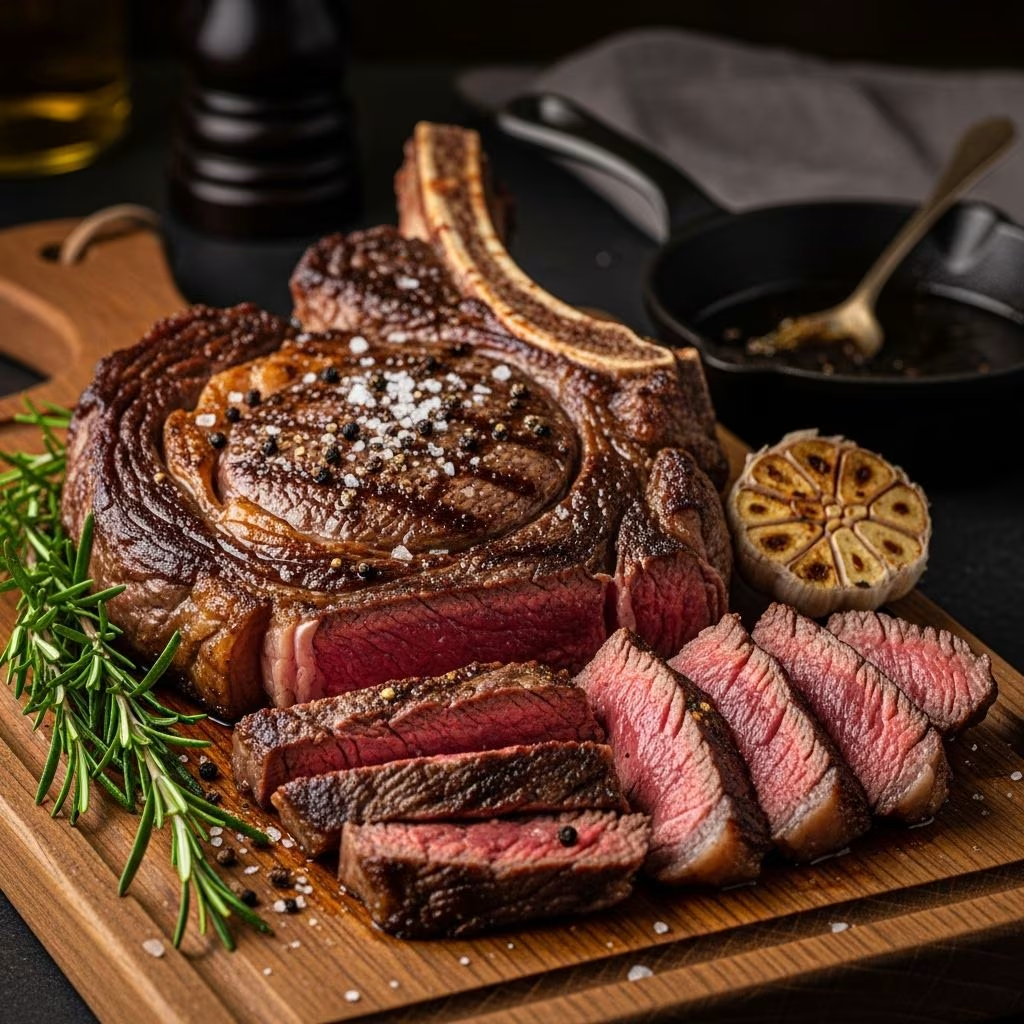
Côte de Bœuf, known as a bone-in ribeye steak cut thick from the rib section, stands as one of the most indulgent beef cuts in French cuisine. This premium piece, often weighing 2 to 5 pounds, delivers unparalleled marbling, tenderness, and flavor when cooked properly. Prized for its juicy interior and caramelized crust, it serves 4 to 6 people and elevates any dinner into a feast. Originating from traditional French butchery, this cut emphasizes quality beef from well-marbled ribs, making it ideal for searing and roasting.
Understanding the Cut: What Makes Côte de Bœuf Special
The essence of Côte de Bœuf lies in its anatomy. Sourced from the rib primal—ribs 6 through 12—it includes the bone for added flavor and moisture retention during cooking. The thick French trim exposes more meat surface for browning while keeping a protective fat cap. High marbling ensures succulence, but its size demands precise temperature control to avoid overcooking. French chefs favor it for its balance of tenderness and beefy richness, often serving it rare to medium-rare.
- Thickness: Typically 2-3 inches thick, allowing for even cooking.
- Weight: 1-2.5 kg, perfect for sharing.
- Bone-in advantage: Infuses meat with savory depth and acts as a natural handle.
- Marbling: Intramuscular fat melts, basting the steak internally.
Compared to a standard ribeye, Côte de Bœuf’s bone and size amplify flavor, but require longer resting to redistribute juices.
Selecting the Perfect Côte de Bœuf
Quality starts at the butcher. Look for bright red meat with creamy white fat marbling throughout. The bone should be cleanly frenched, and the exterior fat evenly distributed. Opt for grass-fed or dry-aged beef for enhanced taste—Irish or French breeds excel here. Avoid cuts with excessive silver skin or dull color, signs of poor handling. Allow the steak to reach room temperature before cooking, about 1-2 hours, for uniform doneness.
| Quality Indicator | Good Sign | Red Flag |
|---|---|---|
| Color | Deep cherry red | Brown or gray |
| Fat | Even, white marbling | Yellow, patchy |
| Bone | White, moist marrow | Dry, cracked |
| Smell | Fresh, metallic | Off or sour |
Essential Tools and Ingredients
Equip your kitchen with a cast-iron skillet or oven-safe pan for searing, an oven or grill for finishing, and a reliable meat thermometer. Key ingredients include coarse sea salt, black pepper, butter, olive oil, garlic, thyme, and rosemary. These aromatics build layers of flavor without overpowering the beef.
- Pan: Heavy cast iron for heat retention.
- Thermometer: Instant-read for core temps (e.g., 125°F/52°C for rare).
- Herbs: Fresh thyme and rosemary sprigs.
- Fat: Butter for basting, olive oil for initial sear.
Classic Stovetop and Oven Method
This reliable technique yields restaurant-quality results. Pat the steak dry, season generously with salt (pepper after searing to avoid burning). Heat pan over high with oil until smoking. Sear 3-5 minutes per side for a dark crust. Add butter, smashed garlic, and herbs; tilt pan to baste. Transfer to a 400°F (200°C) oven for 10-25 minutes based on size and doneness. Rest 15 minutes tented in foil.
- Preheat oven to 400°F.
- Sear in hot cast-iron pan, 3 minutes per side.
- Add aromatics, baste 1-2 minutes.
- Roast to 125°F internal (rare).
- Rest, then slice against the grain.
For Pierre Gagnaire’s twist, ignite thyme for smoke infusion and finish with lemon and vinegar for brightness.
Grill Mastery: Low and Slow then High Heat
Grilling imparts smoky char. Use indirect heat first: Set grill to 250°F (120°C), season steak, and cook with a fat cap on top until 42°C core. Then sear directly over high heat (250°C) for 2 minutes per side. This reverse-sear prevents drying. Rest 10 minutes, salting post-grill. Ideal for Big Green Egg or charcoal setups.
Pro tip: Crosshatch fat, rub grid with rendered fat for non-stick sear.
Seasoning and Flavor Enhancements
Minimalism reigns—salt draws out moisture for better crust. Post-sear additions like butter basting amplify umami. Experiment with compound butters: Mix softened butter with garlic, herbs, and mustard. For French flair, pair with béarnaise sauce or red wine reduction. Avoid heavy marinades; they mask the beef’s purity.
Perfect Doneness Guide
| Doneness | Internal Temp | Rest Temp | Description |
|---|---|---|---|
| Rare | 125°F (52°C) | 130°F | Cool red center |
| Medium-Rare | 135°F (57°C) | 140°F | Warm red center |
| Medium | 145°F (63°C) | 150°F | Pink, juicy |
Always pull 5-10°F early; carryover cooking continues during rest.
Resting and Carving Techniques
Resting is non-negotiable—juices redistribute, preventing dry slices. Tent loosely to retain heat. Carve by running a knife along the bone, then slice 1/2-inch thick against the grain. Serve bone for drama. Chef Tom Cenci emphasizes proper resting for optimal texture.
Signature Side Dishes
Complement with roasted potatoes, Paris mash, or Dauphinoise. Add green beans, asparagus, or almond Caesar salad. Beef dripping toast soaks up juices.
- Potatoes: Crispy roast or creamy gratin.
- Greens: Simple salad with vinaigrette.
- Bread: Toasted in pan drippings.
Common Mistakes and Fixes
Avoid: Skipping room temp (uneven cook), overcrowding pan (steams meat), no rest (dry slices), over-seasoning early. Fix pale crust with hotter pan; tough meat via better marbling.
Advanced Variations
Reverse sear on smoker for BBQ twist. Dry-brine overnight for deeper seasoning. Tom Kerridge slow-cooks then flashes high heat. Henry Harris showcases British sourcing.
Pairing Wines and Beverages
Bold reds like Bordeaux or Cabernet Sauvignon cut richness. Malbec or Syrah for grill versions. Strong beers or whiskey complement.
Storage and Reheating
Refrigerate leftovers up to 3 days. Reheat gently in low oven to avoid overcooking.
Frequently Asked Questions
What is Côte de Bœuf?
A thick bone-in ribeye steak, French for ‘beef rib’.
How long to cook 2kg Côte de Bœuf?
Sear 4-5 min/side, oven 20-25 min for rare.
Can I grill Côte de Bœuf?
Yes, low indirect then high direct.
Best doneness for beginners?
Medium-rare at 135°F.
Substitute for Côte de Bœuf?
Thick ribeye, bone-in if possible.
References
- Cote de Boeuf Recipe Courtesy of Chef Pierre Gagnaire — Grantourismo Travels. 2015-01-15. https://grantourismotravels.com/cote-de-boeuf-recipe/
- Côte de Boeuf — Williams Sonoma. 2023-05-10. https://www.williams-sonoma.com/recipe/cote-de-boeuf.html
- The Perfect Côte de Bœuf — Big Green Egg. 2022-08-20. https://www.biggreenegg.eu/en/inspiration/recipes/the-perfect-cote-de-boeuf
- How to Make Cote de Boeuf with Almond Caesar Salad — The Staff Canteen (YouTube). 2021-11-12. https://www.youtube.com/watch?v=4zscVNI1K6E
- Tom Kerridge Côte de Bœuf Recipe — Tom Kerridge. 2020-06-01. https://tomkerridge.com/recipes/cote-de-boeuf/