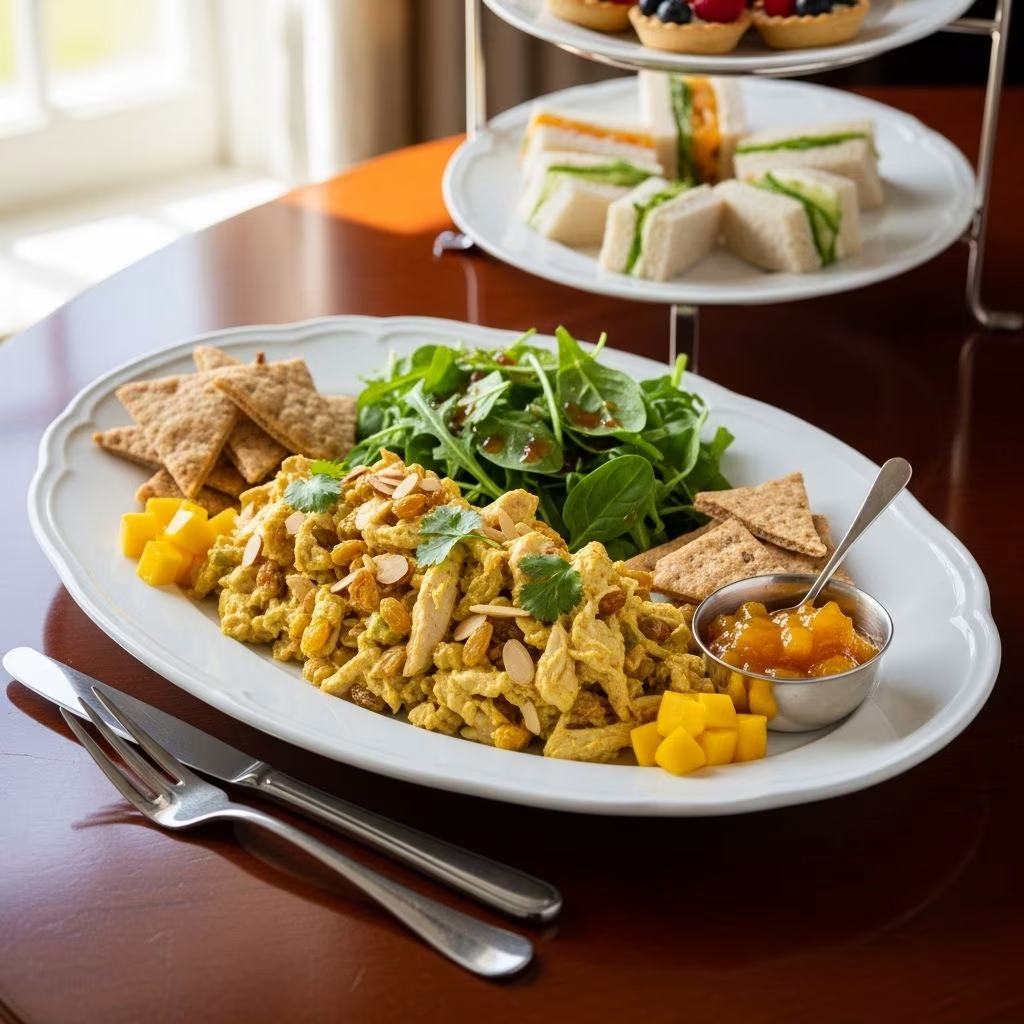
Coronation chicken stands as one of Britain’s most beloved culinary creations, representing a perfect marriage of British tradition and international flavors. This elegant yet simple dish combines tender poultry with a distinctive curry-infused cream sauce, creating a sophisticated meal that has remained popular for over seven decades. Whether served as a sandwich filling, salad component, or elegant appetizer, coronation chicken continues to charm diners with its unique combination of savory, sweet, and aromatic elements.
The Historical Significance and Royal Origins
The story of coronation chicken begins in 1953, when Britain prepared to celebrate the accession of Queen Elizabeth II to the throne. The prestigious culinary establishment Le Cordon Bleu London took on the responsibility of creating a menu worthy of such a momentous occasion. Two visionary food professionals—Constance Spry, a renowned English food writer and flower arranger, and Rosemary Hume, an accomplished chef—collaborated to develop a recipe that would become iconic. Their creation, originally known as Poulet Reine Elizabeth, was specifically designed for a coronation luncheon that needed to be prepared despite significant spatial and logistical constraints.
The practical limitations of the kitchen facilities presented an unexpected advantage to the culinary team. Rather than creating an overly complex hot dish, they designed something elegant yet straightforward—a cold chicken preparation that could be assembled efficiently while maintaining supreme quality. This pragmatic approach actually contributed to the dish’s enduring appeal, as it proved that sophistication and simplicity could coexist beautifully on the dinner table. The recipe achieved such widespread success that it was published for public consumption, allowing families throughout Britain to recreate the royal celebration in their own homes during street parties and private gatherings.
The inspiration for coronation chicken may have drawn from an earlier creation called Jubilee Chicken, which was prepared for the silver jubilee of King George V in 1935. That earlier dish combined chicken with mayonnaise and curry, establishing a foundation upon which the coronation chicken recipe would be built and refined.
Understanding the Flavor Profile and Key Ingredients
What makes coronation chicken remarkable is its carefully balanced combination of contrasting flavor elements. The dish brings together creamy richness, aromatic spice, natural sweetness, and subtle citrus notes in a way that seems unlikely to work but proves entirely harmonious on the palate.
The foundation of any coronation chicken recipe consists of cooked chicken that has been shredded or chopped into manageable pieces. Whether using a rotisserie chicken, leftover roasted poultry, or freshly cooked chicken breast, the texture should be tender and easy to combine with the sauce. The chicken serves as a blank canvas, allowing the supporting ingredients to shine while providing satisfying protein and substance to the dish.
The sauce represents the true heart of coronation chicken, combining several complementary components:
- Mayonnaise and dairy products create the creamy base, typically using a combination of mayonnaise and either Greek yogurt, crème fraiche, or plain yogurt to balance richness with a slight tang.
- Curry powder provides the warm spice that defines the dish, with most recipes calling for a medium-strength variety that adds depth without overwhelming other flavors.
- Ground cinnamon introduces a subtle warmth and complexity that complements the curry without being distinctly noticeable as a separate spice.
- Mango chutney contributes sweetness and a fruity dimension that balances the spices and adds authenticity to the flavor profile.
- Dried fruits such as sultanas and dried apricots provide bursts of natural sweetness and chewy texture throughout the dish.
- Lime or lemon juice and zest brighten the overall composition with citrus acidity and aromatics.
Fresh garnishes such as spring onions, coriander, and toasted almonds add textural interest and visual appeal to the finished dish.
Essential Components and Preparation Methods
| Component | Purpose | Common Quantity |
|---|---|---|
| Cooked chicken (shredded) | Primary protein base | 1-2 pounds |
| Mayonnaise | Creamy binding agent | 3-7 tablespoons |
| Greek yogurt or crème fraiche | Tangy creaminess | 2-3 tablespoons |
| Curry powder (medium) | Warm spice foundation | 1-1.5 teaspoons |
| Ground cinnamon | Subtle aromatic warmth | ⅛-1 teaspoon |
| Mango chutney | Sweet fruity element | 1-3 tablespoons |
| Sultanas or raisins | Chewy sweetness | 2-4 tablespoons |
| Dried apricots (optional) | Additional fruity sweetness | 2-3 tablespoons |
| Fresh lime or lemon juice | Citrus brightness | 1-2 tablespoons |
Step-by-Step Assembly and Preparation
Creating coronation chicken requires minimal cooking but careful attention to combining ingredients properly. The process is straightforward enough that preparation time typically ranges from just ten minutes to under thirty minutes, depending on whether the chicken requires cooking beforehand.
Preparing the sauce base: Begin by combining the mayonnaise and yogurt-based product in a mixing bowl, whisking them together until smooth and uniform. Add the curry powder and ground cinnamon to this base, stirring thoroughly to distribute the spices evenly throughout the creamy mixture. The even distribution of curry powder ensures consistent flavor throughout every bite of the finished dish.
Incorporating sweet elements: Add the mango chutney to the spiced cream mixture, stirring well to combine. The chutney should be distributed throughout rather than appearing in distinct chunks. Next, fold in the sultanas and any dried apricots being used, ensuring these dried fruits are evenly dispersed throughout the sauce.
Adding brightness and tang: Incorporate fresh lime or lemon juice and zest according to taste preferences. This citrus addition brightens the overall flavor profile and prevents the dish from feeling overly heavy or spice-laden. Season the sauce with salt and black pepper to taste, keeping in mind that the mango chutney may already contribute some saltiness.
Combining with chicken: Add the shredded or chopped chicken to the prepared sauce, stirring gently but thoroughly to ensure every piece of poultry receives adequate sauce coating. If the mixture seems too thick, additional water or a small splash of lemon juice can be stirred in to achieve the desired consistency.
Versatile Serving Presentations and Applications
One reason coronation chicken has remained so beloved is its remarkable versatility in serving options. The same basic preparation can be presented in numerous ways to suit different occasions, dietary preferences, and dining contexts.
As a sandwich filling: Spread coronation chicken between slices of bread for a sophisticated lunch option that surpasses ordinary chicken salad sandwiches in complexity and interest. Toasted bread provides pleasant textural contrast to the creamy filling.
Jacket potato topping: Spoon the mixture generously onto baked potatoes for a warming meal with interesting flavor combinations. The potato provides neutral substance that allows the coronation chicken flavors to stand out prominently.
Lettuce leaf vessels: Serve individual portions in separated leaves of little gem or butter lettuce for a fresh, low-carbohydrate presentation. This method adds pleasant crunch and allows diners to enjoy the dish with their hands, making it suitable for buffets and casual entertaining.
Salad integration: Toss coronation chicken with crisp greens, sliced vegetables, and additional garnishes for a complete meal in a bowl. The creamy sauce creates a dressing that coats the vegetables pleasantly.
Flatbread wraps: Spread the mixture onto flatbreads along with fresh vegetables and herbs for an elegant handheld option suitable for casual lunches or light dinners.
Toast topping: Pile onto toasted bread points for an elegant appetizer presentation that works well for entertaining.
Customization Options and Ingredient Variations
While traditional coronation chicken follows a fairly consistent formula, the recipe welcomes various modifications based on available ingredients, dietary preferences, and personal taste preferences.
Protein alternatives: Though chicken remains the traditional choice, the coronation preparation works equally well with cooked turkey, duck, or even vegetarian proteins like tofu or chickpeas for those following plant-based diets.
Spice level adjustment: The amount of curry powder can be increased for those who prefer more pronounced spice or decreased for those with lower spice tolerance. Some recipes substitute curry paste for curry powder to create a richer, more complex spice profile.
Dairy variations: Cooks can adjust the ratio of mayonnaise to yogurt based on whether they prefer a richer or more tangy final product. Some recipes incorporate crème fraiche for additional luxury.
Dried fruit options: While sultanas and apricots remain traditional, other dried fruits like cranberries, dates, or raisins can be substituted or combined for different flavor notes.
Fresh ingredient additions: Spring onions, fresh coriander, toasted almonds, and other fresh or prepared ingredients can be added just before serving for textural interest and visual appeal.
Modern Adaptations and Contemporary Versions
While the original coronation chicken recipe remains popular, contemporary versions have emerged that maintain the essential character while incorporating modern preferences. Some preparations feature warm coronation chicken served as a curry rather than a cold salad, creating a more substantial dinner dish. This warm version uses similar flavoring components but incorporates additional chicken stock and cream, transforming the preparation into a sauce-forward curry that can be served over rice.
In 2023, when King Charles III ascended to the throne, a new variation called Coronation Quiche was created to honor the occasion, demonstrating how the coronation chicken concept continues to evolve while maintaining its royal and celebratory character.
Frequently Asked Questions About Coronation Chicken
How long does coronation chicken keep in the refrigerator? Properly stored in an airtight container, coronation chicken remains fresh and safe to eat for three to four days. The sauce actually allows the flavors to meld and intensify slightly, making it excellent for advance preparation.
Can coronation chicken be frozen? While the dish can be frozen, the texture of the sauce may become grainy upon thawing. For best results, prepare components separately and assemble after thawing, or consume fresh coronation chicken within a few days rather than freezing.
What is the best type of chicken to use? Rotisserie chicken provides excellent convenience and moisture, while leftover roasted chicken works wonderfully for using kitchen scraps. Pre-cooked chicken reduces overall preparation time significantly compared to cooking raw poultry from scratch.
Can the recipe be made dairy-free? Yes, dairy-free mayonnaise and plant-based yogurt alternatives can replace traditional versions, though the flavor profile will shift slightly. Coconut cream provides another dairy-free option for creating richness in the sauce.
How should coronation chicken be served temperature-wise? Traditional presentations serve coronation chicken cold or at room temperature, though the warm curry variation mentioned earlier offers a different experience. Both approaches are authentic to modern coronation chicken variations.
Nutritional Considerations and Serving Guidance
Coronation chicken provides a good source of protein from the poultry, along with healthy fats from mayonnaise and various nutrient-dense ingredients. The dish contains carbohydrates from dried fruits and can be increased or decreased in richness depending on the ratio of mayonnaise to yogurt used in preparation. Serving coronation chicken alongside fresh vegetables, whole grain bread, or salad greens can create a more nutritionally balanced meal.
Conclusion
Coronation chicken remains a testament to the creativity of culinary professionals who understand that the finest dishes often emerge from thoughtful constraint rather than unlimited resources. Created for a royal celebration, this British classic has transcended its ceremonial origins to become a beloved preparation that appears at casual lunches, elegant dinners, and festive gatherings throughout the decades. The recipe’s enduring popularity stems from its perfect balance of flavors, ease of preparation, and remarkable versatility in presentation. Whether served traditionally as a cold salad, integrated into contemporary warm curry preparations, or adapted to accommodate modern dietary preferences, coronation chicken continues to deliver sophisticated satisfaction that explains its presence on British tables for more than seventy years.
References
- Coronation Chicken Salad — Vikalinka. Accessed April 2026. https://vikalinka.com/coronation-chicken-salad/
- Coronation Chicken Recipe — Love French Food. Accessed April 2026. https://www.lovefrenchfood.com/coronation-chicken-recipe/
- Coronation Chicken Curry — Don’t Go Bacon My Heart. Accessed April 2026. https://www.dontgobaconmyheart.co.uk/coronation-chicken-recipe/
- Coronation Chicken: Easy & Creamy — Kitchen Sanctuary. Accessed April 2026. https://www.kitchensanctuary.com/coronation-chicken/
- King Charles’ Coronation Chicken — Jamie Oliver Recipes. Accessed April 2026. https://www.jamieoliver.com/recipes/chicken/king-charles-coronation-chicken/
- Super Easy Coronation Chicken — Dished by Kate. Accessed April 2026. https://dishedbykate.com/coronation-chicken/