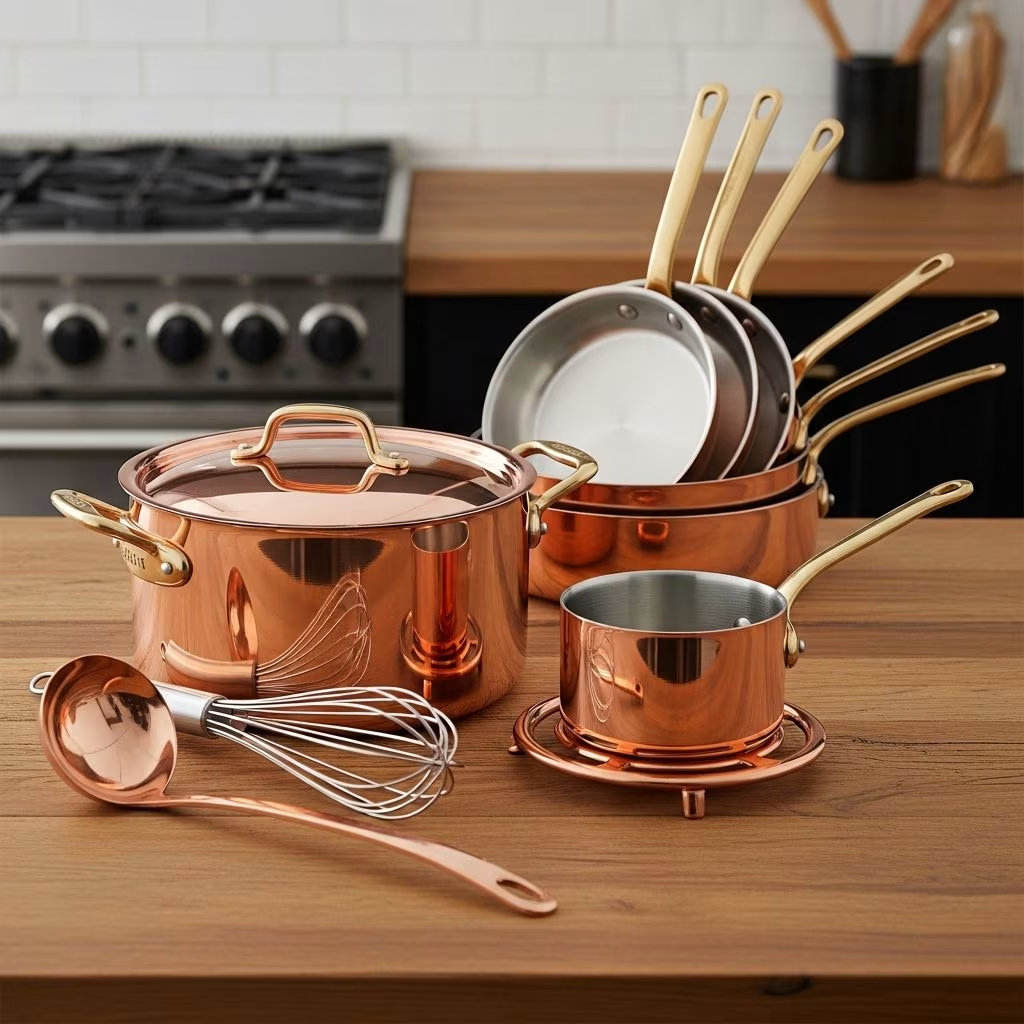
Copper cookware stands out for its exceptional ability to conduct heat evenly and respond quickly to temperature changes, making it a favorite among serious cooks for tasks requiring precision.
The Science Behind Copper’s Superior Performance
Copper’s atomic structure allows it to transfer heat more efficiently than materials like aluminum or stainless steel, heating up rapidly and cooling down just as fast. This property ensures uniform temperatures across the cooking surface, preventing hot spots that can burn delicate ingredients. For home cooks, this means better results in everything from searing meats to crafting smooth custards.
Studies on thermal conductivity confirm copper tops the list among common cookware metals, with a conductivity rate about twice that of aluminum. This responsiveness is particularly valuable on stovetops where flame adjustments demand immediate feedback from the pan.
Varieties of Copper Cookware Available Today
Not all copper pieces are created equal; they differ in construction to balance performance, cost, and durability. Understanding these options helps in picking the right set for your needs.
- Pure Copper Exterior with Tin Interior: Offers the purest heat conduction but requires frequent polishing on the outside and eventual retinning inside, as tin softens at around 450°F.
- Stainless Steel-Lined Copper: Combines copper’s heat prowess with a robust, high-heat-resistant interior that withstands up to 800°F without melting or needing re-lining.
- Copper-Clad or Multi-Layered: Features a copper core sandwiched between other metals, providing good conductivity at a lower price point while enhancing strength.
Each type suits different budgets and cooking styles, with stainless-lined versions gaining popularity for their low-maintenance appeal.
Key Factors for Selecting High-Quality Pieces
Investing in copper means considering thickness, as it directly impacts heat retention and handling. Pans under 1.5mm may warp or react too sensitively to heat changes, especially on electric stoves, while 2-2.5mm strikes an optimal balance for most tasks.
| Thickness | Best For | Pros | Cons |
|---|---|---|---|
| 1-1.5mm | Crepes, eggs, delicate flips | Lightweight, quick heat-up | Less stable, prone to denting |
| 2-2.5mm | General frying, sauces | Even heat, versatile, manageable weight | Slightly heavier |
| 3mm+ | Braising pots, heavy-duty | Superior retention, durable | Expensive, harder to maneuver |
Handles matter too—opt for sturdy, ergonomic designs that stay cool, often made from cast iron or stainless steel. Check for lids that fit snugly to trap steam effectively.
Perfect Pieces to Build Your Collection
Start with essentials that cover daily cooking. A 10-inch frying pan excels at sautés and steaks, while a 2-quart saucepan handles sauces and grains. For versatility, add a saucier with sloped sides for whisking and a rondeau for one-pot meals.
- Small saucepan (1-1.5 quarts): Melting chocolate, reductions.
- Fry pan (9-11 inches): Everyday proteins and vegetables.
- Stock pot (3-6 quarts): Soups, stocks with precise simmering.
Sizes scale with household needs; smaller for singles, larger for families. Induction compatibility requires a magnetic base layer in some modern designs.
Mastering Cooking Techniques with Copper
Copper shines in scenarios needing fine control. For sauces, its quick response prevents curdling by allowing instant heat reduction. In candy-making, monitor temperatures closely to hit exact points for fudge or caramel.
Use medium to low heat initially, as copper amplifies burner power. Preheat gradually for even distribution. Avoid high heat with tin linings to prevent damage; stainless versions offer more flexibility for browning.
Daily Cleaning and Long-Term Maintenance
Keep it simple: wash with hot soapy water and a soft sponge after each use. Avoid dishwashers, which strip tin linings and tarnish exteriors. For stuck-on food, soak in warm water with baking soda.
Polish the outside monthly with a copper cleaner or a vinegar-salt paste to restore shine. Tin-lined pieces may need professional retinning every few years if wear appears. Stainless interiors wipe clean effortlessly, resisting stains.
Overcoming Common Challenges
Copper reacts with acidic foods if unlined, imparting metallic flavors—always use lined versions. Weight can fatigue beginners, so build up to heavier sets. Price is premium, but longevity justifies it for frequent cooks.
Comparing Copper to Other Materials
| Material | Heat Conductivity | Reactivity | Maintenance | Cost |
|---|---|---|---|---|
| Copper (lined) | Excellent | Low | Moderate | High |
| Stainless Steel | Moderate | None | Low | Medium |
| Cast Iron | Poor | High | High | Low |
| Aluminum | Good | High | Low | Low |
Copper leads in precision but demands care, unlike set-it-and-forget-it options like cast iron.
Enhancing Your Kitchen Aesthetic
Beyond function, copper adds warmth and luxury. Arrange on open shelves for visual impact, mixing with matte finishes for contrast. Its patina develops character over time, telling stories of meals shared.
Frequently Asked Questions
Is copper cookware induction-compatible?
Traditional copper isn’t magnetic, but many modern pieces feature a ferrous base for induction use. Check product specs.
How often should I retinn my copper pans?
Every 5-10 years with regular use, or sooner if the lining wears thin and exposes copper.
Can I use metal utensils with copper?
Yes, especially with stainless linings; avoid on tin to prevent scratches.
Does copper leach into food?
Lined copper prevents this; unlined should not contact food directly.
What’s the best way to store copper cookware?
Hang or stack with protectors to avoid scratches; keep dry to prevent verdigris.
References
- A Basic Guide to Copper Pan Thickness — Rocky Hill Forge. 2023. https://www.rockyhillforge.com/blog/a-basic-guide-to-copper-pan-thickness
- The Buyer’s Guide to Copper Pans — Sous Chef. 2024. https://www.souschef.co.uk/blogs/the-bureau-of-taste/the-buyer-s-guide-to-copper-pans
- Everything You Need to Know Before Shopping for Copper Cookware — Made In Cookware. 2025-03-15. https://madeincookware.com/blogs/copper-cookware
- Your Comprehensive Guide to Choosing the Perfect Copper Cookware Set — L’Atelier Paris. 2024. https://www.leatelierparis.com/blogs/news/your-comprehensive-guide-to-choosing-the-perfect-copper-cookware-set
- A Guide to Picking the Best Copper Saucepan — Borough Kitchen. 2023-06-10. https://www.boroughkitchen.com/blogs/news/a-guide-to-picking-the-best-copper-saucepan