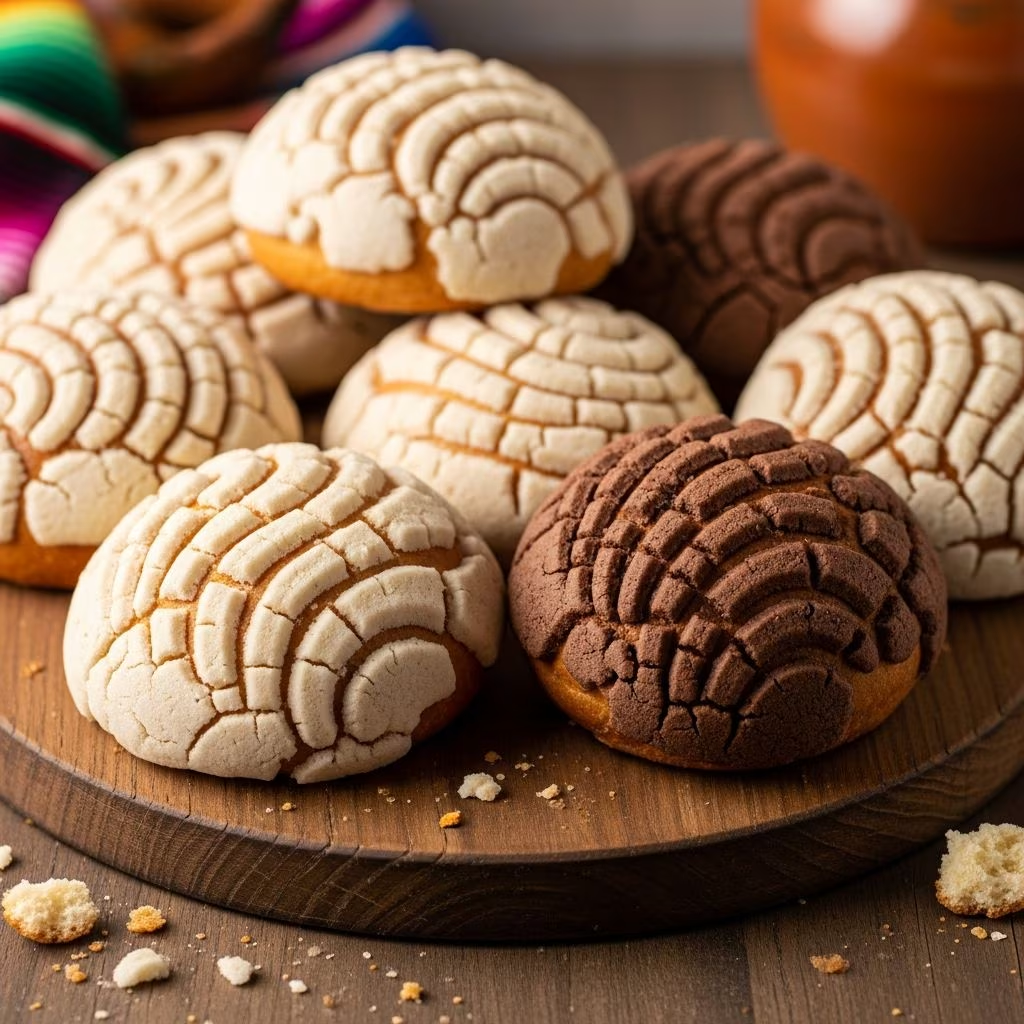
Conchas represent a cornerstone of Mexican culinary tradition, blending soft, enriched dough with a distinctive crunchy topping that resembles a seashell. This pan dulce, beloved across generations, offers a perfect balance of sweetness and texture, making it a staple in bakeries and homes alike. Whether enjoyed with coffee in the morning or as an afternoon treat, conchas capture the essence of Mexican baking heritage.
The Origins and Cultural Significance of Conchas
Conchas trace their roots to the colonial era in Mexico, when European baking techniques merged with local flavors. Introduced by Spanish bakers, the bread evolved uniquely in Mexico, gaining its signature shell-like topping around the 19th century. The name ‘concha,’ meaning shell, aptly describes the radiating cracks in the colored sugar crust, achieved through careful scoring and baking.
In Mexican culture, conchas symbolize community and celebration. They appear at breakfast tables, fiestas, and Day of the Dead altars. Bakeries, or panaderías, display them in glass cases, their vibrant pinks, yellows, and whites drawing crowds. This bread fosters social bonds, often shared among family and friends, embodying Mexico’s warm hospitality.
Historically, conchas adapted to regional tastes. In northern Mexico, they might be denser, while southern versions lean lighter and fluffier. Ingredients like wheat flour arrived with colonizers, but indigenous sweeteners such as piloncillo influenced variations. Today, conchas remain a testament to cultural fusion, preserving traditions while embracing modern twists.
Essential Ingredients for Authentic Conchas
Crafting conchas requires precise ingredients to achieve the ideal tenderness and crunch. The dough base relies on all-purpose flour for structure, active dry yeast for rise, and whole milk for richness. Eggs add moisture, while unsalted butter contributes flavor and softness. Granulated sugar sweetens subtly, and a pinch of salt balances the profile.
The topping, or ‘cazcarón,’ is key. It combines softened butter, powdered sugar, and flour into a pliable paste, tinted with food coloring for visual appeal. Vanilla extract enhances aroma, and cocoa powder creates chocolate variants. Freshness matters—use room-temperature ingredients to ensure even mixing and proper fermentation.
| Ingredient | Dough Amount | Topping Amount (per color) | Purpose |
|---|---|---|---|
| Flour | 4 cups | 1 cup | Structure and texture |
| Yeast | 2¼ tsp | – | Leavening |
| Milk | 1 cup | – | Moisture and tenderness |
| Butter | ½ cup | ½ cup | Richness and flakiness |
| Sugar | ½ cup | 1 cup (powdered) | Sweetness |
Step-by-Step Guide to Baking Conchas at Home
Begin by activating the yeast in warm milk with a teaspoon of sugar. Let it foam for 10 minutes, confirming viability. In a large bowl, whisk flour, remaining sugar, and salt. Incorporate eggs, yeast mixture, and softened butter, kneading until smooth—about 10 minutes by hand or 5 with a mixer. The dough should be soft and slightly sticky.
Allow the dough to rise in a greased bowl, covered, in a warm spot for 1-2 hours until doubled. Punch down, divide into 12-16 balls, and place on parchment-lined sheets. Let rise again for 30-45 minutes.
For the topping, cream butter and powdered sugar, then mix in flour and vanilla. Divide into portions, knead in food coloring (pink with strawberry extract, yellow with vanilla, brown with cocoa). Roll into 3-inch discs, place atop risen dough balls, and score with a concha knife or scissors in a spiral pattern. Bake at 350°F (175°C) for 20-25 minutes until golden.
- Tip 1: Use a stand mixer with dough hook for effortless kneading.
- Tip 2: Score deeply but not through the dough to prevent topping from sliding.
- Tip 3: Cool on racks to maintain crunch.
Perfecting Your Conchas: Troubleshooting Common Issues
Bakers often face challenges like dense bread or sliding toppings. Dense results stem from over-kneading or old yeast—always test yeast first. If the dough resists, add milk sparingly. Toppings slip when dough rises excessively; limit second proofing to 40 minutes.
Uneven cracks? Ensure even topping thickness and sharp scoring. Pale color indicates low oven temp—use an oven thermometer. For fluffier interiors, avoid hot milk when dissolving yeast, as it kills it. Store in airtight containers; they keep 2-3 days at room temp or freeze for a month.
Delicious Variations to Elevate Your Conchas
Classic conchas shine plain, but variations add excitement. Chocolate conchas swap vanilla for cocoa in both dough and topping. Fill with dulce de leche or crema before topping for a gooey center. Nutella-stuffed versions appeal to modern palates.
Vegan adaptations use plant milk, vegan butter, and egg replacer. Gluten-free flour blends work with xanthan gum for binding. Experiment with matcha for green topping or cinnamon for warmth. Savory spins incorporate cheese or chorizo, diverging from sweet norms.
Seasonal twists: pumpkin spice in fall, peppermint for holidays. These keep the tradition alive while innovating.
Pairing Conchas with Beverages and Dishes
Conchas pair beautifully with Mexican coffee, its boldness cutting sweetness. Champurrado, a thick chocolate atole, complements chocolate varieties. Hot chocolate or café de olla enhances classics.
For meals, serve with tamales or chilaquiles at brunch. Dunk in milk like cookies for kids. At parties, arrange colorful conchas on platters with fresh fruit.
Healthier Twists on Traditional Conchas
While indulgent, lighter versions exist. Substitute half the butter with Greek yogurt in dough for moisture without fat. Use whole wheat flour partially for fiber. Reduce sugar by 25%, relying on topping sweetness. Almond flour adds nuttiness and protein.
These maintain flavor while appealing to health-conscious eaters, proving conchas can fit balanced diets.
Storing and Freezing Conchas for Longevity
Fresh conchas are best within 24 hours. Store in paper bags for crispness or plastic for softness. Freeze baked conchas in zip bags up to 3 months—thaw at room temp. Dough balls freeze pre-topping; rise after thawing. Topping freezes separately, assembled post-thaw.
Conchas in Mexican Bakeries and Festivals
Panaderías craft conchas daily, hand-shaping hundreds. Tools like concha knives ensure precision. Festivals like Mexico City’s Pan Festival showcase giant versions. Home bakers replicate this artistry, connecting to roots.
FAQ: Your Conchas Questions Answered
What makes conchas unique?
The cracked sugar topping mimicking a seashell sets conchas apart from other sweet breads.
Can I make conchas without a mixer?
Yes, knead by hand on a floured surface until smooth and elastic.
How do I get the topping to crack properly?
Score in a tight spiral and bake immediately after proofing.
Are conchas vegan?
Traditional ones aren’t, but vegan substitutes work well.
How long do conchas last?
2-3 days at room temp, longer frozen.
Conclusion: Bake Your Way to Mexican Joy
Mastering conchas brings Mexican baking magic home. With practice, your kitchen fills with their aroma, creating memories. Share them, gift them, savor them—conchas unite through simple, profound delight.
References
- Mexican Breads and Pastries — Texas A&M University Press. 2020-01-15. https://www.tamu.edu/press/books/mexican-breads
- Panadería Traditions in Mexico — Instituto Nacional de Antropología e Historia (INAH). 2023-05-10. https://www.inah.gob.mx/panaderia-mexicana
- The Oxford Companion to Sugar and Sweets — Oxford University Press. 2015-03-01. https://global.oup.com/academic/product/oxford-companion-to-sugar-and-sweets-9780199313396
- Yeast Baking Fundamentals — USDA Agricultural Research Service. 2024-02-20. https://www.ars.usda.gov/research/handbook/yeast-baking