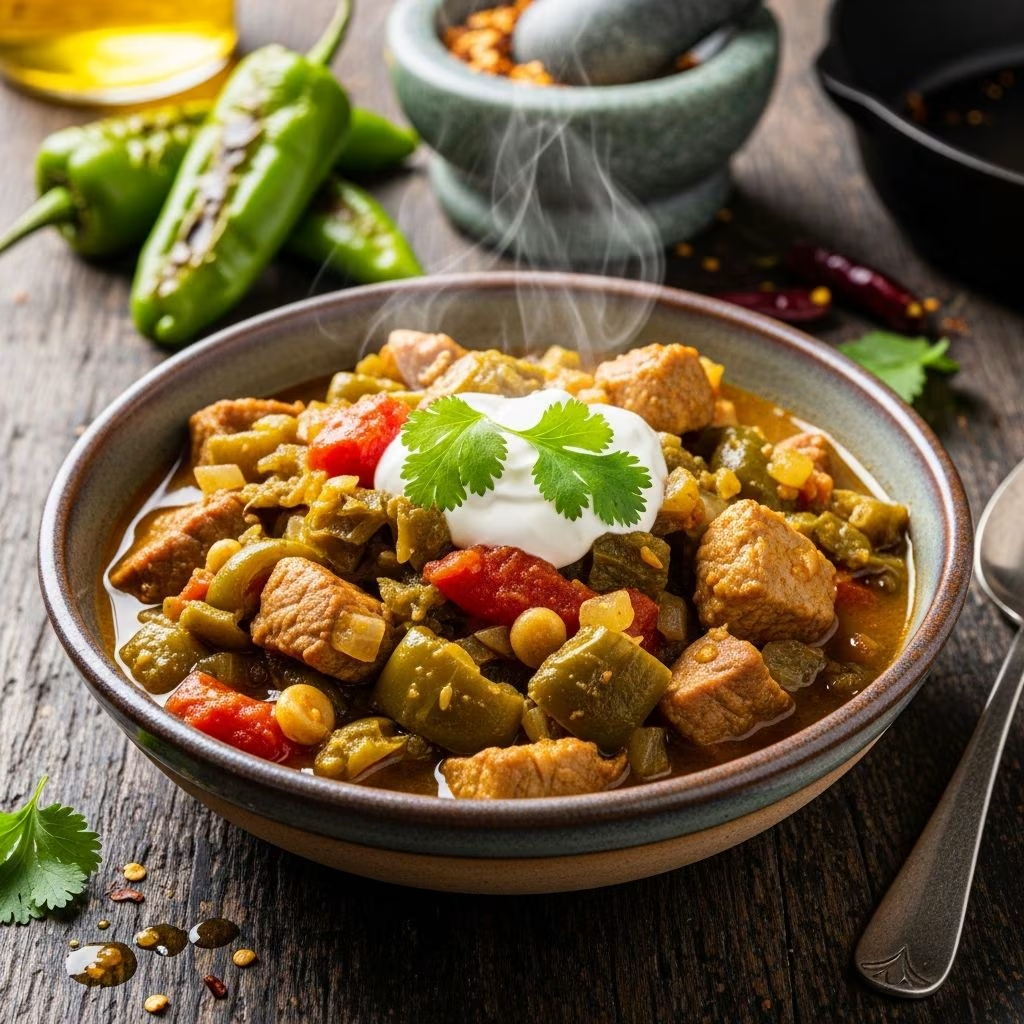
Colorado green chili represents one of the most cherished comfort dishes across the Mountain West region, beloved for its warm, savory character and adaptable nature. This hearty stew-like preparation showcases roasted green chiles as its starring ingredient, balanced with tender protein and aromatic vegetables to create a deeply satisfying meal. Whether enjoyed as a standalone soup, served over rice, or used as a smothering sauce for other dishes, Colorado green chili embodies the spirit of home cooking that brings families and communities together.
Understanding the Essence of Colorado Green Chili
At its core, Colorado green chili is a rustic preparation that emphasizes simplicity and quality ingredients working in harmony. The dish derives its character from fresh or roasted green chiles—typically varieties like Hatch or Anaheim—which provide a balance of mild heat and subtle sweetness. Unlike red chili preparations, green chili maintains a more herbaceous flavor profile, with the chiles taking center stage rather than playing a supporting role.
The foundational elements of authentic Colorado green chili include tender pork shoulder, which becomes impossibly succulent during the extended cooking process, combined with aromatic onions, garlic, and warming spices like cumin. Many traditional recipes incorporate chicken or vegetable broth to create the ideal consistency, while some cooks add tomatoes or potatoes to enhance the dish’s complexity and substance.
Selecting and Preparing Your Ingredients
The quality of your final dish depends significantly on ingredient selection and initial preparation. When choosing pork for your Colorado green chili, opt for pork shoulder or pork butt, which contain sufficient marbling and connective tissue to transform into tender, flavorful meat during slow cooking. Plan for approximately 2 to 4 pounds of pork, depending on how many servings you intend to make and whether you’re including additional vegetables.
Fresh green chiles represent the heart of this dish. If you have access to fresh roasted green chiles during peak season, use them generously—typically 7 to 10 cups of chopped chiles provides the authentic foundation. For other times of year, frozen roasted green chiles work beautifully and deliver consistent flavor. When working with fresh chiles, roasting them yourself involves placing whole peppers under a broiler until the skin blisters and chars, then allowing them to steam in a plastic bag before peeling away the charred exterior.
Additional ingredients to gather include:
- Yellow or white onions for a mellow, sweet undertone
- Fresh garlic cloves, minced or grated for maximum flavor diffusion
- Ground cumin and optional smoked paprika for warmth and depth
- Quality broth—chicken broth works universally well, though vegetable broth suits non-meat versions
- Russet potatoes if you prefer added heartiness
- Optional thickening agents like masa or flour
- Salt and black pepper for seasoning
Cooking Methods: From Stovetop to Slow Cooker
Colorado green chili offers flexibility in preparation methods, allowing home cooks to choose based on their schedule and kitchen equipment. Each approach yields excellent results, though cooking time and attention requirements vary.
Traditional Stovetop Method
The stovetop approach represents the most hands-on technique, providing immediate control over heat and allowing you to monitor the chili’s development closely. Begin by heating olive oil in a large Dutch oven or heavy-bottomed pot over low heat. Add diced onions and sauté until they become translucent and soft, typically requiring 7 minutes. Incorporate minced garlic and jalapeños at this stage, cooking for an additional 2 minutes until the kitchen fills with their aromatic fragrance.
Next, add your prepared green chiles along with cumin and Mexican oregano if desired, cooking briefly until the chiles release their essential oils. Pour in your broth and tomatoes, bring the mixture to a boil, then reduce heat to low and maintain a gentle simmer for 2 to 3 hours, stirring occasionally to prevent sticking and ensure even cooking.
For a richer, more velvety texture, prepare a roux by melting butter in a separate saucepan, whisking in flour until smooth, and cooking until golden brown. Stir this thickening agent into your simmering chili during the final stages of cooking, allowing it to integrate fully and create a more luxurious mouthfeel.
Slow Cooker Method
The slow cooker method suits those seeking convenience and minimal active cooking time. After completing the initial sauté of onions, garlic, and chiles in a skillet, transfer everything to your slow cooker along with broth, tomatoes, and any additional ingredients. Cook on low for 4 hours or on high for 2 hours, stirring periodically. The extended, gentle heat coaxes flavors from ingredients while ensuring the pork becomes fall-apart tender. This method particularly benefits those who enjoy returning home to a meal that has been developing flavor throughout the day.
Ingredient Variations and Adaptations
One of Colorado green chili’s greatest strengths lies in its adaptability to different tastes and dietary preferences. Beyond the traditional pork version, several variations merit exploration:
Vegetarian and Vegan Interpretations maintain the dish’s essential character by replacing pork with hearty vegetables like cubed potatoes, chickpeas, or pinto beans. These plant-based proteins absorb the surrounding flavors beautifully while providing satisfying substance. Simply extend cooking time slightly to ensure vegetables become tender.
Chicken-Based Versions offer a lighter alternative using chicken thighs or breasts. While chicken cooks more quickly than pork, thighs provide more flavor than breasts and remain moist throughout the cooking process. Adjust cooking time downward, typically to 1 to 2 hours, to prevent the chicken from becoming tough.
Chimayo or Hatch Chile Variations allow experimentation with different chile varieties, each contributing unique flavor profiles. Chimayo chiles deliver earthier, more complex notes, while standard Hatch chiles provide balanced heat and fruity undertones.
Some recipes incorporate tomatillos alongside or instead of tomatoes, adding a brighter, more acidic dimension. Others include diced potatoes for added heartiness, or fresh cilantro stirred in just before serving for herbal freshness.
Seasoning and Flavor Development
Achieving the perfect balance of flavors requires understanding how spices and seasonings contribute to the overall profile. Ground cumin, typically 1 to 2 tablespoons, provides the foundational warmth and earthiness characteristic of Southwestern cooking. Mexican oregano, distinct from Mediterranean varieties, offers more herbal complexity and complements green chiles beautifully.
Smoked paprika adds subtle smokiness without dominating the palate, while garlic and onion provide aromatic foundations. Many cooks prefer adding salt incrementally throughout cooking rather than at the beginning, allowing flavors to develop and intensify before final seasoning adjustments.
For those preferring additional heat, fresh jalapeño slices, cayenne pepper, or crushed red pepper flakes can be stirred in during cooking or offered as table-side additions, allowing each diner to customize their heat level.
Serving Suggestions and Accompaniments
Colorado green chili’s versatility extends beyond the pot itself. Serve it as a traditional bowl of soup, accompanied by cornbread or warm flour tortillas. Alternatively, use it as a