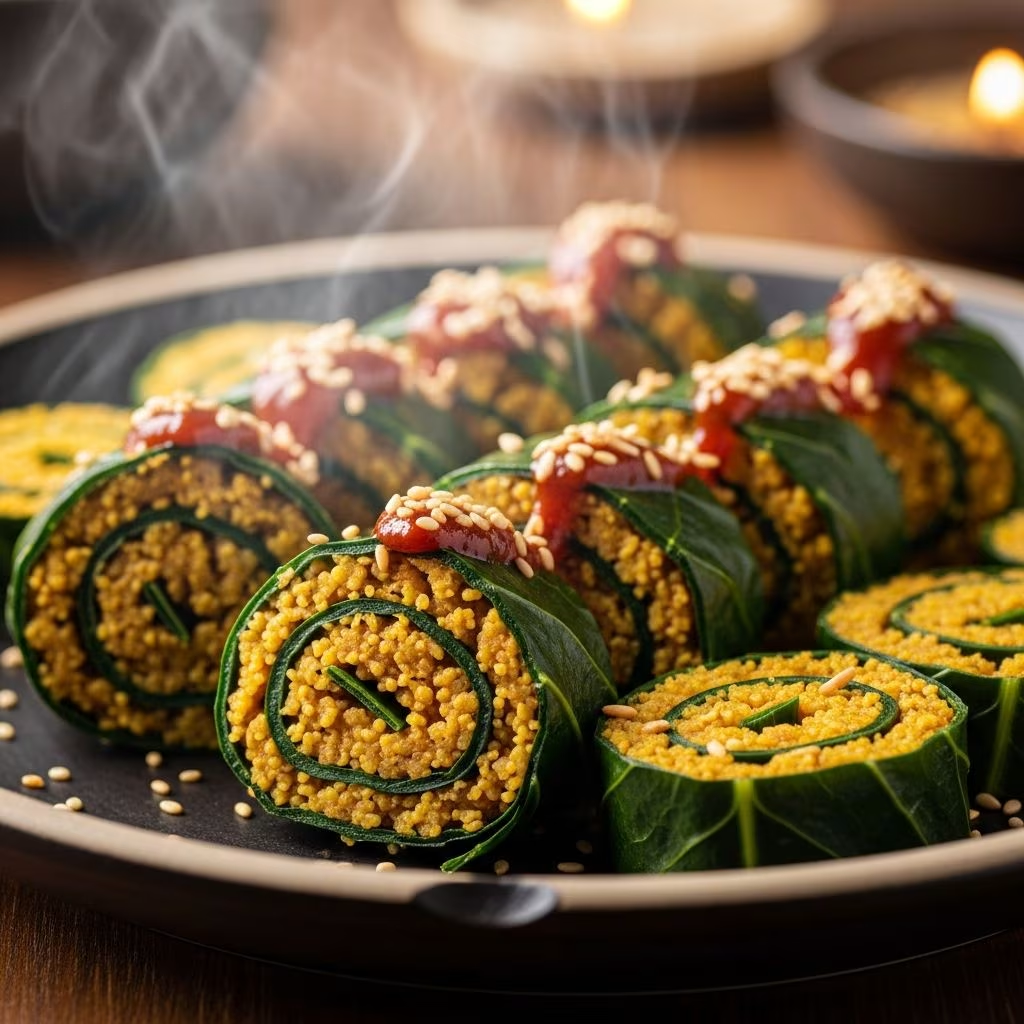
South Asian cuisine encompasses a remarkable diversity of cooking techniques and flavor profiles that have evolved over centuries. Among the many treasured dishes within this culinary heritage is patra, a sophisticated preparation that transforms humble leafy greens into an elegant appetizer or side dish. When crafted with collard greens instead of the more commonly used colocasia leaves, this recipe offers a contemporary interpretation of a traditional favorite while maintaining the authentic spices and preparation methods that define the dish.
Understanding Patra in South Asian Cooking
Patra represents a culinary tradition that speaks to the resourcefulness and creativity found throughout South Asian kitchens. The dish involves wrapping a specially prepared filling with aromatic spices inside leafy vegetation, then cooking it until the flavors meld together and the leaves become tender. The name “patra” itself derives from the Sanskrit word meaning leaf or layer, which perfectly describes the composition of this multilayered creation.
This preparation method has served multiple purposes throughout history—it transforms ordinary greens into substantial fare suitable for meals, makes efficient use of available ingredients, and creates a visually appealing presentation. The technique demonstrates how traditional cooking methods prioritize both nutrition and satisfaction through thoughtful preparation.
The Foundation: Selecting and Preparing Collard Greens
The success of collard greens patra begins with choosing quality leaves that will hold the filling without tearing during the rolling and steaming process. Unlike more delicate greens, collard leaves possess a sturdy structure that withstands cooking while remaining tender enough to eat comfortably. When selecting collards from the market, look for leaves that display vibrant color without browning or wilting.
- Choose medium-sized leaves that are neither too small nor excessively large
- Inspect for blemishes, holes, or damage that would compromise the integrity of the roll
- Select leaves with minimal white veining, as these tend to be more pliable
- Rinse thoroughly under running water to remove any soil or debris
- Pat dry gently before proceeding with the recipe
Preparation of the collard leaves requires blanching them briefly to soften the structure without fully cooking them through. This preliminary step makes rolling significantly easier and helps the leaves conform to the shape of the filling without cracking. The optimal blanching duration is typically two to three minutes, which achieves the desired flexibility while preserving the leaves’ structural integrity.
Crafting the Aromatic Filling
The heart of patra lies in its carefully composed filling, which combines legume flour with an array of spices that define South Asian flavor profiles. The foundation begins with chickpea flour, known as besan, which creates a cohesive mixture that binds the ingredients together while adding nutritional depth and a subtle earthiness to each bite.
The spice profile typically includes turmeric for its warmth and golden coloring, dried chili for heat and complexity, cumin seeds for their nutty undertones, and asafetida for its distinctive umami quality. Many recipes also incorporate fresh ginger and garlic, either minced finely or incorporated as a paste, to add aromatic intensity and freshness that brightens the overall flavor composition.
Essential Components of the Filling Mixture
| Ingredient | Purpose | Approximate Quantity |
|---|---|---|
| Chickpea Flour (Besan) | Binding agent and nutritional base | 1 cup |
| Turmeric Powder | Color and warm spice notes | 1/2 teaspoon |
| Dried Red Chili | Heat and flavor depth | 1-2 peppers |
| Cumin Seeds | Nutty, aromatic quality | 1 teaspoon |
| Ginger-Garlic Paste | Aromatic intensity | 1 tablespoon |
| Asafetida (Hing) | Umami and digestive properties | 1/8 teaspoon |
| Salt | Flavor enhancement | To taste |
| Lemon Juice | Brightness and acidity | 2 teaspoons |
The preparation methodology for combining these elements matters considerably. Begin by toasting the cumin seeds and dried chilies in a dry pan until fragrant, which amplifies their essential oils and deepens their flavors. Allow these to cool slightly before grinding them into a fine powder. Mix the chickpea flour with this spice blend, then incorporate the ginger-garlic paste, asafetida, salt, and lemon juice. Add water incrementally to achieve a thick paste consistency that holds together firmly when shaped.
The Rolling Technique: Transforming Leaves into Parcels
Rolling the collard greens requires practice and precision to ensure that each parcel remains intact during the cooking process. Lay a blanched collard leaf with the smoother side facing downward on a clean work surface. Position the leaf so that the stem end faces toward you, as this orientation provides maximum surface area for filling placement.
Spread approximately one to two tablespoons of the filling mixture across the lower third of the leaf, leaving approximately half an inch of space from the edges. This buffer zone prevents the filling from spilling out during rolling. Roll the leaf tightly toward the top, tucking in the sides as you progress to create a compact package that resembles a spring roll or burrito.
- Position the leaf stem-side closest to your body for optimal rolling control
- Apply filling in a single horizontal line across the lower portion
- Begin rolling by folding the stem end up and over the filling
- Tuck the left and right sides inward as you continue rolling
- Complete the roll with the smooth side of the leaf facing outward
- Place finished rolls seam-side down in the steaming vessel
Steaming Process and Cooking Methodology
The steaming method represents the optimal cooking technique for patra, as it gently cooks the leaves and allows the filling to firm up while maintaining the nutritional integrity of the ingredients. Unlike frying or baking, steaming preserves the delicate nature of the collard greens while allowing the spices to bloom and develop their full complexity.
Prepare a steaming apparatus by filling a large pot with water to a level just below where the steaming rack will sit. Bring the water to a rolling boil before arranging the patra rolls on the rack in a single layer, seam-side down. Cover the pot with a lid and steam for approximately twenty to thirty minutes, depending on the thickness of the rolls and the intensity of the heat.
A reliable indicator of doneness involves testing the filling’s firmness by gently pressing one of the rolls with a fork. The filling should have transformed from its initial paste-like consistency into a firm, cake-like texture. The collard leaves themselves should have darkened slightly and become completely tender to the bite.
Serving Suggestions and Accompaniments
Patra achieves its greatest potential when served alongside complementary components that enhance its flavors and provide textural contrast. Traditional accompaniments include tamarind chutney, which introduces a tangy sweetness that plays beautifully against the spice-forward filling. Coconut chutney offers a creamy, cooling element that balances heat while adding richness to the plate.
Fresh cilantro chutney brings herbal brightness and additional complexity, while a simple yogurt-based cooling sauce provides another dimension of flavor. Some preparations include a light tempering of oil infused with mustard seeds and curry leaves drizzled over the finished patra, which adds aromatic oils and a distinctive toasted quality.
Beverage Pairings
The preparation pairs thoughtfully with various beverages that either complement or contrast its spice profile. Traditional South Asian beverages such as lassi provide cooling relief while complementing the nutritional profile of the dish. Herbal teas, particularly ginger or turmeric-based infusions, echo the spices within the patra and create a harmonious dining experience. For contemporary service, light beers or aromatic white wines can provide refreshing counterpoints to the rich, spiced filling.
Nutritional Considerations and Health Benefits
Collard greens patra represents a nutritionally dense preparation that combines the benefits of cruciferous vegetables with legume-based protein. Collard greens contribute significant quantities of vitamins K and C, calcium for bone health, and dietary fiber that supports digestive function. The chickpea flour provides plant-based protein and additional fiber, creating a substantially satisfying dish despite its modest caloric density.
The spices incorporated into the filling offer more than flavor enhancement; they provide bioactive compounds with documented health benefits. Turmeric contains curcumin, known for its anti-inflammatory properties, while ginger and garlic have long been valued in traditional medicine for their digestive and immunological support. Cumin seeds contribute to metabolic function and nutrient absorption.
Storage and Make-Ahead Preparation
Patra demonstrates remarkable flexibility for advance preparation, making it an excellent choice for meal planning or entertaining. Completed rolls can be refrigerated for up to four days before steaming, allowing the flavors to develop further during storage. This characteristic makes it possible to prepare the rolls during a less busy time and cook them when convenient.
The prepared patra can also be frozen for extended storage of up to three months. Arrange the rolls on a baking sheet and freeze until solid before transferring to freezer-safe containers. When ready to cook, simply increase the steaming time by approximately ten minutes, as cooking from frozen requires additional heat to penetrate the leaves fully.
Variations and Creative Adaptations
While the traditional collard greens patra follows established parameters, creative cooks often incorporate variations that reflect local ingredients and personal preferences. Some preparations include finely minced vegetables such as carrots or zucchini within the filling to add textural complexity and additional nutrition. Others incorporate fresh herbs like mint or fenugreek leaves to introduce different aromatic dimensions.
For those seeking to intensify the spice profile, increasing the quantity of dried chilies or incorporating fresh green chilies into the filling creates a more assertively spiced version. Conversely, reducing chili quantities produces a milder preparation suitable for those with lower spice tolerance. The adaptability of this preparation allows it to satisfy various preferences while maintaining its essential character and cooking methodology.
Frequently Asked Questions
Can I use other types of greens besides collard leaves?
While collard greens work exceptionally well due to their sturdy nature, colocasia leaves represent the traditional choice and create slightly different texture. Cabbage leaves or even chard can substitute, though they may require adjusted blanching times to achieve optimal pliability.
What if my filling mixture is too dry?
Add water in small quantities—one tablespoon at a time—until the mixture reaches a thick paste consistency that holds together when formed. The texture should resemble cookie dough rather than a thick soup.
How long can prepared patra be stored in the refrigerator?
Properly stored patra remains fresh for up to four days when kept in an airtight container. Ensure rolls are cooled completely before refrigerating to prevent condensation buildup.
Is patra suitable for vegan diets?
Yes, the basic patra recipe is entirely plant-based. Ensure all accompaniments, particularly chutneys and sauces, follow vegan guidelines if serving to individuals maintaining vegan diets.
What creates the filling’s firmness after cooking?
The chickpea flour undergoes a gelatinization process during steaming, transforming from a paste into a firm, cake-like consistency as moisture is absorbed and heat denatures the flour proteins.
References
- Collard Greens Nutritional Composition and Health Benefits — U.S. Department of Agriculture, National Nutrient Database. https://fdc.nal.usda.gov/
- Traditional Steaming Methods in South Asian Cuisine — Oxford Academic, Journal of Culinary Science & Technology. 2023. https://academic.oup.com/
- Curcumin and Anti-inflammatory Properties of Turmeric — National Center for Biotechnology Information, PubMed Central. 2022. https://www.ncbi.nlm.nih.gov/pmc/
- Chickpea Flour: Nutritional Profile and Culinary Applications — Food and Agricultural Organization of the United Nations. 2021. https://www.fao.org/
- Plant-Based Protein Sources and Dietary Fiber Content — American Journal of Clinical Nutrition, Oxford University Press. 2023. https://academic.oup.com/ajcn/