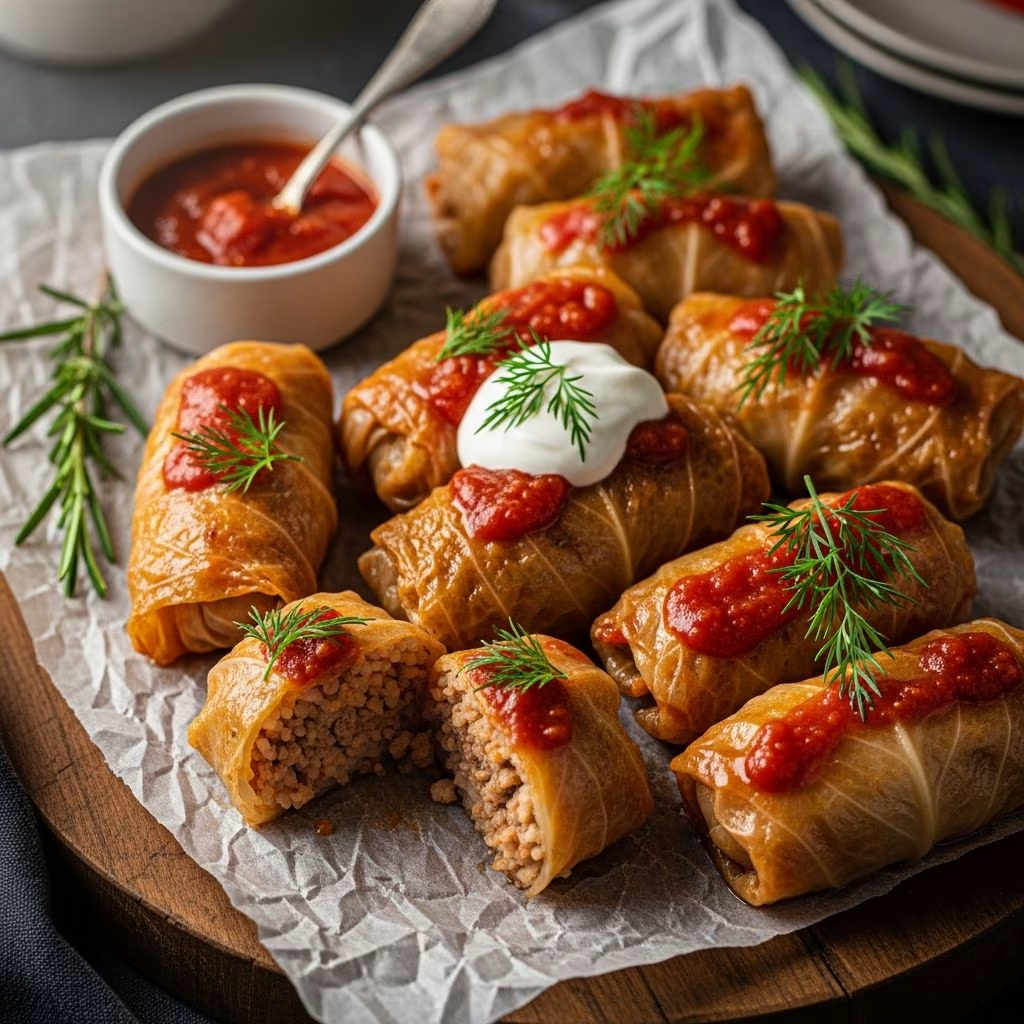
Stuffed cabbage rolls, often called holubtsi or golabki depending on cultural roots, feature soft cabbage leaves encasing a hearty mix of ground meat, rice, and seasonings, all bathed in a robust tomato-based sauce. This dish delivers layers of flavor with its balance of savory filling and slightly sweet, acidic gravy, making it a staple for gatherings or weeknight comfort.
Why Stuffed Cabbage Rolls Captivate Home Cooks
These rolls combine simple ingredients into something extraordinary. The cabbage softens during cooking, providing a gentle wrapper that contrasts the firm, flavorful core. Ground meats like beef or pork blend with rice for texture, while aromatics such as onion and garlic elevate the taste. The sauce, typically tomato-forward with vinegar for tang and sugar for mellow sweetness, ties everything together, creating a dish that’s nourishing and satisfying.
Historically, this recipe reflects resourceful cooking, using abundant cabbage and pantry staples. It’s versatile too—adaptable for dietary needs or available proteins—yet remains a crowd-pleaser across generations.
Essential Ingredients for Success
Gathering quality components ensures great results. Focus on fresh produce and balanced seasonings.
- Cabbage: Choose a large head of green cabbage; it yields 12-15 pliable leaves.
- Ground Meats: A mix of 85/15 ground beef (1 pound) and pork sausage (½ pound) adds richness; all-beef works for simplicity.
- Rice: 1-1½ cups cooked long-grain white rice absorbs flavors without sogginess.
- Aromatics: 1 diced onion, 2-3 minced garlic cloves, and fresh parsley (3 tablespoons chopped).
- Binders and Seasonings: 1 egg, 1 teaspoon salt, ½ teaspoon pepper, ½ teaspoon paprika, pinch of cayenne for subtle heat.
- Sauce Base: 1 can (15 oz) tomato sauce, 1 can (15 oz) crushed tomatoes, 1 tablespoon Worcestershire or cider vinegar, 1-2 tablespoons brown sugar, extra salt/pepper to taste.
These measurements serve 6-8 people, yielding about 12-15 rolls. Scale up for larger crowds.
Step-by-Step Preparation Mastery
Patience is key; each stage builds flavor and texture.
1. Prepare the Cabbage Leaves
Core the cabbage head by cutting a deep cone around the stem. Boil in salted water for 2-3 minutes, then peel off outer leaves with tongs as they soften. They should bend easily without tearing. For stubborn inner leaves, return to simmering water 60-90 seconds more. Drain and cool on towels. Trim thick ribs with a V-notch for easier rolling.
2. Craft the Filling
In a bowl, combine cooked rice, ground meats, diced onion, minced garlic, egg, parsley, salt, pepper, paprika, and cayenne. Use a potato masher or hands to mix gently until uniform—overmixing toughens the meat. Taste a small patty if desired (cook it quickly) to adjust seasoning. Let rest 10 minutes for flavors to meld.
3. Make the Tomato Sauce
In a skillet, sauté extra onion and garlic in olive oil until translucent. Add tomato sauce, crushed tomatoes, Worcestershire or vinegar, brown sugar, salt, and pepper. Simmer 10-15 minutes to thicken and concentrate flavors. This creates a glossy, tangy gravy.
4. Assemble the Rolls
Spread ½-1 cup sauce in a 9×13-inch baking dish. Place 2-4 tablespoons filling (about ⅓ cup for large leaves) at the base of a leaf. Fold sides in, then roll tightly from the bottom, like a burrito. Position seam-side down in the dish. Repeat, fitting snugly in rows. Cover with remaining sauce.
5. Bake to Perfection
Cover tightly with foil. Bake at 350°F for 60-75 minutes, until internal temperature hits 165°F and cabbage is fork-tender. Uncover last 10 minutes for slight browning. Rest 10 minutes before serving.
Pro Tip: For deeper flavor, bake 2-3 hours at 325°F, adding water if sauce reduces too much.
Flavor Variations to Suit Every Palate
Customize without losing the dish’s essence.
| Variation | Key Changes | Why It Works |
|---|---|---|
| Vegetarian | Lentils or mushrooms instead of meat; quinoa for rice | Earthy notes mimic meat; high-protein alternative |
| Spicy | Add ½ teaspoon red pepper flakes or diced jalapeños to filling | Heat cuts sauce sweetness |
| Italian-Inspired | Italian sausage, oregano, Parmesan in filling; marinara sauce | Familiar herbs enhance comfort |
| Asian Twist | Ginger, soy sauce in filling; hoisin-tomato sauce | Fusion of umami profiles |
| Gluten-Free | Ensure tamari replaces Worcestershire; certified GF rice | Seamless substitution |
Make-Ahead and Storage Strategies
These rolls shine with planning.
- Prep Ahead: Assemble rolls and sauce up to 24 hours before baking; refrigerate covered.
- Freezing: Cool baked rolls, portion into freezer bags with sauce. Freeze up to 3 months. Thaw overnight, reheat at 350°F covered.
- Refrigeration: Store leftovers in airtight containers up to 4 days. Reheat gently with extra sauce.
- Batch Cooking: Double recipe; freeze half unbaked for quick future meals.
They reheat beautifully, often tasting better as flavors deepen.
Common Pitfalls and Fixes
Avoid these for flawless results:
- Tough Cabbage: Blanch longer or freeze whole head overnight to thaw and peel easily.
- Leaks: Tuck sides securely; use smaller amounts of filling for tiny leaves.
- Dry Rolls: Ensure ample sauce coverage; check liquid during long bakes.
- Soggy Rice: Use par-cooked rice; it finishes in the oven.
- Bland Flavor: Season sauce boldly; taste and adjust before baking.
Nutritional Profile and Serving Ideas
Per roll (based on 12 servings): ~250 calories, 15g protein, 20g carbs, 12g fat. High in vitamin C from cabbage, iron from beef.
Pair with:
- Mashed potatoes or rye bread to sop up sauce.
- Simple green salad with vinaigrette.
- Sour cream or yogurt dollop for creaminess.
Ideal for potlucks; serves as main with sides.
Frequently Asked Questions
Can I use raw rice in the filling?
Yes, but par-cook it first to prevent crunchiness. Raw rice requires longer baking (2+ hours) with extra liquid.
What’s the best meat combo?
Beef and pork (or sausage) for juiciness; turkey for leaner option.
How do I fix torn leaves?
Patch with small pieces or layer over sauce as backups.
Instant Pot version?
Layer in pot, pour sauce, pressure cook 25 minutes high, natural release 10 minutes.
Can I make them vegan?
Replace meat with TVP, lentils, or walnuts; use flax egg.
Expert Tips for Next-Level Rolls
– Sauté onions low and slow for sweetness.
– Add Worcestershire to filling for umami depth.
– Use a deep dish to contain sauce.
– Garnish with parsley and lemon zest post-bake.
– Experiment with sauerkraut layer for fermented tang.
This guide equips you to create restaurant-worthy stuffed cabbage rolls at home, turning everyday ingredients into cherished meals.
References
- Stuffed Cabbage Rolls – Small Town Woman — Small Town Woman. 2023-05-15. https://www.smalltownwoman.com/cabbage-rolls/
- Classic Stuffed Cabbage Rolls Recipe – Evolving Table — Evolving Table. 2024-02-10. https://www.evolvingtable.com/stuffed-cabbage-rolls/
- Mom’s Classic Easy Stuffed Cabbage Rolls – The Best Recipe! — The Kitchen Whisperer. 2017-07-06. https://www.thekitchenwhisperer.net/2017/07/06/moms-classic-stuffed-cabbage-rolls/
- Best Stuffed Cabbage Rolls – The Suburban Soapbox — The Suburban Soapbox. 2023-08-20. https://thesuburbansoapbox.com/how-to-make-the-best-stuffed-cabbage-rolls/
- Stuffed Cabbage Rolls – Sip and Feast — Sip and Feast. 2024-01-12. https://www.sipandfeast.com/stuffed-cabbage-rolls/