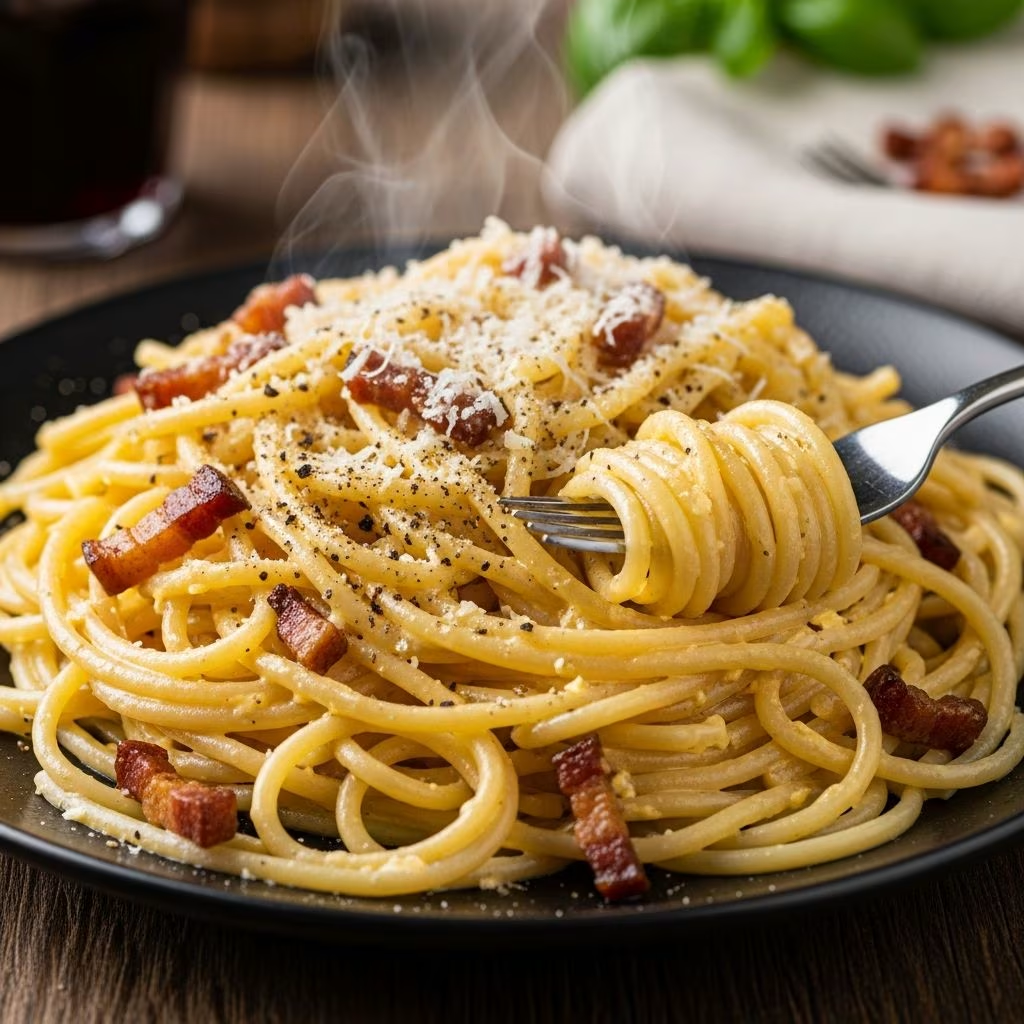
Spaghetti carbonara stands as one of Italy’s most celebrated pasta dishes, originating from the Lazio region in Rome. Despite its seemingly luxurious texture and rich flavor profile, this classic preparation requires only a handful of quality ingredients and straightforward techniques that home cooks can easily master. The magic of carbonara lies not in complex cooking methods but in understanding how to balance heat, timing, and ingredient quality to create a silky sauce that coats each strand of pasta.
The Foundation: Understanding Carbonara Ingredients
The beauty of carbonara rests in its simplicity. The traditional Roman version uses just five essential components: pasta, cured pork, eggs, cheese, and black pepper. This minimalist approach means that each ingredient must be of superior quality, as there are no additional flavors to mask or compensate for inferior choices.
The Protein Component: Guanciale vs. Alternatives
Authentic carbonara traditionally uses guanciale, which is cured pork jowl. This ingredient provides a distinctive flavor and renders fat that becomes integral to the sauce. Guanciale’s higher fat content compared to other cured meats creates a richer mouthfeel and more authentic taste. However, accessibility varies by region, and many home cooks successfully substitute pancetta or bacon when guanciale is unavailable. The key consideration is thickness—aim for pieces cut to approximately one-quarter inch to ensure proper crisping and fat rendering.
Cheese Selection and Preparation
Pecorino Romano cheese represents the traditional choice for carbonara, though Parmigiano-Reggiano offers a slightly milder alternative. The distinction matters because Pecorino Romano’s sharper, more peppery character complements the dish’s overall flavor balance. For optimal results, purchase whole cheese wedges and grate them fresh immediately before cooking. Pre-grated cheese contains anti-caking agents that prevent smooth melting and sauce formation.
Eggs: The Sauce Creator
The eggs perform the crucial function of creating carbonara’s signature creamy sauce without any cream. Most recipes employ a combination of whole eggs and egg yolks, with some traditional versions using predominantly yolks. Room-temperature eggs integrate more smoothly into the hot pasta and reduce the risk of scrambling. The raw egg mixture transforms when combined with the residual heat of the pasta and the warmth from the rendered pork fat, creating an emulsion that coats each piece of pasta luxuriously.
Step-by-Step Preparation Method
Phase One: Preparing the Pasta Base
Begin by bringing a large pot of generously salted water to a rolling boil. The water’s salinity should approximate seawater, as this seasons the pasta from within during cooking. Add the spaghetti and stir well to prevent sticking. Cook until the pasta reaches al dente texture—tender yet maintaining a slight resistance when bitten—according to package directions. Before draining, reserve approximately one cup of the starchy pasta cooking water; this liquid becomes essential for adjusting the sauce consistency and helping the eggs emulsify properly.
Phase Two: Rendering the Cured Meat
While the pasta cooks, prepare the protein component in a large skillet over medium-low heat. Cut the guanciale or pancetta into small pieces and cook slowly, allowing the fat to render gradually rather than browning too quickly. This gentle approach ensures the meat becomes crispy while the fat remains usable for sauce creation. Once the meat achieves golden crispness, turn off the heat immediately. Do not drain the fat—this rendered liquid forms the foundation of your carbonara sauce.
Phase Three: Creating the Egg Mixture
In a separate medium bowl, whisk together the egg yolks, finely grated cheese, and freshly ground black pepper. Combine these ingredients thoroughly until completely smooth, as proper mixing ensures the creamy sauce develops evenly throughout the pasta. Some cooks add a small amount of the reserved pasta water at this stage to facilitate mixing, though this remains optional depending on personal preference.
Phase Four: The Critical Assembly
This step requires attention and quick work to prevent egg scrambling. Add the drained, steaming hot pasta directly to the skillet containing the rendered meat and fat. Using tongs or pasta forks, toss the pasta continuously in the warm fat for about one minute. This coating ensures every strand touches the fat before the egg mixture arrives. Pour the egg and cheese mixture over the hot pasta while continuing to toss rapidly. The residual heat from the pasta cooks the eggs gently, transforming the mixture into a silky sauce. Continue stirring and tossing for one to three minutes until a creamy coating forms uniformly. If the sauce appears too thick, add small amounts of reserved pasta water to reach the desired consistency.
Essential Techniques for Success
Temperature Management
Temperature control represents the most critical factor in carbonara preparation. The residual heat from the hot pasta must be sufficient to cook the eggs without scrambling them into a chunky texture. Turning off the heat under the cured meat before adding the pasta prevents excess heat from curdling the eggs. Many experienced cooks transfer the skillet to a cooler burner or remove it from the heat entirely before adding the pasta, providing better temperature control during the crucial mixing phase.
Pasta Water: The Secret Ingredient
The starchy pasta cooking water serves multiple purposes in carbonara preparation. It adjusts sauce consistency, helps emulsify the egg and cheese mixture, and coats the pasta strands evenly. Add this water gradually in small increments rather than all at once, testing the sauce consistency as you go. The final dish should feature pasta coated in a silky sauce, not dry clumps or a soupy consistency.
Timing and Flow
Execution speed matters significantly in carbonara cooking. Delay between draining the pasta and combining it with the other ingredients risks the pasta cooling, which compromises sauce formation. Organize all components and have them ready before the pasta finishes cooking. This mise en place approach ensures smooth, confident execution during the critical assembly phase.
Common Mistakes and Solutions
| Problem | Cause | Solution |
|---|---|---|
| Scrambled, chunky eggs | Temperature too high or eggs overcooked | Reduce heat earlier, work faster, use room-temperature eggs |
| Dry, clumpy pasta | Insufficient fat or sauce liquid | Add reserved pasta water gradually to reach proper consistency |
| Grainy cheese texture | Pre-grated cheese with additives or overcooking | Use fresh-grated cheese, maintain lower temperature |
| Bland flavor | Under-seasoning pasta water or insufficient cheese | Salt water generously, use full amount of quality cheese |
| Separation of components | Inadequate emulsification or mixing | Whisk egg mixture thoroughly, toss pasta constantly during assembly |
Ingredient Quality and Selection
Choosing the Right Pasta Shape
Spaghetti represents the traditional pasta for carbonara, though other long noodles like bucatini or linguine work equally well. The key characteristic is adequate surface area for sauce coating. Short pasta shapes like penne work but don’t provide the same elegant presentation. Avoid ridged pasta varieties when possible, as smooth surfaces allow the sauce to coat more evenly.
Fresh Versus Shelf-Stable Components
Purchase eggs from sources offering high-quality, fresh products, preferably those kept refrigerated. For cheese, buy blocks and grate them yourself immediately before cooking—pre-grated cheese loses flavor quickly and contains additives that interfere with sauce emulsification. Select cured meats from specialty stores or reliable sources offering authentic products or acceptable substitutes.
Variations and Creative Adaptations
While the traditional recipe remains relatively fixed, some modern interpretations incorporate subtle variations. Some cooks add minimal garlic for additional depth, though purists consider this unnecessary. Others experiment with the egg-to-yolk ratio to adjust richness levels. Certain versions include a small amount of white wine or pasta cooking water mixed into the egg preparation for smoother emulsification. These adaptations maintain carbonara’s essential character while reflecting regional or personal preferences.
Nutritional Considerations
Carbonara provides substantial protein from the eggs, cheese, and meat components, making it a satisfying main course. The dish is relatively calorie-dense due to the fat content, with typical servings ranging from 400 to 600 calories depending on portion size and exact ingredient quantities. The egg-based sauce delivers choline and other beneficial compounds, while the cheese contributes calcium and additional protein. The balance of ingredients creates a nutritionally complete meal requiring minimal additional vegetables or sides.
Storage and Reheating Guidance
Carbonara is best enjoyed immediately after preparation, as the sauce texture changes upon cooling. However, leftovers can be stored in an airtight container for up to two days in the refrigerator. Reheating requires gentle techniques to prevent sauce separation. Add a small splash of pasta water and warm gently over low heat while stirring continuously, or reheat briefly in a microwave with a cover to trap steam. Avoid high-temperature reheating, which causes the eggs to become rubbery.
Frequently Asked Questions
Can I use heavy cream in carbonara?
Traditional carbonara contains no cream whatsoever. The sauce relies entirely on the emulsification of raw eggs with hot pasta and rendered meat fat. Adding cream fundamentally changes the dish’s character and is considered non-traditional by Roman cooking standards.
Is it safe to eat raw eggs in carbonara?
The eggs undergo heat treatment through contact with the steaming hot pasta and rendered fat, cooking them sufficiently to eliminate food safety concerns for most people. However, individuals with compromised immune systems, pregnant individuals, or the very young should consult health guidelines regarding raw or partially cooked egg consumption.
What if my sauce breaks or separates?
Separation typically indicates either insufficient emulsification during mixing or temperature issues. If this occurs, immediately remove the pan from heat and add a tablespoon or two of cold pasta water while stirring gently. This cooling action sometimes allows the emulsion to re-form. Prevention through proper technique remains preferable to correction.
How do I achieve the perfect pasta texture?
Cook spaghetti to al dente following package directions precisely. The slight resistance when biting represents the target texture. Overcooked pasta becomes mushy and fails to absorb the sauce properly, while undercooked pasta remains unpleasantly hard.
Can I prepare this dish ahead of time?
Carbonara must be prepared and eaten immediately for optimal texture and taste. The sauce deteriorates upon cooling and doesn’t reconstitute successfully. All ingredients can be prepared individually in advance, but final assembly must occur just before serving.
References
- Authentic Italian Spaghetti Carbonara With Guanciale (15 MINUTES!!) — Savoring Italy. Accessed April 10, 2026. https://www.savoringitaly.com/spaghetti-alla-carbonara/
- Easy Spaghetti Carbonara — Budget Bytes. Accessed April 10, 2026. https://www.budgetbytes.com/spaghetti-carbonara/
- Ultimate Spaghetti Carbonara Recipe — BBC Good Food. Accessed April 10, 2026. https://www.bbcgoodfood.com/recipes/ultimate-spaghetti-carbonara-recipe
- Classic Pasta Carbonara with Bacon — Familystyle Food. Accessed April 10, 2026. https://familystylefood.com/pasta-carbonara-recipe/