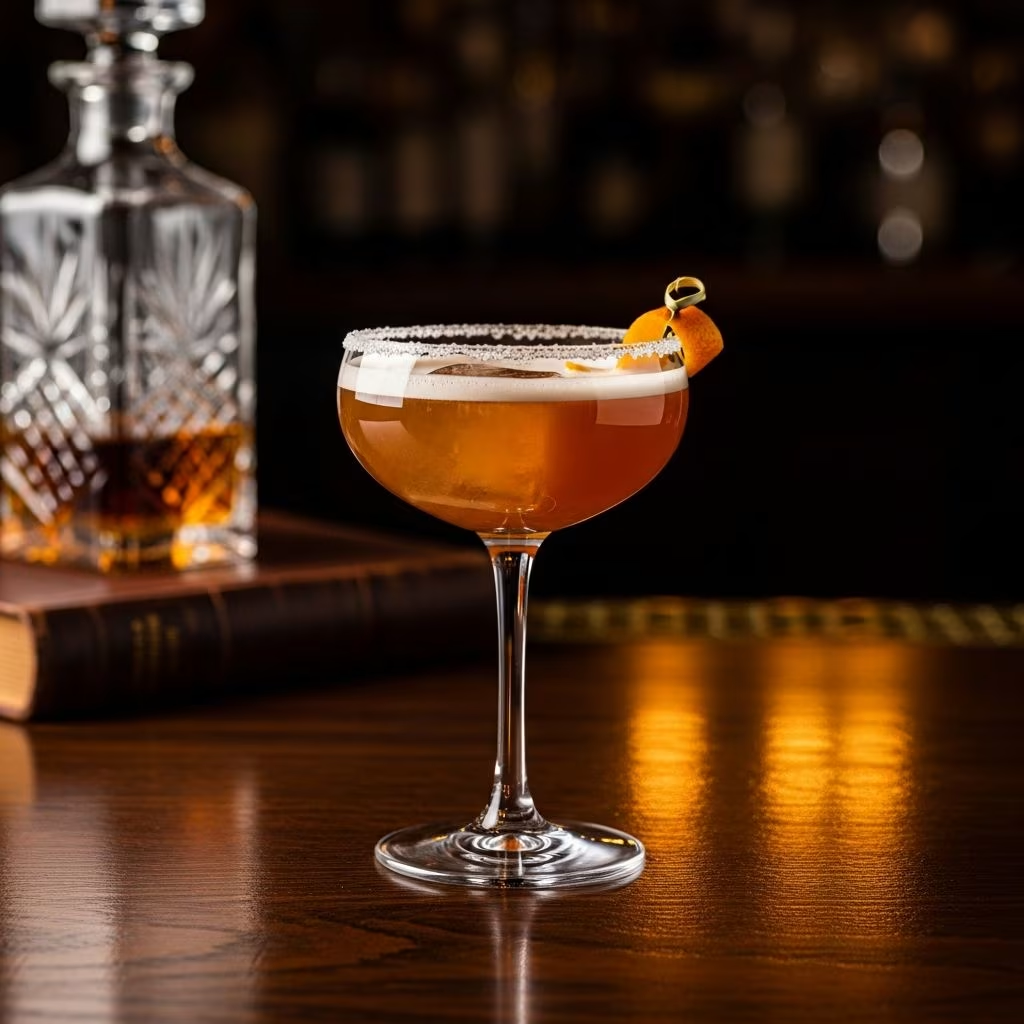
The Sidecar stands as one of the most revered cocktails in mixology history, blending the robust depth of cognac with the bright zing of citrus and a touch of orange liqueur sweetness. This golden-hued drink, often served in a sugar-rimmed coupe glass, delivers a perfect harmony of tart, sweet, and spirit-forward flavors that have captivated drinkers for over a century. Whether you’re hosting a dinner party or unwinding after a long day, mastering the Sidecar elevates your home bar game to professional levels.
Origins and Evolution of the Sidecar
Emerging in the early 20th century, the Sidecar’s roots trace back to the bustling bar scenes of London and Paris, possibly during World War I. One popular tale links it to British Army officers riding in motorcycle sidecars, with the drink’s name inspired by the dusty, citrus-stained glasses left on the vehicle’s frame. By the 1920s, it gained prominence in American cocktail culture, appearing in influential books like Harry Craddock’s Savoy Cocktail Book.
Early recipes varied, reflecting the era’s experimental spirit. Some versions called for equal parts cognac, Cointreau, and lemon juice—a 1:1:1 ratio—creating a bolder, sweeter profile. Others, like Craddock’s, favored a 2:1:1 balance to temper the orange notes and emphasize the brandy. Over decades, the cocktail evolved, incorporating subtle tweaks like simple syrup for finesse or alternative spirits for modern twists, yet its core identity as a refined sour remains intact.
Essential Ingredients for the Perfect Sidecar
Quality ingredients are non-negotiable for this classic. Here’s a breakdown of what makes the Sidecar shine:
- Cognac (1.5-2 oz): The star player, opt for VSOP or VS grades like Hennessy V.S.O.P. or Rémy Martin 1738 for smooth vanilla, fruit, and oak notes. Substitutes like Armagnac or high-quality bourbon work in a pinch.
- Cointreau or Orange Liqueur (0.75-1 oz): This triple sec adds floral orange brightness without overpowering. Avoid cheaper triple secs; Cointreau’s purity elevates the drink.
- Fresh Lemon Juice (0.75 oz): Always freshly squeezed for vibrant acidity. Meyer lemons offer a milder, sweeter edge if available.
- Simple Syrup or Demerara Syrup (0.25 oz, optional): A touch rounds out tartness, especially in drier recipes.
- Sugar for Rimming: Superfine sugar creates a contrasting crust that balances sourness.
- Garnish: Orange or lemon twist, expressed over the glass for aromatic oils.
Proportions matter: A standard recipe uses 2 oz cognac, ¾ oz Cointreau, ¾ oz lemon juice, and a dash of syrup, yielding a tart-forward sipper.
Step-by-Step Guide to Crafting Your Sidecar
Preparation takes just 5 minutes, but precision ensures excellence. Follow these steps for bar-quality results:
- Prep the Glass: Chill a coupe or martini glass in the freezer. Rub a lemon wedge around half the rim and dip in superfine sugar for that signature look.
- Measure Ingredients: In a cocktail shaker, add 2 oz cognac, ¾ oz Cointreau, ¾ oz fresh lemon juice, and ¼ oz simple syrup.
- Add Ice and Shake: Fill with ice cubes. Shake vigorously for 8-12 seconds until frosty cold—over-shaking dilutes the mix.
- Strain and Garnish: Double-strain into the prepared glass to remove ice shards. Express an orange peel over the top, twist, and drop in.
Serve straight up, no ice, to preserve intensity. Yields one cocktail; scale up for batches.
| Ingredient | Amount |
|---|---|
| Cognac (VSOP) | 2 oz |
| Cointreau | ¾ oz |
| Lemon Juice | ¾ oz |
| Simple Syrup | ¼ oz (optional) |
Flavor Profile and Why It Works
The Sidecar tastes like a sophisticated whiskey sour: cognac’s warmth and dried fruit notes mingle with lemon’s sharp acidity, softened by Cointreau’s candied orange. The sugar rim adds crunch and offsets tartness, while the garnish releases essential oils for aroma. It’s dry yet approachable, with a boozy backbone ideal for sipping slowly.
Balance is key—too much lemon overwhelms, too much liqueur sweetens excessively. Fresh juice prevents muddiness, and quality cognac avoids harsh burn.
Pro Tips for Sidecar Perfection
- Shake Smart: 10 seconds max to chill without dilution.
- Glassware Matters: Coupe concentrates aromas; martini works too.
- Batch for Parties: Multiply by guests, stir in a pitcher, shake individuals.
- Storage: Juice ahead, but shake fresh for best foam.
- Common Fixes: Too sour? Add syrup. Too sweet? More lemon.
Delicious Sidecar Variations to Explore
While the classic reigns, variations keep it fresh:
- Between the Sheets: Split cognac with white rum for tropical lightness (1 oz each cognac/rum, ½ oz Cointreau/lemon, ¼ oz syrup).
- Champagne Sidecar: Top with sparkling wine for fizz (¾ oz each cognac/Cointreau/lemon, tsp syrup).
- Champs Élysées: Add green Chartreuse and bitters for herbal depth (2 oz cognac, ¾ oz lemon, ½ oz Chartreuse/syrup).
- Amaro Sidecar: Incorporate blanco amaro for bittersweet complexity.
- Bourbon Sidecar: Swap cognac for bourbon; richer, American twist.
Experiment responsibly—taste as you go.
Pairing the Sidecar: Food and Occasions
This versatile drink pairs with creamy cheeses, roasted nuts, or seafood appetizers. Its citrus cuts through rich pâté or foie gras, a nod to its French heritage. For dinners, it precedes poultry or veal; dessert-wise, it complements fruit tarts.
Occasions: Cocktail hours, holidays, or romantic evenings. Its elegance suits black-tie events or casual gatherings.
Frequently Asked Questions (FAQs)
What glass is best for a Sidecar?
A chilled coupe glass is traditional, enhancing aromas and presentation.
Can I use triple sec instead of Cointreau?
Yes, but Cointreau’s superior quality yields better results.
Is simple syrup necessary?
Optional for drier profiles; it softens acidity in balanced recipes.
How do I make simple syrup?
Boil equal parts sugar and water; cool and store refrigerated up to a month.
Non-alcoholic version?
Seedlip Grove 42, orange juice, lemon, syrup mimic the profile.
History Timeline: Key Milestones
| Year | Milestone |
|---|---|
| 1910s | Possible WWI origins in Europe. |
| 1920s | Featured in Savoy Cocktail Book. |
| Today | Revived in craft cocktail scenes worldwide. |
References
- Sidecar Cocktail | Social Hour – Tom Macy — Tom Macy. Accessed 2026. https://www.tommacy.com/sidecar
- The Classic Sidecar Cocktail – Not Entirely Average — Jenny DeRemer. Accessed 2026. https://notentirelyaverage.com/sidecar-cocktail-recipe/
- Sidecar Cocktail Recipe – YouTube — Steve the Bartender. Accessed 2026. https://www.youtube.com/watch?v=HtZamU4tGA4
- Sidecar – A Bar Above — A Bar Above. Accessed 2026. https://abarabove.com/recipe/sidecar/
- Classic Hennessy Cognac Sidecar Recipe — Hennessy. Accessed 2026. https://www.hennessy.com/en-us/cocktails/sidecar-cocktail
- Sidecar Cocktail Recipe – Cognac Cocktails – Rémy Martin USA — Rémy Martin. Accessed 2026. https://www.remymartin.com/en-us/cocktail-recipe/remy-sidecar/
- How to Make a Sidecar, the Classic Cognac Cocktail – YouTube — Robb Report. Accessed 2026. https://www.youtube.com/watch?v=RO1xO0NBa-s