Classic ratatouille is a timeless Provençal dish that celebrates the bounty of summer vegetables. This rustic stew combines eggplant, zucchini, bell peppers, tomatoes, onions, and garlic, slowly cooked to develop deep, melded flavors. Originating from the sunny region of Nice in southern France, it embodies Mediterranean simplicity and healthfulness.
The Essence of Provençal Ratatouille
Ratatouille, known as ratatouille niçoise, traces its roots to post-World War I Provence, where resourceful cooks transformed abundant garden produce into nourishing meals. Unlike the layered, visually stunning version popularized by the Pixar film, the traditional preparation involves separately cooking each vegetable to preserve their individual textures and tastes before combining them in a gentle simmer. This method ensures eggplant remains velvety, zucchini tender-crisp, and tomatoes form a rich base sauce.
The dish’s name derives from the French verb ratatouiller, meaning to stir up or toss together, reflecting its straightforward yet artful assembly. It’s naturally vegan, gluten-free, and packed with vitamins, fiber, and antioxidants from its vegetable-forward profile. A serving provides roughly 150-200 calories, making it ideal for light dinners or sides.
Key Ingredients for Authentic Flavor
Selecting fresh, seasonal produce is crucial for the best ratatouille. Focus on ripe, firm vegetables at peak ripeness for maximum taste and nutrition.
- Eggplant: 1-3 medium globe eggplants, cubed. Their spongy texture absorbs flavors beautifully.
- Zucchini and Yellow Squash: 2-3 each, sliced or cubed. These add mild sweetness and tenderness.
- Bell Peppers: 1-2 red, yellow, or green, diced for color and subtle heat.
- Onions and Garlic: 1 large onion and 3-6 cloves garlic, finely chopped for aromatic depth.
- Tomatoes: 2-3 fresh ripe or 28oz canned whole peeled, crushed for the sauce base.
- Herbs: Fresh thyme, oregano, basil, or 1-2 tbsp herbes de Provence. Bay leaves enhance earthiness.
- Olive Oil: 1/4-1/2 cup extra-virgin for sautéing, imparting fruity notes.
- Seasonings: Salt, black pepper, optional crushed red pepper flakes for a kick.
Optional additions like white wine or vinegar brighten the stew, while Parmesan or parsley garnish elevates presentation.
Step-by-Step Cooking Guide
Preparation time: 30 minutes. Cook time: 45-60 minutes. Serves 4-6. This stovetop method yields the most authentic results, though oven roasting works for hands-off cooking.
- Prep Vegetables: Cube eggplant into 1-inch pieces, salt generously, and let drain 20-30 minutes to remove bitterness. Pat dry. Slice zucchini, squash, peppers, onion, and mince garlic.
- Cook Eggplant: Heat 2 tbsp olive oil in a large skillet or Dutch oven over medium-high. Sauté eggplant until golden and softened, 8-10 minutes. Remove to a bowl.
- Brown Squash: Add more oil if needed. Cook zucchini and yellow squash until browned, 5-7 minutes. Transfer to eggplant bowl.
- Build the Base: Sauté onion until translucent, 4-5 minutes. Add peppers and garlic; cook until fragrant, 2-3 minutes. Deglaze with 1/4 cup white wine if using, reducing by half.
- Simmer Tomatoes: Stir in crushed tomatoes, bay leaf, oregano, thyme, red pepper flakes, salt, and pepper. Simmer 10 minutes until thickened.
- Combine and Stew: Return eggplant and squash to the pot. Simmer uncovered 20-25 minutes, stirring occasionally, until vegetables are tender and flavors meld.
- Finish: Stir in fresh basil or parsley. Taste and adjust seasoning. Let rest 10 minutes for intensified taste.
For oven variation: Roast vegetables separately at 400°F on sheet pans with oil, herbs, and salt for 25-30 minutes, then combine and bake 20 more minutes.
Pro Tips for Perfection
- Cook vegetables separately to avoid sogginess; eggplant and squash release water that can dilute flavors.
- Use high-quality olive oil—it’s the flavor backbone.
- Fresh summer tomatoes shine; off-season, opt for San Marzano canned.
- Don’t rush the simmer; low heat allows magic to happen.
- Make ahead: Flavors improve overnight. Refrigerate up to 5 days or freeze 3 months.
Nutrition and Health Benefits
Ratatouille is a nutrient powerhouse. Eggplant provides fiber and nasunin, an antioxidant protecting brain cells. Zucchini offers vitamin C and potassium for heart health. Tomatoes deliver lycopene, linked to reduced cancer risk. Peppers add vitamin A for immunity.
| Nutrient (per serving) | Amount | % Daily Value |
|---|---|---|
| Calories | 180 | 9% |
| Fiber | 7g | 25% |
| Vitamin C | 90mg | 100% |
| Vitamin A | 2000IU | 40% |
| Potassium | 800mg | 17% |
Data approximated from standard servings. Low-carb (15g net carbs) and keto-friendly with modifications.
Serving Ideas and Pairings
Serve warm or at room temperature. Classics include crusty baguette, polenta, or rice. Top grilled chicken, fish, or eggs for protein. Layer in lasagna or use as pizza topping.
- With pasta: Toss with spaghetti for primavera vibes.
- Protein boost: Spoon over baked cod or tofu.
- Breakfast: Eggs baked in ratatouille ramekins (shakshuka-style).
- Wine pairing: Rosé from Provence or light Pinot Noir.
Common Mistakes to Avoid
- Crowding the pan: Leads to steaming, not browning.
- Skipping eggplant salting: Results in bitter, watery texture.
- Overcooking: Vegetables turn mushy; aim for tender-firm.
- Ignoring herb balance: Too much overpowers veggies.
Variations for Every Taste
- Roasted Version: All-in-one sheet pan for caramelization.
- Spicy: Add harissa or chili.
- Winter: Root veggies like carrots substitute squash.
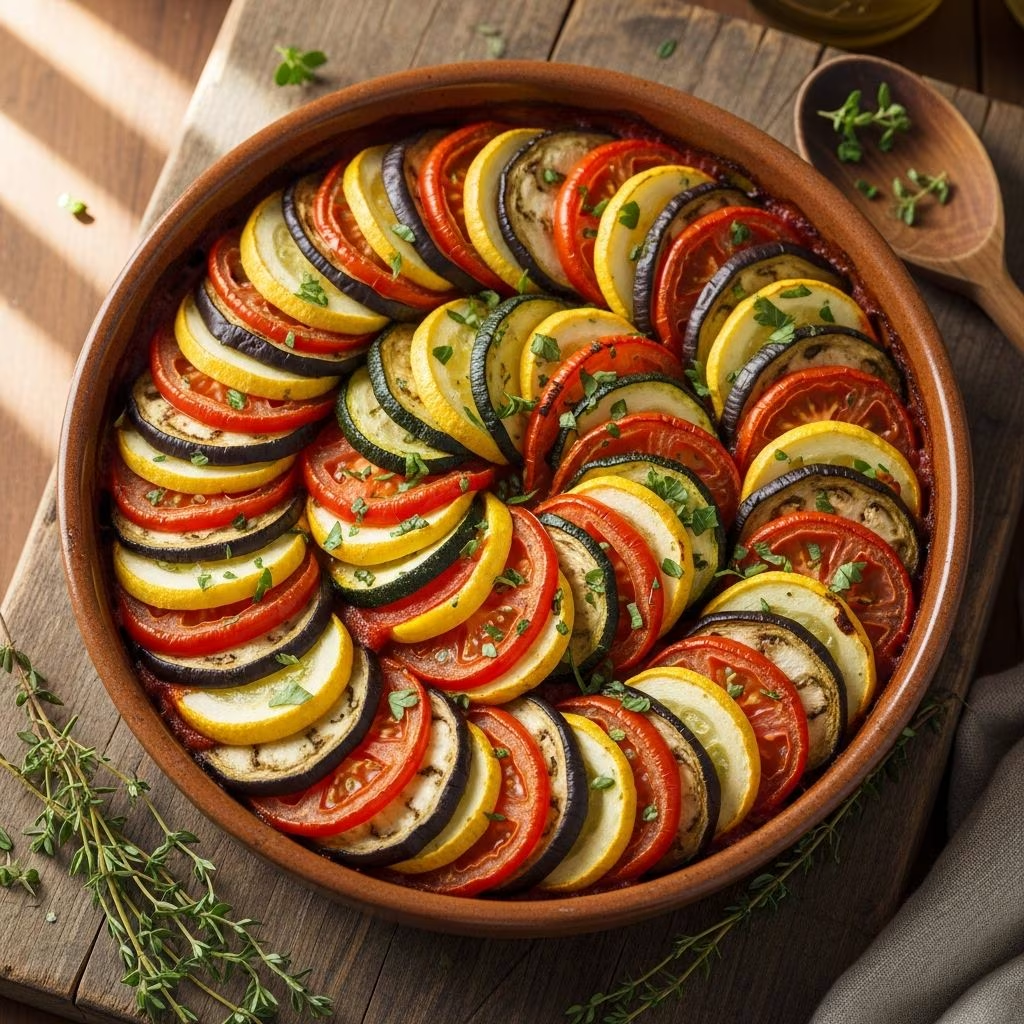
- Stacked: Thinly sliced, baked like confit byaldi for elegance.
Frequently Asked Questions (FAQs)
Can I make ratatouille in advance?
Yes, it tastes better after 1-2 days. Reheat gently with a splash of water.
Is ratatouille vegan?
Absolutely, with no dairy or animal products.
What’s the difference between ratatouille and caponata?
Ratatouille is Provençal stew; caponata is Sicilian with olives, capers, and vinegar tang.
How do I store leftovers?
Fridge: 4-5 days airtight. Freezer: 3 months in portions.
Can I use yellow squash instead of zucchini?
Yes, or mix both for variety.
Why Ratatouille Endures
This dish’s versatility, affordability, and vibrant taste keep it relevant across generations. Whether from a French countryside garden or your local market, ratatouille transports you to Provence with every spoonful. Experiment confidently—its forgiving nature rewards home cooks.
References
- Authentic and Healthy Ratatouille Recipe – Le Chef’s Wife — Le Chef’s Wife. 2023. https://lechefswife.com/authentic-ratatouille-recipe/
- Traditional French Ratatouille Recipe – From A Chef’s Kitchen — From A Chef’s Kitchen. 2023. https://www.fromachefskitchen.com/ratatouille/
- Traditional ratatouille recipe by chef Vivien – YouTube — Chef Vivien. 2023. https://www.youtube.com/watch?v=q1vmVmbeH20
- Roasted Ratatouille Recipe (Easy French Classic) — Pamela Salzman. 2023. https://pamelasalzman.com/roasted-ratatouille-recipe/
- Ratatouille Recipe – Love and Lemons — Love and Lemons. 2023. https://www.loveandlemons.com/ratatouille-recipe/
- Ratatouille Recipe (Classic-French) – Chef Billy Parisi — Chef Billy Parisi. 2023. https://www.billyparisi.com/make-classic-ratatouille-recipe/