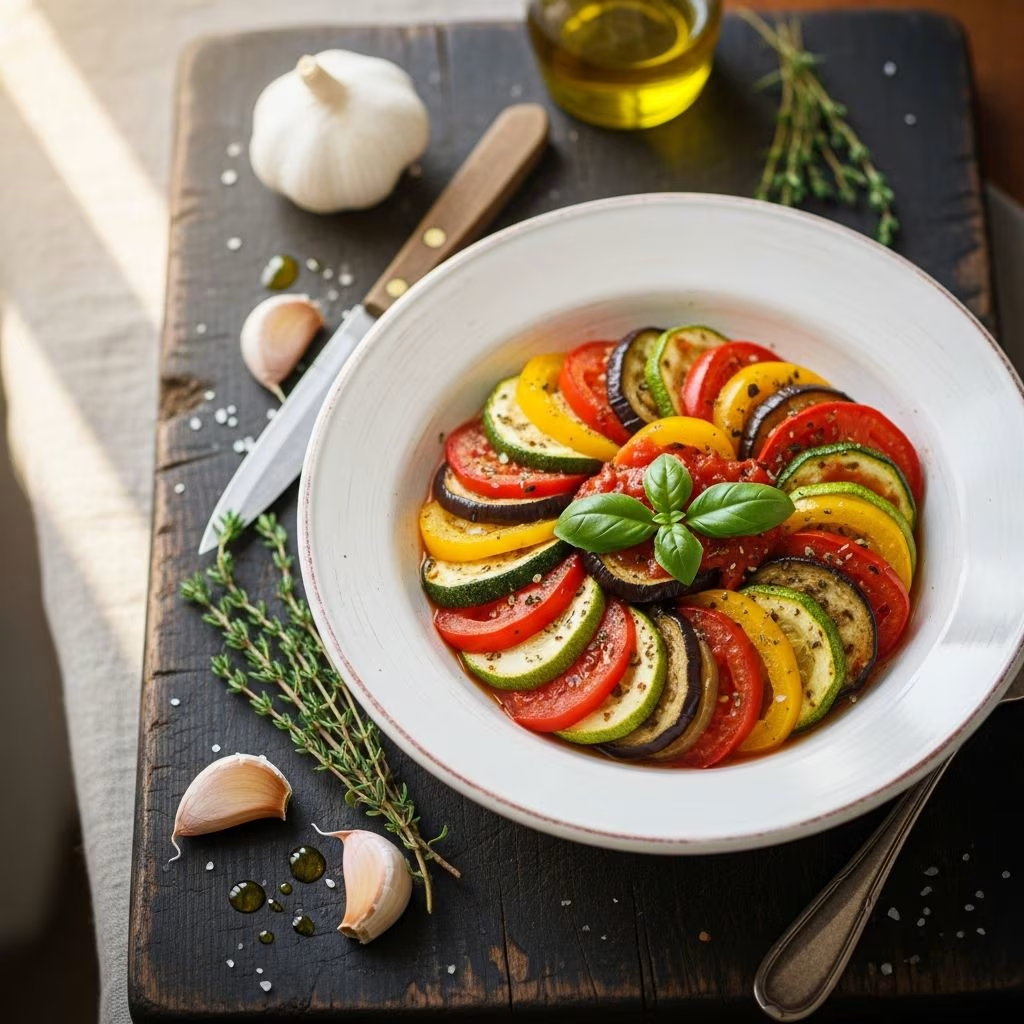
Experience the essence of southern French countryside cooking with ratatouille, a vibrant stew that celebrates the bounty of summer produce. This dish transforms humble vegetables into a symphony of flavors, where each ingredient shines while harmonizing in a tomato-based broth infused with herbs. Originating from the Provence region, particularly around Nice, ratatouille has evolved from a rustic peasant meal to a beloved staple in global cuisine. Whether served warm as a main course or chilled as a side, its versatility makes it ideal for weeknight dinners, potlucks, or elegant gatherings.
The Heritage and Appeal of Ratatouille
Ratatouille embodies the Mediterranean diet’s principles, emphasizing fresh, seasonal vegetables cooked simply to preserve their natural sweetness and texture. Historically, it was prepared by layering or stewing eggplant, zucchini, squash, bell peppers, onions, garlic, and tomatoes—key elements that define its character. The name derives from the French ‘touiller,’ meaning to toss, reflecting the traditional method of combining ingredients in a pot. Today, variations abound, from quick stovetop versions to baked casseroles, but the core remains a celebration of garden-fresh produce.
What draws people to ratatouille is its adaptability. It’s naturally vegan, gluten-free, and packed with nutrients like vitamins A and C, fiber, and antioxidants from its colorful veggies. A single serving provides low calories yet high satisfaction, making it perfect for health-conscious eaters. Pair it with crusty bread, pasta, or eggs for a complete meal, and it tastes even better the next day as flavors meld.
Essential Ingredients for Authentic Flavor
Selecting quality produce is crucial for ratatouille’s success. Focus on firm, ripe vegetables at their peak ripeness to ensure the best taste and texture.
- Eggplant: One medium globe eggplant, cubed into 1-inch pieces. Its spongy texture absorbs flavors beautifully.
- Summer Squash: Two medium zucchini and two yellow squash, similarly cubed, for varied color and subtle sweetness.
- Bell Peppers: Two red or yellow ones, diced, adding sweetness and vibrant hue.
- Onions and Garlic: One medium red onion and four cloves of garlic, minced, for aromatic depth.
- Tomatoes: Three fresh plum tomatoes, chopped, plus a 15-ounce can of crushed tomatoes for a robust base.
- Herbs and Seasonings: Dried oregano, bay leaf, fresh basil, salt, pepper, and optional crushed red pepper flakes.
- Liquids: 1/4 cup olive oil and 1/2 cup dry white wine for deglazing and richness.
These components create balance: earthy eggplant, crisp squash, sweet peppers, and tangy tomatoes, all elevated by olive oil and herbs.
Step-by-Step Stovetop Preparation
The traditional stovetop method cooks vegetables separately before simmering together, preventing sogginess and building layers of flavor. This approach, inspired by Provençal techniques, takes about 1 hour 15 minutes total.
- Prep Eggplant: Cube eggplant, toss with 1 teaspoon salt, and let sit 20 minutes to draw out moisture. Rinse and pat dry.
- Cook Eggplant: Heat 2 tablespoons olive oil in a large Dutch oven over medium-high. Brown eggplant 5-7 minutes, then transfer to a bowl.
- Sauté Squash: Add more oil if needed; cook zucchini and yellow squash until softened and lightly browned, about 5 minutes. Add to eggplant bowl.
- Build Base: Sauté onion until translucent, add bell peppers to soften, then stir in garlic. Pour in white wine, reduce by half.
- Simmer Stew: Add fresh and crushed tomatoes, bay leaf, oregano, and red pepper flakes. Return veggies to pot; simmer uncovered 20-25 minutes until thickened.
- Finish: Season with salt, pepper, and stir in fresh basil. Remove bay leaf.
This method yields tender yet distinct vegetables in a glossy sauce, ready to serve hot or at room temperature.
Oven-Roasted Variation for Hands-Off Cooking
For a modern twist, roasting concentrates flavors through caramelization. Preheat oven to 400°F. Toss chopped eggplant, zucchini, peppers, onion, garlic, and tomatoes with olive oil, balsamic vinegar, thyme, and salt on a large sheet pan or roasting dish. Roast 40-50 minutes, stirring occasionally, until veggies are charred at edges and stewy. This passive technique enhances sweetness without constant stirring, ideal for busy cooks.
Comparison of Cooking Methods
| Method | Time | Effort Level | Flavor Profile | Best For |
|---|---|---|---|---|
| Stovetop | 75 minutes | Medium (active stirring) | Layered, fresh herb-forward | Authentic taste |
| Oven-Roasted | 50 minutes | Low (set-it-and-forget-it) | Caramelized, intense sweetness | Weeknights |
| Baked Casserole | 60 minutes | Low | Creamy, layered | Entertaining |
Creative Serving Suggestions and Pairings
Ratatouille’s flexibility shines in presentation. Serve over polenta or quinoa for heartiness, top with a fried egg for Provençal-inspired ‘ratatouille aux oeufs,’ or layer in a tart with goat cheese. For pasta lovers, mix roasted ratatouille with spaghetti and Parmesan.
- With Proteins: Alongside grilled chicken, fish, or sausages.
- As Appetizer: Chilled with baguette slices and herbed cheese.
- In Sandwiches: On focaccia with mozzarella for a veggie panini.
- Topped: Fresh goat cheese and pine nuts for creaminess and crunch.
Accompany with a crisp rosé from Provence or light red wine to complement its earthiness.
Storage, Make-Ahead, and Freezing Tips
Ratatouille improves with age. Cool completely, then store in an airtight container in the fridge for up to 5 days. Reheat gently with a splash of water. For freezing, portion into freezer bags for up to 3 months; thaw overnight and reheat. Make-ahead: Prepare through simmering, refrigerate up to 2 days, then add basil before serving.
Nutrition and Health Benefits
A 1-cup serving offers approximately 150 calories, 10g fat (from olive oil), 15g carbs, 4g fiber, and 3g protein. Rich in lycopene from tomatoes, beta-carotene from peppers, and potassium from eggplant, it supports heart health and digestion. The anti-inflammatory properties of olive oil and herbs add to its wellness appeal.
Frequently Asked Questions
Can I make ratatouille without eggplant?
Yes, substitute with more squash or mushrooms, though eggplant provides traditional texture.
Is ratatouille vegan?
Absolutely, the classic version uses no animal products.
How do I prevent mushy vegetables?
Cook in batches and avoid over-stirring during simmering.
What’s the difference between ratatouille and caponata?
Ratatouille is a gentle stew; caponata is Sicilian with olives, capers, and vinegar tang.
Can I use fresh tomatoes only?
Yes, but canned add consistent body; blend fresh ones if needed.
Customizing Your Ratatouille
Adapt seasonally: winter versions with root veggies or butternut squash. Add smoked paprika for depth or potatoes for a casserole style. Spice lovers can increase red pepper flakes or add harissa.
Explore global fusions like Mexican-inspired with cilantro and lime, or Italian with Parmesan rind in the simmer. For kids, blend into a sauce for hidden veggies.
Perfecting Texture and Flavor Balance
Key to excellence: Salt eggplant first to avoid bitterness. Use high-quality extra-virgin olive oil—its fruitiness elevates the dish. Taste midway through simmering; adjust acidity with a pinch of sugar if tomatoes are sharp. Fresh basil at the end preserves its aroma, while dried oregano withstands cooking.
Common pitfalls: Overcrowding the pan leads to steaming, not browning. Solution: Use a wide pot. If sauce is thin, simmer longer uncovered.
References
- Traditional French Ratatouille Recipe — From A Chef’s Kitchen. 2023-06-15. https://www.fromachefskitchen.com/ratatouille/
- Ratatouille Recipe — ChefDeHome.com. 2022-08-10. https://www.chefdehome.com/recipes/561/ratatouille
- 25 Minute Ratatouille Recipe — Healthy Seasonal Recipes. 2024-01-20. https://www.healthyseasonalrecipes.com/smoky-ratatouille-with-goat-cheese-and-pine-nuts/
- Roasted Ratatouille Pasta — Alexandra’s Kitchen. 2017-09-01. https://alexandracooks.com/2017/09/01/roasted-ratatouille-pasta/