Pumpkin pie holds a special place in American culinary tradition, particularly during the autumn season and holiday gatherings. This timeless dessert combines the natural sweetness of pumpkin with warm spices, creating a comforting treat that appeals to multiple generations. The addition of a homemade walnut streusel topping elevates this classic recipe by providing textural contrast and enhanced flavor complexity.
Understanding the Foundation of Quality Pumpkin Pie
Creating an exceptional pumpkin pie begins with understanding its core components. The filling serves as the centerpiece, traditionally made from pumpkin puree, eggs, and sweetened condensed milk. This combination creates a custard-like consistency that is both creamy and stable during baking. The use of sweetened condensed milk, rather than regular milk or cream, provides additional sweetness and body to the filling without requiring extra sugar.
The texture of pumpkin pie filling depends significantly on the incorporation of whipped egg whites. This technique, borrowed from French culinary methods, introduces air into the mixture, resulting in a lighter, more delicate crumb structure. The contrast between the dense pumpkin base and the airy egg white component creates the desirable mouthfeel that distinguishes superior pumpkin pie from ordinary versions.
Key Ingredients and Their Roles
Each ingredient in this recipe serves a specific purpose in developing flavor and texture:
- Pumpkin puree: Provides the characteristic flavor, natural sweetness, and nutritional value including fiber and beta-carotene
- Sweetened condensed milk: Adds creaminess and sweetness while helping bind the filling together
- Egg yolks: Contribute richness and help create a stable emulsion within the filling
- Egg whites: When whipped to soft peaks, they introduce air and create a mousse-like texture
- Warm spices: Cinnamon, ginger, and nutmeg provide depth and complexity to the flavor profile
- Walnuts: Offer crunch, earthiness, and nutritional benefits including healthy fats and protein
The Spice Blend: Creating Warmth and Depth
The spice combination in traditional pumpkin pie is crucial to its appeal. Ground cinnamon provides the dominant warm note, while ginger adds subtle heat and complexity. Nutmeg contributes an earthy sweetness that rounds out the flavor profile. A pinch of salt enhances all these flavors, preventing the pie from tasting one-dimensional.
The proportion of spices matters significantly. Too much cinnamon can overwhelm the delicate pumpkin flavor, while insufficient spicing results in a bland filling. The classic ratio of one teaspoon cinnamon to half-teaspoon each of ginger and nutmeg creates a balanced combination that has proven successful across countless home kitchens.
Preparation: Building Your Pumpkin Filling
The process of combining ingredients determines the final texture and quality of your pie. Begin by thoroughly mixing the pumpkin puree with sweetened condensed milk and egg yolks in a large bowl. This initial combination creates a smooth base before the addition of spices.
Incorporating the spices requires careful attention. Rather than dumping all spices into the mixture at once, gradually stir them in while constantly mixing. This prevents clumping and ensures even distribution throughout the filling. Proper mixing techniques guarantee that every bite contains the intended spice profile.
The most critical step involves preparing and folding the whipped egg whites. In a separate, scrupulously clean glass or metal bowl, whip egg whites until soft peaks form. This means the peaks should curl over when the whisk is lifted, rather than standing perfectly straight. Over-whipping egg whites can cause them to break down and lose their air content.
Gently fold the whipped egg whites into the pumpkin mixture using a rubber spatula. The folding motion—drawing the spatula down through the center, across the bottom, and up the side—preserves the air you’ve worked to incorporate. Repeat this process around the bowl until no white streaks remain, being careful not to deflate the mixture with aggressive stirring.
Baking Strategy and Temperature Management
Two-stage baking produces superior results compared to single-temperature methods. Beginning at 425 degrees Fahrenheit (220 degrees Celsius) for 15 minutes sets the crust and prevents sogginess. This initial high-heat phase gelatinizes starches in the flour, creating a protective barrier between the crust and the moist filling.
After the initial 15 minutes, reduce the oven temperature to 350 degrees Fahrenheit (175 degrees Celsius). This lower temperature allows the filling to set gradually without browning excessively or developing cracks. The filling is properly set when the edges are firm but the center still jiggles slightly when the pie is gently shaken.
Crafting the Walnut Streusel Topping
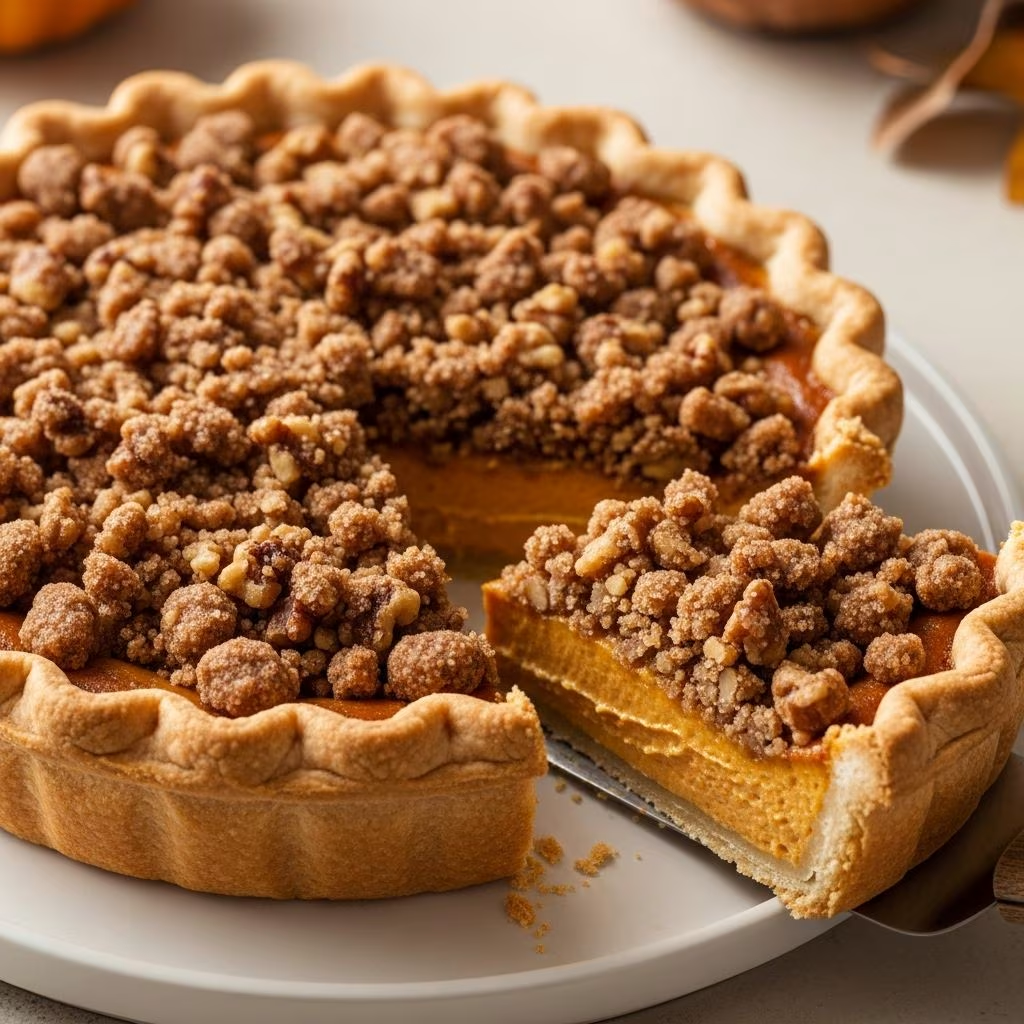
The streusel topping adds textural interest and flavor complexity to an already delicious pie. To prepare this component, combine all-purpose flour, packed brown sugar, and ground cinnamon in a small bowl. Brown sugar contributes moisture and deeper sweetness compared to granulated sugar, resulting in a more cohesive topping that doesn’t separate from the pie during baking.
Cut cold butter into small cubes before incorporating it into the dry mixture. Using chilled butter prevents it from fully incorporating, instead creating small pockets of fat that produce the desired crumbly texture. Work the butter in using a fork or pastry blender, pressing and rubbing until the mixture resembles coarse breadcrumbs or wet sand.
Fold the chopped walnuts into the streusel mixture just before topping the pie. This prevents the nuts from becoming saturated with moisture that would compromise their crunch. Distribute the streusel evenly across the entire surface of the pie, pressing gently to help it adhere to the filling.
Timing and Doneness Assessment
The complete baking time after adding the streusel typically ranges from 40 to 45 minutes at the reduced temperature. However, oven variability means this timeline should serve as a guide rather than a strict rule. Several visual and tactile indicators help determine when your pie has reached optimal doneness.
A properly baked pumpkin pie exhibits a set edge with a center that jiggles slightly when gently moved. The filling should not appear wet or liquid near the center, but complete firmness throughout creates a dense, cake-like texture rather than the desirable custard-like consistency. The streusel topping should be golden brown, indicating that the butter has adequately toasted and the nuts have developed deeper flavor.
Cooling and Resting Periods
Patience after removing the pie from the oven significantly impacts the final result. Allow the pie to cool at room temperature for several hours before slicing. This resting period allows the filling to set completely through carryover cooking and cooling, resulting in cleaner slices rather than a runny texture. Some bakers recommend refrigerating the pie for at least 4 hours or overnight before serving to achieve optimal texture and flavor development.
Storage and Make-Ahead Strategies
Pumpkin pie demonstrates excellent storage properties, remaining fresh and delicious for several days when properly preserved. Cover cooled pie with plastic wrap or aluminum foil and refrigerate for up to 3 days. The flavors actually improve slightly during this storage period as spices continue to bloom and distribute throughout the filling.
For longer storage, freeze the baked pie for up to 2 months. Wrap it thoroughly to prevent freezer burn, then thaw overnight in the refrigerator before serving. Alternatively, prepare and freeze the unbaked pie, extending your preparation time to accommodate the longer baking duration required for frozen pies.
Serving Suggestions and Flavor Pairings
Traditional accompaniments enhance the pumpkin pie experience. Freshly whipped cream serves as the classic pairing, providing cooling contrast and richness. Some prefer the simplicity of vanilla ice cream, which offers both temperature and flavor contrast. For a more sophisticated presentation, drizzle plates with caramel sauce or spiced cream before plating.
Troubleshooting Common Pumpkin Pie Problems
| Issue | Cause | Solution |
|---|---|---|
| Soggy crust | Insufficient initial baking or excess moisture | Use high initial temperature for 15 minutes; egg whites reduce moisture |
| Cracked filling | Oven temperature too high or overbaking | Use thermometer to verify temperature; stop baking when center jiggles |
| Runny filling after cooling | Underbaked or filling not set | Extend baking time; ensure adequate resting period |
| Dense, heavy texture | Egg whites not whipped or over-mixed | Whip egg whites separately; fold gently to preserve air |
| Streusel topping soggy | Added too early or inadequate butter | Add topping after 25 minutes of baking; ensure cold butter |
Frequently Asked Questions
Can I use fresh pumpkin instead of canned puree?
Fresh pumpkin can substitute for canned, but requires additional preparation. Fresh pumpkin contains more water, necessitating cooking and straining to reduce moisture content. Use approximately 1.5 times the volume of fresh pumpkin, as water content will be higher than canned varieties.
What if my egg whites won’t whip to soft peaks?
Ensure your bowl and whisk are completely clean and free of fat residue, which prevents proper whipping. Even a tiny amount of egg yolk in your white portion will inhibit foaming. Room temperature eggs whip more easily than cold ones.
Can I make this pie ahead of time?
Yes, the baked pie stores well for 3 days refrigerated or 2 months frozen. Alternatively, assemble the unbaked pie and refrigerate up to 24 hours before baking, though this requires extending baking time by approximately 10-15 minutes.
Is there a substitute for sweetened condensed milk?
Heavy cream or evaporated milk can replace sweetened condensed milk, but you’ll need to increase the sugar content by approximately one-half cup to maintain sweetness levels in the filling.
How do I prevent the crust edges from browning too quickly?
Shield the pie crust edges with aluminum foil rings or strips after the first 15 minutes of baking. This prevents over-browning while the filling continues to set.
References
- Brown Family’s Favorite Pumpkin Pie — Allrecipes. Accessed April 2026. https://www.allrecipes.com/recipe/12504/brown-familys-favorite-pumpkin-pie/
- The BEST Pumpkin Pie Recipe — Tastes Better From Scratch. https://tastesbetterfromscratch.com/pumpkin-pie-with-caramel-pecan-topping/
- The Pumpkin Pie Recipe — Alton Brown. https://altonbrown.com/recipes/the-pumpkin-pie/
- Brown Sugar Pumpkin Pie — The Country Cook. https://www.thecountrycook.net/brown-sugar-pumpkin-pie/