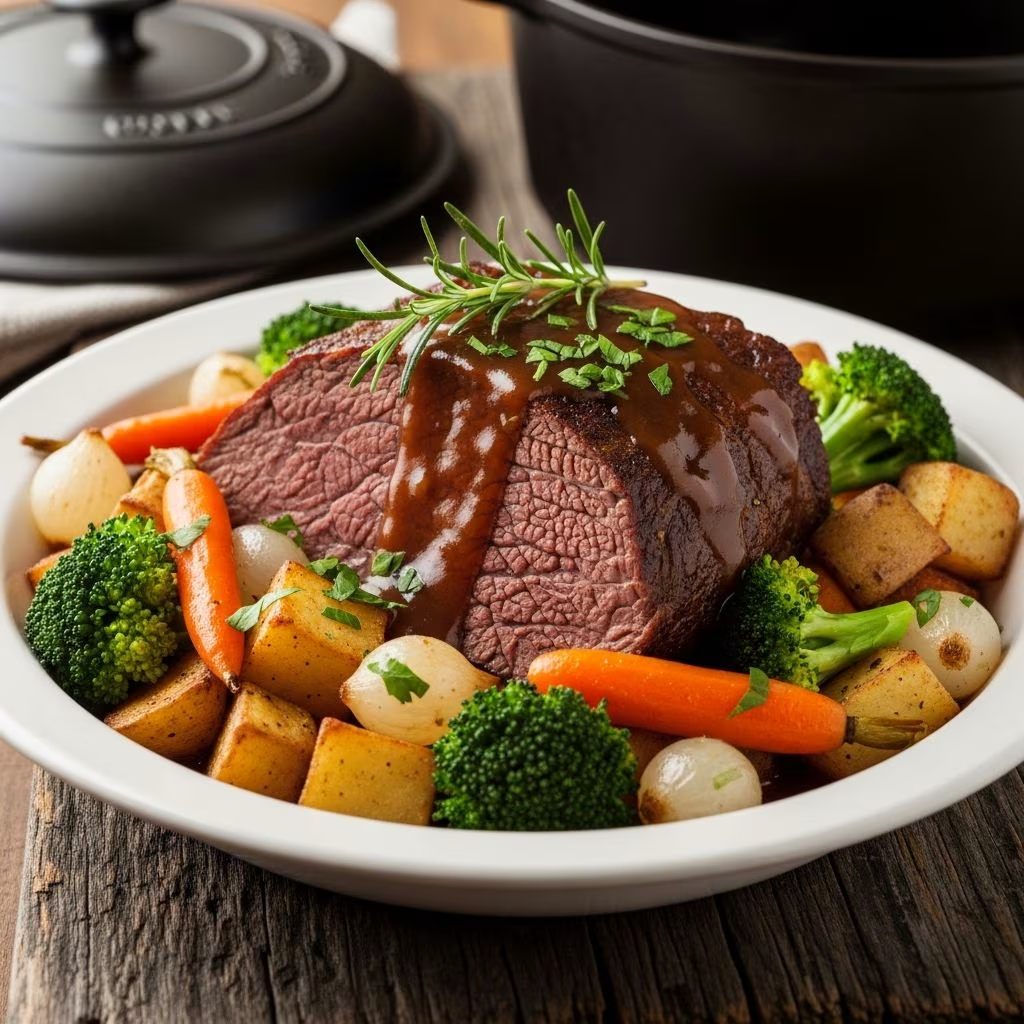
Pot roast stands as a cornerstone of home cooking, delivering melt-in-your-mouth beef alongside vibrant, tender vegetables all infused in a deeply flavorful gravy. This dish transforms simple ingredients into a nourishing meal that warms the soul, making it ideal for weeknight dinners or special gatherings. With roots in traditional American cuisine, pot roast relies on low-and-slow cooking to break down tough cuts of beef while coaxing out natural sweetness from root vegetables.
Why Pot Roast Remains a Kitchen Staple
The appeal of pot roast lies in its forgiving nature and versatility. A well-marbled chuck roast becomes fork-tender after hours of braising, absorbing aromas from herbs, broth, and aromatics. Paired with potatoes, carrots, onions, and celery, it creates a complete one-pot wonder that minimizes cleanup. Nutrition-wise, it offers protein-rich beef balanced by fiber-packed veggies, providing sustained energy without excess carbs.
Historically, pot roasts evolved from European braising techniques adapted by American settlers using affordable cuts. Today, variations abound, from oven-baked classics to slow cooker adaptations for busy lifestyles. Mastering this recipe empowers cooks to customize flavors, swap veggies seasonally, or even prepare ahead for meal prep.
Selecting the Perfect Cut of Beef
Chuck roast reigns supreme for pot roast due to its rich marbling and connective tissue that melts into gelatinous tenderness during cooking. Aim for a 3- to 4-pound boneless piece, ideally 2.5 to 4 inches thick for even cooking. Look for deep red color with white fat veins; avoid leaner cuts like sirloin, which dry out.
Alternatives include shoulder roast or bottom round, though chuck offers the best flavor-to-effort ratio. Always pat dry before seasoning to promote browning, a crucial step called the Maillard reaction that builds savory depth. Tie the roast with butcher’s twine if uneven for uniform results.
Essential Ingredients for Flavorful Success
A great pot roast hinges on quality components. Here’s a breakdown:
- Beef: 3-4 lb chuck roast, trimmed lightly.
- Aromatics: 2 large onions (yellow or sweet), 4-6 garlic cloves, 4 celery ribs.
- Root Veggies: 1.5-2 lbs potatoes (baby reds or Yukon Golds, halved), 6-8 carrots (cut into 2-3 inch chunks).
- Liquids: 4-6 cups beef broth or stock, 1 cup red wine (optional for deglazing), 2 tbsp Worcestershire sauce.
- Seasonings: Kosher salt, black pepper, 2 bay leaves, fresh thyme (8-10 sprigs), Italian seasoning or rosemary.
- Thickener: 2-3 tbsp flour or cornstarch for gravy.
- Oil: 2-3 tbsp neutral oil like vegetable or olive for searing.
Optional add-ins like parsnips, mushrooms, or pearl onions elevate texture and earthiness. Use low-sodium broth to control saltiness.
Step-by-Step Cooking Guide: Oven Method
The oven delivers restaurant-quality results with caramelized edges. Preheat to 325-350°F for gentle braising.
- Prep the Roast: Season generously with salt, pepper, and herbs. Heat oil in a Dutch oven over medium-high; sear roast 10-12 minutes until deeply browned on all sides.
- Sauté Aromatics: Remove roast; add onions, garlic, celery. Cook 5-7 minutes until softened and golden.
- Deglaze and Build Base: Stir in tomato paste (optional, 2 tbsp) for umami, then wine or broth to scrape fond. Add broth, Worcestershire, bay leaves, thyme.
- Braise: Nestle roast back in, cover tightly. Roast 2.5-3.5 hours until fork-tender (internal temp 195-205°F). Add veggies halfway to prevent mushiness.
- Rest and Serve: Transfer roast to board; tent with foil. Simmer juices, thicken with flour slurry. Slice beef, surround with veggies, drizzle gravy.
Slow Cooker Adaptation for Effortless Meals
For hands-off cooking, transfer seared roast and sautéed veggies to a 6-quart slow cooker. Add liquids and herbs; cook on low 8-10 hours or high 5-6 hours. Potatoes and carrots go in at start if halved large. Finish by thickening gravy on stovetop. This method suits busy days, yielding equally tender results with minimal monitoring.
Stovetop Simmer for Compact Kitchens
Use a heavy pot with lid over low heat. After searing and assembling, bring to simmer, then reduce to barest bubble for 3-4 hours. Check liquid levels, adding broth if needed. Stir occasionally; this yields concentrated flavors ideal for smaller batches.
| Method | Prep Time | Cook Time | Best For |
|---|---|---|---|
| Oven | 30 min | 3-3.5 hrs | Rich flavor, caramelization |
| Slow Cooker | 30 min | 6-10 hrs | Hands-off, all-day |
| Stovetop | 30 min | 3-4 hrs | No oven needed |
Gravy Mastery: The Finishing Touch
Pot roast shines with silky gravy. Skim fat from juices, strain solids. Simmer, whisk in 2 tbsp flour mixed with cold water or broth. Cook 5 minutes until thickened. Season with salt, pepper, or a splash of wine. For roux lovers, cook equal butter-flour parts first.
Vegetable Variations and Timing Tips
Core veggies—potatoes, carrots, celery—add bulk and nutrition. Add denser ones early; delicate like peas at end. Yukon Golds hold shape best; russets may disintegrate.
- Winter: Parsnips, turnips for sweetness.
- Spring: Radishes, new potatoes.
- Fall: Butternut squash chunks.
Always cut uniformly for even cooking.
Make-Ahead and Storage Strategies
Pot roast improves overnight as flavors meld. Cool completely, store in airtight containers up to 4 days in fridge or 3 months frozen. Reheat gently in covered pot with splash of broth. Freezes excellently—portion gravy separately to avoid sogginess.
Common Mistakes and Pro Fixes
- Overcrowding: Brown in batches; use fitting pot size.
- Soggy Veggies: Add late or parboil first.
- Dry Meat: Don’t skip searing; ensure covered braise.
- Thin Gravy: Reduce longer or use more thickener.
Taste as you go; adjust acidity with balsamic if flat.
Nutritional Profile and Serving Ideas
Per serving (1/6 recipe): ~600-900 calories, 40g protein, 30g fat, 40g carbs. High in iron, vitamin A from carrots, potassium from potatoes. Serve with crusty bread, mashed roots, or green salad. Pairs with red wines like Cabernet or Merlot.
Frequently Asked Questions
Can I use a different cut of beef?
Yes, brisket or rump work but may need longer cooking. Chuck is optimal for tenderness.
Is red wine necessary?
No, substitute broth or non-alcoholic wine. It adds depth but isn’t essential.
How do I know when it’s done?
Beef shreds easily with fork; internal 195°F+. Veggies fork-tender.
Vegetarian version?
Use mushrooms, lentils for ‘beefy’ texture; vegetable broth.
Instant Pot adaptation?
Sear on sauté, pressure cook 60-90 min natural release.
Scaling for Crowds or Small Groups
Double ingredients for 12; use larger Dutch oven. Halve for 2-3, reduce liquid proportionally. Leftovers make stellar sandwiches or shepherd’s pie.
References
- Easy Pot Roast, Potatoes, and Vegetables — Leite’s Culinaria. 2023-05-15. https://leitesculinaria.com/96721/recipes-pot-roast-with-potatoes-and-vegetables.html
- Classic Pot Roast with Veggies — The Lemon Apron. 2022-10-20. https://thelemonapron.com/classic-pot-roast-with-veggies/
- Simple Pot Roast with Vegetables — I Heart Recipes (YouTube). 2023-11-10. https://www.youtube.com/watch?v=EtKFL2zvS1g
- Slowly Braised Beef Pot Roast with Extra Vegetables — Plays Well With Butter. 2024-02-14. https://playswellwithbutter.com/braised-pot-roast-with-extra-vegetables/
- Pot Roast — Sip and Feast. 2023-08-05. https://www.sipandfeast.com/classic-pot-roast/
- Classic Pot Roast Recipe — Chef Billy Parisi. 2024-01-22. https://www.billyparisi.com/pot-roast/