Pecan pie stands as one of America’s most beloved desserts, particularly during autumn and winter celebrations. This iconic treat combines a flaky, buttery crust with a rich, gooey filling studded with roasted pecans, creating a dessert that appeals to both traditionalists and those seeking a touch of elegance on their holiday table. The beauty of pecan pie lies not only in its delicious taste but also in its relative simplicity to prepare, making it an accessible option for bakers of all skill levels.
Understanding the Components of an Authentic Pecan Pie
A successful pecan pie relies on three essential components working in harmony: the foundation crust, the filling mixture, and the pecans themselves. Each element plays a crucial role in determining the final texture, flavor, and appearance of your pie. By understanding how these components interact, you can make informed decisions about ingredient selection and preparation techniques.
The Foundation: Selecting and Preparing Your Crust
The pie crust serves as the structural backbone of your dessert. While store-bought options are convenient, many bakers prefer homemade versions for superior flavor and texture. A quality pie crust should be tender, flaky, and golden brown after baking. When preparing your crust, whether homemade or purchased, proper chilling is essential. Refrigerating the crust before filling helps prevent shrinkage during baking and promotes even browning. Roll your dough to approximately one-eighth inch thickness and fit it into a nine-inch pie pan, creating decorative fluted edges if desired. Allow the prepared crust to chill for at least thirty minutes before adding the filling, and some bakers recommend up to two hours for optimal results.
Pecans: The Star Ingredient
Pecans form the heart of this dessert, and their quality dramatically affects the final product. When shopping for pecans, select fresh specimens without visible cracks, discoloration, or rancid odors. Many recipes call for one and one-half to two and one-half cups of pecan halves, though some bakers prefer a mixture of halves and chopped pieces for varied texture. Toasting pecans before incorporating them into the filling intensifies their natural flavor and creates a crunchier texture that contrasts beautifully with the gooey filling. Spread pecans in a single layer on a baking sheet and toast at three hundred fifty degrees Fahrenheit for five to seven minutes, stirring occasionally to ensure even browning. Allow toasted pecans to cool completely before adding them to your filling, as this prevents premature cooking of the egg mixture.
The Filling: Creating the Perfect Balance
The filling represents the magic of pecan pie, transforming simple ingredients into a luxurious, caramel-like center. The traditional filling combines eggs, corn syrup, butter, and sugar in specific proportions that create the characteristic gooey yet set texture. Light corn syrup is typically preferred over dark varieties, as it allows the pecan flavor to shine while contributing sweetness and the desired consistency. Brown sugar and granulated sugar work together to provide depth of flavor and proper sweetening. Melted butter adds richness and helps bind the ingredients, while vanilla extract provides subtle flavor complexity.
Ingredient Selection and Preparation Guide
Gathering quality ingredients before you begin ensures a smoother baking process and superior results. Here’s what you’ll need for a classic pecan pie serving eight to twelve people:
| Ingredient | Amount | Preparation Notes |
|---|---|---|
| Pie Crust | 1 unbaked 9-inch shell | Chilled; homemade or store-bought |
| Pecan Halves | 1.5 to 2.5 cups | Toasted for 5-7 minutes at 350°F |
| Brown Sugar | 0.67 to 1 cup | Packed to measure accurately |
| Granulated Sugar | 0.25 to 1 cup | Optional in some recipes |
| Light Corn Syrup | 1 cup | Room temperature |
| Unsalted Butter | 3 to 4 tablespoons | Melted and cooled slightly |
| Large Eggs | 3 | Room temperature for even mixing |
| Vanilla Extract | 0.75 to 1 teaspoon | Pure vanilla preferred |
| Salt | 0.5 to 1 teaspoon | Enhances overall flavor |
| Optional Spices | Pinch of cinnamon | Adds warmth and complexity |
Step-by-Step Preparation and Baking Instructions
Preparing Your Workspace and Equipment
Before beginning, ensure your oven rack is positioned in the center of your oven and preheat to three hundred fifty degrees Fahrenheit. Gather all equipment, including mixing bowls, a rubber spatula, measuring cups and spoons, a whisk, and a baking sheet for toasting pecans. Having everything prepared in advance, known as mise en place in culinary terminology, streamlines your baking process and reduces the likelihood of errors.
Mixing the Filling Properly
Begin by combining dry ingredients in a large bowl. Whisk together brown sugar, granulated sugar (if using), salt, and any spices like cinnamon. These ingredients blend more evenly when mixed together before wet components are added. In a separate container, whisk eggs until they achieve uniform color and consistency, which helps them incorporate smoothly into the filling. Pour the corn syrup and melted butter into the sugar mixture and stir with a rubber spatula until well combined and smooth. Add the whisked eggs gradually while stirring continuously, ensuring thorough incorporation. Finally, add the vanilla extract and stir until the entire mixture appears homogeneous. This method of gradual incorporation prevents lumps and ensures an even-textured filling.
Assembly and Initial Baking
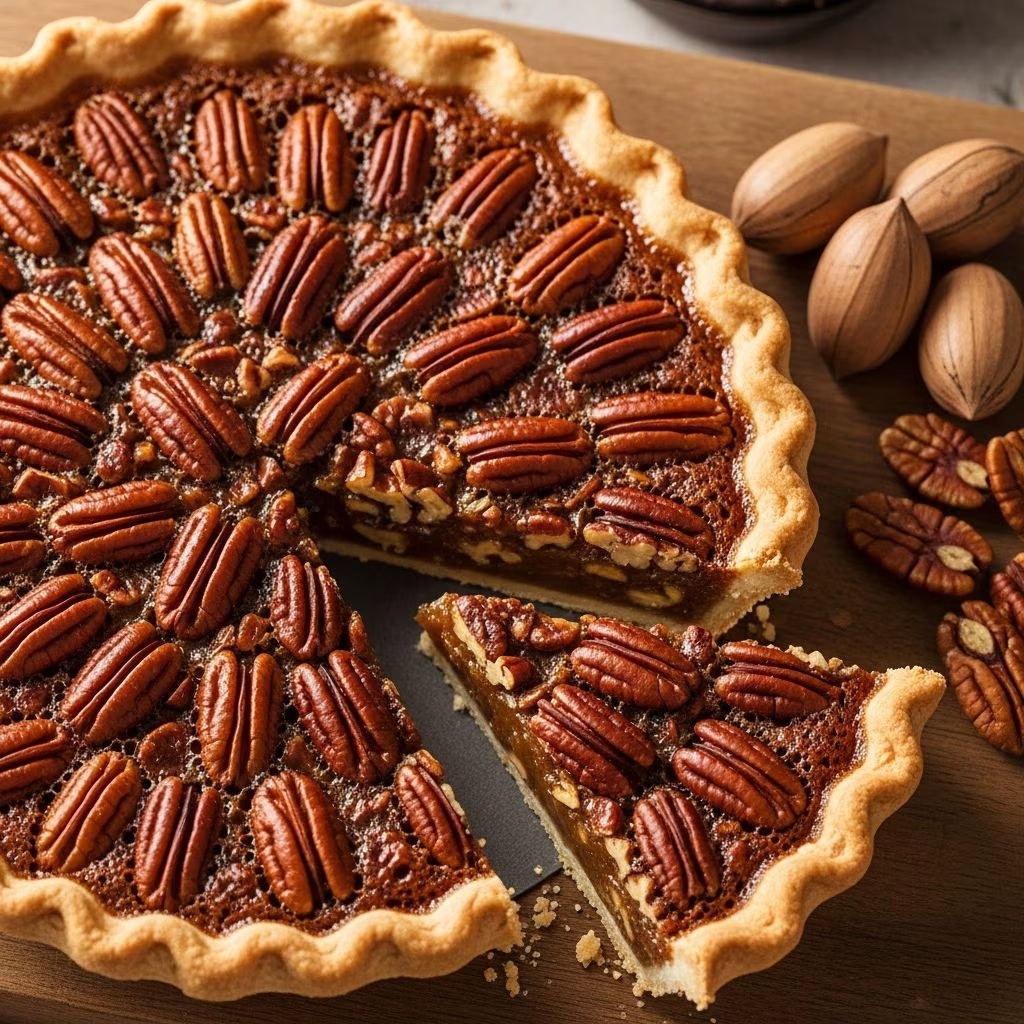
Spread the toasted, cooled pecans evenly across the bottom of your chilled pie crust. Some pecans will naturally sink into the filling during baking, while others remain visible on top, creating an attractive presentation. Pour the prepared filling mixture over the pecans slowly and carefully, allowing the pecans to settle and distribute naturally. If desired, arrange some reserved whole pecans on the surface in a decorative pattern before the filling sets. Place the filled pie on your preheated center oven rack.
Baking Time and Temperature Management
Bake your pecan pie for fifty to sixty minutes at three hundred fifty degrees Fahrenheit. The filling should appear set in the center when gently jiggled but may retain a slight wobble, similar to custard. The filling will continue to set as it cools, so avoid overbaking, which results in a dry, cake-like texture rather than the desired gooey center. The crust should turn a light to medium golden brown. If the crust edges brown too quickly, loosely cover them with aluminum foil during the final fifteen to twenty minutes of baking to prevent burning.
Cooling and Storage Guidelines
Cooling pecan pie properly is essential for achieving the correct final texture. Allow the pie to cool at room temperature for at least two to three hours before serving. The filling continues to set during this period, and premature slicing results in a runny filling. For optimal texture and flavor development, refrigerate the completely cooled pie for at least twelve hours before serving. This extended cooling period allows flavors to meld and the filling to achieve its full richness.
Store leftover pecan pie covered in the refrigerator for up to five days. Before serving chilled pie, allow slices to reach room temperature for approximately fifteen minutes to restore optimal flavor and texture. You may also gently reheat slices in a three hundred twenty-five degree Fahrenheit oven for about ten minutes. Pecan pie freezes exceptionally well for up to three months when properly wrapped in plastic wrap and aluminum foil. Thaw frozen pie in the refrigerator overnight before serving.
Troubleshooting Common Pecan Pie Issues
Runny Filling After Cooling
If your filling remains excessively runny after proper cooling, you may have underbaked the pie. Next time, extend the baking time by five to ten minutes and check for doneness by gently shaking the pie—only a very slight wobble should remain in the center. Additionally, ensure eggs are at room temperature before mixing, as cold eggs take longer to cook through.
Dry or Curdled Filling
Overbaking causes the filling to become dry and potentially separates the custard. Reduce baking time in subsequent attempts and remove the pie when it still displays a gentle jiggle in the center. Use an oven thermometer to verify your oven maintains accurate temperature.
Soggy or Undercooked Crust
A prebaked pie crust or one that has chilled for several hours typically resists sogginess better than a freshly prepared crust. Consider pre-baking your crust at three hundred fifty degrees Fahrenheit for five to seven minutes before adding the filling.
Burnt Crust Edges
Covering crust edges with foil during the later stages of baking prevents excessive browning. Alternatively, use a pie shield specifically designed for this purpose.
Serving Suggestions and Flavor Enhancements
Traditional pecan pie pairs beautifully with freshly whipped cream sweetened with a touch of powdered sugar and vanilla extract. A small dollop placed atop each slice adds elegance and provides a creamy contrast to the pie’s richness. Vanilla ice cream serves as another classic accompaniment, particularly when the pie is served warm. For those seeking additional flavor dimensions, consider serving alongside bourbon or brandy-infused whipped cream for a sophisticated adult dessert option.
Some bakers enhance their pecan pie with additional spice elements beyond the traditional cinnamon. A pinch of nutmeg or allspice adds subtle warmth, while a small amount of sea salt sprinkled over the top before baking can elevate the overall flavor profile. Bourbon or whiskey (approximately one-quarter to one-half teaspoon) mixed into the filling creates a sophisticated undertone appreciated by many. These additions should be incorporated thoughtfully to complement rather than overpower the fundamental pecan and caramel flavors.
Frequently Asked Questions About Pecan Pie
Can I make pecan pie ahead of time?
Yes, pecan pie actually benefits from advance preparation. Bake it up to two days before serving, then cover and refrigerate. This allows flavors to develop fully and makes entertaining easier.
Is it necessary to use corn syrup?
Light corn syrup is traditional and contributes to the characteristic texture and sweetness balance. While honey or maple syrup can substitute partially, they produce different results and may require adjusting other ingredients.
Can I use a store-bought pie crust?
Absolutely. Quality store-bought crusts deliver excellent results when properly chilled and handled according to package directions.
What’s the difference between light and dark corn syrup?
Light corn syrup provides a subtle sweetness without imposing strong flavor, allowing pecans to shine. Dark corn syrup contains molasses, contributing deeper color and richer, more assertive molasses notes that can overwhelm the pecan flavor.
How do I prevent my pecans from sinking to the bottom?
Arrange toasted pecans in an even layer across the pie crust bottom before pouring filling. The filling’s viscosity will support them partially as it sets during baking.
Conclusion: Achieving Pecan Pie Perfection
Mastering pecan pie requires understanding the interplay between its three primary components and respecting fundamental baking principles. By selecting quality ingredients, following proper preparation techniques, and allowing adequate cooling time, you’ll create a dessert worthy of your holiday table. Whether you’re a novice baker or an experienced pastry enthusiast, pecan pie offers the satisfaction of creating something truly delicious and memorable for those you serve.
References
- Classic Pecan Pie — American Pecan Promotion Board. Accessed 2026. https://eatpecans.com/recipes/classic-pecan-pie
- Pecan Pie Recipe — The Pioneer Woman. https://www.thepioneerwoman.com/food-cooking/recipes/a9888/pecan-pie/
- Classic Southern Pecan Pie — House of Nash Eats. https://houseofnasheats.com/classic-southern-pecan-pie/