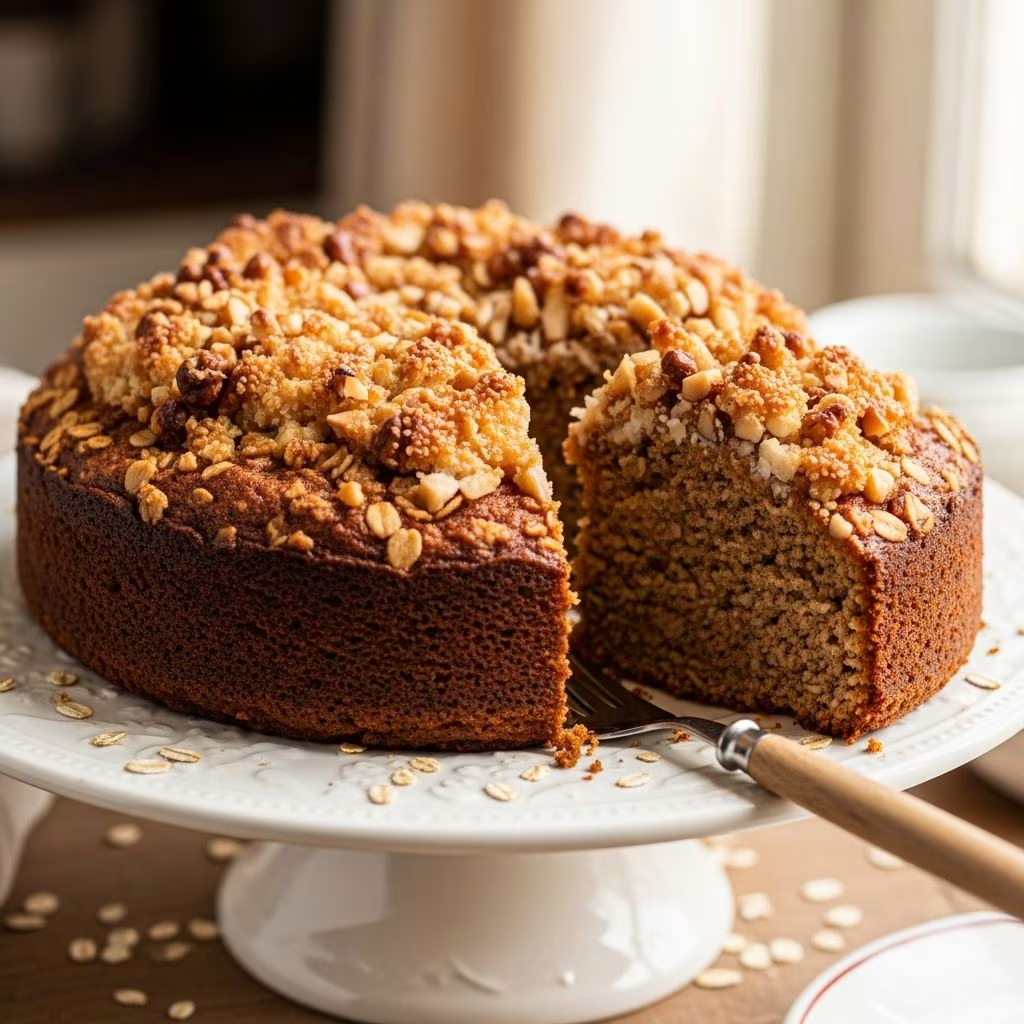
Experience the comforting nostalgia of a **classic oatmeal cake**, a dessert that combines the hearty texture of rolled oats with a spiced batter and a signature broiled topping. This treat, passed down through generations, delivers a moist interior and a crunchy, caramelized exterior that’s hard to resist. Ideal for afternoon tea, potlucks, or holiday celebrations, it requires basic pantry staples and straightforward techniques.
The Allure of Vintage Baking: Why Oatmeal Cakes Endure
Oatmeal cakes have roots in mid-20th-century American home baking, prized for their wholesome ingredients and simple preparation. The oats absorb moisture during soaking, creating a tender crumb without overpowering the cake’s sweetness. Warm spices like cinnamon and nutmeg elevate the flavor profile, evoking cozy memories of family kitchens. Unlike modern layer cakes, this one bakes in a single pan and finishes under the broiler for a unique toasted topping.
Health-conscious bakers appreciate the oats’ fiber content, which adds nutrition to an indulgent dessert. A typical slice offers balanced carbs from sugars and oats, paired with fats from butter and nuts. This makes it a satisfying option compared to overly sugary alternatives.
Essential Ingredients for Authentic Flavor
Gathering the right components ensures success. Focus on quality rolled oats, unsalted butter, and fresh spices for optimal taste and texture.
- For the Cake Base: 1 cup old-fashioned rolled oats, ½ cup butter, 1¼ cups boiling water, 2 eggs, 1 cup brown sugar, 1 cup granulated sugar, 1½ cups all-purpose flour, 1 tsp cinnamon, 1 tsp baking soda, ½ tsp nutmeg, ½ tsp salt.
- For the Broiled Topping: ¼ cup melted butter, ½ cup brown sugar, 3 tbsp evaporated milk or half-and-half, 1 cup shredded coconut, ½ cup chopped nuts (pecans or almonds), 1 tsp vanilla.
These measurements yield a 9×13-inch cake serving 12-15. Variations include using quick oats for faster soaking or gluten-free flour blends for dietary needs.
Step-by-Step Baking Guide
Preparation takes about 20 minutes, with 40-50 minutes baking plus broiling. Preheat your oven to 350°F and grease a 9×13 pan.
- Soak the Oats: Combine oats and butter in a bowl. Pour boiling water over them, stir, cover, and let sit 15-20 minutes until soft and water is absorbed.
- Mix Wet Ingredients: Beat eggs, brown sugar, granulated sugar, and vanilla until fluffy. This incorporates air for lightness.
- Blend Dry Ingredients: Sift flour, cinnamon, baking soda, nutmeg, and salt. Fold into wet mixture gently to avoid toughness.
- Incorporate Oats: Stir in the cooled oat mixture until just combined. The batter will be thick, like oatmeal cookie dough.
- Bake: Pour into pan and bake 35-45 minutes. Test doneness with a toothpick; it should emerge clean.
- Prepare Topping: While baking, mix melted butter, brown sugar, milk, coconut, nuts, and vanilla into a spreadable paste.
- Broil: Switch oven to high broil. Spread topping evenly over hot cake. Broil 2-4 minutes, watching closely to prevent burning, until bubbly and golden.
- Cool and Serve: Let cool in pan 20 minutes before slicing. Serve warm or at room temperature.
Pro Tips for Perfect Results Every Time
Achieve bakery-quality outcomes with these insights:
- Use room-temperature eggs and butter for even emulsification.
- Don’t overmix the batter; lumps are fine and prevent dense cake.
- Position oven rack 6 inches from broiler for even toasting.
- For nut-free versions, substitute seeds like sunflower or omit entirely.
- Store leftovers airtight for 3 days at room temp or freeze slices up to 2 months.
| Common Issue | Solution |
|---|---|
| Soggy center | Bake longer or use metal pan for better heat conduction. |
| Burnt topping | Broil in short bursts, checking every 30 seconds. |
| Dry texture | Ensure oats fully absorb water; add extra tbsp milk if needed. |
Nutritional Profile and Customizations
Per slice (1/15th): Approximately 400 calories, 53g carbs, 5g protein, 19g fat, 38g sugar. Oats provide 2g fiber, supporting digestion.
Adapt for preferences:
- Low-Sugar: Reduce sugars by ¼ cup; use sugar substitutes cautiously.
- Vegan: Swap butter for coconut oil, eggs for flax eggs, milk for plant-based.
- Flavor Twists: Add ½ tsp ginger or orange zest; swap nuts for chocolate chips.
Pairing Suggestions and Serving Ideas
Elevate with classic accompaniments: vanilla ice cream for contrast, whipped cream for lightness, or fresh berries for tartness. Brew coffee or tea to complement the spices. For events, cut into squares and dust with powdered sugar.
Host a bake-off by comparing pan sizes: tube pans yield taller cakes, while 9×13 suits crowds.
Frequently Asked Questions (FAQs)
Can I make this cake ahead?
Yes, bake and top up to 1 day ahead. Reheat slices at 300°F for 10 minutes to refresh.
What if I don’t have a broiler?
Use oven’s top heat at 450°F for 3-5 minutes, rotating for even browning.
Are quick oats okay?
They work but yield a finer texture; soak 10 minutes instead.
How to store?
Room temp in covered container 3 days; refrigerate up to 5. Freeze wrapped tightly.
Nut allergies?
Omit nuts or use seeds; topping still crisps beautifully.
Historical Context and Modern Appeal
This cake mirrors Depression-era resourcefulness, using oats for stretch and nutrition. Today, its no-fuss method appeals to busy home cooks. Social media revivals highlight its broiled topping as a game-changer, differentiating it from frosted cakes.
Experiment with add-ins like raisins or applesauce for moisture. Its versatility spans breakfast (with yogurt) to dessert.
References
- Grandma’s Oatmeal Cake — Tastes Better From Scratch. 2023-05-15. https://tastesbetterfromscratch.com/grandmas-oatmeal-cake/
- Grandma’s Oatmeal Cake — The Pioneer Woman. 2022-11-10. https://www.thepioneerwoman.com/food-cooking/recipes/a105576/grandmas-oatmeal-cake/