Remoulade sauce stands as a cornerstone of Louisiana cuisine, blending creamy textures with bold spices and tangy notes. Originating from French roots but transformed by Creole and Cajun influences, this versatile sauce elevates everything from seafood platters to sandwiches. Its signature pink hue comes from paprika and ketchup, while heat from hot sauce and horseradish delivers a memorable kick.
Origins and Cultural Significance
The story of remoulade begins in France, where it featured mayonnaise mixed with vinegar, mustard, and herbs like tarragon and chives. Upon arriving in Louisiana, cooks adapted it by incorporating local ingredients such as Creole mustard, paprika, and hot sauce, creating the vibrant New Orleans version we know today. This evolution reflects the fusion of European techniques with Southern boldness, making it a staple in po’boy shops, seafood boils, and fine dining.
In New Orleans, remoulade is more than a topping—it’s a tradition. Fried oysters slathered in this sauce define local street food, while crab cakes or shrimp remoulade appear on upscale menus. Its adaptability has spread it nationwide, yet nothing matches the authenticity of Louisiana preparations.
Core Ingredients Breakdown
At its heart, remoulade relies on a few key components for balance: creaminess, acidity, spice, and freshness. Here’s what makes it shine:
- Mayonnaise: The rich base providing smoothness. Full-fat versions yield the best texture.
- Mustard: Creole, Dijon, or whole-grain for tang and grainy bite. Avoid yellow mustard to preserve depth.
- Acid: Lemon juice or vinegar cuts richness and brightens flavors.
- Heat Builders: Hot sauce, horseradish, and cayenne for that signature zing.
- Herbs and Aromatics: Parsley, garlic, green onions, and chives add freshness.
- Spices: Paprika for color, Worcestershire for umami, and Cajun seasoning for complexity.
Optional add-ins like ketchup or capers introduce sweetness or brininess, allowing customization.
Classic New Orleans Remoulade Recipe
Whip up this foolproof version in under 10 minutes. Yields about 1.5 cups, perfect for 4-6 servings.
Ingredients
| Ingredient | Quantity |
|---|---|
| Mayonnaise | 1 cup |
| Creole or Dijon mustard | 2 tbsp |
| Lemon juice | 1 tbsp |
| Horseradish (prepared) | 1 tbsp |
| Hot sauce | 1-2 tsp |
| Worcestershire sauce | 2 tsp |
| Garlic (minced) | 1 clove |
| Paprika (smoked preferred) | 1 tsp |
| Fresh parsley (chopped) | 1 tbsp |
| Salt and cayenne | To taste |
Step-by-Step Instructions
- Gather and prep ingredients: Mince garlic, chop parsley, and measure spices.
- In a medium bowl, whisk mayonnaise and mustard until smooth.
- Add lemon juice, horseradish, hot sauce, Worcestershire, garlic, paprika, parsley, salt, and cayenne. Stir vigorously for 1-2 minutes to emulsify.
- Taste and adjust seasoning—more heat or acid as needed.
- Cover and refrigerate for at least 30 minutes (ideally 1-2 hours) to let flavors meld.
- Serve chilled or at room temperature.
Storage tip: Keeps in an airtight jar for up to 2 weeks in the fridge. Stir before use.
Variations to Suit Every Paler
Remoulade’s beauty lies in its flexibility. Tailor it to preferences or available ingredients:
- Creamier Version: Blend in ¼ cup sour cream for tangier thickness.
- Oil-Based (Emeril Style): Emulsify vegetable oil with lemon juice, onions, celery, and mustards in a blender for a lighter, chunkier sauce.
- Milder Family-Friendly: Skip cayenne and reduce hot sauce; add ketchup for sweetness.
- Herb-Heavy: Boost with chives, tarragon, or capers for French flair.
- Vegan Twist: Use plant-based mayo and mustard; swap Worcestershire for soy sauce or tamari.
Pro tip: For extra smokiness, incorporate smoked paprika or a dash of liquid smoke.
Best Pairings and Serving Suggestions
This sauce transforms ordinary dishes into feasts. Top recommendations:
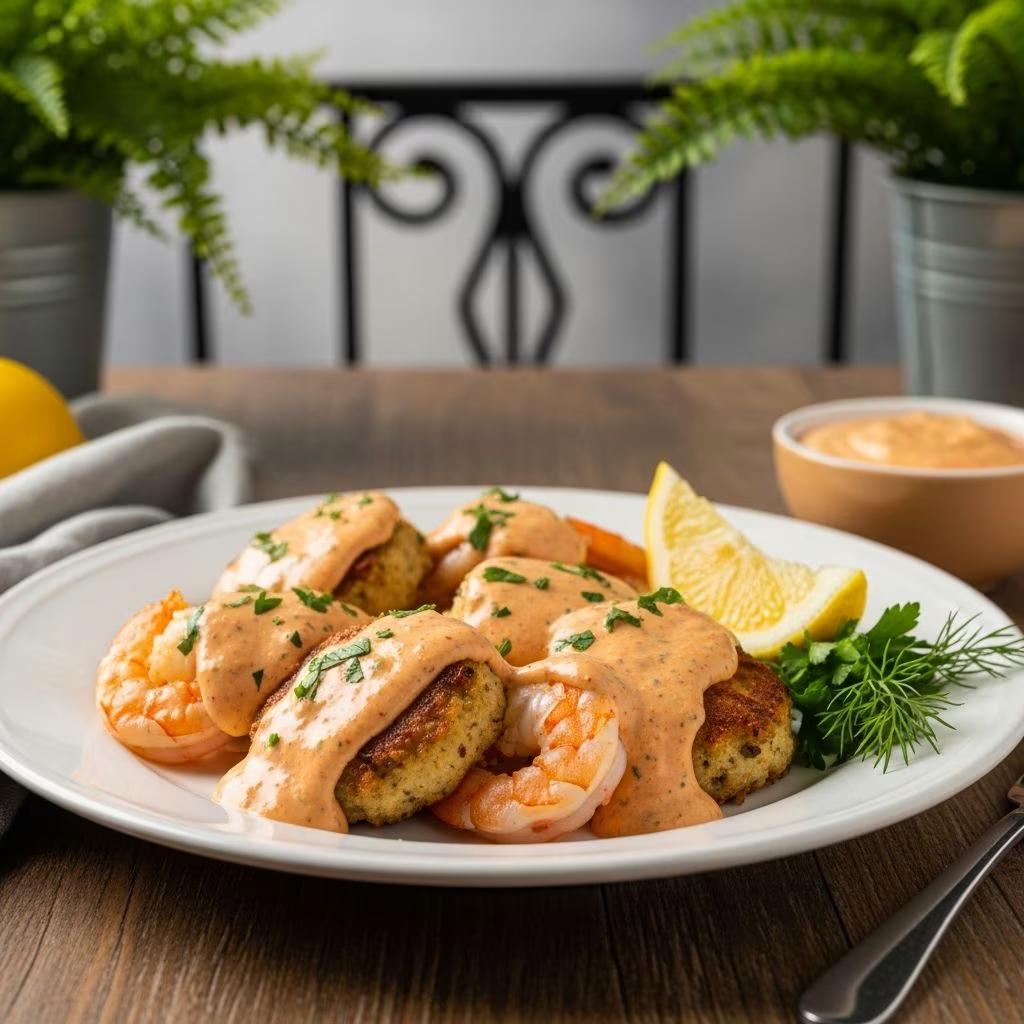
- Seafood Stars: Drench fried shrimp, oysters, or crab cakes. Classic shrimp remoulade salad mixes chilled shrimp with the sauce over lettuce.
- Sandwiches: Essential for po’boys—roast beef, catfish, or oyster. Spread generously on French bread.
- Veggies and Snacks: Dip fried green tomatoes, pickles, or french fries. Pairs brilliantly with air-fried okra.
- Burgers and Meats: Slather on grilled burgers, chicken, or black-eyed pea patties for Cajun flair.
- Unexpected Uses: Drizzle over grilled corn, use as a potato salad binder, or mix into coleslaw.
For platters, serve in a bowl with crudités or as a baked potato topper. Its versatility shines at barbecues or tailgates.
Expert Tips for Perfection
Elevate your remoulade game with these insights:
- Quality Matters: Opt for high-quality mayo (like Duke’s) and fresh lemon juice—no bottled substitutes.
- Balance Flavors: Taste iteratively; acidity should cut cream, spice should linger without overpowering.
- Make-Ahead Magic: Flavors intensify overnight, so prep early for parties.
- Texture Control: Whisk briskly or use a food processor for emulsion; avoid over-blending to retain some graininess from mustard.
- Scaling Up: Double ingredients seamlessly; freezes well in ice cube trays for portions.
Common pitfalls: Over-salting (add gradually) or skimping on chill time, which dulls vibrancy.
Nutrition and Dietary Notes
A 2-tablespoon serving typically offers about 150 calories, mostly from mayo fats. It’s naturally gluten-free and low-carb (under 2g net carbs). For lighter options, substitute half the mayo with Greek yogurt. High in vitamin C from lemon and antioxidants from paprika.
Frequently Asked Questions (FAQs)
What is the difference between remoulade and tartar sauce?
Tartar sauce is milder, with pickles and sweeter profile; remoulade amps up spice with paprika, hot sauce, and mustard for bolder Cajun punch.
Can I make remoulade without mayonnaise?
Yes—use Greek yogurt, sour cream, or aquafaba-based vegan mayo. Adjust thickness with a touch of oil.
How long does homemade remoulade last?
Up to 2 weeks refrigerated in a sealed container. Discard if it separates or smells off.
Is Creole mustard necessary?
Not strictly, but it adds authentic horseradish kick. Sub with whole-grain or Dijon.
Can remoulade be frozen?
Yes, for 1-2 months. Thaw in fridge and whisk to recombine; best used within days post-thaw.
Conclusion: Bring New Orleans Home
With minimal effort, remoulade delivers restaurant-quality flavor. Experiment with these recipes to capture Louisiana’s spirit—creamy, spicy, and utterly addictive. Whether drizzled on a po’boy or dipped with fries, it’s a game-changer for any cook.
References
- New Orleans Style Remoulade Sauce — Hezzi-D’s Books and Cooks. 2023. https://www.hezzi-dsbooksandcooks.com/new-orleans-style-remoulade-sauce/
- Remoulade Sauce — Lauren from Scratch. 2024. https://laurenfromscratch.com/louisiana-cajun-remoulade-sauce/
- New Orleans Remoulade Sauce Recipe — Pink Owl Kitchen. 2023. https://pinkowlkitchen.com/new-orleans-remoulade-sauce-recipe/
- Classic New Orleans Remoulade Sauce — Emerils.com. 2022. https://www.emerils.com/126937/classic-new-orleans-remoulade-sauce
- Louisiana Remoulade Sauce — Southern Discourse. 2024. https://southerndiscourse.com/louisiana-remoulade-sauce/
- Cajun Remoulade Sauce Recipe — Salt & Lavender. 2023. https://www.saltandlavender.com/cajun-remoulade-sauce-recipe/