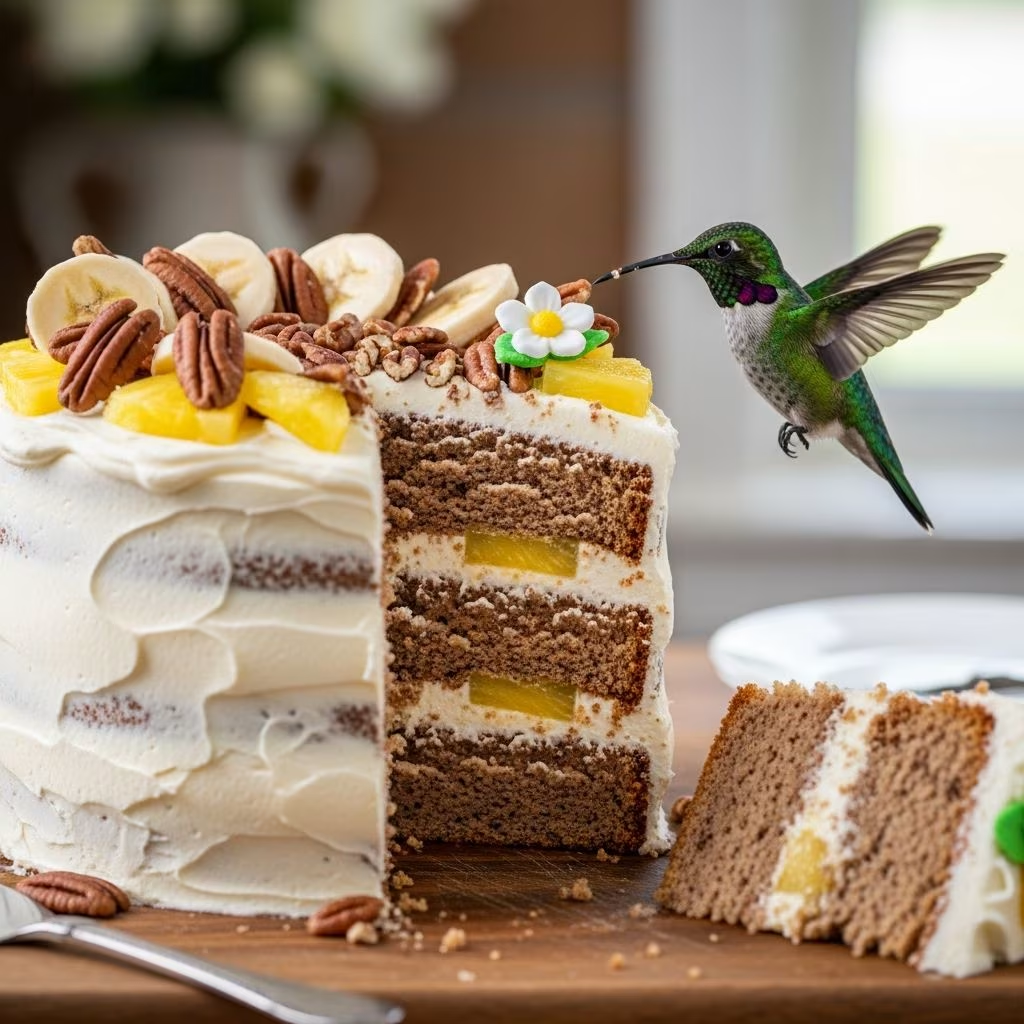
Few desserts capture the essence of Southern hospitality quite like hummingbird cake. This exceptional layer cake represents more than just a recipe—it embodies a culinary tradition that blends sophisticated flavor profiles with approachable home baking. The combination of moist cake layers, tropical fruits, aromatic spices, and velvety cream cheese frosting creates a dessert that stands apart from typical vanilla or chocolate offerings.
What makes hummingbird cake truly special is its paradoxical nature: it is simultaneously rich and refined, yet unpretentious and welcoming. Whether you’re preparing it for a special celebration or treating your family to an elegant weeknight indulgence, this cake delivers impressive results that seem to require far more culinary expertise than the straightforward preparation actually demands.
Understanding the Historical Journey of This Iconic Dessert
The story of hummingbird cake begins not in the American South, but in Jamaica during the late 1960s. The original creation, known as “doctor bird cake,” emerged from the Caribbean island and bore no frosting in its earliest form. The nickname “doctor bird” referenced the Red-billed Streamertail, Jamaica’s national bird and a member of the hummingbird family. According to local lore, the bird earned its moniker because its long beak resembles a doctor’s examination technique when probing flowers.
The exact origins of the cake’s association with hummingbirds remain somewhat mysterious. Various explanations have circulated throughout culinary circles: some suggest the cake’s intensely sweet fruit and sugar content would naturally attract hummingbirds, while others propose that the yellow streaks in the finished cake resembled the birds’ coloring, or simply that the cake’s deliciousness inspired people to hum like birds. Most culinary historians believe the connection began as a creative marketing strategy.
The transformation that elevated hummingbird cake to iconic status occurred in February 1978 when Southern Living magazine published a recipe submitted by Mrs. L.H. Wiggins of Greensboro, North Carolina. This version featured three distinct layers and introduced cream cheese frosting—the innovative addition that distinguished it from its Caribbean predecessor. The recipe’s popularity exploded almost immediately, and by 1978, a hummingbird cake had already won the blue ribbon at the Kentucky State Fair. Today, this remains the most beloved and recognized hummingbird cake recipe in American culinary tradition.
Deconstructing the Ingredient List and Their Specific Roles
Understanding what each ingredient contributes to the final product empowers home bakers to make informed decisions and modifications. Hummingbird cake succeeds because of carefully balanced components that work in concert.
The Dry Foundation
All-purpose flour provides the structural backbone, while salt enhances all flavors and balances sweetness. Baking soda and baking powder work together as dual leavening agents, essential for lifting this naturally dense, moisture-heavy cake. The combination prevents the cake from becoming too compact or heavy, despite the abundance of wet ingredients.
Cinnamon and allspice are the spice profile heroes. These warm spices complement bananas and pineapple beautifully while adding complexity that prevents the cake from tasting one-dimensional or overly fruity. Together, they create warmth and depth that elevates the tropical elements into something more sophisticated.
The Wet Components and Fat
Vegetable oil plays a crucial role in creating the signature moisture and tender crumb. Unlike butter, which can sometimes create a denser cake, neutral-flavored vegetable oil allows the fruit and spice flavors to shine through while maintaining that characteristic soft, plush texture. Avocado oil serves as an acceptable alternative for bakers preferring it.
Eggs provide structure, richness, and emulsification properties that help bind ingredients together while contributing to the cake’s tender structure.
The Star Ingredients
Crushed pineapple with juice contributes both moisture and natural sweetness. The included juice prevents the cake from drying out while adding subtle tropical flavor throughout. Ripe bananas add creamy texture, natural sweetness, and moisture retention capabilities. Using overripe bananas intensifies flavor and ensures maximum moisture.
Pecans provide textural contrast and nutty flavor complexity. Toasting pecans first for approximately eight minutes dramatically enhances their flavor profile. A portion gets incorporated into the batter while the remainder serves as garnish, creating both flavor and visual appeal.
The Frosting Elements
The cream cheese frosting requires room-temperature butter and cream cheese for proper whipping and smoothness. Confectioner’s sugar provides sweetness while creating a light, fluffy texture. Pineapple juice incorporated into the frosting echoes the cake’s tropical profile and adds subtle tanginess that cuts through richness.
Mastering the Preparation Techniques
Preparing Your Baking Equipment
Success begins before mixing any ingredients. Preheat your oven to 350 degrees Fahrenheit. Prepare two 9-inch round cake pans by spraying thoroughly with non-stick baking spray, then line each with parchment paper, and spray the parchment tops as well. This triple-layer protection ensures effortless cake removal and even baking.
Creating the Batter
In a large mixing bowl, whisk together flour, sugar, cinnamon, baking soda, and salt until thoroughly combined. This dry ingredient mixing ensures even distribution of leavening agents and spices. In a separate preparation, beat your eggs with oil and vanilla extract.
Rather than gradually incorporating wet ingredients into dry ingredients (the traditional method), hummingbird cake preparation combines everything more robustly. Add the wet mixture to the dry ingredients, then fold in crushed pineapple with its juice, mashed bananas, and pecans until completely combined. The final batter will appear noticeably thick. This consistency difference reflects the high proportion of solid fruit content and should not be considered an error.
Baking Process
Divide the batter evenly between prepared pans. Bake for approximately 28-30 minutes until a toothpick inserted into the center emerges clean. The layers should spring back lightly when touched. Remove from the oven and allow cooling in pans for 10 minutes before turning out onto wire racks to cool completely.
Crafting the Perfect Cream Cheese Frosting
The frosting represents the finishing touch that distinguishes hummingbird cake from simpler preparations. Begin by adding butter and cream cheese—both at room temperature—to your mixer bowl. Beat on high speed until the mixture thickens and fluffs significantly, a process requiring 3-5 minutes.
Reduce mixer speed to low and carefully add confectioner’s sugar, incorporating it gradually to prevent powdered sugar clouds. Continue mixing until a smooth, light, and fluffy frosting develops. Finally, add pineapple juice and vanilla extract, whipping until fully incorporated. If your frosting seems too soft, add additional confectioner’s sugar by the tablespoon. If too stiff, add pineapple juice in small increments.
Assembly and Presentation Guidelines
| Layer Position | Preparation Step | Frosting Amount |
|---|---|---|
| Bottom cake layer | Place on serving plate | 1/3 of frosting |
| Middle cake layer | Stack atop frosting | 1/3 of frosting |
| Top cake layer | Stack atop frosting | Remaining frosting on top and sides |
Once cake layers have cooled completely, place the first layer on your serving plate or cake stand. Spread approximately one-third of the frosting across the top surface. Add the second cake layer, aligning it carefully, and frost its top surface with another third of the frosting. Position the final layer, then apply remaining frosting to the top and around the sides, creating either a rustic finish or a more refined appearance depending on preference. Garnish with toasted pecan halves or finely chopped dried pineapple.
Ingredient Substitutions and Variations
Home bakers often seek modifications that accommodate dietary restrictions or personal preferences:
- Flour adjustment: Substitute homemade cake flour for all-purpose flour to achieve even greater tenderness.
- Sweetener options: Replace granulated sugar entirely or partially with light brown sugar for deeper molasses notes.
- Spice alternatives: Exchange cinnamon for ground nutmeg, apple pie spice, or pumpkin pie spice blend depending on desired flavor direction.
- Frosting variation: Some bakers incorporate pineapple juice directly into the frosting rather than simply brushing it on cake layers.
- Pecan substitution: Walnuts can replace pecans, though the resulting flavor profile will shift slightly.
Storage and Make-Ahead Strategies
Proper storage extends hummingbird cake’s enjoyment period. Store completed cake, loosely covered, at room temperature for up to two days. Refrigeration extends shelf life to five days, though allowing the cake to reach room temperature before serving enhances flavor perception and texture. For longer storage, wrap unfrosted cake layers individually in plastic wrap and freeze for up to three months. Thaw at room temperature before frosting and serving.
Frequently Asked Questions About Hummingbird Cake
Why is vegetable oil used instead of butter?
Vegetable oil creates a more tender crumb and maintains moisture more effectively than butter in this particular cake style. The neutral flavor prevents it from competing with the delicate tropical fruit and spice profile.
Can I make this cake in advance?
Yes. Bake unfrosted layers up to three days ahead, wrap securely, and refrigerate. Prepare frosting the day before and store refrigerated. Assemble the cake on serving day for optimal presentation.
What if my frosting is too thick or too thin?
Frosting that seems too stiff may simply need additional pineapple juice mixed in gradually. If too soft, add more confectioner’s sugar by the tablespoon until reaching desired consistency.
Is there a secret to keeping the layers perfectly moist?
Using overripe bananas and including pineapple juice in both the cake batter and frosting maximizes moisture retention. Additionally, serving the cake at room temperature allows flavors and moisture to be fully appreciated.
Can I reduce the sugar content?
While technically possible, reducing sugar significantly alters the cake’s structure and texture. Decreasing sugar by more than 15-20 percent may result in a denser, drier cake.
References
- Hummingbird Cake – Sally’s Baking Addiction — Sally McKenney. Sally’s Baking Addiction. Accessed April 2026. https://sallysbakingaddiction.com/hummingbird-cake/
- A Southern Classic: Hummingbird Cake — CHARNOPIA. Accessed April 2026. http://www.charnopia.com/blog-1/a-southern-classic-hummingbird-cake
- This Hummingbird Cake Recipe Is Our Most Popular — Southern Living Magazine. YouTube. Accessed April 2026. https://www.youtube.com/watch?v=gx5wug3Dmt8
- American Cakes – Hummingbird Cake Recipe and History — Tori Avey with historian Gil Marks. Tori Avey. Accessed April 2026. https://toriavey.com/hummingbird-cake-history-recipe/
- Southern Family’s Generational Hummingbird Cake Recipe — Grandbaby Cakes. Accessed April 2026. https://grandbaby-cakes.com/hummingbird-cake-recipe/
- Old Fashioned Hummingbird Cake Recipe — The Cagle Diaries. Accessed April 2026. https://thecaglediaries.com/hummingbird-cake/