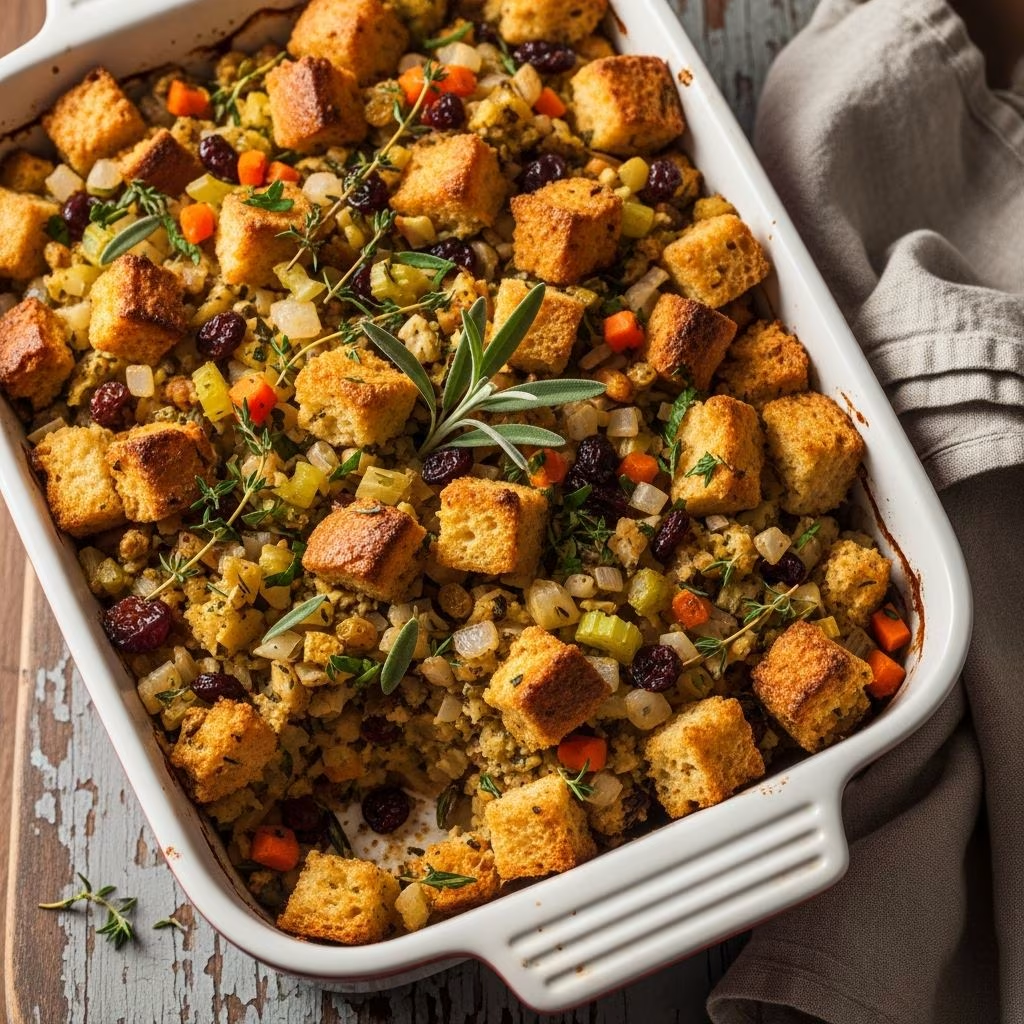
Bread stuffing represents one of the most beloved comfort food preparations in home cooking, particularly during festive gatherings and holiday celebrations. This classic dish combines simple, accessible ingredients into a sophisticated side dish that serves as the foundation for memorable meals. Creating exceptional stuffing from scratch requires understanding the interplay between texture, moisture, and flavor development—skills that any home cook can master with proper guidance and technique.
Understanding the Foundation: Selecting Quality Bread
The success of any stuffing recipe begins with thoughtful bread selection and preparation. The bread serves as the structural foundation of your dish, meaning its quality directly impacts the final outcome. Rather than using fresh, soft bread straight from the bakery, experienced cooks deliberately choose bread that has begun to lose its moisture. This characteristic allows the bread to absorb flavoring liquids without becoming mushy or overly saturated.
Day-old bread from bakery sections provides an economical and practical solution for home cooks. This bread has already begun the drying process naturally, making it ideal for stuffing preparation. If you purchase fresher loaves, allow them to sit uncovered at room temperature for a full day before cutting them into cubes. For those seeking more control over timing, deliberate toasting offers an efficient alternative—slicing bread and baking it at moderate temperatures accelerates the drying process significantly.
Bread type selection influences both flavor profile and texture characteristics. Italian crusty breads contribute a sturdy foundation with subtle wheat flavors, while white sandwich bread provides neutral taste that highlights herb seasonings. French or sourdough varieties introduce tangy complexity that sophisticated palates appreciate. Most home cooks successfully combine multiple bread types, mixing white and wheat varieties to achieve balanced texture and taste.
Bread Cube Preparation Technique
Proper cutting technique ensures even moisture absorption throughout your finished dish. Cut bread into uniform half-inch to one-inch cubes, maintaining consistency across all pieces. Irregular cube sizes result in some portions becoming soggy while others remain dry. After cutting, spread cubes across baking sheets, allowing air circulation around all surfaces. This arrangement accelerates the drying process and prevents moisture pockets from developing within the bread mass.
Essential Ingredients and Their Roles
Traditional stuffing relies on a carefully balanced ingredient list that works synergistically to create depth and complexity. Understanding each component’s function empowers you to make informed substitutions and adjust recipes to personal preferences.
The Aromatic Foundation
Onions and celery form the aromatic base that builds flavor complexity in every spoonful. These vegetables should be finely diced into small pieces, roughly one-quarter inch in size, ensuring they cook through completely and distribute evenly throughout the mixture. Yellow onions provide slightly sweet undertones, while celery adds herbaceous notes that complement traditional sage and thyme seasonings. Garlic, though optional in some recipes, intensifies savory qualities and adds pungent aromatic notes that sophisticated preparations often include.
Fat and Moisture Components
Butter serves dual purposes in stuffing preparation—both as a cooking medium for aromatic vegetables and as an enriching ingredient that adds mouthfeel and flavor. Unsalted butter allows you to control sodium levels precisely, an important consideration when broth, which often contains significant salt, is also incorporated. Plan for approximately one-half to one cup of butter depending on your total bread quantity and desired richness level.
Broth, typically chicken or vegetable varieties, provides the liquid necessary for proper hydration. This crucial ingredient transforms dried bread cubes into a cohesive, moist casserole. The amount of broth requires careful judgment—too little leaves dry pockets of bread, while excessive broth creates a mushy, soup-like consistency. Most recipes call for one and one-half to two cups of broth for standard loaf quantities, though individual ovens and bread types may require adjustments.
Binding Ingredients and Seasonings
Eggs, while not universally included in all stuffing recipes, serve as binding agents in more substantial preparations. When included, eggs help maintain structural integrity during baking and create custard-like richness throughout the dish. Dried herbs—sage, thyme, marjoram, and rosemary—provide the characteristic flavors most people associate with traditional stuffing. These dehydrated seasonings concentrate flavor intensity, so measured quantities go significantly further than fresh herbs would. Most recipes incorporate one to two teaspoons total dried herbs, adjusted for personal preference and intensity preferences.
Step-by-Step Preparation Process
The Aromatics Phase
Begin by melting half your total butter allocation in a large skillet over medium heat. This temperature range allows vegetables to cook through gently without browning excessively. Add your prepared onion, celery, and minced garlic to the melted butter, stirring occasionally. This initial cooking phase typically requires eight to ten minutes, continuing until onion pieces become translucent and vegetables soften considerably. At this point, reduce heat slightly and add your dried herbs, stirring constantly for approximately one minute. This brief cooking blooms the herb flavors, intensifying their aromatic qualities and distributing them evenly through the fat.
Combining Components
Transfer your cooked aromatics mixture into a large mixing bowl containing your prepared bread cubes. If space allows, combine everything in the same bowl; otherwise, move the vegetable mixture to a separate larger container. Melt your remaining butter and pour it over the bread cubes along with the vegetable mixture. Begin folding ingredients together gently using a wooden spoon or rubber spatula, ensuring every bread piece receives contact with the butter and seasonings.
Gradually add your room-temperature broth while continuing to fold, adding liquid in measured increments rather than all at once. This cautious approach allows you to monitor moisture absorption and adjust quantities based on your bread’s absorbency rate. You’re aiming for a consistency where most bread cubes glisten with moisture but individual pieces remain distinct rather than dissolving into paste. When satisfied with the moisture level, season to taste with additional salt and freshly ground black pepper.
Baking and Finishing Techniques
Transfer your prepared mixture into a buttered casserole dish, pressing gently to create a relatively compact layer. Some cooks prefer maintaining a looser texture for crunchier results, while others compress the mixture more thoroughly for denser, more custard-like consistency. Both approaches yield acceptable results—choose based on your textural preferences.
Cover your casserole dish with aluminum foil and place it in a preheated 350-degree Fahrenheit oven. The foil traps steam, allowing the interior to cook through thoroughly and the bread to absorb remaining moisture. Bake covered for approximately twenty-five to forty minutes, depending on your casserole depth and oven characteristics.
After the covered baking period, remove the foil to allow the top surface to brown and crisp. Continue baking for an additional fifteen to thirty minutes, monitoring the top closely to prevent excessive darkening. The surface should develop a golden-brown color with some slightly darker, crispy edges. Internal temperature should reach 160 degrees Fahrenheit when measured with a kitchen thermometer, ensuring thorough heating if eggs have been included.
Remove your finished stuffing from the oven and allow it to rest for ten minutes before serving. This resting period allows the structure to set slightly, making portioning cleaner and easier. Fresh parsley sprinkled over the surface immediately before serving adds visual appeal and fresh herbal notes that complement the rich, savory base.
Common Variations and Flavor Additions
While classic herb-forward preparations remain popular, numerous variations accommodate different preferences and ingredient availability. Bacon adds smoky richness and textural contrast when diced and added to the aromatics phase. Mushrooms sautéed alongside onions and celery contribute earthy umami depth. Fresh herbs like parsley, sage, and thyme replace dried versions for brighter, more delicate flavoring, though quantities must be adjusted upward since fresh herbs contain significantly more moisture than dehydrated versions.
Nuts including pecans and walnuts introduce textural variety and complement traditional seasonings beautifully. Add toasted nuts during the final folding phase to maintain their crispy character. Dried fruit such as cranberries or apples adds sweet-tart complexity that balances rich, savory components. Vegetable additions like corn, diced carrots, or green beans incorporate color, nutrition, and flavor variation suited to personal preferences.
Storage and Make-Ahead Considerations
Prepare bread cubes several days in advance, storing them in airtight containers at room temperature. The aromatics mixture can be prepared up to two days ahead and refrigerated in a covered container. Combine all components only immediately before baking to maintain optimal texture, though the assembled mixture may be refrigerated for several hours if necessary. Refrigerated stuffing may require additional baking time to reach the appropriate temperature throughout. Leftover stuffing stores well refrigerated in airtight containers for up to four days and can be reheated gently in a 350-degree oven covered with foil.
Frequently Asked Questions
Can I make stuffing gluten-free?
Yes, substitute regular bread with gluten-free varieties in equal quantities. Gluten-free bread often contains more moisture than traditional wheat bread, so monitor the broth amount carefully to avoid excessive sogginess.
What if my stuffing turns out too dry?
Serve additional warm broth on the side for drizzling, or stir in small amounts of broth and re-bake briefly. For next time, increase broth quantity or reduce oven temperature slightly to extend baking duration.
Can I prepare stuffing in a slow cooker?
Yes, combine prepared ingredients in a slow cooker and cook on low for four to five hours, or high for two to three hours, replacing the covered oven phase. This method works excellently for keeping stuffing warm during meal service.
Should I stuff poultry or use a separate dish?
Individual preferences vary, but preparing stuffing separately in a casserole ensures even cooking and allows better texture control. This method also simplifies poultry preparation timing.
References
- Classic Homemade Bread Stuffing — Baked by Rachel. Accessed April 2026. https://www.bakedbyrachel.com/classic-homemade-bread-stuffing/
- Traditional Bread Stuffing Recipe — Brown Eyed Baker. Accessed April 2026. https://www.browneyedbaker.com/bread-stuffing-recipe/
- Homemade Stuffing From Scratch With Easy-to-Make Bread Cubes — DIY Natural. Accessed April 2026. https://diynatural.com/homemade-stuffing-cubes/
- Best Stuffing Recipe: Our Favorite Buttery Herb Stuffing — How Sweet Eats. Accessed April 2026. https://www.howsweeteats.com/2020/11/best-stuffing-recipe/
- Traditional Bread Stuffing Recipe — Thrift and Spice. Accessed April 2026. https://thriftandspice.com/nanas-thanksgiving-stuffing/
- Easy Stuffing Recipe — Spend With Pennies. Accessed April 2026. https://www.spendwithpennies.com/easy-stuffing-recipe/
- Dad’s Plain Bread Stuffing — My Own Sweet Thyme. Accessed April 2026. https://myownsweetthyme.com/2013/11/dads-plain-bread-stuffing/