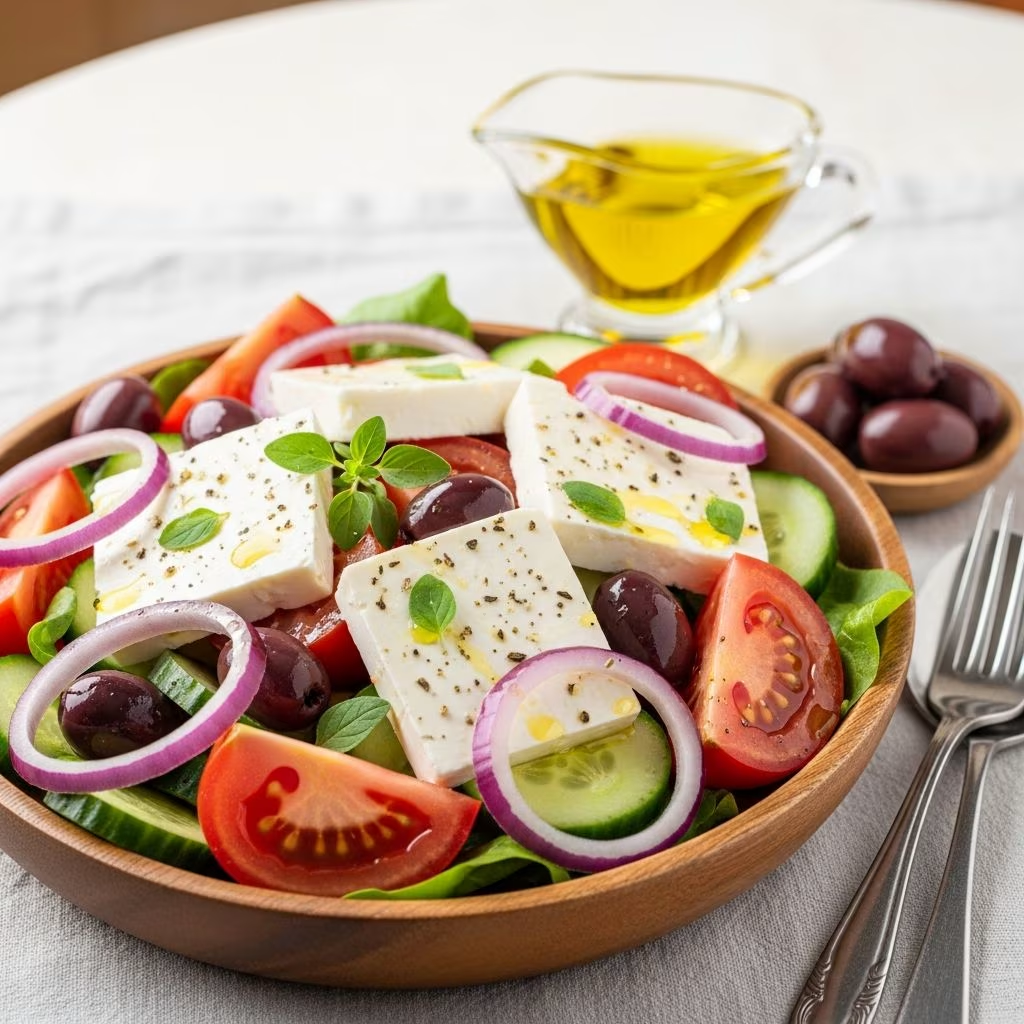
Traditional Greek salad, known as horiatiki, captures the essence of Mediterranean cuisine through its simplicity and bold flavors. This refreshing dish combines ripe tomatoes, crisp cucumbers, tangy feta cheese, briny olives, and a drizzle of extra virgin olive oil, creating a perfect balance of tastes and textures.
Core Ingredients of a Classic Greek Salad
The beauty of Greek salad lies in its minimalistic approach, relying on high-quality, seasonal produce. Key components include:
- Tomatoes: Medium-sized, juicy varieties sliced into wedges for their natural sweetness and acidity.
- Cucumbers: English or Persian types, partially peeled and cut into half-moons to retain crunch without bitterness.
- Green Bell Pepper: Sliced into rings or strips, adding a mild bitterness and vibrant color.
- Red Onion: Thinly sliced and soaked in ice water to mellow its sharpness.
- Kalamata Olives: Pitted and scattered for salty, fruity notes.
- Feta Cheese: A block torn into slabs or cubed, providing creamy, tangy richness.
- Dried Oregano: Sprinkled generously for earthy aroma.
- Extra Virgin Olive Oil: The primary dressing element, offering fruity depth.
- Red Wine Vinegar or Lemon Juice: A splash for brightness.
These elements form the foundation, avoiding lettuce or leafy greens in the purest village-style versions to emphasize vegetable purity.
Step-by-Step Preparation Method
Assembling a Greek salad takes under 15 minutes, focusing on gentle handling to preserve freshness.
- Prepare Vegetables: Slice tomatoes into bite-sized wedges, cucumbers into ¼-inch half-moons with a striped peel, bell pepper into rings, and onion into thin half-moons. Soak onions in ice water for 10 minutes to reduce pungency, then drain.
- Combine in a Platter: Arrange on a wide, shallow dish rather than mixing in a bowl to showcase layers and ease serving.
- Add Olives and Season: Scatter Kalamata olives, sprinkle 1½ teaspoons oregano and a pinch of kosher salt.
- Drizzle Dressing: Whisk ¼ cup olive oil with 1-2 tablespoons vinegar, then pour over. Place feta slabs on top.
- Rest and Serve: Let sit 5-10 minutes for flavors to meld. No vigorous tossing needed.
This method ensures each bite delivers contrasting textures—from crisp veggies to creamy feta.
Essential Dressing Variations
The dressing elevates the salad from good to unforgettable. Traditionalists use just oil, vinegar, oregano, and salt, but subtle tweaks add depth.
| Variation | Ingredients | Best For |
|---|---|---|
| Classic | ¼ cup olive oil, 1-2 tbsp red wine vinegar, oregano, salt | Authentic horiatiki |
| Zesty | ¼ cup olive oil, 3 tbsp vinegar, 1 garlic clove, ¼ tsp Dijon, oregano | Bright, modern twist |
| Herbal | ¼ cup olive oil, ¼ cup vinegar, 1 tsp oregano, garlic, pepper | Bolder flavor profile |
| Lemon | ¼ cup olive oil, juice of 1 lemon, oregano | Lighter, citrus-forward |
Always use extra virgin olive oil for its polyphenols and antioxidants, whisking slowly to emulsify.
Health Benefits and Nutritional Profile
Greek salad is a nutrient powerhouse aligned with the Mediterranean diet, linked to heart health and longevity. A typical serving (about 2 cups) provides:
- Low Calories: Around 200-300 kcal, mostly from healthy fats.
- Rich in Vitamins: Tomatoes and peppers deliver vitamin C (over 50% DV), supporting immunity.
- Healthy Fats: Olive oil’s monounsaturated fats reduce inflammation; olives add omega-9.
- Protein and Calcium: Feta offers 4g protein and 140mg calcium per ounce.
- Fiber: Cucumbers and veggies provide 3-5g, aiding digestion.
Studies from the Mediterranean Diet Pyramid emphasize such dishes for reducing chronic disease risk through anti-inflammatory compounds like lycopene in tomatoes.
Customizing Your Greek Salad
While tradition rules, personalization keeps it exciting.
Summer Variations
- Add halved cherry tomatoes or grape varieties for juiciness.
- Incorporate fresh mint or parsley for herbaceous lift.
- Mix in artichoke hearts or capers for brininess.
Protein-Packed Upgrades
- Grill chicken or shrimp for mains.
- Top with chickpeas for vegan protein.
Seasonal Twists
- Swap green pepper for red for sweetness.
- Use peaches in peak summer for fruity contrast.
- Add romaine sparingly for volume without overpowering.
These adaptations maintain the salad’s spirit while suiting dietary needs.
Pairing Suggestions and Serving Ideas
Greek salad shines as a side or light meal.
- With Proteins: Alongside grilled souvlaki, gyros, or fish.
- Bread Companion: Serve with crusty bread to sop up dressing and feta.
- Wine Pairing: Crisp Assyrtiko or light rosé enhances flavors.
- Meal Prep: Stores 2 days in fridge; dress just before eating.
For gatherings, scale up and present family-style on large platters.
Common Mistakes to Avoid
Preserve authenticity and taste by sidestepping these pitfalls:
- Using pre-crumbled feta—opt for brine-packed blocks for superior flavor.
- Over-dressing; a light drizzle suffices.
- Ignoring vegetable ripeness—choose peak-season produce.
- Adding lettuce in traditional recipes; it dilutes purity.
- Chopping too finely—keep pieces generous for texture.
FAQ
What makes Greek salad different from other salads?
It skips leafy greens, focusing on chunky vegetables, slab feta, and minimal dressing for rustic appeal.
Can I make Greek salad ahead?
Prep veggies up to 4 hours early; dress and add feta at serving time to avoid sogginess.
Is Greek salad vegan?
Yes, omit feta and use plant-based alternatives or extra olives.
How long does it last in the fridge?
Up to 2 days, though best eaten fresh.
What’s the best olive oil for dressing?
Extra virgin, cold-pressed for maximum flavor and health benefits.
Storage and Make-Ahead Tips
Store undressed components separately in airtight containers. Reassemble and drizzle before serving. Freezing is not recommended due to texture loss in watery veggies.
References
- Greek Salad (Traditional Horiatiki Recipe) — The Mediterranean Dish. 2023-05-15. https://www.themediterraneandish.com/traditional-greek-salad-recipe/
- Mediterranean Salad with Greek Salad Dressing — Le Creme de la Crumb. 2022-08-10. https://www.lecremedelacrumb.com/greek-chopped-salad/
- Greek Salad Recipe — Love and Lemons. 2024-01-20. https://www.loveandlemons.com/greek-salad/
- How to Make the BEST Classic Greek Salad — Natasha’s Kitchen (YouTube). 2023-06-12. https://www.youtube.com/watch?v=36QOkwvNzts
- Greek Salad Recipe with Homemade Dressing — Budget Bytes. 2023-03-05. https://www.budgetbytes.com/greek-salad/