Crème brûlée stands as one of the most iconic desserts in French cuisine, celebrated for its luxurious contrast of velvety custard beneath a shatteringly crisp caramelized sugar shell. This guide unlocks the techniques for achieving professional results in your own kitchen, drawing on time-tested methods to ensure success.
Understanding the Essence of Crème Brûlée
At its core, crème brûlée features a baked custard made primarily from egg yolks, heavy cream, sugar, and vanilla, slowly cooked to a tender, silky texture. The defining element is the hardened sugar topping, created by torching or broiling granulated sugar until it forms a glassy, brittle layer that cracks satisfyingly under a spoon. Originating from 17th-century France, this dessert—sometimes called ‘burnt cream’—balances richness with simplicity, requiring minimal ingredients but precise execution.
The custard’s smoothness comes from gentle heating and a water bath during baking, which prevents curdling and ensures even cooking. Mastering temperature control and timing elevates this from home experiment to gourmet triumph.
Essential Ingredients for Success
Selecting high-quality components is crucial for authentic flavor and texture. Here’s a breakdown:
- Heavy Cream: Provides the base’s richness; use at least 35% fat content for optimal creaminess. Substitutes like whipping cream work but may yield a lighter result.
- Egg Yolks: The structure builders; large yolks offer emulsification and custard firmness. Aim for 5-6 per 2-3 cups of cream.
- Sugar: Granulated or caster for the custard; extra for the topping. Caster dissolves faster, aiding smooth integration.
- Vanilla: Bean pod, extract, or paste infuses deep aroma. Scraping seeds from a pod maximizes flavor potency.
- Salt: A pinch enhances all flavors without overpowering.
Proportions Table:
| Ingredient | Standard Amount (4 servings) | Notes |
|---|---|---|
| Heavy Cream | 2-3 cups (480-720ml) | Full-fat essential |
| Egg Yolks | 5-6 large | Room temperature |
| Sugar (custard) | 1/3-1/2 cup (67-100g) | Granulated or caster |
| Vanilla | 1 pod or 1 tsp extract | Fresh preferred |
| Sugar (topping) | 1-2 tsp per ramekin | Even layer |
Step-by-Step Preparation Guide
Follow these instructions meticulously for foolproof results.
- Preheat Oven: Set to 300-325°F (150-165°C). Low, slow heat prevents overcooking.
- Infuse Cream: Combine cream, vanilla (split and scraped), and a pinch of salt in a saucepan. Heat until steaming and bubbling at edges—do not boil. Remove from heat and let steep 10-15 minutes.
- Whisk Yolks: Beat egg yolks with sugar until pale and thick, about 2 minutes. This builds volume and dissolves sugar fully.
- Temper Mixture: Gradually whisk hot cream into yolks in a thin stream to avoid scrambling. Strain through a fine sieve to remove solids.
- Fill Ramekins: Pour into shallow 4-6 oz ramekins. Place in a deep baking dish.
- Water Bath: Add hot water to the dish, reaching halfway up ramekin sides. This steams the custard gently.
- Bake: 25-35 minutes until edges set but centers jiggle slightly. Cool, then chill 4+ hours or overnight.
Mastering the Caramelized Topping
The signature crack defines crème brûlée. Two primary methods:
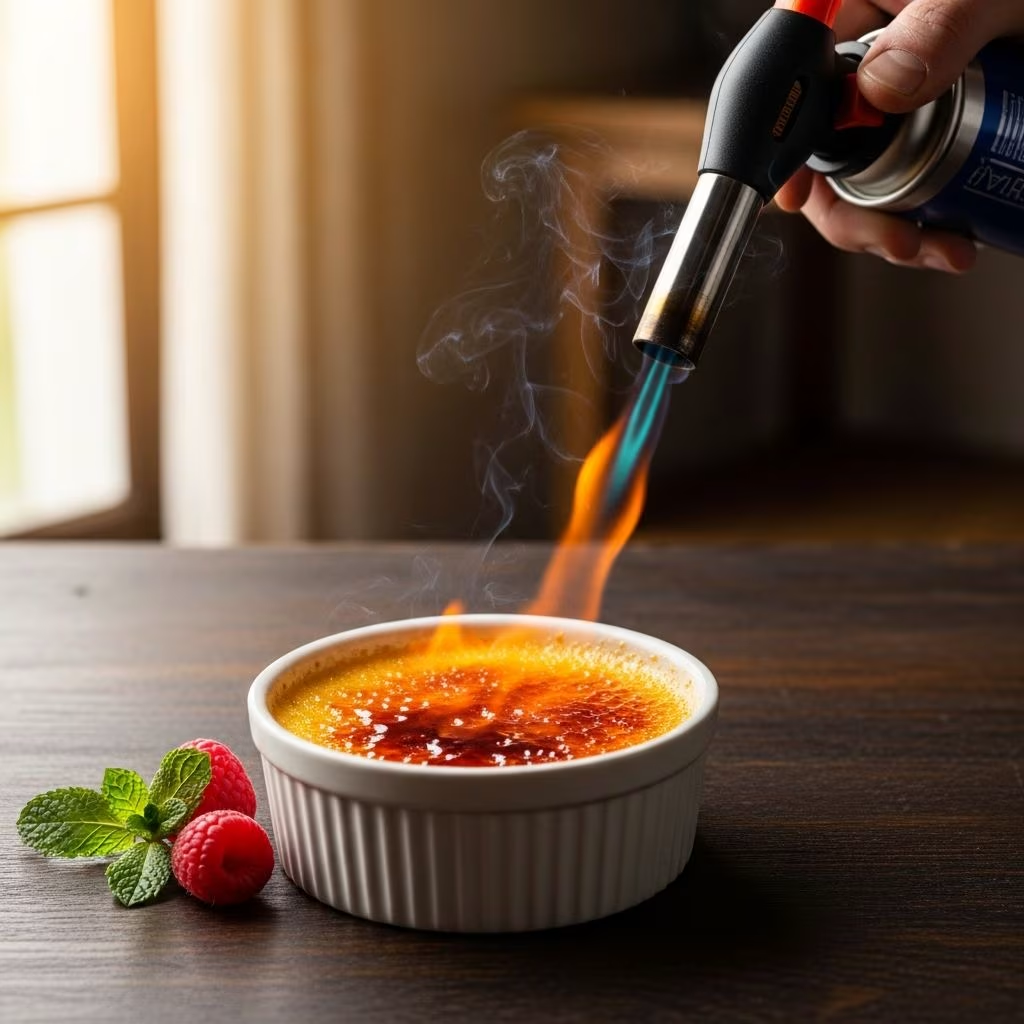
- Kitchen Torch (Preferred): Sprinkle 1-2 tsp sugar evenly over chilled custard. Torch in circular motions until deeply golden and bubbling. Let harden 2-5 minutes.
- Broiler/Oven: Position rack close to heat source. Sugar-top ramekins and broil 1-2 minutes, watching closely to avoid burning.
Tips: Use white granulated sugar for clarity; avoid brown sugar as it burns faster. Rotate for even melting. Serve immediately for peak crunch.
Common Pitfalls and Fixes
Even seasoned bakers encounter issues. Address them proactively:
- Grainy Custard: Undissolved sugar or overbeaten eggs. Solution: Whisk thoroughly and strain.
- Cracked Surface: Too-high oven temp or no water bath. Solution: Verify 300°F and water level.
- Runny Texture: Underbaked or insufficient yolks. Solution: Bake until just set; chill fully.
- Soft Topping: Thick sugar layer or humidity. Solution: Thin, even sprinkle; torch thoroughly.
Temperature check: Custard at 170-175°F internally signals doneness.
Creative Flavor Variations
Elevate the classic with infusions:
- Chocolate: Stir in 4 oz melted dark chocolate post-tempering.
- Matcha: Whisk 1-2 tsp matcha powder into yolks for earthy notes.
- Coffee: Add 1/2 tsp espresso powder to cream for depth.
- Fruit: Layer berry compote beneath custard before baking.
- No-Bake Version: Use cornstarch-thickened stovetop custard for quicker prep.
Experiment cautiously; strong flavors can overpower the delicate base.
Equipment Essentials
Invest in these for efficiency:
- Shallow ramekins (4-6 oz) for ideal custard-to-crack ratio.
- Kitchen torch for precise caramelizing.
- Roasting pan for water bath.
- Fine-mesh sieve and instant-read thermometer.
Shallow vessels ensure the topping spans the surface evenly.
Storage and Make-Ahead Strategies
Baked custards store refrigerated up to 3 days, covered loosely. Torch just before serving to preserve snap. Freeze unbaked custards up to 1 month; thaw and bake fresh. Ideal for entertaining—prep ahead, dazzle guests with live torching.
Nutritional Insights
Per serving (1/4 recipe): ~450 calories, high in fat from cream and yolks. Rich in vitamin A and protein, but indulgent—portion accordingly.
Frequently Asked Questions
Can I use whole eggs instead of yolks?
No; whites make custard eggy and watery. Yolks alone ensure silkiness.
What if I lack a torch?
Broil works; position 4-6 inches from heat, 1-2 minutes max.
Is vanilla extract okay?
Yes, 1-2 tsp substitutes one pod effectively.
How do I know it’s baked?
3-inch center jiggles like gelatin; edges firm. Overbaking curdles.
Gluten-free or dairy-free?
Naturally gluten-free. Use coconut cream for dairy-free, but texture varies.
Pairing Suggestions
Complement with fresh berries, shortbread, or sparkling wine. The caramel echoes champagne’s toastiness.
References
- Perfect Crème brûlée — Simply Delicious Food. 2023. https://simply-delicious-food.com/creme-brulee-recipe/
- Easy Crème Brûlée Recipe (6 Ingredients) — Sally’s Baking Addiction. 2023. https://sallysbakingaddiction.com/creme-brulee/
- The Best Easy Crème Brûlée Recipe (4 Ingredients!) — The Cooking Foodie (YouTube). 2022. https://www.youtube.com/watch?v=jcoGuoHmiEg
- Crème Brûlée — Ricardo Cuisine. 2023. https://www.ricardocuisine.com/en/recipes/4016-creme-brulee
- Ultimate crème brûlée recipe — BBC Good Food. 2023. https://www.bbcgoodfood.com/recipes/ultimate-creme-brulee