When it comes to elevating your holiday table, few side dishes command as much sophistication and warmth as a well-crafted chestnut stuffing. This classic preparation transforms humble bread, aromatic vegetables, and rich chestnuts into a dish that serves as both a culinary centerpiece and a nostalgic reminder of festive gatherings past. The combination of earthy nutty flavors with fresh herbs creates a depth of taste that appeals to both traditional palates and adventurous eaters alike.
Chestnut stuffing stands apart from conventional bread-based dressings due to the unique characteristics chestnuts bring to the table. Unlike other nuts, chestnuts contain significantly less fat and offer a subtle sweetness that complements savory herbs beautifully. This distinctive profile makes chestnut stuffing an ideal choice for those seeking to serve something memorable without resorting to heavy or overly rich preparations.
Understanding the Foundation: Selecting Your Ingredients
The success of any chestnut stuffing begins long before you enter the kitchen. Each component deserves careful consideration to ensure your final dish achieves the perfect balance of flavors and textures.
The Bread: Your Base Architecture
The bread you select forms the structural foundation of your stuffing. Day-old or slightly stale bread works best because it has already begun to lose moisture, allowing it to absorb the flavorful liquids you’ll be adding without becoming mushy. White bread, sourdough, or a hearty whole grain blend all work well, though white bread provides a milder flavor that allows the chestnuts and herbs to shine. When cutting your bread, aim for uniform half-inch cubes to ensure even moisture absorption and consistent texture throughout the finished dish.
Chestnuts: The Star Ingredient
Fresh chestnuts require roasting and peeling before use, a process that demands patience but rewards you with superior flavor. Alternatively, vacuum-packed or canned roasted chestnuts offer tremendous convenience and deliver reliable results. When selecting chestnuts, look for specimens that feel heavy for their size and show no signs of mold or soft spots. The roasted chestnuts should be chopped roughly rather than reduced to fine pieces, preserving their presence in the final dish and creating pleasing textural variation.
Aromatic Vegetables: Building Flavor Layers
Onions and celery form the aromatic backbone of your preparation. These vegetables should be finely minced to distribute their flavors evenly throughout the stuffing. Some preparations include garlic for additional depth, while others rely on the gentler sweetness of onion and celery alone. The choice depends on your personal preference and the other flavors in your holiday menu.
Fresh Herbs: The Flavor Profile
Fresh sage provides the traditional herbal foundation for chestnut stuffing, offering an earthy, slightly peppery note that pairs exceptionally well with chestnuts. Thyme contributes a subtle minty undertone, while parsley adds brightness and visual appeal. Some preparations incorporate rosemary for additional complexity. Using fresh herbs rather than dried versions ensures superior flavor intensity and aroma.
The Preparation Method: From Raw Materials to Ready-to-Bake
Step One: Toasting the Bread
Before combining ingredients, spread your bread cubes on a baking sheet and toast them at 350°F for approximately 10-15 minutes. This step removes residual moisture and creates a subtle golden tone that adds visual appeal to your finished dish. Toasting also prevents the bread from disintegrating during mixing and baking.
Step Two: Sautéing the Aromatics
Melt butter in a skillet over medium heat and add your minced onions and celery. Sauté gently for about three to five minutes until the vegetables become translucent and release their aromatics. If using garlic, add it near the end of this cooking period and stir for just one minute to avoid burning, which would create an unpleasant bitter flavor. The objective is to soften the vegetables while preserving their structural integrity.
Step Three: Combining Dry Ingredients
In a large mixing bowl, combine your toasted bread cubes with fresh herbs, salt, and pepper. Toss gently to distribute the seasonings evenly. This step establishes the flavor profile before adding moisture, allowing you to adjust seasoning levels as needed.
Step Four: Incorporating Wet Components
Add the sautéed vegetables to the bread mixture, folding gently to combine. Pour in your stock gradually, stirring constantly to monitor the moisture level. The mixture should be moist but not soggy—the bread cubes should absorb liquid without becoming waterlogged. At this point, add beaten eggs and fold carefully to incorporate them throughout the mixture. Finally, gently fold in the chopped chestnuts, being mindful not to crush them into fine pieces.
Cooking Techniques: Two Excellent Approaches
The Casserole Method
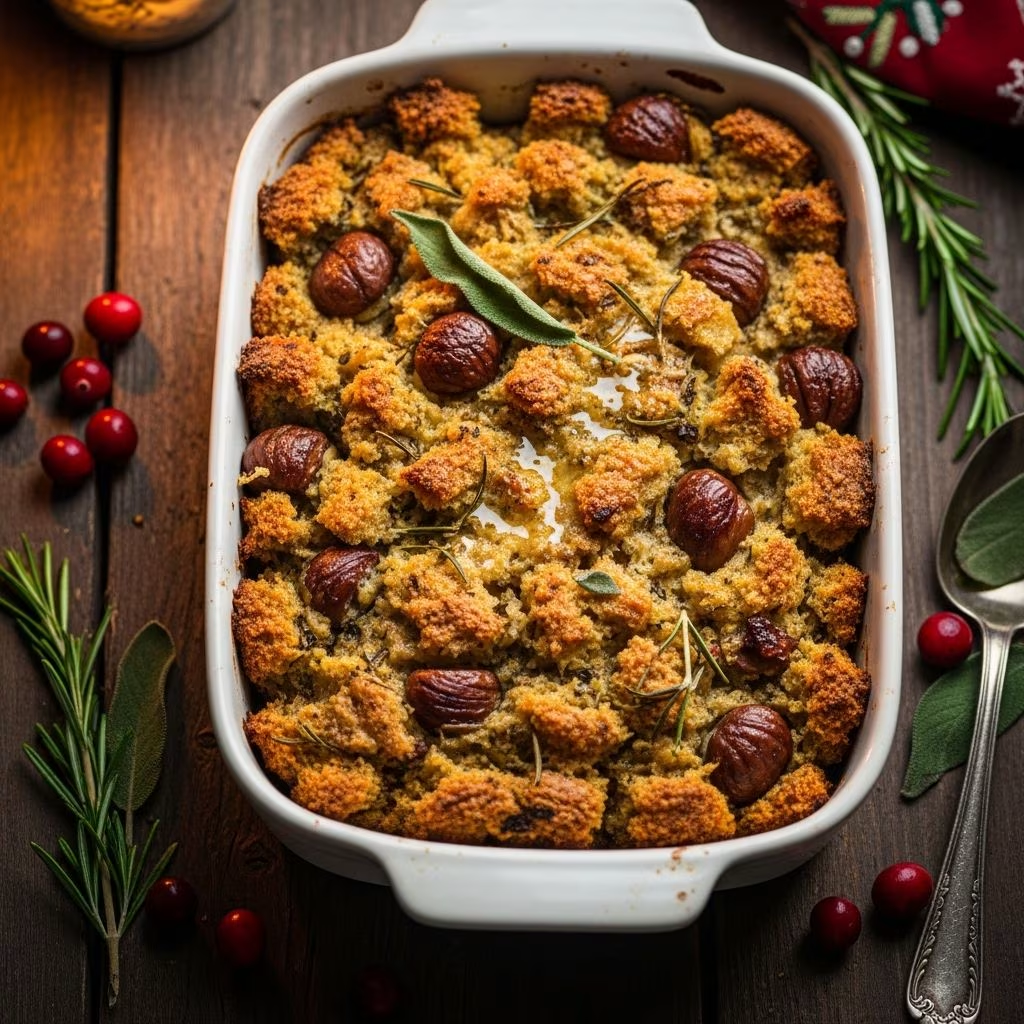
Transfer your prepared stuffing mixture to a buttered baking dish, spreading it into an even layer without packing it densely. This loose arrangement allows heat to circulate throughout the mixture during baking. Cover the dish with aluminum foil and bake at 350°F for approximately 35-40 minutes. Remove the foil during the final 10-15 minutes to allow the top to brown and develop a slightly crispy texture. The finished casserole should display a golden-brown surface while remaining moist inside.
The Turkey Cavity Method
If you prefer to stuff your turkey, transfer the prepared mixture into the bird’s cavity until full and compact. The stuffing will cook alongside the turkey, absorbing flavorful juices and developing enhanced taste. When using this method, ensure the internal temperature of both the turkey thigh meat and the stuffing reaches 165°F before removing from the oven. After roasting is complete, allow the turkey to rest for 15-20 minutes before carefully scooping out the stuffing and transferring it to a serving dish.
Adjustments and Refinements
Managing Moisture Levels
If your stuffing mixture appears dry, you can add additional stock in one-eighth cup increments until reaching your desired consistency. Remember that stock will evaporate during cooking, so a slightly moist mixture before baking often becomes perfectly textured during the cooking process. Conversely, if your mixture seems too wet, you can add additional toasted bread cubes or let the mixture rest uncovered for 15-20 minutes to allow excess moisture to dissipate.
Seasoning Adjustments
Taste your mixture before baking and adjust salt and pepper as needed. Remember that the stock and other ingredients contribute additional saltiness, so season conservatively. You can always add more salt, but removing it is impossible.
Textural Variations
For a heartier version, some cooks include cooked Italian sausage, which adds richness and depth. Others incorporate dried cranberries or fresh apple pieces for slight sweetness and tartness. These additions should never overwhelm the chestnuts and herbs, but rather complement them harmoniously.
Make-Ahead Strategies
Prepare your stuffing mixture up until the baking stage, cover it with plastic wrap, and refrigerate for up to one day in advance. When ready to bake, remove the covered mixture from the refrigerator 30-45 minutes before placing it in the oven. This resting period allows the mixture to return to near room temperature, ensuring more even cooking. Bake according to your chosen method, adding a few extra minutes to the baking time if the mixture is still quite cold when entering the oven.
Serving and Presentation
Transfer your finished chestnut stuffing to an attractive serving dish, garnishing with additional fresh herbs if desired. The golden-brown exterior and aromatic presentation will immediately signal to your guests that this is no ordinary side dish. Serve warm alongside carved turkey, roasted vegetables, or cranberry sauce for a complete holiday meal.
Frequently Asked Questions
Can I make this stuffing vegetarian?
Absolutely. Simply substitute vegetable stock for any chicken or turkey stock called for in the recipe. The result will be equally flavorful and satisfying.
How do I roast fresh chestnuts?
Score an X on the shell of each chestnut, spread them on a baking sheet, and roast at 400°F for 15-20 minutes. Once cooled slightly, peel away both the outer shell and inner papery skin.
Can I freeze chestnut stuffing?
Yes, you can freeze either the prepared but unbaked mixture or the finished baked stuffing for up to three months. Thaw in the refrigerator overnight before reheating.
What if I don’t have fresh herbs available?
Dried herbs can substitute for fresh ones, but use approximately one-third the quantity due to their concentrated flavor. Add them earlier in the cooking process to allow their flavors to fully develop.
How should I store leftover chestnut stuffing?
Refrigerate leftovers in an airtight container for up to four days. Reheat gently in a 325°F oven, covered with foil, until warmed through.
Conclusion
Chestnut stuffing represents far more than a simple side dish—it embodies the warmth, tradition, and celebration that define holiday gatherings. By understanding each ingredient’s role, mastering fundamental techniques, and applying thoughtful adjustments to suit your preferences, you can create a memorable dish that will earn compliments from even the most discerning dinner guests. Whether you choose the casserole method for convenience or the turkey cavity method for traditional presentation, this sophisticated preparation deserves a prominent place on your holiday menu.
References
- Chestnut Stuffing Recipe – An Easy Holiday Side Dish — Foolproof Living. Accessed April 10, 2026. https://foolproofliving.com/chestnut-stuffing/
- Old Fashioned Chestnut Stuffing — Lakewinds Food Co-op. Accessed April 10, 2026. https://www.lakewinds.coop/recipes/all/old-fashioned-chestnut-stuffing/
- Old Fashioned Chestnut Stuffing – Easy Thanksgiving Recipes — Feels Like Home Blog. Accessed April 10, 2026. https://feelslikehomeblog.com/chestnut-stuffing-easy-thanksgiving-recipes/
- Andrew Zimmern Cooks: Chestnut Stuffing Recipe — Andrew Zimmern. Accessed April 10, 2026. https://andrewzimmern.com/recipes/andrew-zimmern-cooks-chestnut-stuffing/
- Chestnut Stuffing Recipe with Italian Sausage — She Loves Biscotti. Accessed April 10, 2026. https://www.shelovesbiscotti.com/chestnut-stuffing/
- Chestnut Herb Stuffing — Life is but a Dish. Accessed April 10, 2026. https://www.lifeisbutadish.com/chestnut-herb-stuffing/