The Caesar salad stands as one of the most beloved dishes in culinary history, combining crisp greens with a rich, savory dressing and crunchy elements for a balanced bite. Originating in the 1920s, this salad has evolved into a staple on menus worldwide, prized for its bold flavors and satisfying texture. This guide explores everything needed to recreate it authentically at home, from selecting premium ingredients to mastering the dressing emulsion and assembly process.
Understanding the Caesar Salad Components
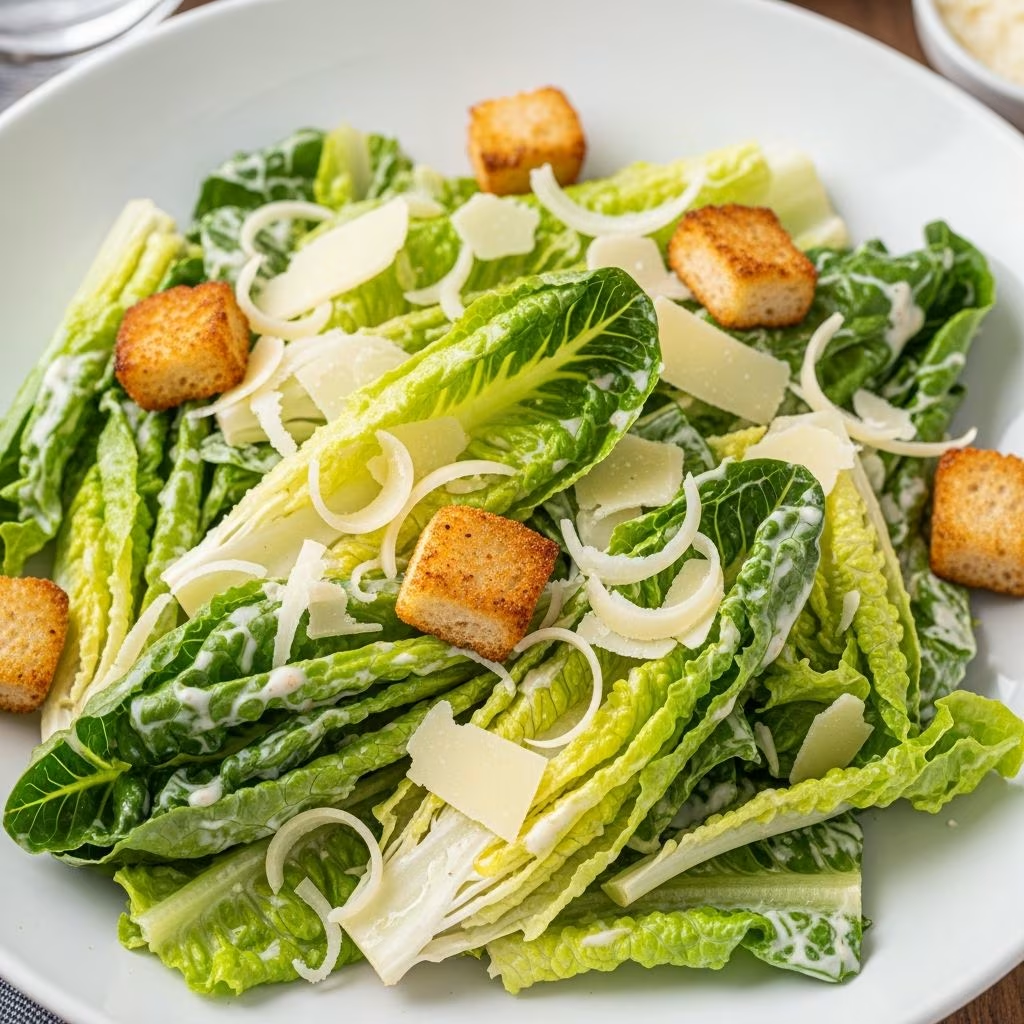
A true Caesar salad relies on harmony among its parts: fresh romaine lettuce, a creamy emulsified dressing featuring umami from anchovies, nutty Parmesan cheese, and golden croutons. Each element contributes uniquely—lettuce provides crunch, dressing delivers tang and richness, cheese adds sharpness, and croutons offer contrast.
Romaine hearts form the ideal base due to their sturdy leaves that hold dressing without wilting. Look for vibrant green outer leaves and crisp cores. The dressing, the heart of the salad, builds creaminess through slow oil incorporation into an egg yolk base, amplified by garlic, lemon, and Worcestershire. Parmesan, preferably shaved or grated fresh, melts slightly into the mix for depth. Croutons, when homemade, absorb flavors better than store-bought versions.
Essential Ingredients Breakdown
Gathering high-quality components ensures superior results. Here’s a detailed list for a salad serving 4:
- Romaine lettuce: 2 large heads or 4 hearts, cored and cut into 1- to 2-inch pieces (about 8-10 cups total).
- Fresh lemon juice: From 1-2 lemons (3-4 tablespoons), for bright acidity.
- Egg yolks: 2 large, pasteurized for safety, to emulsify the dressing.
- Garlic: 2-3 cloves, minced or pressed, for pungent aroma.
- Anchovy fillets or paste: 2-3 fillets or 1-1.5 teaspoons paste, providing essential savory backbone.
- Worcestershire sauce: 1 teaspoon, for complex fermented notes.
- Dijon mustard: 1-2 teaspoons (optional in some recipes), to stabilize emulsion.
- Extra-virgin olive oil: ½-¾ cup, plus neutral oil if desired for milder flavor.
- Parmesan cheese: ¾-1 cup grated or shaved, preferably Parmigiano-Reggiano.
- Bread for croutons: 3-4 thick slices (sourdough or baguette), cubed (about 4 cups).
- Seasonings: Kosher salt, black pepper, optional dried herbs.
These measurements draw from traditional methods, scalable for larger groups.
Step-by-Step Dressing Preparation
The dressing is the make-or-break element, requiring careful whisking to achieve a thick, velvety texture. Start in a large bowl with lemon juice, egg yolks, minced garlic, anchovies (mashed if whole), Worcestershire, mustard, and pepper. Whisk vigorously for 1-2 minutes until slightly thickened and uniform.
Next, drizzle in olive oil in a thin, steady stream while whisking nonstop—this creates the emulsion, turning the mixture creamy without separating. Aim for 30-60 seconds of pouring. Fold in half the Parmesan last. Taste and adjust: more lemon for tang, salt sparingly due to anchovies and cheese. Yields about 1 cup, enough for the salad with leftovers.
Pro Tip: For smoother results, use an immersion blender in a tall jar: submerge and blend while adding oil slowly. Refrigerate up to 3 days; whisk before use.
Crafting Perfect Homemade Croutons
Store-bought croutons often lack flavor and crunch. Homemade versions take 10-15 minutes and elevate the dish dramatically. Cube bread into ¾- to 1-inch pieces. Toss with 2-3 tablespoons olive oil, 1 minced garlic clove, salt, pepper, and optional Parmesan or herbs.
Spread on a baking sheet and bake at 375°F (190°C) for 8-12 minutes, stirring halfway, until golden and crisp. For stovetop: sauté in a skillet over medium heat, 8-10 minutes, tossing frequently. Cool completely to maintain crunch. Store in an airtight container up to 1 week.
| Method | Time | Texture | Best For |
|---|---|---|---|
| Oven-Baked | 10-12 min | Evenly crisp | Batch cooking |
| Skillet-Fried | 8-10 min | Extra crunchy | Small batches |
| Air Fryer | 5-7 min | Light & airy | Quick prep |
Preparing and Chilling the Romaine
Freshness is key—select romaine with tight heads and no browning. Core by slicing off the base, then chop into bite-sized pieces. Rinse thoroughly under cold water to remove grit, especially in the center. Dry completely using a salad spinner or towels; excess moisture dilutes dressing.
Chill chopped leaves in a bowl lined with paper towels for 30-60 minutes. This crisps them further and prevents sogginess upon dressing. For advance prep, wrap dry leaves in a kitchen towel and refrigerate up to 24 hours.
Assembly and Tossing Technique
Assemble just before serving to preserve crispness. In a large wooden or chilled bowl, add cold romaine, croutons, and most of the Parmesan. Sprinkle salt and pepper lightly.
Pour dressing around the bowl’s inner edges, not directly on greens—this ensures even coating as you toss. Use tongs to gently lift and turn until every leaf glistens, 30-60 seconds. Add remaining cheese on top. Serve immediately.
Common Mistake to Avoid: Over-dressing leads to sogginess; start with ¾ of the batch and add more if needed.
Variations and Modern Twists
While classic is unbeatable, adaptations suit different tastes:
- Chicken Caesar: Grill or bake 1 lb chicken breast, slice, and top salad.
- Vegan Version: Swap egg with aquafaba, anchovies with capers or seaweed, use vegan Parmesan.
- Kale Caesar: Massage sturdy kale leaves for tenderness.
- Grilled Romaine: Char halves briefly for smoky flavor.
- Shrimp Addition: Sauté peeled shrimp with garlic for surf-and-turf.
These keep the core intact while innovating.
Nutrition and Pairing Suggestions
A standard serving (about 2 cups) offers roughly 250-350 calories, with protein from cheese and egg (10-15g), healthy fats from oil (20g), and vitamins A, C, K from romaine. It’s naturally low-carb and gluten-free if using GF bread for croutons.
Pair with grilled steak, pasta, or seafood for mains. Wines like crisp Sauvignon Blanc or light Chardonnay complement the acidity and richness.
Storage, Make-Ahead, and Troubleshooting
Storage: Undressed salad lasts 1-2 days in fridge; dressed, consume immediately. Store components separately.
Make-Ahead: Prep dressing and croutons 2-3 days ahead; chop romaine 1 day prior.
Troubleshooting:
- Dressing separated? Whisk vigorously or re-emulsify with a teaspoon mustard.
- Croutons soft? Bake briefly to recrisp.
- Too salty? Balance with more lemon.
Frequently Asked Questions
Can I skip anchovies?
Anchovies provide umami; substitute with extra Worcestershire or soy sauce, but flavor won’t be identical.
Is raw egg safe?
Use pasteurized eggs to minimize risk, or coddle them briefly.
How do I make it dairy-free?
Omit Parmesan or use nutritional yeast; add more lemon for tang.
Best bread for croutons?
Sourdough or French baguette for chew and flavor absorption.
Can I use bottled dressing?
Homemade far superior, but choose anchovy-inclusive brands if rushed.
References
- Classic Caesar Salad Recipe — Chef Billy Parisi. 2023. https://www.billyparisi.com/classic-caesar-salad-recipe/
- Classic Caesar Salad Recipe — Foolproof Living. 2022-10-15. https://foolproofliving.com/classic-caesar-salad/
- Original Tijuana Caesar Salad — The Gourmet Gourmand. 2021. https://thegourmetgourmand.com/original-tijuana-caesar-salad/
- Perfect Classic Caesar Salad — Plays Well With Butter. 2023-05-20. https://playswellwithbutter.com/classic-caesar-salad/
- Traditional Caesar Salad (Tableside) — Coley Cooks. 2022. https://coleycooks.com/caesar-salad/
- Caesar Salad Recipe — BettyCrocker.com. 2024-01-10. https://www.bettycrocker.com/recipes/caesar-salad/2787ce54-0843-43fc-a878-3b657ddb839d