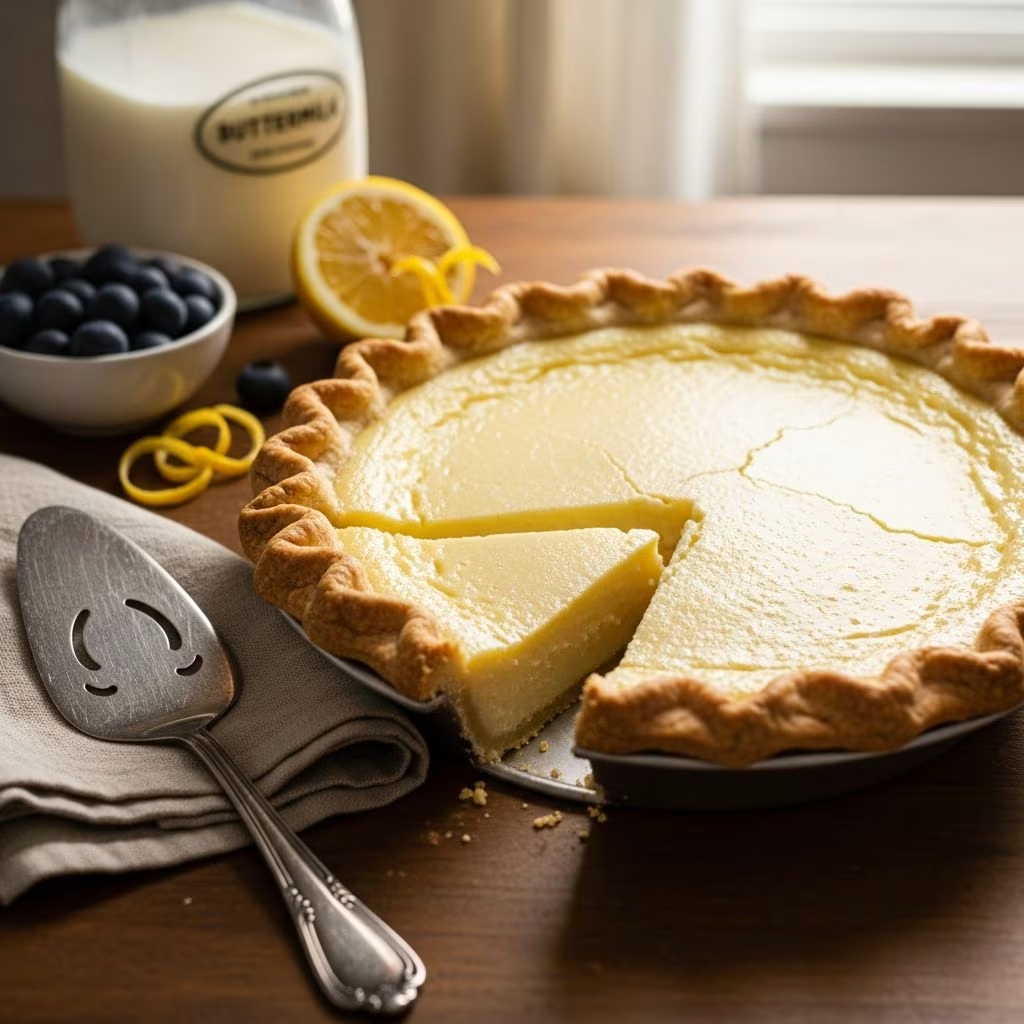
Buttermilk pie stands as a beloved staple in Southern American baking, cherished for its silky texture and bright, tangy flavor. This dessert combines simple pantry staples into a custard-like filling that sets beautifully during baking, offering a contrast to fruit-filled pies. Whether you’re hosting a family gathering or simply craving a comforting treat, mastering buttermilk pie opens doors to endless culinary creativity.
The Roots of Buttermilk Pie in Southern Cuisine
Tracing its origins to the 19th century, buttermilk pie emerged from the resourceful kitchens of the American South. During an era when fresh milk was often turned into butter, the leftover liquid—buttermilk—became a versatile ingredient. Cooks discovered that its acidity tenderized baked goods and added a distinctive zing. Historical cookbooks from the 1800s, such as those by Mary Randolph, feature early versions akin to chess pie, another Southern icon. Over time, buttermilk pie carved its own identity, prized for its ability to shine without elaborate add-ins.
This pie’s popularity surged in rural households where ingredients like sugar, eggs, and flour were kitchen constants. It symbolized thriftiness and ingenuity, transforming everyday byproducts into something extraordinary. Today, it graces Thanksgiving tables and church potlucks, evoking nostalgia and warmth.
Essential Ingredients for Authentic Flavor
At its core, buttermilk pie relies on a handful of high-quality components. Start with full-fat buttermilk for optimal creaminess and tang—low-fat versions dilute the flavor. Eggs provide structure and richness, binding the custard as it bakes. Granulated sugar sweetens while cornstarch or flour thickens, preventing a runny result.
Butter adds luxurious mouthfeel; unsalted varieties let you control salt levels. Vanilla extract enhances aroma, and a pinch of salt balances sweetness. For the crust, opt for homemade pie dough or a reliable store-bought option to encase the filling perfectly.
- Buttermilk: 1.5 cups, chilled for best texture
- Eggs: 4 large, room temperature
- Sugar: 1.5 cups, fine granulated
- Butter: ½ cup, melted and cooled
- Flour or cornstarch: 3 tablespoons
- Vanilla: 2 teaspoons pure extract
- Salt: ¼ teaspoon
These proportions yield a 9-inch pie serving 8 generously. Measure precisely to ensure success.
Step-by-Step Guide to Baking Success
Preparation begins with the crust. Roll out dough to ⅛-inch thickness, fit into a pie plate, and chill for 30 minutes. This prevents shrinkage. Blind-bake by lining with parchment and weights, then bake at 375°F for 20 minutes. Remove weights and bake 5 more minutes until pale golden.
Meanwhile, whisk sugar, flour, and salt in a bowl. Beat in eggs one by one, followed by melted butter, buttermilk, and vanilla. The mixture should be smooth and pourable. Strain if needed to eliminate lumps. Pour into the par-baked crust and shield edges with foil.
Bake at 350°F for 45-55 minutes. The center will jiggle slightly but firm as it cools. A toothpick inserted near the edge should emerge clean. Cool completely on a wire rack—patience here avoids cracks.
| Step | Time | Temperature | Key Tip |
|---|---|---|---|
| Blind bake crust | 25 min | 375°F | Use pie weights |
| Mix filling | 10 min | N/A | Whisk vigorously |
| Bake pie | 45-55 min | 350°F | Foil edges |
| Cool | 4 hours | Room temp | Wire rack |
Mastering Texture and Troubleshooting Common Issues
Achieving the ideal creamy yet firm texture demands attention to details. Overmixing incorporates air, leading to bubbles; gentle stirring preserves smoothness. Buttermilk’s acidity reacts with baking soda (if used) for lift, but traditional recipes skip leaveners for a dense custard.
If the top browns too quickly, tent with foil midway. Cracks signal overbaking or rapid cooling—lower the oven rack if needed. A soggy bottom? Ensure thorough blind-baking. For deeper flavor, infuse the buttermilk with lemon zest or nutmeg beforehand.
Storage tip: Cover and refrigerate up to 3 days. Freezing works for unbaked pies; thaw overnight before baking.
Delicious Variations to Elevate Your Pie
While classic buttermilk pie shines solo, twists add excitement. Lemon buttermilk pie incorporates zest and juice for citrus brightness, cutting richness. Chocolate lovers grate cocoa into the filling or swirl ganache on top.
Go savory with a chess pie hybrid, adding cornmeal for grit. For holidays, stir in bourbon or pecans. Mini versions in muffin tins suit parties—bake 20-25 minutes.
- Citrus Burst: Add 1 tbsp lemon zest + 2 tbsp juice.
- Spiced Delight: ½ tsp nutmeg + cinnamon.
- Nutty Crunch: ½ cup toasted pecans folded in.
- Berry Swirl: Dot with jam before baking.
Experiment confidently; the forgiving base accommodates bold ideas.
Pairing Suggestions for the Perfect Slice
Buttermilk pie’s tang pairs beautifully with robust coffees or teas. For dessert wine, try a late-harvest Riesling. Whipped cream sweetened with brown sugar enhances creaminess, while fresh berries provide tart contrast.
Serve chilled for firm slices or at room temperature for softer indulgence. Portion with a hot knife for clean cuts.
Health-Conscious Adaptations
Lighten up by swapping half the butter for Greek yogurt and using low-fat buttermilk. Sugar substitutes like erythritol work, though texture may vary. A graham cracker crust adds whole grains.
Portion control and mindful ingredients keep it enjoyable without excess.
Why Buttermilk Pie Endures
Its simplicity belies profound satisfaction. No special equipment or skills required—just basic baking know-how yields impressive results. In a world of complex desserts, buttermilk pie celebrates unpretentious joy, uniting generations around the table.
Frequently Asked Questions
Can I use regular milk instead of buttermilk?
No, buttermilk’s acidity is crucial for flavor and tenderizing. Make a substitute by adding 1 tbsp vinegar to 1 cup milk; let sit 10 minutes.
How do I prevent a watery filling?
Increase flour to 4 tbsp or bake longer. Ensure eggs are fresh and at room temp.
Is it gluten-free friendly?
Yes, use a nut-based crust and ¼ cup cornstarch instead of flour.
Can I make it vegan?
Replace eggs with flax eggs (1 tbsp flax + 3 tbsp water each), use vegan butter, and plant-based buttermilk.
How long does it keep?
Refrigerated, up to 4 days; frozen slices up to 2 months.
Advanced Techniques for Pro Results
For ultra-flaky crusts, incorporate vodka into dough—it evaporates without gluten development. Temper eggs by whisking in warm butter gradually. A water bath ensures even baking for taller pies.
Infuse vanilla bean or citrus peels in buttermilk overnight for depth. These tweaks impress seasoned bakers.
References
- The Virginia Housewife — Mary Randolph. 1824 (reprinted editions authoritative for Southern pie history). https://www.loc.gov/item/01030189/
- Southern Living: The Southern Cake Book — Oxmoor House. 2015-10-20. https://www.southernliving.com/food/cakes/buttermilk-pie
- USDA Food Safety Guidelines for Pies — United States Department of Agriculture. 2023-08-15. https://www.fsis.usda.gov/food-safety/safe-food-handling-and-preparation/food-safety-basics/pies-pastries
- King Arthur Baking: Pie Crust Science — King Arthur Baking Company. 2024-02-10. https://www.kingarthurbaking.com/blog/2024/02/10/pie-crust-science
- Joy of Cooking Buttermilk Pie Entry — Irma S. Rombauer et al. 2020 edition. https://www.simonandschuster.com/books/Joy-of-Cooking/Irma-S-Rombauer/9780743246262
(Word count: 1678)