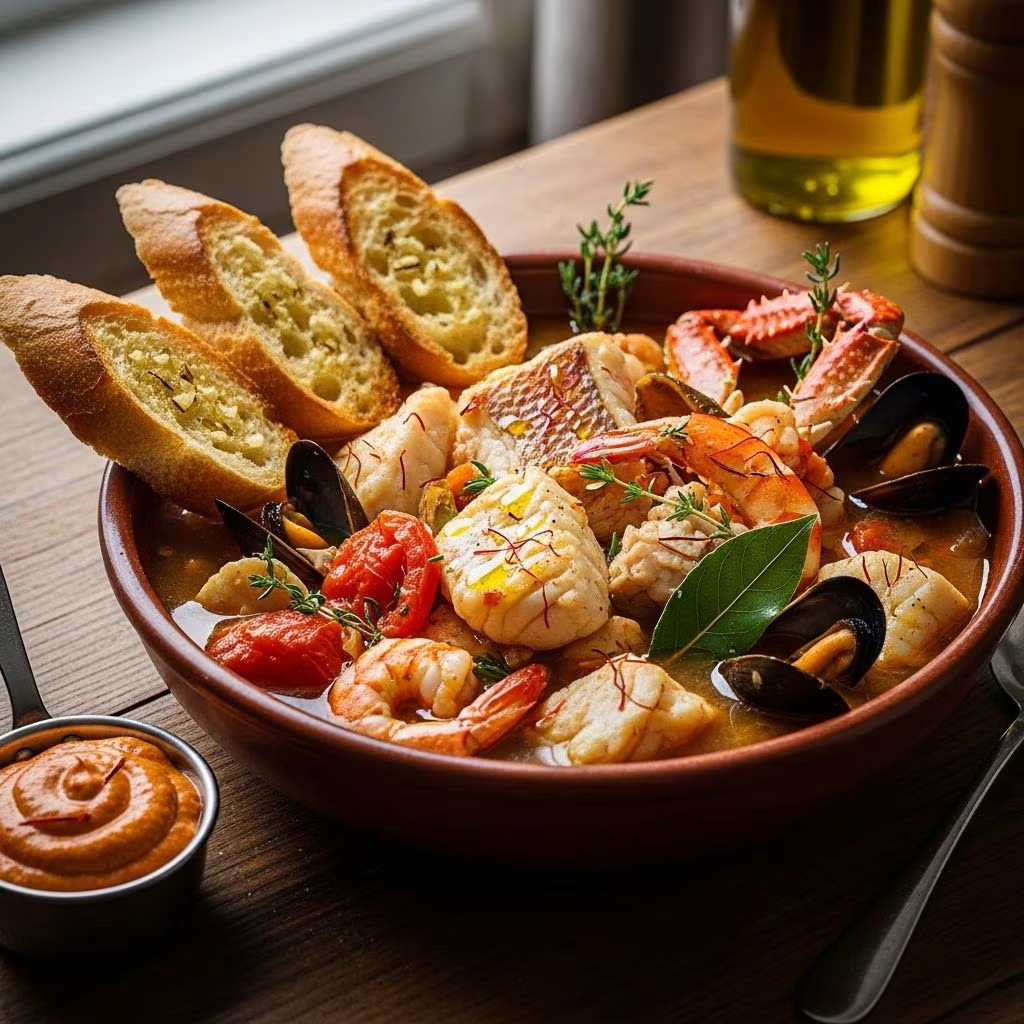
Bouillabaisse stands as one of the most celebrated dishes from the Mediterranean coast of France, particularly Marseille. This hearty seafood stew combines an array of fresh fish and shellfish in a fragrant broth infused with saffron, tomatoes, and herbs. Originally crafted by local fishermen using the day’s catch, it has evolved into a sophisticated yet accessible recipe for home cooks worldwide.
The Origins and Cultural Significance
Tracing its roots to the 16th century, bouillabaisse emerged from humble beginnings in Provençal fishing villages. Fishermen would simmer less desirable fish and scraps in a simple broth to create a nourishing meal. Over time, the dish gained fame, attracting notable figures like Julia Child, who popularized a streamlined version in her cookbooks. Today, it symbolizes the bounty of the sea and the resourcefulness of coastal communities.
In Marseille, strict guidelines define authentic bouillabaisse, mandating specific fish like scorpionfish and conger eel, along with key aromatics. While traditionalists adhere to these rules, modern adaptations incorporate widely available seafood, making it feasible for global kitchens without compromising flavor.
Essential Ingredients for Authentic Flavor
The magic of bouillabaisse lies in its balance of seafood, vegetables, and seasonings. A robust broth forms the foundation, enriched by fish bones and shells for depth.
- Seafood Base: Use 3-4 pounds of mixed fish such as monkfish, snapper, or cod fillets, plus shellfish like shrimp, mussels, and clams. Fish heads, bones, and shrimp shells are crucial for the stock.
- Aromatics: Onions, leeks, fennel, and garlic provide a sweet, anise-like foundation.
- Tomatoes and Paste: Fresh or canned tomatoes and a spoonful of tomato paste add acidity and richness.
- Herbs and Spices: Saffron imparts a golden hue and earthy notes; thyme, parsley, and bay leaves enhance complexity. A strip of orange peel offers subtle citrus brightness.
- Liquids: Seafood stock, water, or white wine (about 2-3 quarts) simmered gently.
For the classic rouille sauce—a garlicky, spicy mayonnaise—blend roasted red peppers, cayenne, lemon juice, breadcrumbs, and olive oil. This condiment elevates the stew, spread on crusty bread.
Step-by-Step Guide to Preparing Bouillabaisse
Mastering bouillabaisse requires patience, especially in building the broth. This recipe serves 6-8 and takes about 1.5 hours.
1. Craft the Rich Broth
Heat ½ cup extra-virgin olive oil in a large stockpot over medium heat. Sauté 1 cup each of chopped onions and leeks until softened, about 5 minutes. Add 4 smashed garlic cloves, cooking until fragrant. Stir in 2-3 chopped ripe tomatoes (or 2 cups canned) and 3 tablespoons tomato paste, cooking for 2 minutes.
Pour in 2.5 quarts water or seafood stock, plus fresh herb sprigs (thyme, parsley, fennel fronds), a 2-inch orange peel strip, ½ teaspoon saffron threads, and 1 tablespoon sea salt. Add 3-4 pounds fish bones, heads, and shrimp shells. Simmer gently for 30-40 minutes, never boiling, to extract flavors without clouding the broth. Strain through a fine mesh sieve, discarding solids.
2. Prepare the Seafood
While the broth simmers, clean 1.5 pounds firm white fish fillets (cut into 2-inch pieces), 1 pound shrimp (peeled, shells reserved for broth), 1 pound mussels, and 1 pound clams. Pat dry and refrigerate until ready.
3. Simmer the Stew
Return strained broth to the pot and bring to a gentle simmer. Add fish pieces first, cooking 5 minutes until opaque. Follow with shellfish, covering until mussels and clams open (discard unopened ones), about 3-5 minutes. Taste and adjust seasoning with salt, pepper, or a pinch of cayenne.
4. Make Rouille Sauce
In a blender, combine 2 roasted red peppers, ½ teaspoon cayenne, 1 tablespoon lemon juice, 1 garlic clove, ¼ cup breadcrumbs, ¼ cup parsley, and ½ teaspoon salt. Puree, then drizzle in ⅓ cup olive oil to emulsify into a thick paste.
Ingredient Variations and Substitutions
Adapt bouillabaisse to seasonal availability or preferences with these options:
| Traditional Ingredient | Substitution | Flavor Impact |
|---|---|---|
| Scorpionfish or Conger Eel | Monkfish or Snapper | Maintains firm texture |
| Fresh Fennel | Celery or Extra Leeks | Milder anise note |
| Saffron | Saffron Threads + Turmeric | Approximates color and aroma |
| White Wine | Dry Vermouth | Enhances herbal depth |
| Rouille | Garlic Aioli with Paprika | Simpler spicy topping |
For a lighter version, reduce oil and use vegetable stock. Vegan adaptations swap seafood for hearty vegetables like potatoes and artichokes, though they diverge from tradition.
Perfect Pairings and Serving Suggestions
Serve bouillabaisse piping hot in wide bowls to showcase the seafood. Accompany with toasted baguette slices rubbed with garlic and brushed with olive oil, topped with rouille. A crisp white wine like Sancerre or Provençal rosé cuts through the richness.
Garnish with chopped parsley and fennel fronds for freshness. For special occasions, present the broth separately from the seafood, allowing diners to assemble their bowls—a nod to classic French service.
Common Mistakes to Avoid
- Overboiling the Broth: High heat emulsifies oils, creating a greasy texture. Maintain a bare simmer.
- Overcooking Seafood: Add in stages—firm fish first, delicate shellfish last.
- Skipping the Strain: Solids cloud the broth; a cheesecloth-lined sieve ensures clarity.
- Undersalting: Seafood releases moisture; season progressively.
Nutritional Profile and Health Benefits
A 1-cup serving offers approximately 300 calories, 25g protein, and omega-3 fatty acids from seafood, supporting heart health. Tomatoes provide lycopene, an antioxidant, while saffron boasts anti-inflammatory properties. Use lean fish and minimal oil for a lighter meal.
Storage, Freezing, and Reheating Tips
Store leftovers in airtight containers for up to 2 days in the fridge. Freeze broth separately for 3 months; add fresh seafood upon reheating. Gently warm on stovetop, avoiding microwaves to prevent toughness.
Frequently Asked Questions (FAQs)
What makes bouillabaisse different from other fish stews?
Its signature saffron-infused broth, rouille, and Provençal herbs distinguish it from cioppino or chowder.
Can I make bouillabaisse without fish bones?
Yes, use store-bought seafood stock, but homemade yields superior depth.
Is bouillabaisse gluten-free?
The stew is naturally gluten-free; opt for gluten-free bread and check rouille breadcrumbs.
How spicy should rouille be?
Adjust cayenne to taste—mild for families, bolder for heat lovers.
What’s the best fish for bouillabaisse?
Firm, white-flesed varieties like halibut or grouper hold up best in the broth.
Advanced Techniques for Home Chefs
Elevate your bouillabaisse with a lobster stock base or infuse Pernod for licorice notes. For clarity, chill the strained broth overnight; fat rises for easy skimming. Experiment with potato-thickened broth for heartiness, a Marseille staple.
Pairing it with a green salad dressed in vinaigrette balances the meal. For events, scale up in a Dutch oven, serving family-style to impress guests.
References
- Julia Child’s Simple French Bouillabaisse Recipe — Familystyle Food, Karen Tedesco. 2023. https://familystylefood.com/julia-childs-bouillabaisse-recipe/
- Seafood Bouillabaisse Recipe — Fulton Fish Market. 2024. https://fultonfishmarket.com/blogs/recipes/seafood-bouillabaisse-recipe
- Simple Bouillabaisse Recipe (French Seafood Stew) — Little Ferraro Kitchen. 2022. https://littleferrarokitchen.com/julia-childs-bouillabaisse/
- Bouillabaisse — Fashion Tales Blog. 2023. https://fashiontalesblog.com/recipe/bouillabaisse/
- French Fish Stew – Bouillabaisse recipe — Let’s Eat The World. 2021. https://letseattheworld.com/bouillabaisse-french-fish-stew-2/
- Fancy Bouillabaisse — West Via Midwest. 2023. https://www.westviamidwest.com/fancy-bouillabaisse/