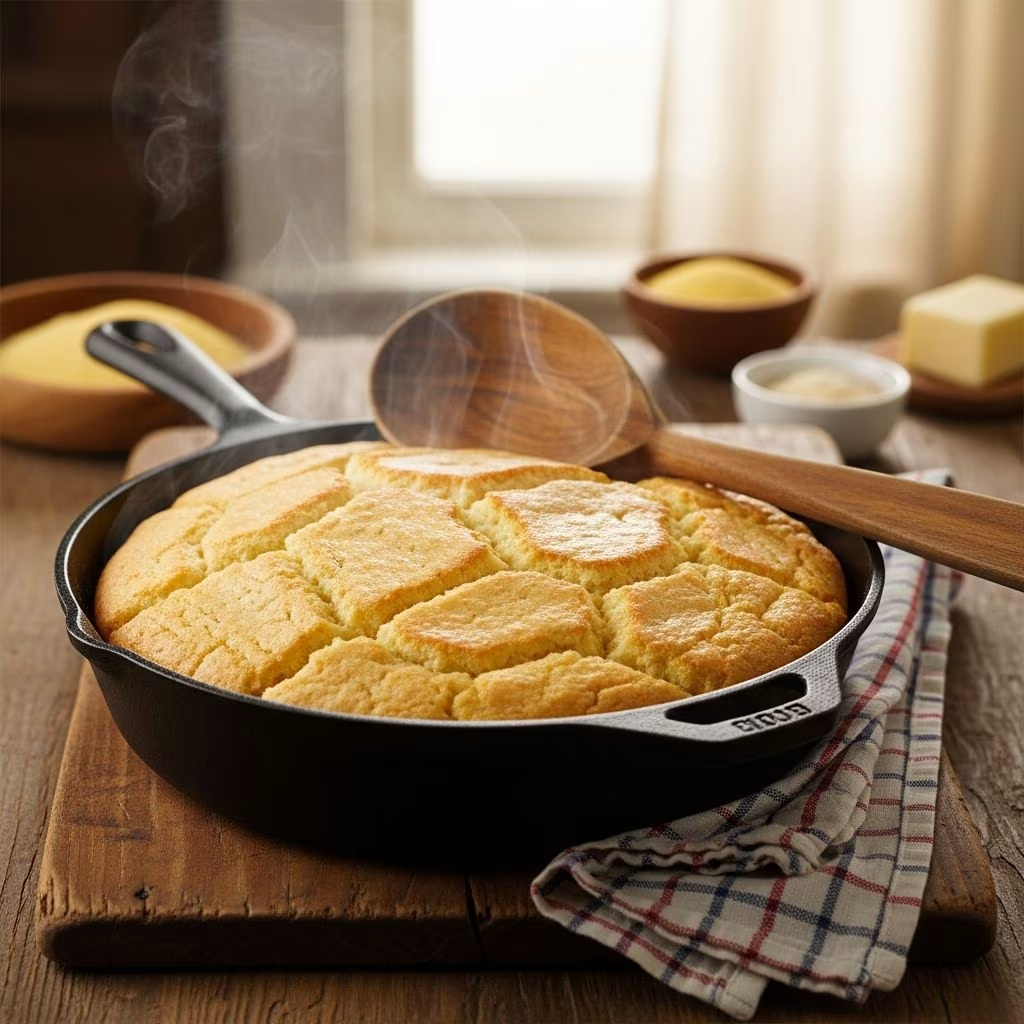
Appalachian spoon bread stands as a timeless emblem of Southern culinary tradition, blending the simplicity of cornmeal with the richness of eggs and milk to create a dish that’s equal parts pudding and bread. This versatile side scoops easily from the pan, offering a custardy interior with lightly crisped edges that make every bite memorable. Rooted in the rugged mountains of Appalachia, it has warmed homes for centuries, evolving from Native American influences and early settler ingenuity into a beloved staple at gatherings and daily tables alike.
The Rich History Behind Spoon Bread
Spoon bread traces its origins to the early 19th century in the American South, particularly among Appalachian communities where corn was a dietary cornerstone. Unlike dense cornbread baked in skillets, spoon bread’s batter-like consistency allows it to be served with a spoon, hence its name. Historical accounts suggest it emerged as a practical adaptation for families with limited ovens, cooked stovetop before a final bake for fluffiness. By the 1920s, recipes appeared in community cookbooks, emphasizing fresh cornmeal and scalded milk for optimal texture. This dish embodies resilience, transforming humble pantry items into something luxurious and communal.
In Appalachian culture, spoon bread often graces holiday tables, church suppers, and weeknight dinners, symbolizing hospitality. Its evolution reflects regional tweaks: Kentucky versions lean sweeter, while Virginia styles prioritize savory notes. Today, it remains a bridge between past and present, cherished for its nostalgic appeal and effortless preparation.
Essential Ingredients for Perfect Spoon Bread
The beauty of spoon bread lies in its straightforward ingredient list, relying on quality basics to shine. Core components include fine cornmeal for smoothness, whole milk for creaminess, eggs for lift, and leaveners like baking powder for that signature rise. Butter adds richness, while salt balances flavors.
- Cornmeal: Use 1 cup of stone-ground or plain fine cornmeal (not self-rising) to avoid grittiness.
- Milk: 3-4 cups whole milk, scalded to soften the cornmeal properly.
- Eggs: 3-4 large eggs, separated for maximum volume from whipped whites.
- Butter: 2-4 tablespoons melted, for flavor and tenderness.
- Leaveners and Seasoning: 1-1.5 teaspoons baking powder and salt to taste.
These elements create a batter that’s pourable yet thick, ensuring the final product jiggles gently when done. Opt for fresh, high-quality dairy to elevate the dish’s natural sweetness from the corn.
Step-by-Step Guide to Baking Spoon Bread
Preparing spoon bread involves a few key techniques: scalding milk, cooking cornmeal into a mush, and folding in whipped eggs. This method yields a light, airy result that’s far from ordinary cornbread. Follow these steps for foolproof results.
- Preheat and Prep: Set your oven to 350-400°F and place a greased 1.5-2 quart cast-iron skillet or baking dish inside to heat. This step crisps the edges beautifully.
- Scald the Milk: In a saucepan, heat 3-4 cups milk until steaming but not boiling. Gradually whisk in 1 cup cornmeal, stirring over medium heat for 10-15 minutes until thickened like polenta.
- Incorporate Flavors: Off heat, stir in melted butter (2-3 tablespoons), salt (1-1.5 teaspoons), and baking powder. Let cool slightly to avoid curdling eggs.
- Handle the Eggs: Separate 3-4 eggs. Beat yolks into the cornmeal mixture, then whip whites to stiff peaks. Gently fold whites in for loft.
- Bake: Pour batter into the hot, greased vessel. Bake 25-45 minutes until golden, puffed, and set in the center with a slight jiggle. A knife should emerge mostly clean.
- Serve Immediately: Scoop warm portions, topping with butter for melt-in-your-mouth indulgence.
Total time: About 20 minutes prep and 30-45 minutes baking. The batter rests briefly to hydrate cornmeal fully, enhancing tenderness.
Tips for Achieving Fluffy, Custardy Texture
Success with spoon bread hinges on precision. First, scalding milk properly prevents a gritty bite by fully blooming the cornmeal. Always separate and whip egg whites separately—their structure traps air for rise. Cool the cornmeal base before adding eggs to maintain smoothness. Use a preheated pan for contrast: crispy outside, soft inside.
Common pitfalls include overmixing (deflates air) or overbaking (dries it out). Test doneness early; it firms as it cools. For extra lift, sift dry ingredients. Whole milk outperforms lower-fat options for superior mouthfeel. Store leftovers covered in the fridge up to two days, reheating gently to revive moisture.
Creative Variations to Suit Any Palate
While traditional spoon bread is plain and perfect, variations add excitement. Experiment with these ideas to match meals or moods.
| Variation | Add-Ins | Baking Adjustment |
|---|---|---|
| Savory Cheese | 1 cup shredded cheddar or gouda | Same time, 375°F |
| Spicy Jalapeño | 1/2 cup diced jalapeños + corn kernels | Add 5 minutes if needed |
| Herbed Delight | 2 tbsp fresh chives or rosemary | No change |
| Sweet Version | 2-4 tbsp sugar + honey drizzle | 350°F for softer set |
| Corn-Filled | 1 cup fresh or canned corn | Slightly longer bake |
Incorporate add-ins after egg yolks but before whites. These twists keep the dish versatile for breakfast, sides, or even desserts.
Pairing Suggestions and Serving Ideas
Spoon bread shines as a side for fried chicken, collard greens, or barbecue, its mild corn flavor complementing bold proteins. For breakfast, top with syrup alongside bacon. At holidays, pair with ham or turkey. A pat of butter or dollop of apple butter enhances its warmth. Serve family-style from the skillet for rustic charm, portioning generously since it doesn’t keep well.
Portion yields 6-8 servings. It’s naturally gluten-free, making it inclusive. For larger crowds, double the recipe and use multiple pans.
Nutritional Profile and Dietary Notes
A serving (about 1/2 cup) offers roughly 200-250 calories, with carbs from cornmeal, protein from eggs, and fats from butter/milk. It’s rich in vitamin A and B vitamins from dairy. Customize for low-fat by using skim milk (though texture suffers) or vegan adaptations with plant milk and flax eggs. Always highlight its comforting, wholesome appeal.
Frequently Asked Questions (FAQs)
What makes spoon bread different from cornbread?
Spoon bread is softer and pudding-like due to more liquid and whipped eggs, served by spooning rather than slicing.
Can I make spoon bread ahead?
Best fresh, but batter can rest 30 minutes. Leftovers reheat in a 300°F oven with foil.
Why did my spoon bread not rise?
Common causes: under-whipped eggs, expired baking powder, or oven not preheated fully.
Is stone-ground cornmeal necessary?
Preferred for fineness, but fine yellow cornmeal works; avoid coarse grits.
How do I store leftovers?
Refrigerate covered up to 2 days; freeze unbaked batter for up to a month.
Preserving the Tradition in Modern Kitchens
In today’s fast-paced world, spoon bread offers a slow-food antidote, reconnecting us to Appalachian roots. Its simplicity belies profound satisfaction—fluffy, golden, and evocative of grandmothers’ kitchens. Whether for a quiet supper or festive spread, mastering this recipe invites heritage onto your plate. Experiment confidently, but honor the basics for authenticity.
References
- Classic Southern-Style Spoon Bread — Fueling a Southern Soul. Accessed 2026. https://www.fuelingasouthernsoul.com/southern-spoon-bread/
- Spoon Bread – Heirloom Family Recipes from 1927 — YouTube (Master Cookbook). 2026. https://www.youtube.com/watch?v=BEeF69rOk4E
- Virginia Spoon Bread Recipe {Classic Southern Side Dish} — The Seasoned Mom. Accessed 2026. https://www.theseasonedmom.com/spoon-bread/
- The EASIEST Spoonbread Recipe You’ll Ever Make — YouTube (South Mountain Homestead). 2026. https://www.youtube.com/watch?v=HGVTfEAoQLA