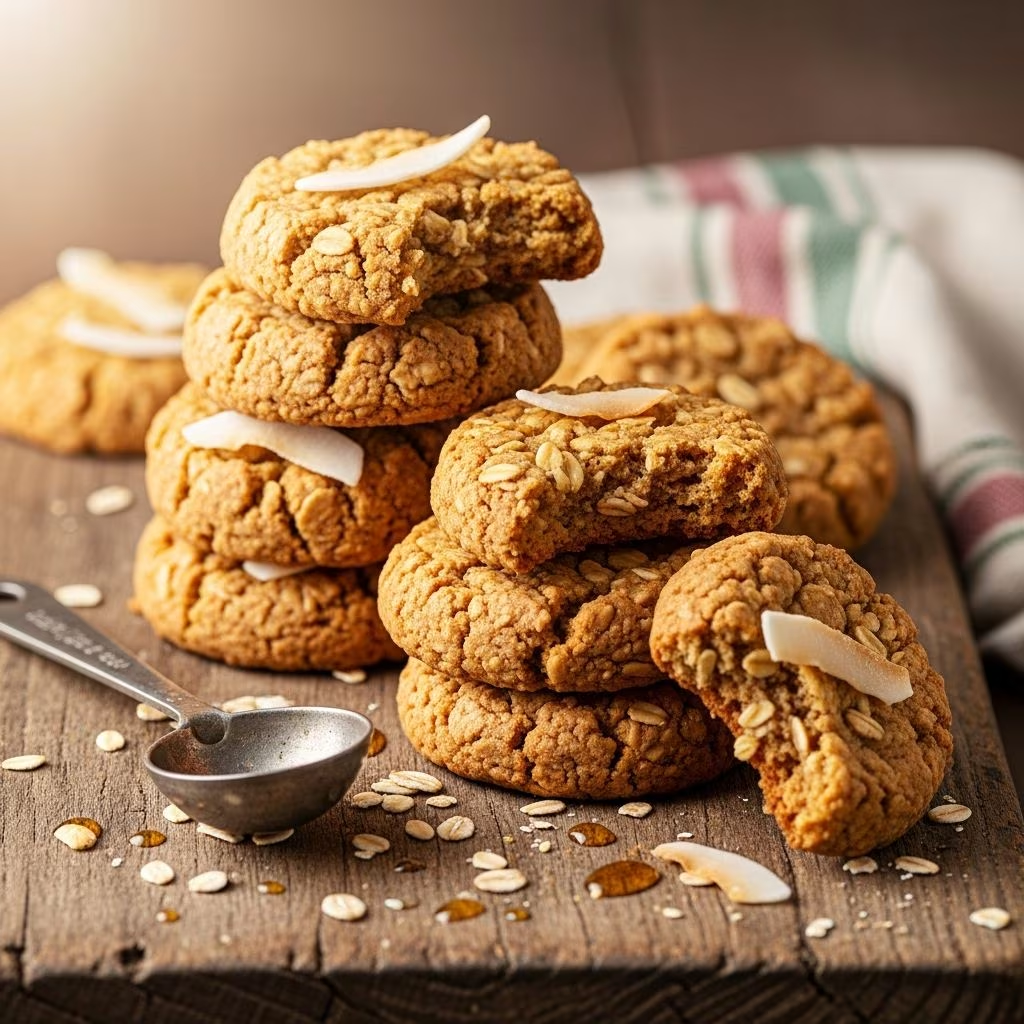
Anzac biscuits stand as a cornerstone of Australian and New Zealand baking traditions, cherished for their simple ingredients, chewy texture, and deep historical roots. These golden, oaty cookies evoke memories of resilience and community, making them a must-bake for holidays like ANZAC Day or casual gatherings.
The Fascinating Origins of Anzac Biscuits
Tracing back to World War I, Anzac biscuits emerged during a time of global conflict when home bakers sought durable, long-lasting treats. Families and women’s groups created these biscuits using readily available pantry staples that wouldn’t spoil during shipping to soldiers overseas. The name ‘Anzac’ derives from the Australian and New Zealand Army Corps, symbolizing national pride and support for troops.
Early recipes appeared in community cookbooks around 1915-1916, evolving from Scottish oatcake traditions but adapted with local ingredients like golden syrup for binding and flavor. By the 1930s, organizations such as the Country Women’s Association (CWA) documented standardized versions, emphasizing their role in fundraising efforts. These biscuits were sold at fetes to raise money for the war effort, blending practicality with patriotism.
Unlike perishable baked goods, Anzac biscuits’ high sugar and fat content ensured they traveled well without refrigeration, a critical factor in wartime logistics. Today, they remain a symbol of remembrance, baked annually on April 25th to honor veterans.
Essential Ingredients for Authentic Anzac Biscuits
The beauty of Anzac biscuits lies in their straightforward, no-fuss ingredient list. Core components include rolled oats for chewiness, desiccated coconut for nutty flavor, flour for structure, sugar for sweetness and crisp edges, butter for richness, golden syrup for caramel notes, and bicarbonate of soda activated with boiling water for lift.
| Ingredient | Quantity (for ~24 biscuits) | Role |
|---|---|---|
| Rolled Oats | 1 cup | Provides chewy texture and heartiness |
| Desiccated Coconut | 1 cup | Adds tropical flavor and moisture |
| Plain Flour | 1 cup | Binds the mixture |
| Brown Sugar | 1 cup | Delivers sweetness and chewiness |
| Butter | 2 tbsp (or 125g) | Creates richness and spread |
| Golden Syrup | 2 tbsp | Binds and imparts caramel depth |
| Bicarbonate of Soda | 1 tsp | Causes foaming for lightness |
| Boiling Water | 2 tbsp | Activates soda |
Golden syrup is non-negotiable for authenticity; substitutes like honey alter the flavor profile. Use unsalted butter to control saltiness, and opt for old-fashioned rolled oats over instant for superior texture.
Step-by-Step Recipe for Perfect Anzac Biscuits
Mastering Anzac biscuits requires precision in mixing and baking to achieve the ideal balance of chew and crunch. This recipe yields about 24 biscuits and takes under 30 minutes total.
- Preheat and Prep: Set oven to 180°C (350°F). Line trays with baking paper to prevent sticking.
- Mix Dry Ingredients: In a large bowl, combine oats, coconut, flour, and sugar. Stir evenly.
- Melt Wet Base: In a saucepan, gently melt butter and golden syrup over low heat until smooth.
- Activate Soda: Dissolve bicarbonate of soda in boiling water—it will foam dramatically. Quickly stir into the butter mixture.
- Combine: Pour wet ingredients into dry. Mix until a sticky dough forms. If too dry, add a splash of hot water.
- Shape and Bake: Roll tablespoon-sized portions into balls, place 5cm apart on trays, and flatten slightly. Bake 10-15 minutes until golden. They firm up as they cool.
- Cool: Let rest on trays for 5 minutes, then transfer to a wire rack.
Pro Tip: Space dough balls generously; they spread significantly due to the soda reaction.
Tips for Achieving Ideal Texture
- Chewy vs. Crispy: For softer biscuits, underbake slightly (10 minutes) and store in an airtight tin. For crunch, bake longer (15-18 minutes).
- Oven Variations: Rotate trays midway if your oven heats unevenly. Lower temp to 160°C for chewier results.
- Storage: Keep in airtight containers for up to 2 weeks; they improve with age as flavors meld.
- Common Mistakes: Avoid overmixing to prevent toughness. Don’t skip the foam step—it’s key for rise.
Experiment with dough ball size: 35g yields classic size, while larger ones make satisfyingly thick cookies.
Delicious Variations to Elevate Your Anzac Biscuits
While traditionalists stick to the classic, creative bakers love twists that maintain the spirit of the original.
- Brown Butter Version: Cook butter until nutty and fragrant before mixing for deeper flavor.
- Chocolate Chip: Fold in ½ cup dark chocolate chunks for gooey pockets.
- Fruit and Nut: Add chopped dates, sultanas, or nuts, reducing coconut to balance moisture.
- Gluten-Free: Swap plain flour for a 1:1 gluten-free blend; add xanthan gum if needed.
- Spiced: Incorporate cinnamon or ginger for warmth.
- Anzac Slice: Press dough into a lined tin, bake, top with chocolate, and slice into bars.
These adaptations keep the oaty, syrupy essence while suiting modern diets.
Pairing Suggestions and Serving Ideas
Anzac biscuits shine solo but elevate with thoughtful pairings. Serve with tea or coffee for breakfast, alongside vanilla ice cream for dessert, or crumbled over yogurt for granola. For ANZAC Day, arrange on platters with poppies for a thematic display.
Nutritionally, one biscuit offers ~90 calories, providing fiber from oats. They’re naturally vegan if using plant-based butter.
Frequently Asked Questions (FAQs)
Can I make Anzac biscuits without golden syrup?
Yes, but the flavor changes; try honey or maple syrup in equal amounts, though results may be less chewy.
Why do my biscuits spread too much?
Chill dough 15 minutes before baking, or ensure proper spacing and fresh baking soda.
Are Anzac biscuits healthy?
Moderately so—oats provide fiber, but high sugar means they’re treats, not health food.
How long do they last?
Up to 2 weeks in a tin; freeze dough balls for fresh-baked anytime.
What’s the best oven temp for chewy biscuits?
160-170°C for 18-20 minutes; test small batches first.
Why Anzac Biscuits Endure in Modern Kitchens
Beyond history, Anzac biscuits captivate with versatility and ease. They’re forgiving for beginners yet rewarding for pros, adapting to trends like browned butter or vegan swaps. In a fast-paced world, their 20-minute bake time delivers comfort and nostalgia.
Communities worldwide bake them for fundraisers, echoing original purposes. Whether crispy-edged or soft-centered, they unite generations around the oven.
References
- The Best Classic Anzac Biscuits Recipe Based on the 1933 CWA — Grantourismo Travels. 2023. https://grantourismotravels.com/classic-anzac-biscuits-recipe/
- Anzac Biscuits – A World War One Recipe — The Darling Academy. 2022. https://www.thedarlingacademy.com/articles/anzac-biscuits-a-world-war-one-recipe/
- 30 Minute Brown Butter Anzac Biscuits — Cloudy Kitchen. 2024. https://cloudykitchen.com/blog/anzac-biscuits/
- The World’s Best ANZAC Biscuit Recipe — Visit Yarra Valley. 2023. https://www.visityarravalley.com.au/blog/the-worlds-best-anzac-biscuit-recipe
- 9 Anzac Biscuit Recipes to Bake for ANZAC Day — Gourmet Traveller. 2024. https://www.gourmettraveller.com.au/recipe-collections/anzac-biscuit-recipes-15020/