Butter is a fundamental ingredient in countless kitchens worldwide, yet many cooks remain unaware that it can be transformed into several distinct preparations, each with unique characteristics and applications. When you purchase conventional butter at the grocery store, you’re getting a mixture of three primary components: butterfat, milk solids, and water. Standard American butter typically contains approximately 80% butterfat, 16-18% water, and about 1-2% milk solids. However, by applying different heating and straining techniques, you can separate these components to create clarified butter, ghee, or brown butter—three preparations that offer distinct flavor profiles, smoke points, and culinary uses.
The Foundation: Understanding Butter’s Basic Composition
Before exploring the three butter varieties, it’s essential to understand what standard butter contains. Butter regulations in the United States mandate that butter maintain approximately 80% butterfat content. European-style butters, such as premium brands, typically exceed this standard, containing a minimum of 82% butterfat. Some homemade butter preparations can reach as high as 86% butterfat, a distinction that significantly impacts both flavor and cooking performance.
The remaining composition consists of water and milk solids—the components that give butter its distinctive taste and aroma but also limit its cooking versatility. These elements cause butter to splutter when heated to high temperatures and create a lower smoke point compared to pure fats. Understanding this composition provides the foundation for comprehending why and how each butter preparation differs.
Clarified Butter: Pure Butterfat Separation
Definition and Composition
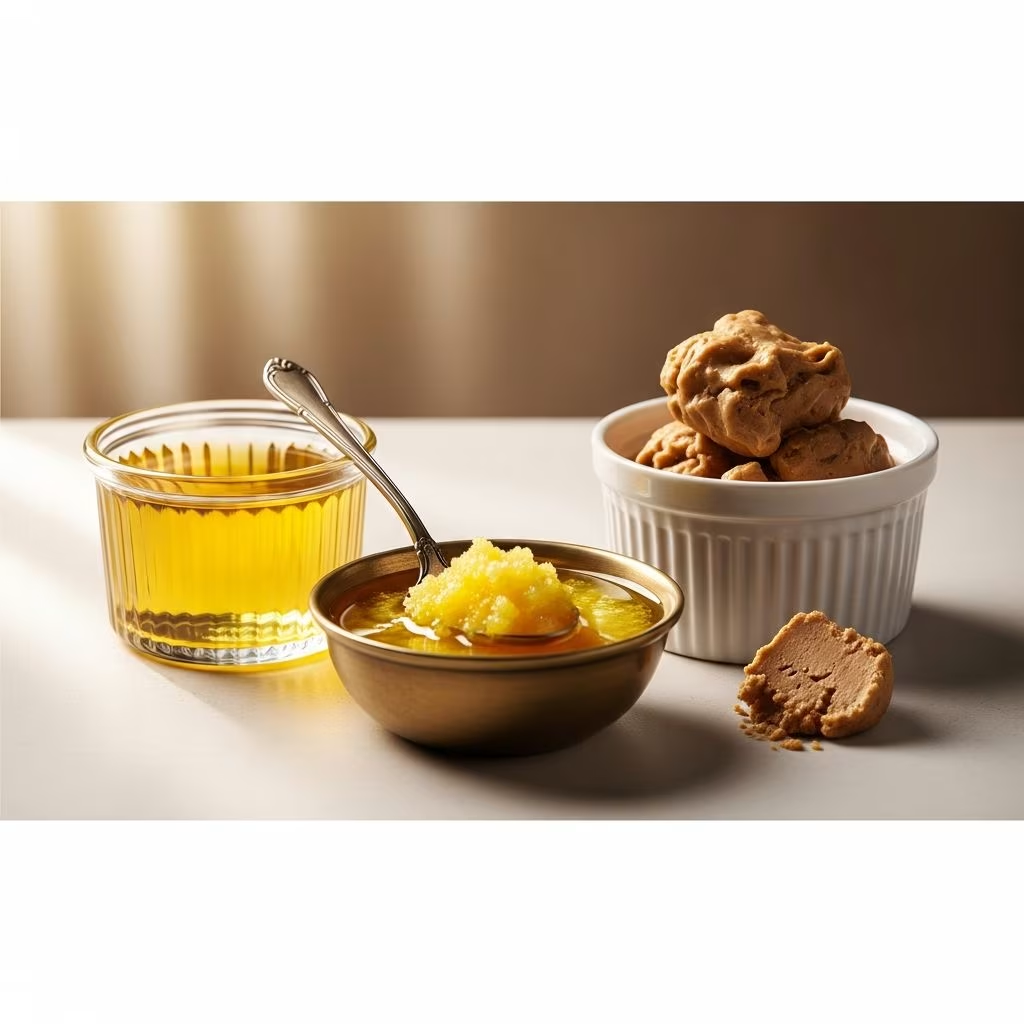
Clarified butter represents the most straightforward butter transformation—it is essentially pure butterfat with water and milk solids removed. The preparation process involves gentle heating to evaporate moisture and separate milk proteins, which then sink to the bottom of the pan. The resulting product is a transparent, golden liquid that consists almost entirely of butterfat.
Preparation Process
Creating clarified butter requires careful attention throughout the heating process. Begin by melting butter over moderate heat. As it melts and warms, foam will form on the surface—this is whey rising from the milk solids. Many cooks skim this foam away continuously during the process. The critical moment arrives when the milk solids settle to the bottom of the pan. At this stage, you must monitor the heat carefully to prevent the solids from browning, which would transform the butter into ghee instead. Once the water has completely evaporated, the clarified butter can be strained through cheesecloth or a fine-mesh filter to remove any remaining sediment.
Yield Expectations
The clarification process results in volume loss of approximately 25%. One cup of starting butter typically yields roughly three-quarters cup of clarified butter, as water content evaporates and solids are removed.
Cooking Advantages
Clarified butter offers several practical cooking advantages. It possesses a significantly higher smoke point than many other cooking fats and oils, making it suitable for high-heat cooking methods. In fact, clarified butter’s smoke point exceeds that of coconut oil, grapeseed oil, lard, duck fat, sesame oil, canola oil, and sunflower oil. Only three oils surpass clarified butter’s smoke point: safflower oil, rice bran oil, and refined olive oil. This expanded heat tolerance makes clarified butter versatile for sautéing, pan-frying, and other high-temperature cooking techniques.
Additionally, because clarified butter lacks milk solids, it remains stable at room temperature for extended periods and resists spoiling as quickly as regular butter. This stability has made it a staple in professional kitchens for decades.
Ghee: Caramelized Milk Solids and Golden Richness
The Distinctive Difference
While ghee and clarified butter share many similarities and can be used interchangeably in many applications, a crucial distinction sets them apart: ghee involves caramelizing the milk solids rather than merely removing them. This single difference fundamentally changes the flavor, aroma, and appearance of the final product.
The Caramelization Process
Ghee preparation begins identically to clarified butter. You melt butter, skim the foam, and allow the milk solids to settle. However, instead of stopping once the water evaporates, ghee requires continued gentle heating. The cook monitors the bottom of the pan carefully until the settled milk solids begin to turn golden brown and slightly caramelize. This caramelization process imparts a subtle, toasty fragrance reminiscent of roasted nuts and develops a more golden hue than clarified butter.
Flavor Development
The extended cooking time in ghee preparation creates chemical transformations through the Maillard reaction—the same process that creates brown color and complex flavors when foods are heated. This reaction develops nutty, slightly sweet undertones that distinguish ghee from clarified butter. Many cooks and food professionals describe ghee as having a more complex and satisfying flavor profile than its clarified counterpart.
Culinary Tradition
Ghee holds significant cultural importance in South Asian cuisines, particularly in Indian cooking. Traditional recipes throughout India, Pakistan, and neighboring regions have utilized ghee for centuries, valuing it for both its unique flavor and its ability to preserve foods in warm climates without refrigeration.
Brown Butter: Embracing the Milk Solids
A Fundamentally Different Approach
Brown butter represents a departure from both clarified butter and ghee in one essential way: it retains the milk solids rather than removing or caramelizing them separately. This inclusion of milk solids fundamentally distinguishes brown butter and affects how it should be used in the kitchen.
The Preparation Challenge
Creating brown butter requires precise attention and timing. The cook must heat butter until the milk solids not only brown but achieve a deep golden or amber color throughout. This requires cooking longer than with either clarified butter or ghee, and the margin for error is narrow. Brown butter approaches the point of burning, where the butter would become acrid and unusable. The difference between perfect brown butter and ruined butter can be mere seconds, requiring constant vigilance and careful heat management.
Distinctive Flavor and Texture
The retained milk solids in brown butter create an extraordinarily flavorful product. The browned solids deliver an intense, nutty complexity that many chefs and home cooks find irresistible. The deeper the golden-brown color, the more pronounced these flavors become. This richness makes brown butter a finishing ingredient rather than a cooking medium for prolonged heat exposure.
Usage Recommendations
Because brown butter contains milk solids that have already undergone extensive heating, it should not be subjected to additional high-heat cooking. Instead, it works best when added to dishes at the final moment or cooked over very low heat for minimal time. Brown butter excels as a finishing ingredient for pasta, vegetables, baked goods, and sauces, where its intense flavor can shine without further cooking that might degrade its quality.
Comparative Analysis: Side-by-Side Examination
| Characteristic | Clarified Butter | Ghee | Brown Butter |
|---|---|---|---|
| Milk Solids | Removed | Removed | Retained |
| Color | Clear, pale golden | Golden | Deep amber to brown |
| Aroma | Mild, buttery | Nutty, toasty | Rich, intensely nutty |
| Flavor Profile | Clean, pure butter | Complex, roasted | Intense, caramelized |
| Smoke Point | Higher | Higher | Moderate |
| Best Use | High-heat cooking | Cooking and finishing | Finishing ingredient |
| Storage Life | Extended | Extended | Shorter |
Selecting the Right Butter for Your Needs
High-Heat Cooking Applications
When recipes require cooking at elevated temperatures, such as searing meat, stir-frying vegetables, or deep-frying, clarified butter or ghee both serve as excellent choices. Their higher smoke points prevent the breakdown of fat and the creation of harmful compounds that occur when regular butter overheats. Clarified butter offers a neutral, clean flavor that won’t overpower delicate ingredients.
Flavor-Forward Dishes
Recipes where you want pronounced butter flavor benefit from ghee or brown butter. Ghee works well in curries, rice dishes, and traditional Indian recipes where its toasted flavor complements spices. Brown butter shines in beurre noir sauces, browned butter cakes, and drizzles over roasted vegetables or pasta where its complexity becomes a featured component.
Dietary and Digestive Considerations
Some individuals find clarified butter and ghee easier to digest than regular butter due to the removal of milk solids. These preparations contain minimal to no lactose, making them more tolerable for those with lactose sensitivity or dairy restrictions. Brown butter, still containing milk solids, may not provide these benefits.
Storage and Shelf Life Considerations
Clarified butter and ghee both enjoy exceptional shelf stability due to the absence of water and milk solids—elements that promote bacterial growth and rancidity. Both can be stored at room temperature for extended periods, though refrigeration extends their life further. Brown butter, retaining milk solids, requires refrigeration and should be used within a reasonable timeframe to maintain quality and prevent spoilage.
Frequently Asked Questions
Can clarified butter and ghee be used interchangeably?
In most cooking applications, yes. The primary functional difference relates to flavor. Clarified butter provides a neutral taste, while ghee offers nuttiness. Choose based on whether you want pure butter flavor or prefer the complex toasted notes.
Why does brown butter require such careful attention?
Brown butter reaches its optimal state just before the point of burning. The margin between perfectly browned milk solids and burnt, unusable butter is extremely narrow. Constant monitoring prevents overcooking that would create bitter, acrid flavors.
Is homemade clarified butter worth making?
Absolutely. The process is straightforward and results in a superior product to store-bought alternatives. Additionally, clarified butter made at home is typically less expensive than specialty cooking fats, making it economically sensible.
Can brown butter be used for high-heat cooking?
It’s not recommended. The milk solids in brown butter have already been heated extensively and can burn or break down further under high temperatures. Reserve brown butter for finishing dishes or low-heat applications.
What should I do with the skimmed foam when making clarified butter?
This foam, known as whey, shouldn’t be discarded. Many cooks use it in soups, stocks, or as a cooking fat for vegetables. It retains wonderful butter flavor and can enhance various dishes.
Conclusion: Expanding Your Culinary Toolkit
Understanding the differences between clarified butter, ghee, and brown butter transforms your cooking capabilities and allows you to select the perfect fat for each culinary application. Clarified butter serves as a reliable, high-heat cooking fat with neutral flavor. Ghee provides elevated heat tolerance along with complex, toasted notes that enhance traditional and contemporary dishes. Brown butter delivers unparalleled nutty intensity as a finishing ingredient that elevates simple foods into restaurant-quality experiences. By mastering these three preparations, you gain flexibility, control, and the ability to extract maximum flavor from butter in virtually any cooking situation.
References
- How to Make Clarified Butter, Ghee, and Brown Butter — A Beautiful Plate. Accessed April 8, 2026. https://www.abeautifulplate.com/clarified-butter-ghee-and-brown-butter/
- Code of Federal Regulations Title 7 — Butter Standards — U.S. Department of Agriculture. https://www.ecfr.gov/current/title-7/part-58
- Maillard Reaction in Cooking — American Chemical Society. Accessed April 8, 2026. https://www.acs.org/