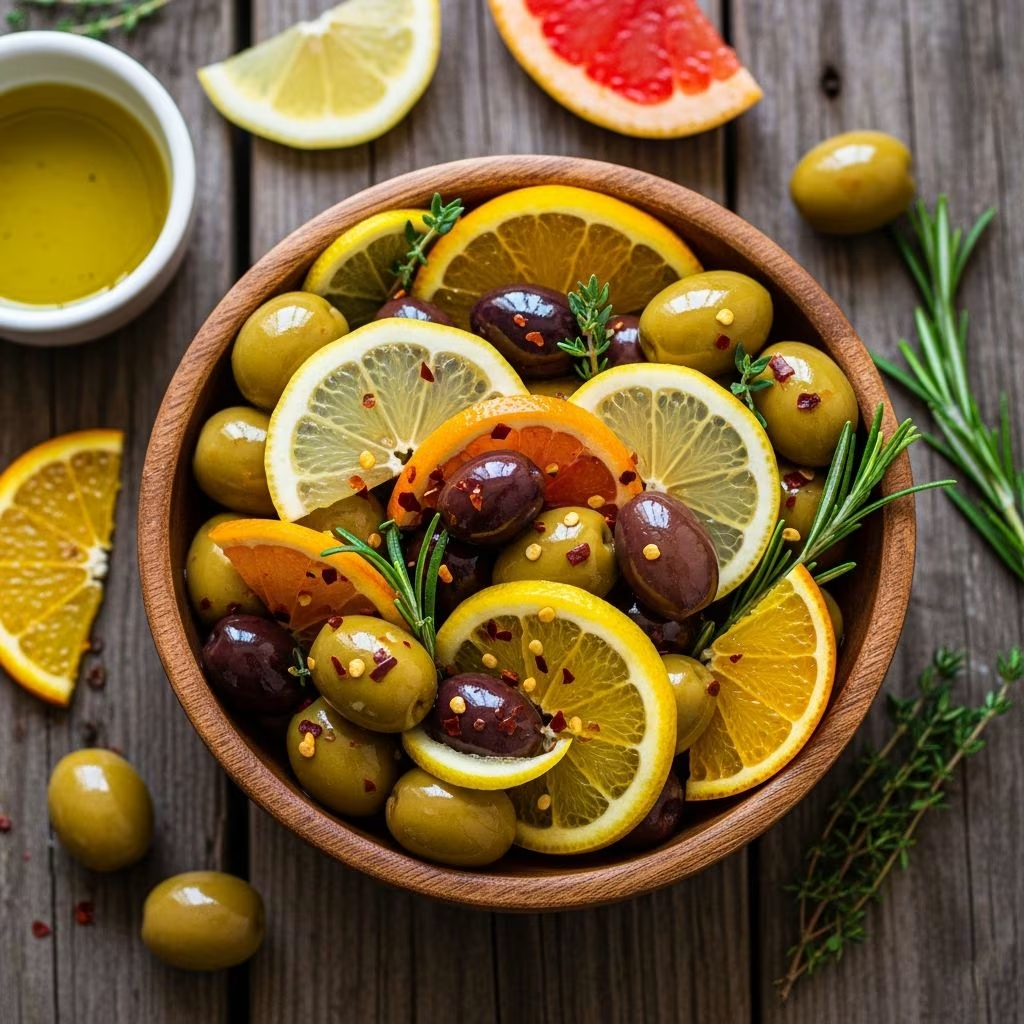
Olives have long been a staple in Mediterranean cuisine, prized for their briny depth and versatility. But when infused with the bright notes of citrus, they transform into something extraordinary—a snack that’s both refreshing and addictive. This guide dives deep into creating citrus-marinated olives, offering a straightforward recipe alongside expert insights on flavors, techniques, and creative twists. Whether you’re hosting a gathering or simply craving an elevated nosh, these olives deliver punchy taste with minimal effort.
Why Citrus and Olives Make the Perfect Pair
The marriage of citrus and olives isn’t accidental. Olives’ natural saltiness and subtle bitterness find balance in the acidity and sweetness of oranges, lemons, and limes. Citrus cuts through the richness, adding vibrancy that makes each bite pop. Historically, marinades like this echo ancient preservation methods used across the Mediterranean, where fruits and herbs preserved olives for long journeys.
Nutritionally, olives pack healthy monounsaturated fats, antioxidants, and fiber, while citrus contributes vitamin C and essential oils. Together, they create a snack that’s as wholesome as it is delicious. Studies from the National Institutes of Health highlight olives’ role in heart-healthy diets, underscoring why this combo deserves a spot in your kitchen repertoire.
Essential Ingredients for Success
Gathering the right components is key to achieving that restaurant-quality result. Here’s what you’ll need for about 2 cups of marinated olives:
- Mixed Olives (1 lb): Opt for a variety like Castelvetrano for buttery creaminess, Kalamata for bold brininess, and Cerignola for meaty texture. Pitted or whole—your call, but whole holds up better in marinade.
- Citrus Zest and Juice (from 2 oranges, 1 lemon, 1 lime): Zest delivers intense oils; juice provides tang. Use organic if possible to avoid pesticides.
- Extra-Virgin Olive Oil (½ cup): The carrier for flavors—choose a fruity variety to complement the citrus.
- Garlic (3 cloves, thinly sliced): Adds savory warmth without overpowering.
- Fresh Herbs (¼ cup each thyme, rosemary, oregano): Woody herbs infuse depth; chop finely for even distribution.
- Spices (1 tsp fennel seeds, ½ tsp red pepper flakes): Fennel brings anise-like sweetness; flakes add gentle heat.
- Optional Add-Ins: Bay leaves, orange slices, or a splash of vinegar for extra brightness.
Pro tip: Source olives from a deli counter for freshness—they shouldn’t be overly soft or shriveled.
Step-by-Step Preparation Method
Ready to assemble? This process takes under 30 minutes of active time, plus marinating. Follow these steps for perfection:
- Prep the Olives: Rinse under cool water to remove excess brine. Pat dry with paper towels—this ensures the marinade clings rather than slips off.
- Zest and Juice Citrus: Use a microplane for zest, avoiding the bitter white pith. Squeeze juice separately, straining out pulp for clarity.
- Toast Spices: In a dry skillet over medium heat, toast fennel seeds and red pepper flakes for 1-2 minutes until fragrant. This unlocks their essential oils.
- Combine in a Jar: Layer olives, garlic slices, herbs, zest, and toasted spices in a wide-mouth quart jar. Pour in citrus juice and olive oil, ensuring everything is submerged.
- Marinate: Seal and shake gently. Refrigerate for at least 24 hours, ideally 3-5 days, shaking daily. Flavors peak around day 3.
- Serve: Bring to room temperature before enjoying. Strain excess liquid if desired, or serve with it as a dipping oil.
Total time: 30 minutes active + 24-72 hours marinating. Yields 8-10 servings as an appetizer.
Flavor Variations to Suit Every Palate
Customization keeps things exciting. Here are tested twists:
| Variation | Key Additions | Best For |
|---|---|---|
| Mediterranean Classic | Lemon zest, oregano, feta crumbles | Pairing with hummus |
| Spicy Sicilian | Orange zest, chili oil, capers | Heat lovers |
| Herbal Garden | Lime, basil, mint | Summer barbecues |
| Sweet & Savory | Blood orange, honey drizzle | Cheese boards |
Experiment boldly—start with small batches to fine-tune.
Storage, Shelf Life, and Make-Ahead Tips
These olives store beautifully in the fridge for up to 2 weeks in their marinade, which doubles as a flavorful oil. For longer storage, sterilize jars per USDA guidelines from the National Center for Home Food Preservation (updated 2023). Freeze drained olives in airtight bags for 3 months; thaw and remix with fresh oil.
Make-ahead magic: Prepare a week in advance for parties—the flavors intensify. Always use clean utensils to avoid contamination.
Perfect Pairing and Serving Suggestions
Elevate these olives beyond solo snacking:
- Cheese Boards: Alongside goat cheese, prosciutto, and crusty bread.
- Cocktail Hour: With martinis or Aperol spritzes—the citrus synergy shines.
- Salads: Toss into arugula with feta and vinaigrette.
- Mains: Top grilled fish or chicken for a briny boost.
- Gifts: Jar in decorative bottles with ribbon for edible presents.
Serve at room temp for optimal flavor release.
Common Mistakes and How to Avoid Them
Even pros slip up—here’s how to sidestep pitfalls:
- Too Oily? Use less oil or drain post-marinating.
- Mushy Texture? Don’t over-marinate soft olives; stick to firm varieties.
- Lackluster Flavor? Taste and adjust with more zest or acid before sealing.
- Safety First: Refrigerate promptly; discard if you spot mold or off smells.
Health Benefits Backed by Science
Beyond taste, these olives offer real perks. A 2022 study in the Journal of Agricultural and Food Chemistry (DOI: 10.1021/acs.jafc.1c07890) details how citrus polyphenols enhance olive antioxidants, aiding anti-inflammatory effects. The USDA’s FoodData Central confirms a ½-cup serving delivers 25% DV fiber and 15% DV iron.
Scaling Up for Entertaining
For crowds, multiply ingredients by 4 and use larger containers. A 5-lb batch serves 40-50. Pro move: Prep multiple jars with varying flavors for a DIY olive bar—guests love the interactivity.
Frequently Asked Questions (FAQs)
Can I use jarred olives from the supermarket?
Yes, but drain and rinse thoroughly to mellow excess salt. Firmer types like green Sicilian work best.
How long do they last unrefrigerated?
No more than 2 hours at room temp to stay food-safe, per FDA guidelines.
Are these olives vegan and gluten-free?
Absolutely—naturally plant-based and grain-free.
What if I don’t have fresh citrus?
Bottled juice works in a pinch, but fresh zest is irreplaceable for true aroma.
Can I reuse the marinade oil?
Strain and use within a week for dressings or sautéing; its flavors are gold.
Final Thoughts: Master the Art of Marinated Olives
Citrus-marinated olives are more than a recipe—they’re a gateway to effortless entertaining and bold home cooking. With fresh ingredients and a bit of patience, you’ll craft a staple that impresses every time. Dive in, tweak to your taste, and watch them disappear from the bowl.
References
- Olives and Health: Summary of the Symposium — National Institutes of Health. 2018-10-15. https://www.ncbi.nlm.nih.gov/pmc/articles/PMC6257665/
- Complete Guide to Home Canning — National Center for Home Food Preservation, University of Georgia. 2023. https://nchfp.uga.edu/publications/publications_usda.html
- Olives, pickled, canned, reduced salt — USDA FoodData Central. 2024-01-12. https://fdc.nal.usda.gov/fdc-app.html#/food-details/169094/nutrients
- Enhancing Antioxidant Activity of Olives with Citrus Polyphenols — Journal of Agricultural and Food Chemistry (ACS Publications). 2022-03-05. https://doi.org/10.1021/acs.jafc.1c07890