Achieving restaurant-quality grilled chicken at home requires more than basic cooking technique—it demands a strategic approach to flavor development and moisture retention. The foundation of truly exceptional poultry lies in proper marination, which allows flavors to penetrate deep into the meat while tenderizing the protein through the action of acidic components. This comprehensive guide explores the art and science behind creating succulent grilled chicken that consistently impresses at any dinner table.
Understanding the Marinade Foundation
The most critical element in preparing memorable grilled chicken is the marinade itself. A well-balanced marinade combines acidic components, flavorful aromatics, sweetening agents, and quality fat to create a cohesive flavor profile that transforms ordinary chicken into something extraordinary. The acidic base—whether from vinegar, citrus juice, or other sources—serves a dual purpose: it breaks down muscle fibers to increase tenderness while simultaneously allowing flavor compounds to penetrate more deeply into the meat.
This particular preparation utilizes cider vinegar as the primary acidic component, which provides a subtle fruity undertone that distinguishes it from sharper vinegars. The addition of fresh citrus juice from both limes and lemons introduces brightness and complexity, creating a multi-layered flavor experience rather than a one-dimensional sour note. Fresh citrus contains natural enzymatic compounds that further assist in protein breakdown, contributing to improved texture beyond what vinegar alone could achieve.
Key Ingredients and Their Roles
| Ingredient | Quantity | Primary Function |
|---|---|---|
| Cider Vinegar | ¼ cup | Acidic base for tenderizing and flavor development |
| Fresh Lime Juice | 1 whole lime | Citrus acidity and aromatic brightness |
| Fresh Lemon Juice | ½ lemon | Complementary citrus complexity and enzyme activity |
| Coarse-Ground Mustard | 3 tablespoons | Tangy depth and emulsification of marinade components |
| Brown Sugar | ½ cup | Sweetness, caramelization during grilling, and flavor balance |
| Garlic | 3 cloves, minced | Savory complexity and antimicrobial properties |
| Olive Oil | 3 tablespoons | Moisture retention and carrier for fat-soluble flavors |
| Salt & Pepper | To taste | Seasoning and flavor enhancement |
Each ingredient contributes strategically to the final result. The coarse-ground mustard acts as an emulsifier, helping to blend the acidic and oily components while adding a subtle tanginess that enhances rather than overpowers the citrus notes. Brown sugar doesn’t merely sweeten the preparation; during the high-heat grilling process, it undergoes the Maillard reaction—a chemical transformation that creates complex flavors and an attractive caramelized crust on the exterior of the chicken.
The Science of Marination Time
While quick marinades of 30 minutes may seem convenient, the traditional recommendation of 8 hours to overnight marination reflects a deeper understanding of flavor penetration and protein transformation. During extended marination, several processes occur simultaneously. The acidity gradually breaks down collagen and muscle proteins, creating a more tender final product. Simultaneously, flavor compounds dissolve into the surrounding liquid and gradually diffuse into the meat’s deeper layers.
The extended timeline also allows salt ions to migrate into the protein matrix, actually altering the protein’s structure in ways that enhance moisture retention during cooking. This is distinct from quick marinades, which primarily coat the exterior. By allowing 8 hours or overnight, you’re essentially engineering the chicken to remain juicier throughout the grilling process, preventing the common problem of dry, stringy results.
Preparation Steps for Maximum Success
Creating the Marinade Base
Begin by selecting a non-reactive container—glass, ceramic, or food-grade plastic works well. Avoid metal containers, as the acidic marinade can interact with certain metals and impart undesirable flavors. Combine the cider vinegar, fresh lime juice, and fresh lemon juice in your chosen vessel. Fresh citrus always outperforms bottled juice in this application because bottled versions contain preservatives and have lost volatile aromatic compounds during processing and storage.
Add the coarse-ground mustard to this liquid base, whisking thoroughly to ensure the mustard doesn’t clump. The whisking motion begins the emulsification process, dispersing the mustard particles evenly throughout the liquid. Next, incorporate the minced garlic, brown sugar, salt, and black pepper. Whisk until the sugar begins to dissolve—you don’t necessarily need complete dissolution at this stage, as marination time will complete the process.
Oil Integration
Rather than simply pouring olive oil into the mixture, add it gradually while whisking. This creates a more stable emulsion and ensures even distribution throughout the marinade. Quality olive oil matters here; extra virgin varieties contribute subtle fruity and peppery notes that complement the citrus and mustard profile, while standard olive oil provides the necessary fat without competing flavor elements.
Chicken Preparation and Marination
Use boneless, skinless chicken breast halves for this recipe, as their mild flavor allows the marinade to shine, and their relatively quick cooking time prevents them from drying out during grilling. If your chicken breasts are particularly thick, gently pound them to create more uniform thickness, which ensures even cooking.
Place the chicken pieces in a large resealable plastic bag or storage container, then pour the prepared marinade over them, ensuring each piece is thoroughly submerged and coated. A large zip-top bag offers distinct advantages: you can easily massage the marinade into the chicken, and the flexible container accommodates marinating in a crowded refrigerator. If using a bag, seal it securely and place on a plate to catch any potential leaks. Flip the bag once or twice during marination to ensure even flavor distribution, particularly during the first few hours when concentration gradients are steepest.
Grilling Techniques for Perfect Results
Preparing Your Cooking Equipment
Remove the chicken from the refrigerator approximately 15-20 minutes before cooking. This allows the meat to reach closer to room temperature, promoting more even cooking throughout. While the chicken comes to temperature, preheat your outdoor grill to high heat, or alternatively, preheat your oven broiler to its maximum setting if outdoor grilling isn’t possible.
Lightly oil your grill grate to prevent sticking and to promote better contact between the chicken and the heat source. Better contact creates more effective browning and prevents the chicken from clinging to the grate. Discard the used marinade at this point—never reuse raw poultry marinade without bringing it to a boil first, as raw chicken juices can harbor harmful bacteria.
Cooking Guidelines
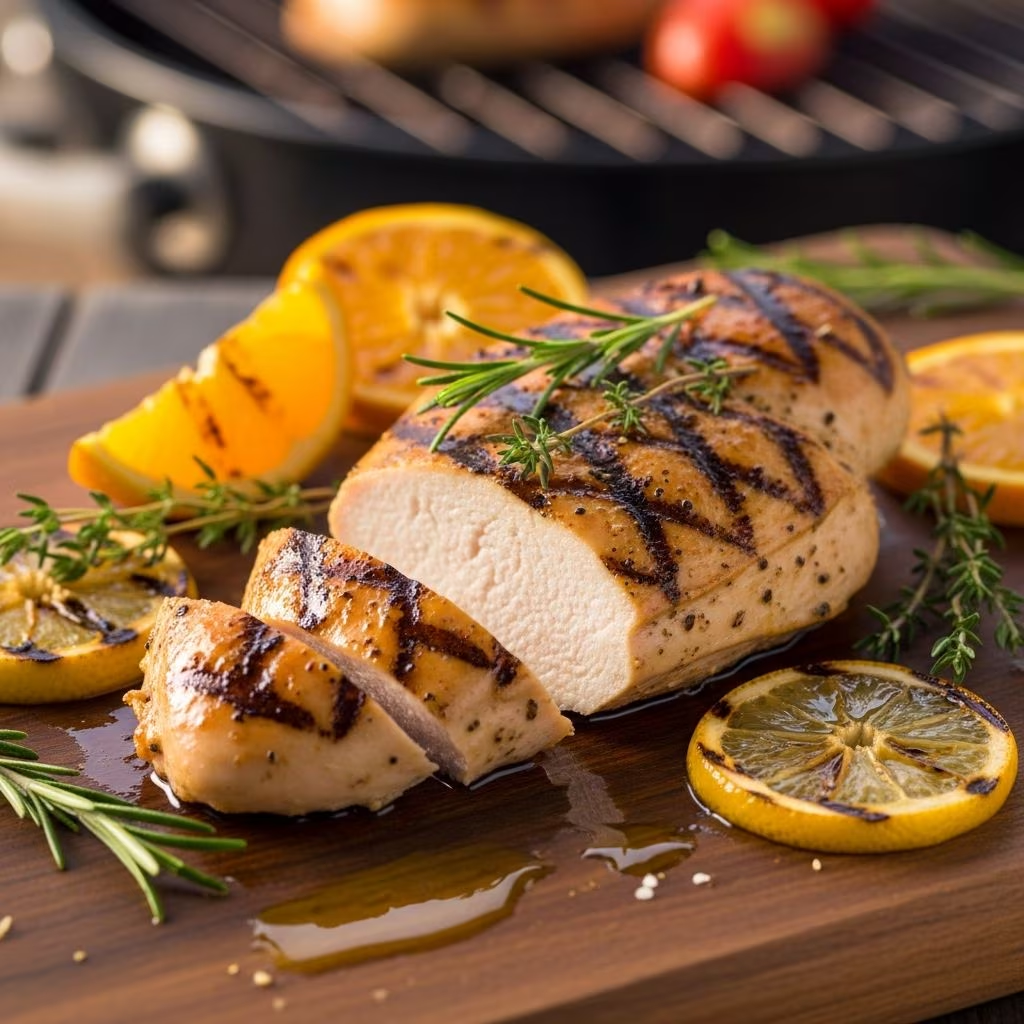
Place the marinated chicken breasts directly on the prepared grill or under your preheated broiler. The high heat creates an immediate sear on the exterior, trapping moisture inside while the Maillard reaction generates complex, savory flavors and visual appeal through browning. Cook for 6 to 8 minutes on the first side, allowing a golden crust to develop. Flip the chicken carefully using tongs rather than a fork—puncturing the surface allows accumulated juices to escape.
Cook the second side for an additional 6 to 8 minutes. The chicken is done when the internal temperature reaches 165°F (74°C) when measured with an instant-read thermometer inserted at the thickest point. Visual cues like juices running clear provide a secondary check, but temperature measurement remains the most reliable indicator of doneness.
Serving Suggestions and Complementary Dishes
The bright citrus and mustard flavors of this grilled chicken pair beautifully with numerous side dishes. Serve it hot immediately after grilling, allowing time only for the residual heat to redistribute through the meat—typically 3-5 minutes of resting. Fresh green salads with vinaigrette-based dressings complement the chicken’s flavor profile without overwhelming it. Grilled vegetables like zucchini, bell peppers, and asparagus benefit from the same high-heat cooking method and can cook simultaneously on a two-zone grill setup.
For lighter preparations, slice the cooled chicken and arrange it over fresh greens with your favorite salad components. The marinade’s flavor persists even after cooking, providing interesting depth to cold preparations. Alternatively, incorporate the chicken into grain-based dishes—serve alongside rice pilaf, couscous, or quinoa to create balanced, complete meals.
Frequently Asked Questions
Can I prepare this recipe indoors if I lack outdoor grilling equipment?
Yes, both broiler and stovetop cooking methods work effectively. For broiler preparation, place marinated chicken on a lined baking sheet and position under the heat source, adjusting rack height to prevent burning. For stovetop preparation, heat a skillet or grill pan over medium-high heat with light oil, cooking 8-10 minutes per side until the internal temperature reaches 165°F. Stovetop grill pans produce attractive sear marks similar to outdoor grilling.
What if I need to prepare this recipe faster than the traditional 8-hour timeline?
While extended marination yields superior results, marinating for as little as 2-3 hours produces acceptable outcomes. You can accelerate marinade penetration by using a fork to pierce the chicken’s surface before marinating, creating pathways for the liquid to penetrate more quickly.
Are there variations I can make to this basic recipe?
The recipe framework remains flexible. Some cooks add fresh herbs like rosemary or thyme to the marinade, or incorporate additional spices like smoked paprika. However, avoid significantly increasing the proportion of acidic components, as excessive acid can over-tenderize the chicken, resulting in mushy texture.
How should I store leftover cooked chicken?
Place cooled chicken in an airtight container and refrigerate for up to 4 days. Reheating gently in a low oven preserves moisture better than microwaving, which can cause uneven heating and texture degradation.
Nutritional Considerations
Boneless, skinless chicken breasts represent a lean protein source with approximately 31 grams of protein per 100-gram serving. The relatively modest marinade coating contributes limited calories per serving while providing significant flavor impact. This recipe represents an excellent choice for health-conscious diets emphasizing whole proteins without excessive sodium or saturated fats, particularly when compared to breaded or heavily sauced preparations.
Conclusion: Elevating Your Grilling Repertoire
Mastering this citrus-marinated grilled chicken technique establishes a foundation for confident, impressive poultry preparation. The recipe’s apparent simplicity masks a sophisticated understanding of flavor balance, protein chemistry, and cooking methodology. Through understanding why each ingredient matters, why marination duration affects outcomes, and how heat interacts with the prepared chicken, you develop the conceptual framework to adapt and create your own variations. The result transcends ordinary weeknight fare, creating memorable dishes that consistently impress family and guests through both flavor and technique.
References
- Unbelievable Chicken Recipe — Food.com. Accessed April 2026. https://www.food.com/recipe/unbelievable-chicken-311207
- USDA Food Safety and Inspection Service: Safe Minimum Internal Temperature Chart — U.S. Department of Agriculture. https://www.fsis.usda.gov/food-safety/safe-food-handling-and-preparation/food-safety-basics/safe-minimum-internal-temperature-chart
- The Science of Marinades: How Acids and Enzymes Break Down Proteins — America’s Test Kitchen Science Lab. https://www.americastestkitchen.com