Understanding the Culinary Heritage of Cioppino
Cioppino represents one of America’s most distinctive regional dishes, born from the melting pot of San Francisco’s immigrant communities during the late 1800s. This robust seafood stew emerged from the practical traditions of Italian and Portuguese fishermen who populated the waterfront areas around Fisherman’s Wharf. When catches were bountiful, fishermen would combine their daily harvest into communal pots, creating meals that reflected both abundance and resourcefulness. The name itself derives from the Italian word “ciuppin,” meaning “chopped,” a fitting description for the medley of diced seafood swimming in aromatic broth.
What began as a humble fisherman’s meal has evolved into a celebrated dish served in upscale restaurants and home kitchens across the country. The beauty of cioppino lies in its adaptability—the recipe transforms based on seasonal availability and personal preference, yet maintains its essential character through the combination of fresh seafood and a deeply flavored tomato base.
The Building Blocks of Authentic Cioppino Broth
The foundation of exceptional cioppino rests on a carefully constructed broth that balances sweetness, acidity, and herbaceous complexity. The cooking process begins with aromatic vegetables that create a flavor base through patient sautéing rather than rushing. This foundational step, often called “sweating” the aromatics, allows the natural sugars and essential oils to develop fully before proceeding to the next stages.
Creating Your Aromatic Base
Begin by heating extra-virgin olive oil in a substantial Dutch oven or large pot over medium heat. Add finely chopped onion and sliced fennel bulb along with kosher salt, allowing these vegetables to soften and turn translucent over approximately 8-10 minutes. The fennel bulb contributes a subtle anise note that distinguishes cioppino from other seafood stews, providing complexity without overwhelming the delicate seafood flavors.
Once the onion and fennel have reached the proper tenderness, introduce minced garlic along with crushed red pepper flakes, stirring constantly for about one minute. This brief cooking time releases the garlic’s pungent oils while the heat mellows its raw bite. Add tomato paste at this stage, stirring vigorously to incorporate it thoroughly into the oil, which prevents the concentrated tomato from burning and ensures even distribution throughout the broth.
Developing Deep Flavor Through Wine Reduction
Deglazing the pot with dry white wine serves multiple purposes beyond flavor enhancement. The alcohol cooks off during a 2-3 minute simmer, while the wine’s acidity cuts through the richness of the oil and adds brightness to the developing broth. This step builds complexity through the Maillard reaction, creating subtle depth that distinguishes homemade cioppino from simpler preparations.
Add crushed or whole San Marzano tomatoes to the pot, along with a bay leaf and dried oregano. These acidic, fruity tomatoes provide the backbone of the broth, contributing both substance and authentic flavor. Bring the mixture to a gentle simmer and allow it to bubble softly for several minutes, permitting the flavors to meld and the tomatoes to break down slightly.
Selecting and Preparing Your Seafood
The success of cioppino depends entirely on ingredient quality, particularly the freshness of the seafood. Unlike dishes where seafood is served raw or barely cooked, cioppino’s cooking method is forgiving enough to accommodate a variety of preparations, yet still demands the freshest specimens available. Visit reputable fishmongers and ask specifically about the day’s catch, selecting items that smell briny and ocean-fresh rather than fishy.
Essential Seafood Components
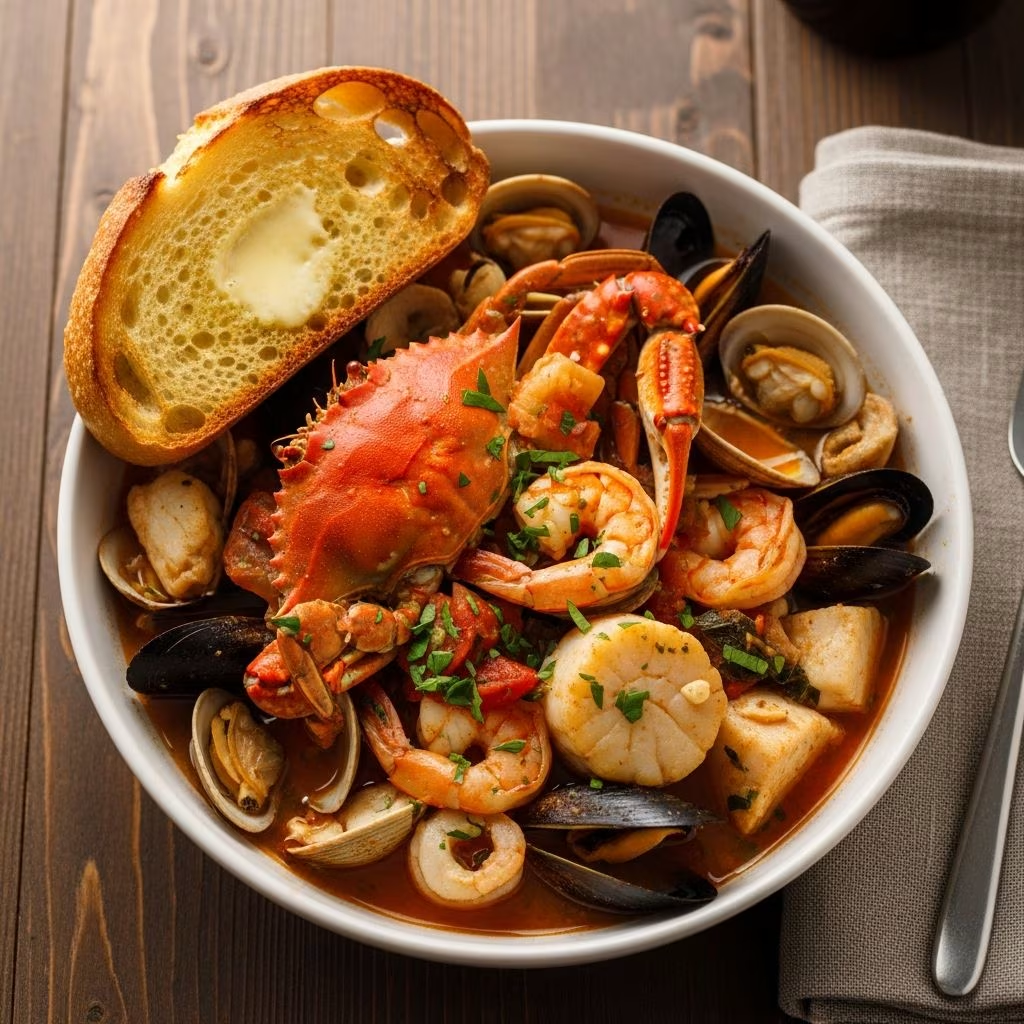
Traditional cioppino incorporates multiple types of seafood, creating textural and flavor variation in each spoonful. Littleneck or Manila clams provide briny sweetness and chewy texture, while mussels contribute delicate flavor and tender meat. Crab legs, whether Dungeness or king crab varieties, add richness and substantial chunks of sweet meat. Firm white fish such as halibut or cod maintains its structure during cooking, while shrimp adds quick-cooking protein that turns pink when done. Some versions include scallops for their tender sweetness or fresh lobster for occasion-worthy elegance.
Prepare all seafood shortly before cooking. Cut firm fish into 1-inch cubes, leaving the skin on if desired to prevent disintegration. Devein shrimp if purchasing them unpeeled, and leave clams and mussels in their shells to protect their delicate meat during the cooking process. Keep seafood on ice until the moment it enters the pot, preserving its quality and texture.
The Cooking Sequence: Timing and Technique
Executing cioppino requires understanding that different seafood types require vastly different cooking times. Adding all ingredients simultaneously would result in some pieces being overcooked while others remain undercooked. Instead, employ a strategic approach that respects each ingredient’s cooking needs.
Step-by-Step Cooking Process
After your tomato broth has simmered and developed flavor, add approximately 4 cups of seafood stock to the pot, which should cover most of the ingredients. Bring this back to a gentle simmer and cover the pot, allowing it to bubble softly for about 30 minutes. This extended simmering period permits the broth flavors to intensify and mellow.
Just before serving, bring the broth to a rolling simmer. Add your firm white fish first, drizzled lightly with olive oil and seasoned with salt and pepper. Maintain a gentle boil and cook covered for approximately 3 minutes, until the fish begins to turn opaque at the edges.
Next, add the crab pieces and raw shrimp, stirring gently to distribute them evenly throughout the pot. Continue cooking for 2-3 minutes until the shrimp turn pink and firm—this visual indicator prevents overcooking, which transforms them into rubbery disappointments.
Finally, add your pre-steamed clams and mussels (if using canned or pre-cooked clams, add these at the very end to prevent reheating-related toughness). The gentle residual heat will warm them through without further cooking. Taste the broth and adjust seasoning as needed, sprinkling fresh chopped parsley over the finished dish.
Flavor Enhancements and Finishing Touches
Creating a Parsley-Olive Gremolata
Elevate your cioppino presentation by preparing a vibrant gremolata—a chopped herb condiment that adds freshness and textural contrast. Combine fresh parsley, orange zest, pitted olives, minced garlic, salt, and red pepper flakes in a food processor. Pulse until a chunky paste forms, then add extra-virgin olive oil and pulse again until uniformly chopped but still maintaining its texture. This bright topping offers color, pops of salty brine from the olives, and aromatic intensity that cuts through the rich broth.
Serving Accompaniments
Authentic San Francisco tradition dictates serving cioppino alongside grilled sourdough bread, perfect for dunking into the flavorful broth or using to push final pieces of seafood onto your spoon. Some prefer spooning the stew over fresh pasta, creating a heartier presentation. Lemon wedges on the side permit diners to add brightness and acidity to taste, while additional gremolata provides optional garnish.
Common Questions About Making Cioppino
Frequently Asked Questions
- Can I make cioppino ahead of time?
- Prepare the tomato broth completely in advance, cooling and refrigerating it for up to two days. Add seafood only just before serving to prevent overcooking and maintain optimal texture and flavor.
- What if I can’t find certain seafood varieties?
- Cioppino’s beauty lies in its flexibility. Substitute unavailable seafood with other fresh, quality options. The basic cooking technique remains the same regardless of specific ingredients.
- Is cioppino considered a soup or a stew?
- Cioppino occupies a middle ground between the two categories. Its higher broth-to-ingredient ratio compared to traditional stews, combined with its presentation in bowls with substantial broth, places it closer to soup, though it’s often called a seafood stew due to its ingredient composition and cooking method.
- How do I prevent my seafood from becoming overcooked?
- Add seafood in stages based on cooking time requirements, starting with the longest-cooking items first. Pay close attention to visual indicators—fish becomes opaque, shrimp turn pink, and clams open their shells. Remove from heat immediately when these signs appear.
- What wine pairs best with cioppino?
- Crisp white wines such as Sauvignon Blanc, Pinot Grigio, or unoaked Chardonnay complement the dish beautifully. These wines echo the white wine used in the broth and cut through the richness of the seafood and tomato base.
Variations and Modern Adaptations
While traditional cioppino maintains strong culinary boundaries, contemporary preparations have expanded the possibilities. Some cooks incorporate fennel seeds for additional anise complexity, while others add a splash of anise-flavored liqueur such as Pernod or sambuca. Shellfish stock replaces seafood stock in premium versions, concentrating the briny, oceanic flavors.
Dietary modifications have also emerged—the dish naturally fits paleo and ketogenic parameters due to its emphasis on protein and healthy fats. Low-carbohydrate diets find cioppino particularly appealing since the broth-based preparation eliminates starchy thickeners.
Comparing Cioppino to Other Seafood Stews
| Stew Type | Primary Broth | Origin | Distinctive Features |
|---|---|---|---|
| Cioppino | Tomato and wine-based | San Francisco, USA | Mixed shellfish and fish, crusty bread for dunking |
| Bouillabaisse | Saffron-infused seafood broth | Provence, France | Rouille and gruyere toast, traditionally includes shellfish |
| Cacciucco | Tomato-based with red wine | Tuscany, Italy | Multiple seafood varieties, served with toasted bread |
Essential Equipment for Success
A large Dutch oven or heavy-bottomed pot measuring at least 5-6 quarts accommodates the substantial volume of broth and seafood without overcrowding. A sharp chef’s knife facilitates quick, clean cuts through delicate fish and firm shellfish. A food processor streamlines gremolata preparation, while measuring spoons and cups ensure precise ingredient addition. A wooden spoon permits gentle stirring without damaging tender seafood or scratching the pot’s interior.
Final Thoughts on This Iconic Preparation
Cioppino transcends its humble origins as a fisherman’s meal to occupy an honored place in American culinary tradition. Its preparation requires attention to detail, quality ingredients, and respect for cooking times, yet remains approachable for home cooks willing to invest modest effort. The reward—a stunning presentation of tender seafood in fragrant broth, shared with friends and family—justifies every moment of preparation. Whether celebrating a special occasion or creating memorable weeknight dining, cioppino delivers the essence of San Francisco’s maritime heritage to your own table.
References
- The Mediterranean Dish – Cioppino Recipe (Seafood Stew) — The Mediterranean Dish. Accessed April 2026. https://www.themediterraneandish.com/cioppino/
- Tastes Better From Scratch – Cioppino — Tastes Better From Scratch. Accessed April 2026. https://tastesbetterfromscratch.com/cioppino/
- Feasting at Home – Cioppino (Italian Fish Stew) — Feasting at Home. Accessed April 2026. https://www.feastingathome.com/cioppino-recipe/
- Coley Cooks – San Francisco Cioppino: Easy Authentic Seafood Stew — Coley Cooks. Accessed April 2026. https://coleycooks.com/cioppino/
- Skinnytaste – Cioppino — Skinnytaste. Accessed April 2026. https://www.skinnytaste.com/cioppino/