French toast represents one of the most versatile and beloved breakfast dishes, offering endless opportunities for creative variations. When infused with warming cinnamon, this timeless recipe transforms into something truly special—a dish that combines simplicity with sophistication. Whether you’re preparing breakfast for yourself or hosting a brunch gathering, understanding the fundamentals of cinnamon-accented French toast will elevate your cooking skills and impress everyone at your table.
Understanding the Foundations of French Toast
At its core, French toast is deceptively simple: bread soaked in an egg-based custard and then cooked until golden. The magic lies in understanding how each component works together to create the ideal texture and flavor. The custard base—typically made from eggs, milk, and vanilla—acts as both a flavor enhancer and a binding agent that transforms ordinary bread into something luxurious.
Cinnamon amplifies these qualities by adding warmth and depth to the custard mixture. This spice doesn’t simply sit on top; when properly incorporated, it becomes an integral part of the cooking process, infusing the entire dish with its distinctive, comforting essence.
Selecting the Right Bread for Optimal Results
The foundation of exceptional French toast begins with bread selection. Thickness matters considerably—thicker slices, typically ranging from three-quarters of an inch to a full inch, provide the ideal surface area for absorption while maintaining structural integrity during cooking. Brioche bread offers a rich, buttery base that absorbs the egg mixture beautifully. Challah brings similar luxurious qualities with its slightly sweet flavor profile. For those preferring a heartier option, Texas toast, sourdough, or milk bread deliver excellent results with their denser crumb structures.
The key is choosing bread that’s substantial enough to soak up the custard without falling apart. Day-old bread works particularly well because it has lost some moisture, making it more capable of absorbing the egg mixture while remaining intact during cooking.
Crafting the Perfect Cinnamon Custard Mixture
The custard mixture serves as the flavor foundation for your French toast. A standard formula combines:
- 2-4 large eggs, beaten thoroughly
- ½ to 1 cup whole milk or a milk and cream combination
- 1-2 tablespoons sugar
- 1-2 teaspoons ground cinnamon
- ½ teaspoon vanilla extract
- A pinch of salt
The preparation technique significantly impacts the final result. Whisk the eggs, sugar, and cinnamon together first, before adding milk. This approach prevents lumps and ensures the cinnamon distributes evenly throughout the mixture, creating consistent flavor in every bite. Some recipes add nutmeg for additional warmth and complexity.
For a more indulgent version, incorporate heavy cream or even bourbon to create a deeper, more sophisticated flavor profile. The custard should feel thick and well-speckled with cinnamon, creating an visually appealing mixture that promises bold flavor in every piece.
The Two-Stage Cooking Technique
Professional cooks employ a two-stage cooking method that sets their French toast apart from ordinary preparations. The first stage involves cooking the bread slices until they achieve a light brown color on both sides. At this point, the exterior develops structure while the interior remains sufficiently porous to absorb additional flavors.
During the second stage, while the toast remains in the pan, sprinkle cinnamon sugar mixture directly onto the surface. Flip the toast, apply additional cinnamon sugar to the newly exposed side, and continue cooking. This technique allows the heat of the pan to caramelize the sugar, creating a textured, sweet crust that contrasts beautifully with the tender interior.
Cook the cinnamon-sugar-topped toast for approximately one more minute per side until the sugar transforms into a deep golden caramel. This caramelization process represents the crucial difference between standard French toast and restaurant-quality preparations.
Temperature Control and Cooking Duration
Medium heat represents the ideal temperature range for cooking French toast. Using medium heat prevents burning while allowing sufficient time for the custard to cook through properly. At this temperature setting, each side typically requires 4-5 minutes, resulting in a deep golden exterior while maintaining a tender, custardy center.
If your heat is too high, the exterior browns quickly but the interior remains undercooked and custard-like in an undesirable way. Conversely, heat that’s too low produces pale, rubbery results. The medium setting provides the ideal balance, creating the textural contrast that makes French toast so appealing.
Ingredient Enhancements and Variations
| Variation Type | Key Additions | Result |
|---|---|---|
| Classic | Vanilla, cinnamon, milk | Warm, familiar comfort |
| Creamy | Heavy cream, mascarpone | Rich, luxurious texture |
| Sophisticated | Bourbon, nutmeg | Complex, adult flavor |
| Spiced | Allspice, ginger, cloves | Deep, warming notes |
Beyond the traditional approach, numerous enhancements elevate the basic formula. Adding bourbon to the custard mixture creates sophisticated depth without introducing obvious alcohol flavor. A small quantity of nutmeg complements cinnamon beautifully, creating layered warmth. Some recipes incorporate mascarpone and honey into a whipped cream topping, transforming the dish into something approaching dessert.
Serving Suggestions and Toppings
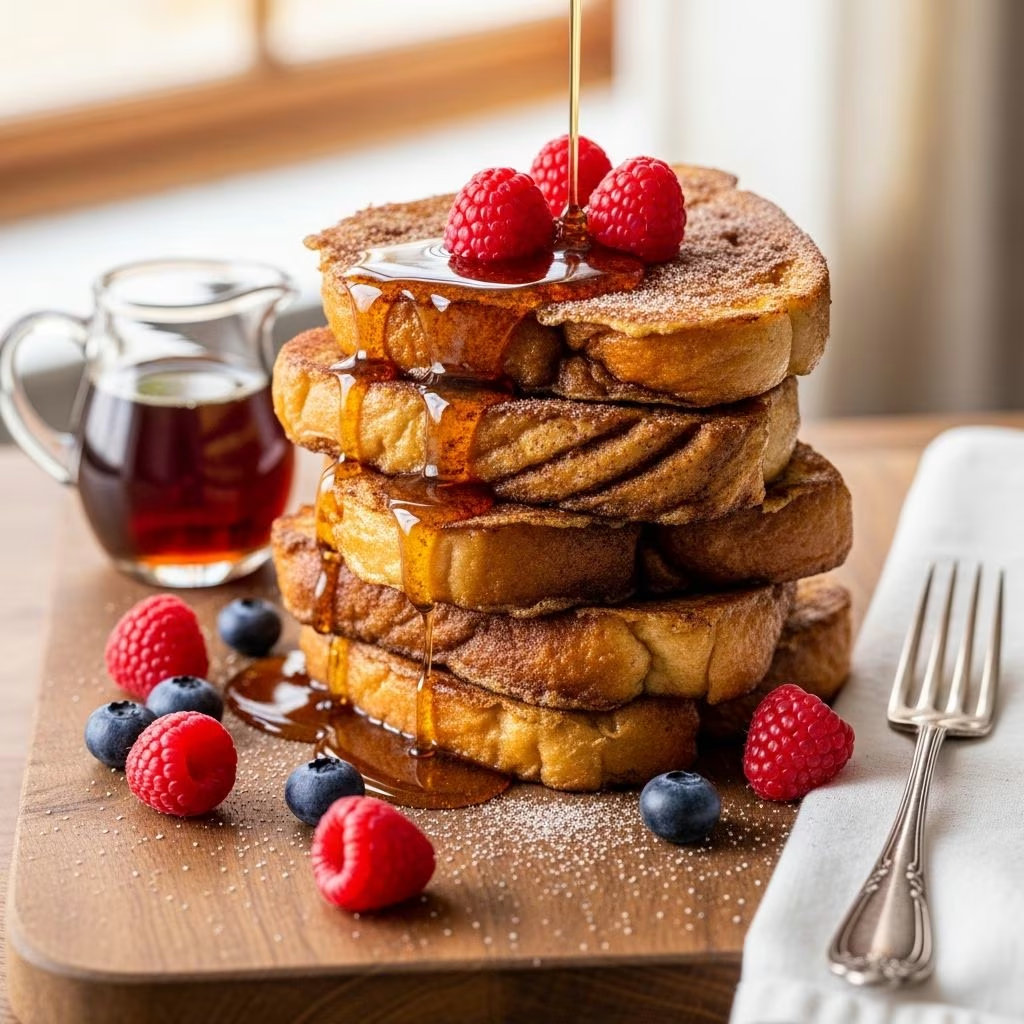
The presentation of your finished French toast dramatically impacts the dining experience. A classic approach involves dusting with confectioners’ sugar and serving alongside maple syrup. Fresh berries, whether raspberries, blueberries, or strawberries, add bright acidity and visual appeal. Banana slices provide creaminess and natural sweetness that complements the cinnamon undertones.
Whipped cream or mascarpone-based toppings create luxurious contrasts against the caramelized cinnamon sugar crust. Golden syrup offers deeper, more complex sweetness compared to standard maple syrup. Chopped nuts—particularly pecans, walnuts, or almonds—introduce textural variety and nutty sophistication.
For special occasions, consider preparing a cinnamon syrup by warming maple or pancake syrup and stirring in additional cinnamon. This infused syrup ensures every element of your plate carries complementary flavor notes.
Scaling Your Recipe for Different Serving Sizes
The basic French toast formula scales easily, whether you’re cooking for one or preparing breakfast for a crowd. A single serving typically requires one thick slice of bread, one egg, ¼ cup milk, ¼ teaspoon cinnamon, and a small amount of butter. This scaling allows you to prepare fresh French toast whenever desired without waste.
For larger groups, the ingredients multiply proportionally. A batch serving six typically uses six thick bread slices, six eggs, one cup milk, and two teaspoons cinnamon. The cooking method remains consistent; simply work in batches, keeping finished pieces warm on a serving platter while cooking the remaining bread.
Make-Ahead Options for Busy Mornings
Some French toast preparations benefit from advance preparation. Baked variations, particularly those made with crusty bread, allow you to assemble the dish the evening before. Arrange bread pieces in a baking pan, pour the egg mixture over them, cover, and refrigerate overnight. The extended soaking time produces particularly custardy results when baked the following morning.
However, traditional stovetop French toast is best prepared and served immediately. The cinnamon sugar crust loses its textural appeal as it sits, and the interior gradually loses warmth and appeal. If you must prepare ahead, cook the bread without the cinnamon sugar topping, then quickly add it just before serving.
Frequently Asked Questions
What’s the best way to prevent soggy French toast? Use day-old bread, dip slices quickly rather than soaking them extensively, and cook at medium heat to ensure the interior cooks through without the exterior burning.
Can I use non-dairy milk alternatives? Yes, whole milk alternatives like oat or almond milk work well in the custard base, though they may produce slightly less rich results than dairy milk.
How do I store leftover French toast? Refrigerate cooked French toast in an airtight container for up to three days. Reheat gently in a toaster oven or skillet to preserve the cinnamon sugar crust.
Is it possible to make French toast without eggs? While traditional recipes rely on eggs for structure and binding, you can experiment with alternatives like cornstarch mixed with milk and appleseed, though results vary significantly.
What temperature should French toast be cooked to internally? Aim for an internal temperature of approximately 160°F (71°C) to ensure the egg custard fully sets while maintaining a tender, custardy texture.
Troubleshooting Common Issues
If your French toast lacks cinnamon flavor, ensure you’re using freshly ground cinnamon rather than older spice that may have lost potency through storage. Adding cinnamon directly to both the custard and the coating layer creates more pronounced flavor.
Mushy, falling-apart French toast typically results from using bread that’s too fresh or oversaturating it in the custard mixture. Switch to thicker, day-old bread and reduce the dipping time to 5-10 seconds per side.
Pale French toast indicates insufficient heat. Ensure your pan is adequately preheated before adding bread, and confirm that your heat setting is truly medium or medium-high.
Conclusion: Mastering This Timeless Breakfast
Cinnamon French toast represents an achievable yet impressive dish that rewards attention to detail. By understanding bread selection, custard formulation, two-stage cooking techniques, and creative presentations, you’ll consistently produce restaurant-quality results. Whether you’re enjoying a quiet morning by yourself or hosting a special brunch, this classic dish never fails to deliver comfort, satisfaction, and pure enjoyment.
References
- Nicky’s Kitchen Sanctuary Cinnamon French Toast Recipe — Kitchen Sanctuary. Accessed 2026-04-09. https://www.kitchensanctuary.com/cinnamon-french-toast/
- Easy Cinnamon French Toast Recipe — The Subversive Table. Accessed 2026-04-09. https://thesubversivetable.com/easy-cinnamon-french-toast/
- Cinnamon French Toast Recipe — McCormick Spices. Accessed 2026-04-09. https://www.mccormick.com/blogs/recipes/cinnamon-french-toast-recipe
- Best Cinnamon Baked French Toast Recipe — The Pioneer Woman. Accessed 2026-04-09. https://www.thepioneerwoman.com/food-cooking/recipes/a8921/cinnamon-baked-french-toast/
- Cinnamon Sugar French Toast with Bourbon — Half Baked Harvest. Accessed 2026-04-09. https://www.halfbakedharvest.com/cinnamon-sugar-french-toast/