Creating impressive, restaurant-quality meals at home doesn’t require spending hours in the kitchen or mastering complex techniques. One of the most accessible ways to achieve sophisticated flavors is through braising, a cooking method that transforms simple ingredients into deeply flavorful dishes. This particular preparation combines bone-in pork chops with the natural sweetness of apples and the tangy depth of apple cider vinegar, creating a balanced sauce that elevates an ordinary weeknight dinner into something memorable.
Understanding the Braising Method
Braising is a two-stage cooking technique that begins with high-heat searing and concludes with gentle simmering in liquid. The process doesn’t require the extended cooking times traditionally associated with braising tough cuts of meat. Instead, this recipe accomplishes what might typically take several hours of cooking in just about 60 minutes total, making it practical for busy home cooks who still want impressive results.
The magic of braising lies in the development of flavor through the Maillard reaction during the searing phase. When proteins and sugars in the meat reach high temperatures, they create new flavor compounds that wouldn’t develop through gentle cooking alone. This creates what professional chefs call the fond—those caramelized, browned bits clinging to the bottom of the pan that become the foundation of an exceptional sauce.
Key Ingredients and Their Roles
Success in this dish depends on understanding what each ingredient contributes to the final result. The pork chops should be substantial bone-in rib chops, approximately 1½ inches thick, which provide enough mass to remain tender and juicy through the cooking process while the bone itself adds collagen that enriches the sauce.
Apple selection matters considerably for this preparation. Granny Smith apples offer the necessary tartness to balance the dish’s richness, though Gala apples provide additional sweetness that some prefer. These apples serve dual purposes: their cut sides create a golden surface during initial searing that adds visual appeal, while their flesh softens during braising to become part of the sauce’s body.
Shallots contribute a sophisticated onion flavor without the sharpness of regular onions. When halved lengthwise and seared cut-side down, they develop a golden exterior while remaining slightly firm in the center, adding textural contrast to the finished dish.
The trinity of acidic elements—apple cider vinegar, hard cider, and chicken broth—creates the sauce’s backbone. Hard cider, whether a commercial brand or homemade, provides fruity sweetness tempered by natural fermentation. The vinegar supplies brightness that cuts through the richness, while chicken broth adds savory depth and body.
Dijon mustard acts as both a flavor component and a sauce thickener. Its emulsifying properties help create a silky sauce while its sharp, slightly bitter notes provide complexity. All-purpose flour works alongside the mustard to thicken the braising liquid into a proper sauce rather than leaving it as thin cooking liquid.
Preparation and Seasoning Strategy
Proper seasoning begins before the meat touches heat. A mixture of sugar, salt, and freshly ground black pepper creates a flavored crust during searing. The sugar caramelizes, contributing to browning and adding subtle sweetness, while salt seasons the meat throughout and aids in browning through osmosis. Freshly ground pepper provides aroma and bite that pre-ground versions cannot match.
Dry patting of the pork chops before seasoning removes surface moisture that would otherwise generate steam during searing. This steam prevents proper browning, resulting in pale, boiled-looking meat instead of an appetizing caramelized crust. This single step separates good results from exceptional ones.
The Searing Process
Searing both the pork chops and apples creates the flavor foundation for the entire dish. High heat causes the outer surfaces to brown through the Maillard reaction, developing complex flavors that gentle cooking cannot achieve. The pork chops, seared for approximately five minutes total with a mid-cooking flip, develop a deep mahogany exterior while the interior remains protected from overcooking.
The apples and shallots receive similar treatment on their cut sides, developing golden-brown surfaces in approximately two minutes. Gentle pressing against the pan with a spatula increases contact between the produce and the hot surface, ensuring even browning. This step requires attention but minimal active cooking time.
Building the Sauce Foundation
After removing the seared ingredients, the pan’s heat reduces to medium for garlic preparation. Garlic cooks for just 30 seconds—enough time for its aromatic compounds to bloom into the oil without developing bitterness from overheating. Finely grating the garlic rather than mincing increases surface area, accelerating this process.
Adding mustard, flour, and butter to the shallots creates a paste that coats the vegetables and prevents them from sticking. This combination forms what French cooks call a beurre manié—a butter and flour mixture that thickens sauces smoothly without creating lumps. When the cider and broth are added while scraping the pan’s bottom, this paste distributes evenly throughout the liquid, creating uniform thickening.
The Simmering Phase
The initial simmering of 20 minutes allows the sauce to reduce and concentrate. During this time, flavors meld while excess liquid evaporates, creating a sauce thick enough to coat a spoon. This visual indicator—when sauce leaves a trail down the back of a spoon rather than running off immediately—signals proper sauce consistency.
Tasting and adjusting seasoning at this point allows correction before the pork chops rejoin the pan. The sauce should taste balanced, with none of the component flavors overwhelming the others. Tartness from vinegar and cider should be noticeable but not puckering; mustard should provide complexity rather than dominating; and the pork flavor should enhance rather than overwhelm.
Finishing the Pork Chops
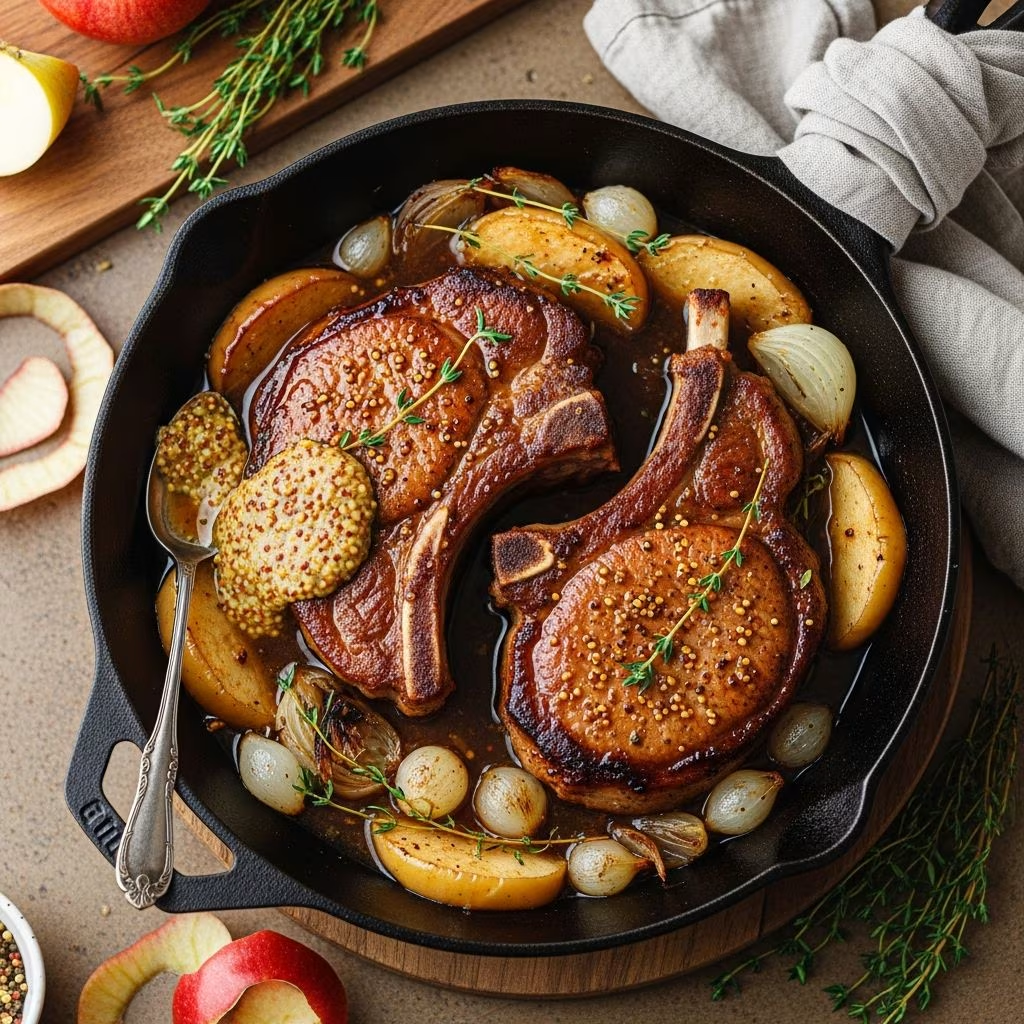
The pork chops return to the pan nestled into the sauce with apples arranged cut-side up, creating a visually appealing presentation. The partial cover—using a lid, baking sheet, or heavy foil—maintains moisture while allowing some evaporation to concentrate flavors further. Simmering for 7 to 10 minutes brings the meat to a safe internal temperature of 145°F while maintaining its juiciness.
Overcooking pork is a common mistake that yields dry, unpleasant meat. Using an instant-read thermometer removes guesswork, ensuring doneness without overstaying in the pan. The residual heat continues cooking even after removal from the stove, so removing at 145°F rather than pushing to 160°F results in noticeably juicier meat.
Presentation and Serving Suggestions
Garnishing with finely chopped chives adds a fresh onion note that brightens the rich sauce while providing visual contrast. A final grinding of black pepper adds aroma and finishing flourish. The dish pairs beautifully with creamy accompaniments—mashed potatoes, polenta, or buttered egg noodles work beautifully. The sauce, being the highlight of the dish, should pool around these starches rather than these sides stealing focus.
For a vegetable component, wilted seasonal greens like broccolini or silverbeet provide textural contrast without competing for attention. These greens benefit from the sauce’s richness when served together, creating a balanced, complete plate.
Adapting the Recipe for Variations
This recipe’s framework tolerates substitutions based on availability and preference. Boneless pork chops work when bone-in versions aren’t available, though they cook slightly faster due to reduced thickness. Different apple cider varieties—from dry to sweet—alter the sauce’s flavor profile, allowing cooks to customize sweetness levels.
Thyme can be replaced with sage for an earthier flavor profile, or tarragon for a more delicate anise-like note. Vegetable broth substitutes successfully for chicken broth when necessary, though chicken broth provides superior depth. Some versions incorporate cream for additional richness, though the original recipe balances richness and acidity beautifully without it.
Timing and Preparation Planning
The entire recipe requires approximately one hour of active and passive cooking time. Advance preparation—peeling shallots, halving apples, mincing garlic—streamlines the cooking process. These prep tasks can occur earlier in the day, reducing cooking time to under 45 minutes when service time arrives.
Flavor Profile Summary
- Savory elements: Pork, chicken broth, mustard, garlic, shallots
- Sweet notes: Apples, cider, sugar
- Acidic brightness: Apple cider vinegar, residual tartness from cider
- Aromatic complexity: Thyme, black pepper, Dijon mustard
- Textural contrast: Tender pork, softened apples, creamy sauce
Why This Recipe Succeeds
This dish achieves restaurant-quality results through straightforward technique rather than unusual ingredients or extended cooking times. The balance between sweet apples and cider, tart vinegar, and savory pork creates a harmonious whole where no single flavor dominates. The textural contrast between tender meat, soft apples, and creamy sauce satisfies both in flavor and mouthfeel. Most importantly, achieving such sophistication in one hour makes this recipe practical for regular weeknight cooking rather than special occasions only.
Frequently Asked Questions
Can I use boneless pork chops?
Yes, boneless chops work well, though they cook approximately 2-3 minutes faster than bone-in varieties due to reduced thickness. Check temperature around 8 minutes rather than the full 10-minute range.
Does the alcohol in hard cider cook off?
Simmering cider for 20 minutes removes most, though not all, alcohol content. For alcohol-free versions, substitute non-alcoholic cider or increase chicken broth by one-half cup while reducing cider volume accordingly.
Can I make this ahead?
The entire dish actually improves when made 1-2 days ahead, allowing flavors to meld further. Reheat gently on the stovetop over medium-low heat until the sauce reaches a simmer, then serve as directed.
What if my sauce is too thin?
If sauce hasn’t thickened sufficiently after 20 minutes, mix 1 tablespoon cornstarch with 2 tablespoons cold water, stir into the sauce, and simmer 2-3 minutes more until thickened.
Why are my apples mushy?
If apples disintegrate during cooking, reduce the final simmering time or add apples during the last 5 minutes of cooking with the pork chops rather than at the beginning.
References
- Anguiano, Inés. “Mustardy Cider-Braised Pork Chops.” — Bon Appétit Magazine. Bon Appétit
- United States Department of Agriculture Food Safety and Inspection Service. “Safe Minimum Internal Temperature Chart.” — USDA FSIS. 2024. https://www.fsis.usda.gov/food-safety/safe-food-handling-and-preparation/food-safety-basics/safe-temperatures-food
- McGee, Harold. “On Food and Cooking: The Science and Lore of the Kitchen.” — Scribner. 2004. Maillard reaction and braising principles.