Chocolate ganache cake represents one of the most sophisticated desserts a home baker can master. This elegant creation combines moist chocolate layers with silky chocolate ganache that serves triple duty as filling, frosting, and decorative drip. What makes this dessert particularly appealing is that despite its polished appearance, the baking process remains surprisingly manageable for bakers of varying skill levels.
Understanding the Foundation: Quality Ingredients Matter
The success of any ganache cake begins with ingredient selection. The chocolate you choose determines the flavor profile and richness of your finished dessert. Dark chocolate, particularly varieties containing between 60 and 70 percent cacao, provides the ideal balance of bitter notes and sweetness without overwhelming the palate. Dutch-processed cocoa powder adds depth and complexity to the cake layers, creating a more authentic chocolate flavor than natural cocoa.
The fat content in heavy cream plays a crucial role in ganache creation. Proper ganache requires cream with sufficient fat to create that signature silky texture. Using cream that has been properly stored and is at the right temperature ensures smooth emulsification with melted chocolate. Butter quality also influences the cake’s crumb structure, lending richness and helping achieve that desirable tender texture.
The Science Behind Perfect Ganache Preparation
Ganache is fundamentally simple—just chocolate and cream—yet understanding the chemistry behind this combination elevates your baking results. The emulsification process that occurs when hot cream meets chopped chocolate is what creates the smooth, glossy finish. Temperature control determines the ganache’s final consistency and application method.
- Warm ganache: Used for pouring and creating elegant drips, this pourable consistency requires the ganache to be recently made and still warm
- Cooled and thickened ganache: Perfect for filling layers, this version has firmed up enough to hold structure between cake layers without squishing out
- Whipped ganache: Once fully cooled, ganache can be whipped with an electric mixer to create a frosting-like texture suitable for spreading and piping
The ratio of chocolate to cream affects thickness and spreadability. A 1:1 ratio by weight creates a balanced ganache that transitions smoothly between these three states. Adjusting ratios—adding more chocolate for thickness or more cream for fluidity—allows customization based on specific baking needs.
Building Your Cake Foundation: The Layers
Creating tender, moist chocolate cake layers requires attention to mixing technique and ingredient proportions. Begin by aerating butter and sugar thoroughly, which incorporates air into the batter and creates a lighter crumb. This process typically requires one to two minutes of mixing at high speed.
Adding eggs individually ensures proper emulsification and prevents curdling. Each egg should be completely incorporated before the next addition. This methodical approach creates a stable batter that holds the air bubbles necessary for a tender, well-risen cake.
The dry ingredients—flour, cocoa powder, baking powder, and salt—should be mixed together before combining with wet ingredients. This ensures even distribution of leavening agents and seasoning. When incorporating dry ingredients into the wet mixture, alternate between dry components and liquid (typically milk or buttermilk), beginning and ending with dry ingredients. This technique prevents overdevelopment of gluten, which would result in a tough, dense cake.
Distributing batter evenly among three eight-inch pans ensures uniform cake layers that bake at the same rate. Each pan should receive approximately equal portions of batter, typically around 500 grams per nine-inch layer.
Oven Temperature and Baking Mastery
Most chocolate ganache cakes bake at 350°F (175°C), though some recipes use 325°F (162°C) for a gentler bake. The lower temperature allows the cake to bake more slowly and evenly, reducing the risk of a firm outer crust before the center sets. Convection ovens may require reducing temperature by 25 degrees and shorten baking time.
Testing for doneness requires more than simply looking at the cake. A wooden toothpick inserted into the center should emerge with a few moist crumbs rather than completely clean (which indicates overbaking) or wet batter (which indicates underbaking). The cake should spring back when gently pressed in the center.
The Critical Cooling Phase
Proper cooling is essential before assembling your cake. Cake layers should cool in their pans for approximately ten minutes, then be turned out onto wire racks to cool completely. This typically requires two to three hours at room temperature. Never attempt to assemble a warm cake, as the layers will compress and the frosting will melt.
For quicker preparation, cake layers can be prepared a day in advance and wrapped tightly before refrigeration. This actually improves assembly, as cold, firm cake layers resist compression from frosting pressure.
Mastering Ganache Preparation Techniques
Creating silky, smooth ganache depends on proper chocolate melting and cream temperature. Begin by placing finely chopped dark chocolate in a large bowl. Heating cream in a saucepan over medium heat brings it to a simmer—visible bubbles should appear around the edges without aggressive boiling. Overheated cream can result in broken ganache or a grainy texture.
Pour the hot cream over chopped chocolate and let it sit undisturbed for one to two minutes. This resting period allows the chocolate to soften from residual heat. Using a rubber spatula, gently stir from the center outward using small circular motions. Vigorous stirring incorporates air and creates an overly light, fluffy texture when whipping is not desired.
Allowing ganache to cool completely to room temperature develops the ideal consistency for filling. Refrigeration speeds cooling but requires occasional stirring every five to ten minutes to ensure even temperature reduction. Ganache that hasn’t cooled uniformly may develop an undesirable grainy texture.
Assembly Strategies for Professional-Looking Results
Assembling your ganache cake requires planning and precision. Place the first cooled cake layer on your serving plate or cake board. Using the thickened, unwhipped ganache, apply a thin layer to the top of the first layer. Some bakers prefer piping a dam of frosting around the edge of the layer before filling the center, preventing filling from squishing out during stacking.
Position the second layer directly atop the filling, pressing gently to secure without compressing the filling. Repeat with the third layer. Once all layers are stacked, refrigerate the assembled cake for thirty minutes to allow the ganache filling to firm up.
For frosting, use the whipped ganache version, which has an airy, light texture perfect for spreading or piping. Apply a thin crumb coat first—a preliminary layer that seals loose crumbs—then refrigerate for fifteen minutes before applying the final frosting layer. This technique prevents crumbs from mixing into your final frosting surface.
Creating the Signature Chocolate Drip
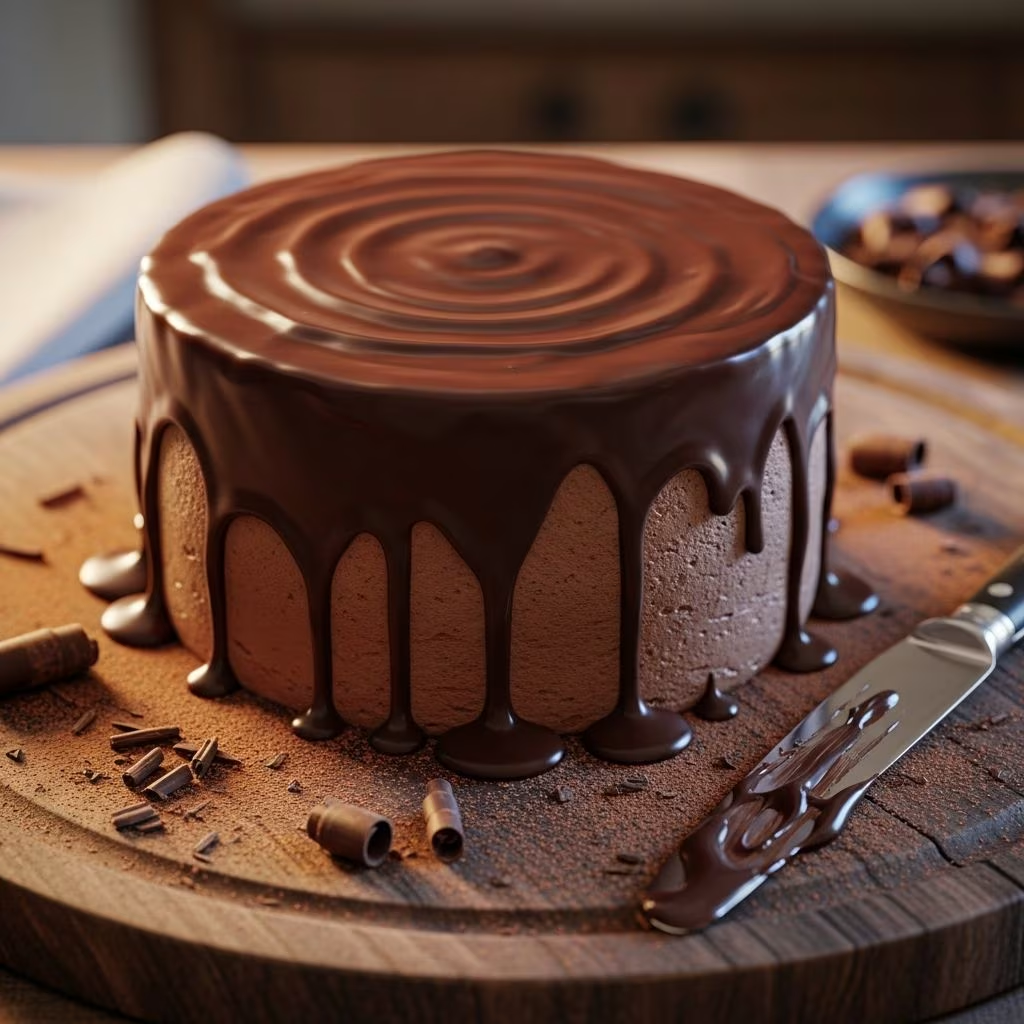
The elegant chocolate drip that cascades down a ganache cake requires warm ganache with a pourable consistency. Prepare this by gently reheating cooled ganache using short microwave bursts of five to ten seconds, stirring between intervals until it reaches a pourable but not hot consistency. Alternatively, gently reheat over a double boiler, stirring constantly.
Working with a freshly frosted cake still chilled from the refrigerator, pour warm ganache slowly onto the top center of the cake, allowing gravity to naturally create drips down the sides. Use an offset spatula to spread excess ganache across the top, creating an even surface. The contrast between the dark ganache and lighter frosting creates a visually striking presentation.
Timing and Planning Your Baking Day
Successfully executing a ganache cake requires strategic timing. Advance preparation significantly reduces day-of stress. Cake layers can be baked, cooled, wrapped, and refrigerated up to two days before assembly. Ganache can be prepared ahead and stored in an airtight container at room temperature for up to five days, then gently reheated as needed.
On assembly day, remove cake layers from the refrigerator approximately thirty minutes before use, allowing them to reach room temperature for easier, cleaner slicing. Whip your ganache frosting about one hour before assembly to achieve optimal consistency and appearance.
Storage and Serving Recommendations
Proper storage extends your ganache cake’s shelf life while maintaining quality. Store the finished cake in a cool environment, covered loosely to prevent dust while allowing some air circulation. Depending on room temperature, a ganache cake remains fresh for three to four days. Refrigeration extends this to five days, though cold temperatures may affect the frosting’s texture.
Slicing is most effective using a hot, sharp knife. Dip the knife into hot water and wipe clean between each cut for neat, professional-looking slices. This prevents ganache from sticking and tearing the delicate layers.
Troubleshooting Common Challenges
| Problem | Cause | Solution |
|---|---|---|
| Broken or grainy ganache | Temperature shock or overmixing | Ensure cream and chocolate temperatures are compatible; stir gently |
| Ganache too thick for spreading | Over-cooled ganache | Reheat gently in microwave for 5-10 second bursts |
| Cake layers compress during assembly | Warm or fragile layers | Ensure layers are completely cool before assembly |
| Drip texture uneven | Ganache temperature inconsistent | Maintain consistent warm temperature when pouring |
| Frosting too soft for piping | Insufficient cooling or overwhipping | Refrigerate whipped ganache before piping |
Frequently Asked Questions
Can I prepare this cake in advance?
Yes, cake layers can be baked and refrigerated up to two days ahead. Ganache can be prepared up to five days in advance. Assemble one day before serving for best results, though the finished cake remains fresh for several days when properly stored.
What type of chocolate works best?
Dark chocolate with 60-70% cacao content provides optimal flavor and texture. Avoid chocolate chips with stabilizers; use chopped bar chocolate or high-quality couverture chocolate for the smoothest ganache.
Can I reduce the number of layers?
Absolutely. A two-layer ganache cake works beautifully and requires less ganache. Adjust baking time slightly based on layer thickness—thicker layers require slightly longer baking.
How do I fix ganache that breaks?
If ganache appears broken or grainy, slowly incorporate room-temperature cream while stirring gently. Start with one tablespoon and continue as needed until the mixture becomes smooth again.
Can I freeze this cake?
Yes, unfrosted cake layers freeze well for up to three months. The finished frosted cake is less ideal for freezing due to texture changes in the ganache, but can be frozen for up to one month if wrapped carefully.
References
- Chocolate Ganache Cake — Baran Bakery. https://baranbakery.com/chocolate-ganache-cake/
- The Best-Ever Chocolate Cake with Whipped Dark Chocolate Ganache — Bigger Bolder Baking. https://www.biggerbolderbaking.com/best-ever-chocolate-cake/
- Extra Moist Triple Chocolate Ganache Cake: a Bakery Recipe — Amy Cakes Bakes. https://amycakesbakes.com/triple-chocolate-ganache-cake/
- Dark Chocolate Ganache Cake — Smells Like Home. https://www.smells-like-home.com/2015/03/dark-chocolate-ganache-cake/
- Easy Chocolate Ganache Cake — Live to Sweet. https://livetosweet.com/2023/02/15/chocolate-ganache-cake/