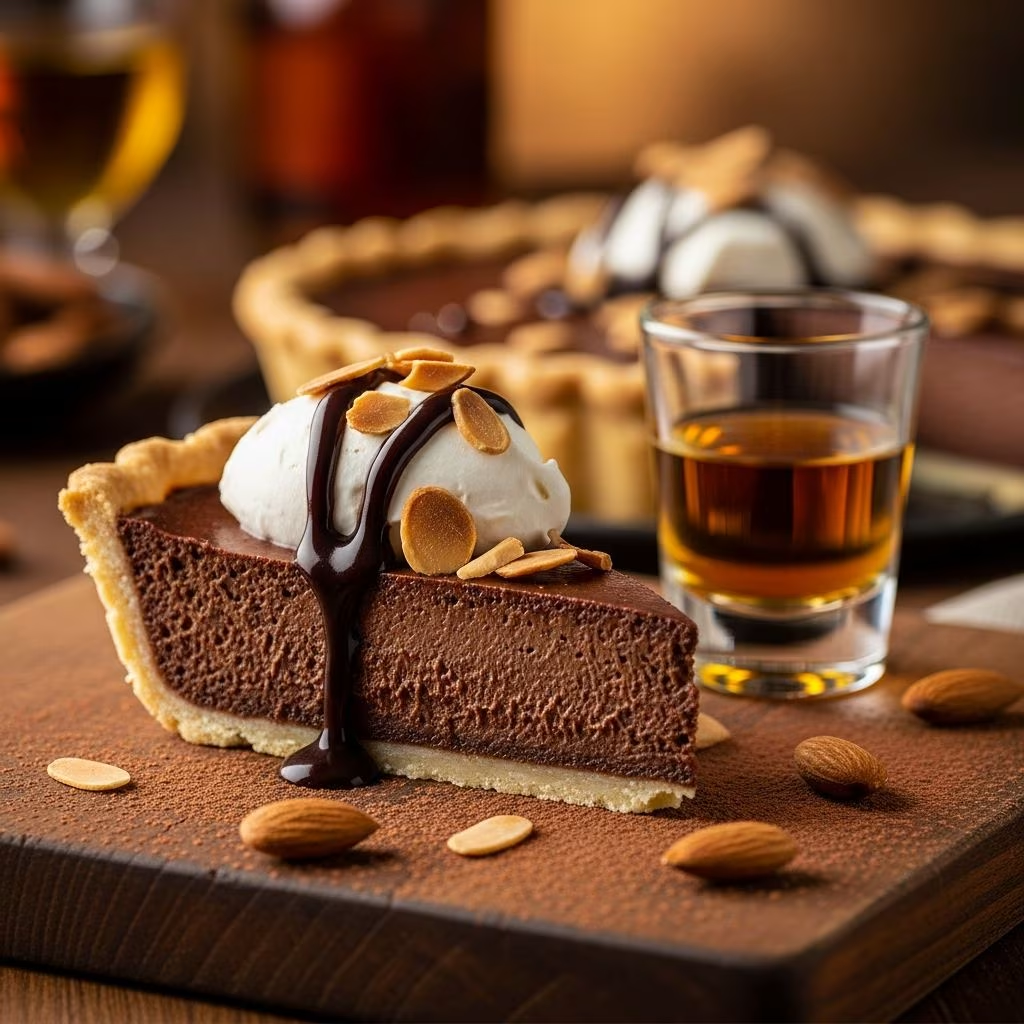
Dessert enthusiasts seeking a sophisticated and memorable treat will find this chocolate buttermilk pie with whiskey and almonds to be an exceptional choice. This refined confection brings together the velvety smoothness of buttermilk, the depth of dark cocoa, the complexity of whiskey, and the textural contrast of toasted almonds. The result is a dessert that impresses both visually and palate-wise, making it perfect for special occasions, dinner parties, or when you simply want to elevate your baking repertoire.
Understanding the Flavor Profile and Ingredients
The beauty of this pie lies in how each ingredient plays a specific role in creating a harmonious flavor experience. The buttermilk serves as the foundation, contributing moisture and a subtle tanginess that prevents the dessert from becoming overly sweet. This dairy component creates a custard-like consistency that is both rich and approachable. The dark cocoa powder provides an intense chocolate flavor without the heaviness sometimes associated with melted chocolate bars, allowing the other flavors to remain prominent.
Whiskey functions as a complexity enhancer, adding subtle warmth and a sophisticated backdrop that balances the sweetness. The alcohol content diminishes during baking, leaving behind only the refined flavor notes. Toasted sliced almonds contribute both textural interest and a nutty undertone that complements chocolate naturally. Together, these elements create layers of flavor that unfold with each bite.
The Foundation: Sugars and Dry Ingredients
The filling begins with a combination of white and light brown sugar. White sugar provides sweetness and structure, while brown sugar adds moisture and subtle molasses notes that deepen the overall flavor complexity. All-purpose flour serves as a thickening agent, and a modest amount of cornmeal adds a delicate crumb that prevents the filling from being too dense or custardy. Dark cocoa powder is the star of the dry ingredients, delivering authentic chocolate flavor without additional liquid. A touch of salt heightens all the surrounding flavors, creating better balance and preventing the dessert from tasting one-dimensional.
The Wet Base: Eggs, Buttermilk, and Fat
Eggs provide structure and help the filling set while maintaining a tender crumb. Buttermilk’s acidity and moisture create the signature silky texture. Melted butter enriches the filling and carries fat-soluble flavors, while the whiskey adds sophistication. Vanilla bean paste (rather than extract) provides a luxury element with visible flecks and robust vanilla flavor that enhances without overwhelming.
Preparing the Perfect Pie Crust
Success begins with the crust. A properly prepared pie crust serves as the vessel for your filling and contributes texture and flavor. Commercial pie crusts offer convenience, while homemade versions provide superior control over ingredients and texture. Whichever you choose, the crust must be thoroughly chilled before filling.
Place your pastry in a nine-inch pie plate and refrigerate for 20 to 30 minutes. This chilling step is crucial because it:
- Allows the gluten to relax, preventing shrinkage during baking
- Firms the butter or shortening, creating a flakier texture
- Helps the crust maintain its shape when filled with the wet filling mixture
- Prevents the crust from sliding down the sides of the pie plate
Combining and Assembling Your Filling
Proper mixing technique makes a significant difference in the final texture of your pie. Begin by combining all dry ingredients in a small bowl: white sugar, brown sugar, flour, cocoa powder, cornmeal, and salt. Mixing these together ensures even distribution of the cocoa powder and prevents lumps or pockets of dry cocoa in your finished dessert.
In a large bowl, whisk together the wet ingredients: eggs, buttermilk, melted butter, whiskey, and vanilla bean paste. Whisk thoroughly until well combined and slightly frothy. This aeration helps create a lighter texture in the finished pie. Gradually add the dry mixture to the wet mixture, blending until smooth. Overmixing at this stage is actually acceptable—thorough blending ensures even cocoa distribution and prevents streaks.
Finally, stir in the toasted sliced almonds by hand. Hand-stirring prevents breaking the almonds into smaller pieces, preserving the desired textural contrast. Pour the entire mixture into your chilled pastry crust.
Baking Techniques for Optimal Results
Preheat your oven to 350 degrees Fahrenheit (175 degrees Celsius) before you begin assembling your filling. This ensures the oven reaches proper temperature by the time your pie is ready to bake. An oven thermometer is invaluable for verifying accurate temperature, as ovens often run hot or cold.
Place the filled pie directly in the center of your oven and bake for 50 to 60 minutes. The pie is done when the crust achieves a golden-brown color and the center is set. You can test for doneness by gently jiggling the pie plate—the center should have minimal movement, similar to a set custard rather than liquid filling. A toothpick inserted into the center should come out with just a few moist crumbs clinging to it.
Several factors affect baking time: oven accuracy, pie temperature at the start of baking, and oven rack position. If your pie is browning too quickly, tent it with aluminum foil to prevent the crust from burning while the center continues cooking.
Cooling and Serving Considerations
Transfer the baked pie to a wire rack immediately upon removal from the oven. This allows air circulation underneath the pie plate, preventing the bottom crust from becoming soggy from residual heat. Allow the pie to cool completely to room temperature—this typically takes two to three hours—before serving.
This cooling period is important for several reasons. The filling continues to set as it cools, making slicing cleaner and easier. Serving the pie at room temperature allows all the flavor components to be fully appreciated. The chocolate flavor is most pronounced at room temperature rather than when served warm.
Storage and Make-Ahead Planning
This pie stores beautifully, making it an excellent choice for advance preparation. Cover the cooled pie with plastic wrap and refrigerate for up to four days. The flavors actually develop and mellow over time, making day-two pie even better than the freshly baked version. You can also freeze the unbaked pie (once assembled but before baking) for up to one month. Bake directly from the frozen state, adding 10 to 15 minutes to the baking time.
Customization and Variations
While the classic recipe is exceptional, several modifications allow you to personalize this dessert:
| Modification | Effect | Notes |
|---|---|---|
| Use dark brown sugar exclusively | Increases molasses depth | Creates richer, earthier flavor |
| Substitute bourbon or rum for whiskey | Alters spirit profile | Each spirit contributes unique undertones |
| Toast raw almonds yourself | Enhances almond flavor | Produces superior nutty complexity |
| Chop almonds instead of using sliced | Distributes texture more evenly | Creates different mouthfeel |
| Add espresso powder to filling | Deepens chocolate intensity | Use one teaspoon; subtle effect |
Pairing Suggestions and Serving Ideas
This sophisticated pie pairs exceptionally well with several accompaniments. A dollop of unsweetened whipped cream provides cooling contrast and richness. Vanilla ice cream creates a luxurious pairing that complements the chocolate and whiskey notes. A small glass of brandy, port wine, or coffee enhances the evening’s elegance when serving this dessert to guests.
For a lighter presentation, serve with fresh berries or a berry compote. The tartness of raspberries or blackberries cuts through the richness and provides visual appeal. A drizzle of chocolate sauce or caramel sauce over individual slices elevates the presentation for dinner parties.
Why This Pie Works: The Science Behind the Success
The combination of ingredients in this pie works because each component contributes both flavor and function. Buttermilk’s acidity interacts with baking soda or other alkali elements in cocoa, intensifying chocolate flavor through a chemical reaction. The eggs coagulate during baking, setting the filling while the buttermilk’s moisture keeps it tender. Sugar dissolves and caramelizes slightly at the edges during baking, creating depth of flavor. The almonds remain structurally intact because they’re added to the already-formed filling, not baked throughout, preserving their crunch.
Troubleshooting Common Issues
Understanding potential problems helps you achieve consistent success:
- Runny filling: The pie wasn’t baked long enough. The center should set like a gentle custard, not jiggle like Jello. Resume baking and check every five minutes.
- Cracked top: This is cosmetic and doesn’t affect taste. Cracks occur when the filling sets too quickly at high temperature. Lower your oven temperature by 25 degrees on subsequent attempts.
- Soggy crust: Ensure the pastry was chilled before baking. You can also pre-bake the crust for five minutes before adding filling.
- Almonds sink to bottom: Stir the filling thoroughly and don’t let it sit too long before pouring into the crust. Hand-stir the almonds just before pouring.
- Strong alcohol taste: Use less whiskey, or ensure your oven is at the correct temperature (alcohol that doesn’t bake off long enough remains prominent in flavor).
Ingredient Quality Matters
Using quality ingredients elevates the final result noticeably. Premium dark cocoa powder provides richer flavor than standard varieties. Toasted almonds from a specialty store often taste superior to mass-produced versions. Real vanilla bean paste contains actual vanilla specks and robust flavor compared to synthetic extract. A good-quality whiskey—while the alcohol burns off—still contributes better flavor compounds than cheaper alternatives.
Frequently Asked Questions
Can I use regular buttermilk, or does it have to be fresh-cultured?
Standard store-bought buttermilk works perfectly. Fresh-cultured buttermilk would provide slightly more complex tang, but regular buttermilk delivers excellent results and is more readily available.
Is there a way to reduce the whiskey flavor if I’m sensitive to alcohol taste?
Reduce the whiskey to two tablespoons or replace half with strong coffee for similar depth. Ensure the pie bakes for the full time so the alcohol fully evaporates.
What if I don’t have vanilla bean paste?
Use one teaspoon of pure vanilla extract instead. You’ll lose the visual speckles but gain similar flavor.
Can this pie be made in a larger or smaller pie plate?
This recipe is sized for a nine-inch pie. A slightly larger pie will bake a bit longer, while a smaller one will bake slightly faster. Adjust baking time accordingly, monitoring the center for doneness.
Does the filling really need to go into a chilled crust?
Yes. The chilled crust sets quickly, which prevents it from absorbing excess moisture from the wet filling before baking begins, resulting in a crispier crust.
References
- Chocolate Buttermilk Pie with Whiskey and Almonds — PantryLink Recipe Database. Accessed April 2026. https://pantrylink.app/recipes/chocolate-buttermilk-pie-with-whiskey-and-almonds
- Chocolate Almond Pie — Of Batter and Dough. https://ofbatteranddough.com/chocolate-pie-almonds-bourbon/
- Chocolate Buttermilk Pie — Bunsen Burner Bakery. https://www.bunsenburnerbakery.com/chocolate-buttermilk-pie/