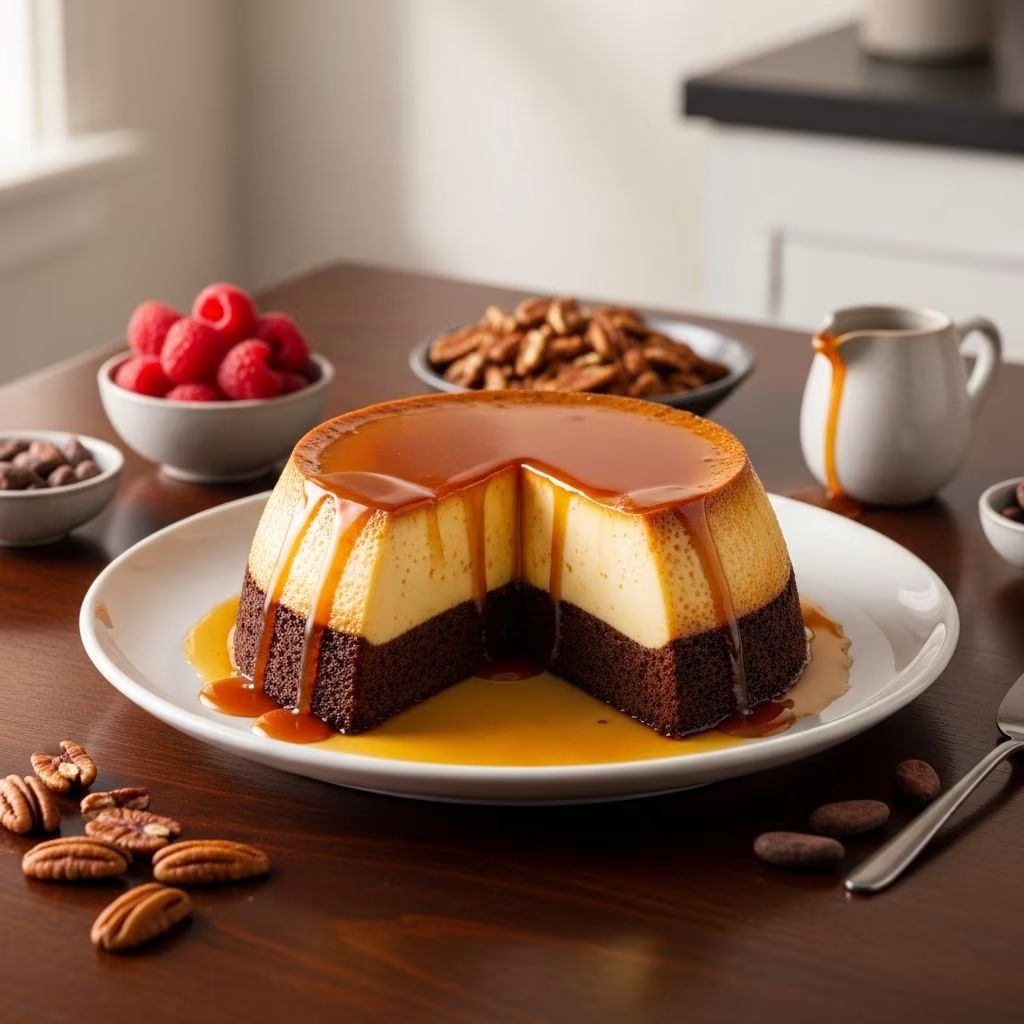
Chocoflan, often called the impossible cake or pastel imposible, captivates bakers with its dramatic baking transformation. A dense chocolate cake batter sits at the bottom of the pan, topped by a pourable flan mixture. During baking in a water bath, the layers mysteriously swap places, resulting in flan crowning a moist chocolate base, all glazed with caramel. This dessert fuses Mexican flan traditions with indulgent chocolate cake, creating a showstopper for celebrations.
The Allure of Chocoflan’s Physics-Defying Bake
The magic lies in density and temperature dynamics. The lighter flan, being more fluid, sinks through the denser cake batter as it bakes and expands. This inversion happens reliably in a bain-marie (water bath), ensuring even cooking without cracks. Originating from Latin American fusion cuisine, chocoflan gained fame through innovative chefs blending European flan with American-style cakes. It’s denser than typical cakes but lighter than pure flan, offering textural contrast in every bite.
Essential Ingredients for Perfect Chocoflan
Success starts with quality components. For the cake layer, opt for Dutch-processed cocoa for deeper flavor. Flan demands sweetened condensed and evaporated milks for authentic creaminess—substitutes alter texture. Caramel, whether homemade dulce de leche or store-bought cajeta, provides sticky sweetness that binds layers post-inversion.
- Cake Base: Flour, sugar, cocoa powder, baking powder/soda, milk (or coffee for intensity), eggs, oil or butter.
- Flan Mixture: Eggs, sweetened condensed milk, evaporated milk, vanilla extract.
- Caramel Layer: Granulated sugar for caramelization or ready-made cajeta/dulce de leche.
Room-temperature ingredients prevent lumps and ensure smooth blending. Use large eggs for structure and full-fat milks for richness.
Step-by-Step Guide to Baking Chocoflan
Preheat your oven to 350°F (175°C). Generously grease a 12-cup bundt or tube pan with butter—this is crucial for clean release.
1. Craft the Caramel Foundation
Melt 1 cup granulated sugar with ½ cup water over medium heat, stirring until amber. Pour into the pan, tilting to coat evenly. For ease, spread ¾–1 cup cajeta directly.
2. Whip Up the Chocolate Cake Batter
From scratch: Sift 1⅓ cups flour, 1 cup sugar, ½ cup cocoa, ½ tsp salt, ¾ tsp each baking powder and soda. Whisk in 1 cup milk (or half coffee), 1 egg, ½ cup oil until smooth. Box mix alternative: Blend per package with 3 eggs, 1¼ cups water, ½ cup oil.
Spoon batter over caramel, smoothing gently to avoid disturbing the base.
3. Blend the Flan Topping
In a blender, combine 1 can (14 oz) sweetened condensed milk, 1 can (12 oz) evaporated milk, 4 eggs, 1 tsp vanilla. Pulse until uniform, then tap to release bubbles. For silkiness, strain through a sieve.
Pour flan slowly over cake batter—it will float initially.
4. Bain-Marie Baking Magic
Place pan in a larger roasting dish. Add hot water to 1-inch depth. Cover tightly with foil. Bake 60–90 minutes until cake springs back and toothpick tests clean in cake (flan will jiggle). Cool in pan 1 hour, then refrigerate overnight.
5. The Grand Reveal
Run a knife around edges. Invert onto a plate. Lift pan slowly—caramel-drizzled flan tops the chocolate cake. Chill before slicing for clean cuts.
Recipe Variations to Elevate Your Chocoflan
| Variation | Key Changes | Flavor Profile |
|---|---|---|
| Coffee-Infused | Replace half milk with strong coffee in cake; add espresso powder to flan. | Bold, mocha richness. |
| Spiced Tres Leches Style | Mix cinnamon into cake; top flan with condensed milk soak post-bake. | Warm, milky depth. |
| Nutty Delight | Fold pecans into caramel; add almond extract to flan. | Crunchy, toasted notes. |
| Vegan Twist | Aquafaba for eggs; coconut condensed milk; gluten-free flour blend. | Creamy, plant-based indulgence. |
These tweaks maintain the inversion while personalizing taste.
Troubleshooting Common Chocoflan Pitfalls
Bakers often face issues—here’s how to fix them:
- Sunken or Mixed Layers: Ensure flan is blended smoothly without overbeating eggs. Use exact water bath depth.
- Sticking Pan: Butter generously and chill fully before inverting.
- Cracked Surface: Avoid overbaking; foil prevents steam escape.
- Runny Flan: Bake until set (internal temp 180°F in center). Refrigerate 4+ hours.
- Bitter Caramel: Watch closely—remove at light amber.
Test doneness by gentle center shake: cake firm, flan softly set.
Pairing and Serving Suggestions
Serve chilled for best texture. Drizzle extra caramel or cajeta. Pair with:
- Coffee or Mexican hot chocolate for contrast.
- Fresh berries to cut richness.
- Whipped cream dollops for decadence.
Portions yield 12–16 slices, ideal for parties. Store covered in fridge up to 4 days; freezes well sliced.
Nutritional Snapshot and Dietary Notes
Per slice (12 servings): ~416 calories, high in protein from eggs/milk, moderate carbs from cake. Not low-sugar due to condensed milk, but portion control works. Gluten-free by swapping flour; nut-free base recipe.
Frequently Asked Questions (FAQs)
Why does chocoflan invert during baking?
The denser cake batter rises as it bakes, displacing the lighter flan downward through buoyancy and expansion forces.
Can I use a regular cake pan instead of bundt?
Yes, but tube pans promote even cooking. Deep 10-inch round works; adjust bake time +10–15 minutes.
What’s the difference between cajeta and dulce de leche?
Cajeta is goat milk-based (Mexican), dulce de leche cow milk (Argentine)—both caramelize milk sugars beautifully here.
How far ahead can I make chocoflan?
Up to 2 days ahead; flavors deepen. Overnight rest mandatory for setting.
Is a blender necessary for flan?
Essential for aeration-free smoothness. Whisk vigorously as alternative, then strain twice.
Historical Roots and Cultural Significance
Chocoflan emerged in the 20th century from Mexican-American kitchens, merging Spanish colonial flan (custard steamed in caramel) with post-WWII boxed cake mixes. Chefs like Rick Bayless popularized refined versions. Today, it’s a staple at quinceañeras, weddings, and holidays, symbolizing fusion ingenuity.
Experiment confidently—the ‘impossible’ effect rarely fails with precise temperatures and patience. This cake not only delights the palate but astonishes guests with its bake-time alchemy.
References
- Chocoflan (AKA Pastel Imposible or Impossible Cake) — Rick Bayless. Accessed 2026. https://www.rickbayless.com/recipe/chocoflan-aka-pastel-imposible-or-impossible-cake/
- Chocoflan Recipe | How to make Chocoflan the Impossible Cake — In the Kitchen with Matt. Accessed 2026. https://www.inthekitchenwithmatt.com/chocoflan-recipe
- Chocoflan (Flan Cake) – Pies and Tacos — YouTube/Pies and Tacos. Accessed 2026. https://www.piesandtacos.com/flan-cake/