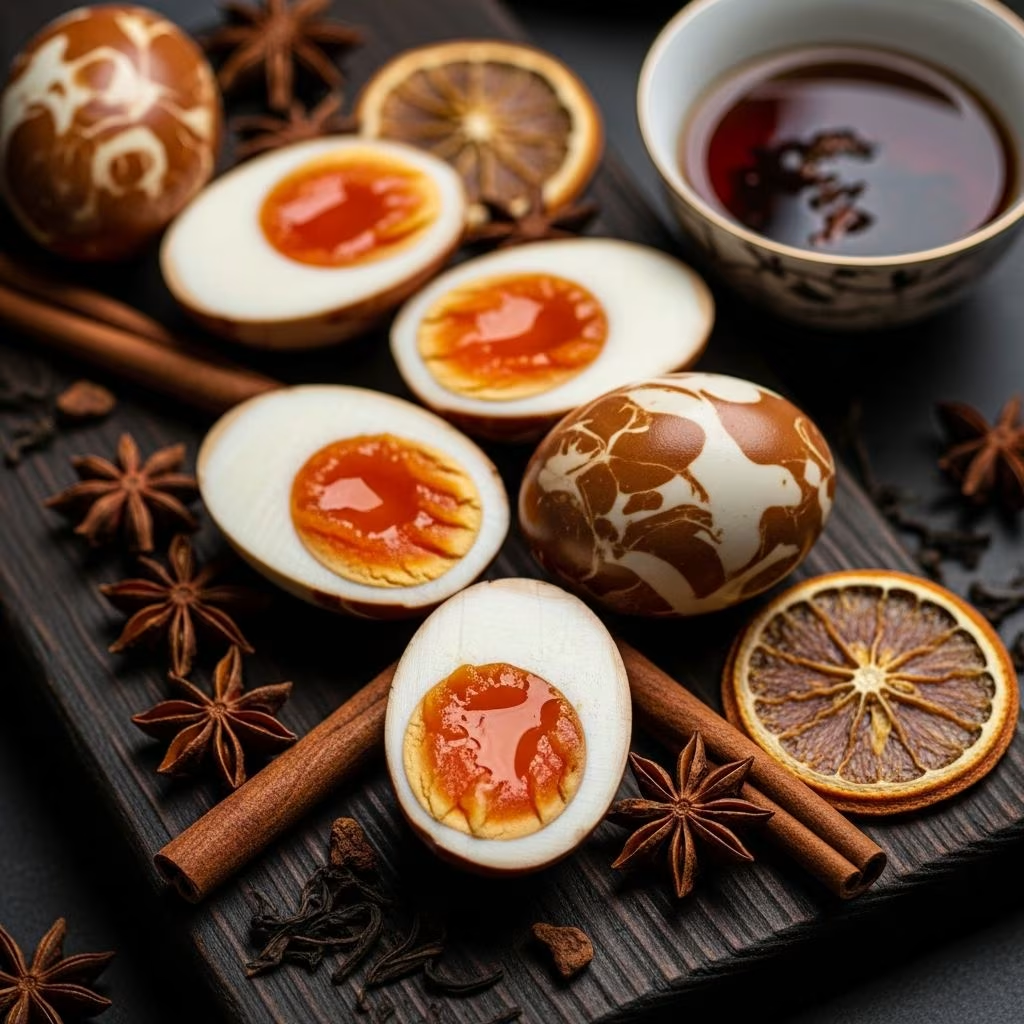
Tea eggs represent a beloved staple in Asian street food culture, offering a unique blend of visual appeal and deep flavors. These eggs feature shells delicately cracked to allow a savory marinade of tea and spices to seep in, creating intricate marbled patterns upon peeling. Simple to prepare yet impressive, they serve as versatile snacks, appetizers, or meal accompaniments.
The Allure of Tea Eggs in Global Cuisine
Originating from China, tea eggs have transcended borders, appearing in Taiwanese night markets, Japanese convenience stores, and beyond. Their popularity stems from affordability, portability, and the satisfying contrast of tender egg whites infused with aromatic notes against a spiced yolk. Street vendors simmer batches in large pots, selling them warm for immediate enjoyment.
At home, replicating this treat requires minimal equipment: a pot, eggs, tea, soy sauce, and pantry spices. The process involves boiling, cracking, and marinating, yielding results that rival commercial versions. Variations allow customization, from soft-boiled centers to intensified flavors.
Essential Ingredients for Authentic Flavor
Gathering the right components ensures success. Start with fresh eggs—medium to large sizes work best for even cooking. Black tea provides the base color and subtle earthiness; loose leaves or bags both suffice.
Soy sauce delivers umami and darkness to the marinade. Use a mix of light and dark for balanced color without overpowering saltiness. Spices like star anise, cinnamon, Sichuan peppercorns, and bay leaves build complexity, evoking warmth and slight numbness.
- Eggs: 12 medium, room temperature to prevent cracking.
- Tea: 2 tablespoons black tea leaves or 2-3 bags.
- Soy sauces: 3 tablespoons light, 1-2 teaspoons dark.
- Spices: 3 star anise, 1 cinnamon stick, 1 teaspoon Sichuan peppercorns, 2 bay leaves.
- Aromatics: 2 ginger slices, optional Shaoxing wine.
- Seasonings: 1 teaspoon sugar, 1-2 teaspoons salt.
- Liquid: 4-5 cups water to cover eggs.
Substitutions simplify: five-spice powder replaces whole spices for convenience, maintaining robust taste.
Step-by-Step Guide to Perfection
Preparation divides into boiling, cracking, and marinating phases. Patience yields the best marbling and infusion.
Boiling the Eggs Precisely
Bring water to a rolling boil in a pot large enough for all eggs. Gently lower room-temperature eggs using a spoon to avoid shell damage. Cook uncovered over medium heat: 5 minutes for soft yolks, 7 for medium, 8-10 for hard-boiled.
Timing varies by egg size and starting temperature. Test with large, room-temp eggs for reliability. Immediately transfer to an ice bath or cold running water to halt cooking, ensuring peelable whites and vibrant yolks.
Creating the Cracks for Marbling
Once cooled, tap each egg gently with a spoon’s back or against a counter. Aim for fine, even cracks covering the surface without removing large shell pieces. This allows marinade penetration while keeping shells intact for pattern formation.
For rushed prep, peel eggs fully before marinating; flavors absorb faster, ready in hours versus overnight.
Preparing and Infusing the Marinade
In a separate pot, combine tea, spices, soy sauces, sugar, salt, ginger, and water. Boil, then simmer 3-10 minutes to extract flavors. Cool completely for optimal infusion.
Place cracked eggs in a snug container. Pour cooled marinade over, ensuring full submersion. Seal and refrigerate 12-24 hours, flipping midway if needed for even coloring. Longer steeps deepen taste and pattern.
Ingredient Variations and Customizations
Adapt the recipe to preferences or availability. For heat, add dried chilies or gochugaru. Sweet notes come from extra sugar or honey. Green tea offers lighter hues, while oolong adds floral depth.
| Variation | Key Change | Effect |
|---|---|---|
| Soft-Center | Boil 5-7 min | Runny yolk for ramen |
| Five-Spice Quick | Use powder | Simplified aroma |
| Spicy Kick | Add chilies | Heat balance |
| Peeled Fast | Skip shells | Quick marination |
These tweaks maintain tradition while personalizing.
Tips for Flawless Results Every Time
- Use room-temp eggs to minimize cracks during boiling.
- Cool marinade fully before adding eggs to prevent overcooking.
- Crack under running water for easier handling.
- Store in marinade up to 4 days; flavors peak at 24 hours.
- Reuse liquid for batch two, boiling fresh first.
Avoid common pitfalls: over-boiling toughens whites; insufficient cracks limit infusion.
Storage, Serving, and Pairing Ideas
Refrigerate marinated eggs in their liquid for freshness up to a week. Peel just before eating to preserve patterns. Serve warm or cold, halved to showcase interiors.
Pair with congee for breakfast, alongside rice for meals, or as bar snacks with beer. Slice into salads or noodle bowls for umami boost.
Nutritional Profile and Health Benefits
Each egg provides protein (6g), healthy fats, and vitamins from yolks. Spices offer antioxidants; tea adds polyphenols. Low-calorie at ~80 per egg, they’re satisfying yet light.
Frequently Asked Questions
Can I use any tea type?
Black tea is traditional for color, but experiment with others; avoid delicate greens for stronger brews.
How long do they last?
Up to 5 days in fridge, submerged. Discard if off-smelling.
Why won’t my eggs marble?
Insufficient cracks or short marination. Crack finer and steep longer.
Vegan alternative?
No direct sub, but marinate tofu similarly for plant-based version.
Scale for fewer eggs?
Halve marinade; adjust water to cover.
Scaling Up for Parties or Gifts
Double or triple batches easily; use larger pots. Present in jars with marinade for edible gifts, patterns visible through glass. Perfect for potlucks or holidays.
Experiment with dyes like beet juice alongside tea for vibrant twists.
References
- Chinese Tea Eggs (w/ Soft and Hard Boiled Eggs, 茶叶蛋) — Omnivore’s Cookbook. 2023-05-15. https://omnivorescookbook.com/chinese-tea-eggs/
- Chinese Tea Eggs (茶叶蛋) — Red House Spice. 2022-11-10. https://redhousespice.com/tea-eggs/
- Tea Eggs Recipe — H.Y. Hanna. 2021-08-20. https://www.hyhanna.com/tea-eggs-recipe/
- Tea Eggs — Taste Cooking. 2020-03-05. https://tastecooking.com/recipes/tea-eggs-2/
- Chinese Tea Eggs — The Woks of Life. 2024-02-14. https://thewoksoflife.com/chinese-tea-eggs/