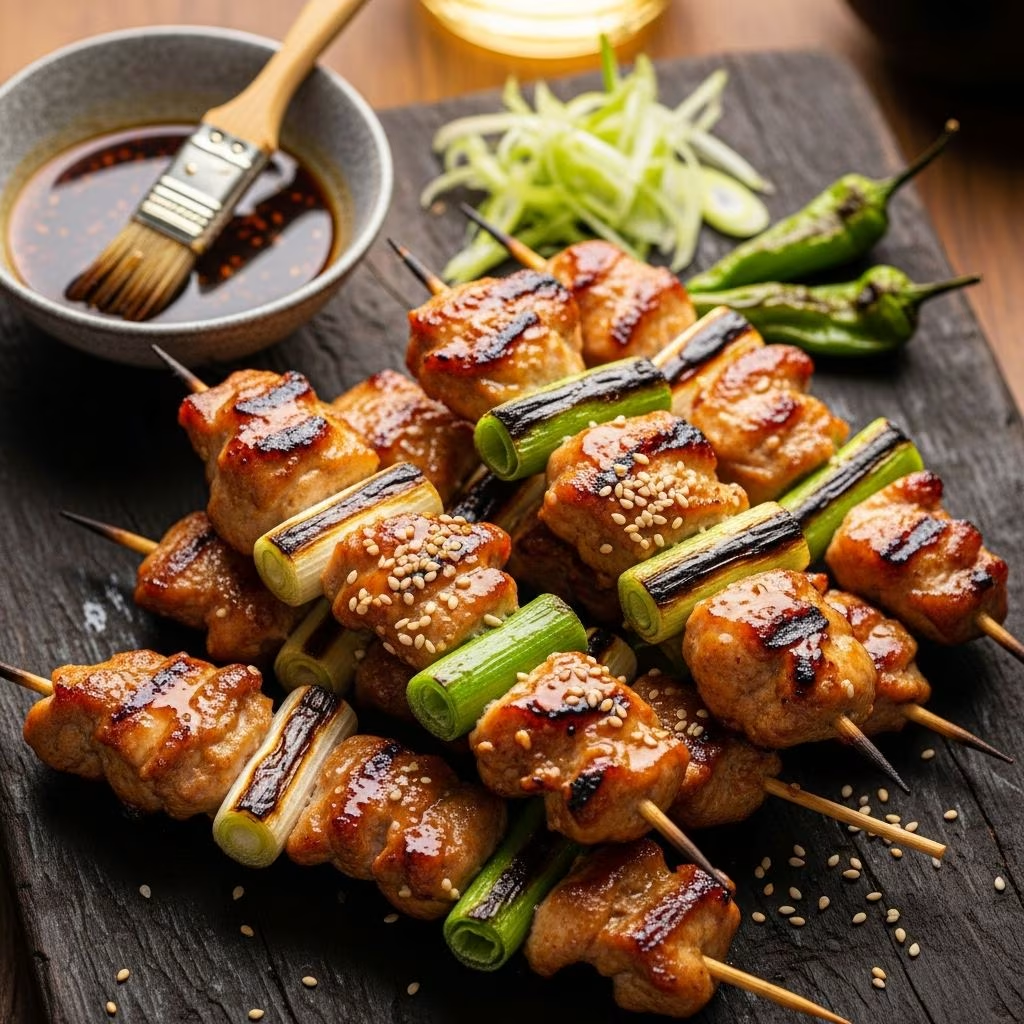
Chicken yakitori represents a cornerstone of Japanese street food and izakaya culture, where tender bites of chicken are threaded onto skewers, charred over high heat, and lacquered with a glossy tare sauce. This dish combines simplicity with profound flavor, making it accessible for home cooks while evoking the smoky allure of Tokyo’s bustling yakitori stalls. Whether you’re firing up the grill for a summer barbecue or broiling indoors, yakitori delivers bold umami in every bite.
The Origins and Cultural Significance of Yakitori
Yakitori, translating literally to “grilled bird,” emerged in post-war Japan as an affordable protein source amid rice shortages. Street vendors and small bars popularized these skewers, often paired with sake or beer in casual after-work settings. Today, yakitori spans from humble yatai carts to high-end restaurants, where chefs experiment with offal and premium cuts. Its appeal lies in the tare—a reduced glaze of soy, mirin, sake, and sugar—that caramelizes during grilling, creating a addictive sweet-savory crust.
In Japan, yakitori is more than food; it’s social ritual. Diners select from bins of fresh chicken parts, watching skewers sizzle over binchotan charcoal for optimal smokiness without flare-ups. This tradition influences home versions worldwide, emphasizing fresh ingredients and precise cooking to achieve that signature char.
Essential Ingredients for Authentic Yakitori
Success starts with quality components. Boneless, skinless chicken thighs provide juiciness and fat that thighs’ dark meat offers, outperforming breasts which dry out easily. Cut into uniform 1- to 1.5-inch cubes for even cooking.
- Chicken: 1-1.5 lbs boneless thighs, trimmed of excess fat.
- Vegetables: Scallions (green onions), white parts cut into 1.5-2 inch segments for alternating on skewers; green tops chopped for garnish.
- Tare Sauce Base: Soy sauce (1/2 cup), mirin (1/2 cup), sake (1/4 cup), brown sugar (1-2 tbsp), water (1/4 cup optional for thinning).
- Skewers: Bamboo or metal; soak bamboo 30-45 minutes to prevent burning.
- Extras: Vegetable oil for brushing, sea salt for sprinkling, lime wedges for brightness.
Tare isn’t marinated into the chicken pre-grill to avoid burning sugars; instead, it’s brushed on during cooking for glaze formation. This method preserves meat tenderness while building layers of flavor.
Step-by-Step: Crafting the Perfect Tare Sauce
The heart of yakitori is homemade tare, simmered to concentrate flavors. Unlike store-bought teriyaki, true yakitori sauce balances savory depth with subtle sweetness, thickened naturally without cornstarch.
- Combine soy sauce, mirin, sake, brown sugar, and water in a saucepan over medium heat.
- Bring to a simmer, stirring until sugar dissolves—about 5 minutes.
- Reduce heat to low; cook 10-15 minutes until syrupy and reduced by half. It should coat the back of a spoon.
- Cool slightly; divide into basting portion (for grilling) and dipping portion (untouched by raw meat).
This yields about 3/4 cup, enough for 4 servings. For deeper flavor, add grated ginger or garlic, but purists stick to basics.
Preparing and Skewering the Chicken
Uniformity ensures even grilling. Pat chicken dry, then cube consistently. Alternate chicken with scallion pieces—3-4 chicken bites per skewer with 2-3 scallions—for balance of meaty chew and vegetal snap.
Thread loosely, leaving small gaps for heat circulation. Refrigerate skewered meat 15-30 minutes to firm up. This prevents pieces from spinning during cooking.
Grilling Techniques for Smoky Perfection
High, dry heat mimics binchotan coals. Preheat grill to medium-high (400-450°F); oil grates lightly.
| Method | Time per Side | Tips |
|---|---|---|
| Outdoor Grill | 3 min initial, flip & baste; repeat 2-min intervals | Baste cooked sides only; total 10-12 min until 165°F internal. |
| Oven Broil | 4-5 min per side, 6 inches from heat | Use wire rack over foil-lined sheet; baste midway for char. |
| Stovetop Grill Pan | 5 min initial, flip & baste; 2-5 min more | Oil pan; tent with foil if needed to finish cooking. |
Flip frequently, basting only cooked surfaces to prevent raw meat contamination. Final bastes build glossy char. Sprinkle salt post-grill for contrast.
Variations to Elevate Your Yakitori
While chicken thighs are classic, explore:
- Neck or Gizzard: Chewy textures for adventurous eaters.
- Meatballs (Tsukune): Ground chicken mixed with egg, shaped around skewers.
- Veggie Boost: Shiitake mushrooms, bell peppers, or lotus root.
- Salt-Only (Shio): Skip tare; season with sea salt and yuzu pepper.
- Seafood Twist: Shrimp or scallops for non-chicken yakitori.
For gluten-free, use tamari instead of soy. Spice with shichimi togarashi for heat.
Pairing and Serving Suggestions
Serve hot with reserved tare for dipping, rice, or salad. Beverage matches include chilled sake, crisp lager, or highball. Garnish with scallions and lime for zing.
As appetizer: 2-3 skewers per person. Main: 6-8 with sides like cucumber salad or miso soup.
Common Mistakes and Pro Tips
Avoid these pitfalls:
- Overcrowding: Space skewers for airflow.
- Marinating Pre-Grill: Sugars burn; baste instead.
- Uneven Cuts: Leads to under/overcooked pieces.
- Low Heat: Produces steam, not sear.
Pro Tip: Use a meat thermometer for 165°F doneness. Rest 1 minute post-cook for juices to redistribute.
Nutrition and Storage Info
Per 4-skewer serving (using recipe basics): ~300 calories, 25g protein, 15g fat, 10g carbs. High in B vitamins from chicken.
Store leftovers in airtight container up to 3 days; reheat under broiler to revive crispness. Freeze uncooked skewers up to 1 month; thaw before grilling.
Frequently Asked Questions (FAQs)
Can I use chicken breast for yakitori?
Thighs are preferred for moisture, but breast works if not overcooked—brine first for tenderness.
What’s the difference between yakitori and teriyaki?
Yakitori uses tare on grilled skewers; teriyaki is a thicker marinade for various proteins.
Are metal skewers better than bamboo?
Metal conducts heat evenly without soaking; bamboo adds rustic charm but must be prepped.
How do I achieve that charred edge at home?
High heat + final sauce baste; binchotan ideal, but gas grill or broiler approximates.
Is yakitori sauce the same as tare?
Yes, “tare” means sauce; it’s the boiled reduction specific to yakitori.
Conclusion: Bring Yakitori Home Tonight
With minimal prep and maximal flavor, chicken yakitori transforms simple chicken into a feast. Experiment with cuts and pairings to make it yours, channeling Japan’s vibrant grill culture right in your kitchen.
References
- Chicken Yakitori Recipe — The Forked Spoon. 2023-06-15. https://theforkedspoon.com/yakitori/
- Chicken Yakitori – The Japanese Grilled Chicken — I Believe I Can Fry. 2022-08-10. https://www.ibelieveicanfry.com/japanese-chicken-yakitori-recipe/
- Chicken Yakitori – Japanese Grilled Chicken — The Quirino Kitchen. 2021-11-20. https://thequirinokitchen.com/how-to-make-chicken-yakitori-in-skewers-for-sundaysupper/