Chicken tortilla soup represents one of the most beloved comfort dishes in contemporary cuisine, blending the warmth of a traditional broth-based soup with the vibrant flavors of Mexican gastronomy. This versatile dish adapts beautifully to various cooking methods and ingredient preferences, making it an ideal choice for weeknight dinners or entertaining guests. Whether you prefer a light broth-based version or a creamier variant, this soup delivers satisfying flavors and nourishment in a single pot.
Understanding the Foundations of This Beloved Dish
Chicken tortilla soup emerges as a culinary marriage of simplicity and sophistication. The dish centers around tender shredded chicken suspended in a flavorful broth, enriched with tomatoes, beans, and corn, while drawing depth from a carefully curated spice blend. What distinguishes this soup from ordinary chicken preparations is the layering of flavors through complementary ingredients and the interactive element of customizable toppings that allow each diner to personalize their bowl.
The beauty of this soup lies in its adaptability. Home cooks can prepare it using fresh chicken breasts, leftover rotisserie chicken, or even boneless thighs, depending on their preference for richness and texture. The cooking process remains straightforward, typically requiring thirty to forty-five minutes from start to finish, making it accessible to cooks of varying skill levels.
Essential Ingredients for Building Flavor Complexity
Creating an exceptional chicken tortilla soup begins with understanding how each ingredient contributes to the final result. The foundation consists of aromatic vegetables—yellow onion, garlic, and jalapeño pepper—which form the flavor base through gentle sautéing. These aromatics release their essential oils, creating a fragrant foundation upon which all subsequent flavors build.
The liquid component typically combines chicken broth with crushed or fire-roasted tomatoes, providing both savory depth and subtle acidity. The choice between crushed tomatoes and fire-roasted varieties affects the soup’s final taste profile; fire-roasted tomatoes impart a deeper, slightly smokier character that many cooks prefer.
Supporting ingredients include black beans and corn, which contribute textural variety and nutritional substance. These legumes and vegetables provide fiber while maintaining the soup’s approachable flavor profile. The spice combination generally includes chili powder, cumin, oregano, and paprika, with optional additions of smoked paprika or chipotle pepper for those seeking enhanced depth and heat.
Ingredient Selection Guide
- Chicken: Choose boneless chicken breasts for a leaner result, or select thighs for enhanced richness and flavor. Pre-cooked rotisserie chicken offers convenience for streamlined preparation.
- Broth: Quality chicken broth serves as the soup’s backbone; select low-sodium varieties to maintain seasoning control throughout the cooking process.
- Tomatoes: Both canned crushed tomatoes and fire-roasted varieties work effectively; select based on your preference for standard or intensified tomato flavor.
- Beans and Vegetables: Black beans and corn provide substance; consider frozen or canned options for convenience without sacrificing quality.
- Spices: Maintain freshness by purchasing whole spices when possible and grinding as needed; ground spices gradually lose potency over time.
- Fresh Aromatics: Opt for firm, unblemished garlic and jalapeños; fresh lime juice cannot be adequately replaced by bottled alternatives.
Step-by-Step Preparation Methodology
Initial Aromatics Development
Begin your soup preparation by heating olive oil in a substantial Dutch oven or soup pot over medium-high temperature. Once the oil shimmers, introduce the diced yellow onion, allowing it to cook for approximately two minutes until it begins releasing its natural moisture. Add the minced garlic and diced jalapeño, continuing to cook until all aromatics become translucent and the kitchen fills with their characteristic fragrance—typically an additional two to three minutes.
Spice Incorporation and Deepening Flavors
At this crucial juncture, introduce your dried spices directly into the pot with the aromatics. This technique, known as blooming spices, allows their volatile flavor compounds to activate within the warming oil, significantly intensifying their contribution to the final soup. Stir continuously for approximately one to two minutes, ensuring even distribution and preventing any spices from burning. This moment represents a significant flavor development phase in the cooking process.
Liquid and Protein Integration
Pour the chicken broth and tomatoes (with their juices) into the pot, stirring thoroughly to incorporate all the spice and aromatic residue from the pot’s bottom. Add your raw chicken breasts or pre-cooked chicken, then increase heat to bring the soup to a gentle boil. Once boiling begins, reduce the heat to maintain a steady simmer rather than a vigorous rolling boil, which can cause the chicken to become tough and stringy.
Chicken Preparation and Final Assembly
Allow the soup to simmer gently for twenty to thirty minutes if using raw chicken breasts, or five to seven minutes if using pre-cooked chicken. The chicken should easily separate when tested with a fork. Remove the chicken to a separate bowl and shred it using two forks, working the meat apart along its natural grain. Return the shredded chicken to the simmering broth, then add the black beans and corn. Continue simmering for an additional five to ten minutes, allowing all components to integrate and flavors to meld.
Remove from heat and stir in fresh cilantro and lime juice, adjusting the seasoning with additional salt and pepper as needed. The lime juice serves a critical function, brightening the soup’s overall flavor profile and cutting through the richness of the broth and beans.
Customization and Variation Strategies
| Variation | Key Modifications | Best For |
|---|---|---|
| Creamy Version | Add cream cheese and sharp cheddar cheese after returning chicken to pot; stir until fully incorporated | Those preferring a richer, more indulgent texture |
| Vegetarian Adaptation | Substitute vegetable broth for chicken broth; add additional beans and vegetables; increase spicing for depth | Plant-based diets without sacrificing satisfaction |
| Restaurant-Style Blend | Use immersion blender to puree soup until smooth after simmering; this creates a velvety base | Those seeking sophisticated, refined presentation |
| Instant Pot Method | Sauté aromatics using pot function; add remaining ingredients; pressure cook for fifteen minutes; natural release | Expedited preparation without stovetop monitoring |
| Slow Cooker Preparation | Layer ingredients directly in slow cooker; cook on low for six to eight hours or high for three to four hours | Hands-off cooking and extended flavor development |
Garnish and Topping Considerations
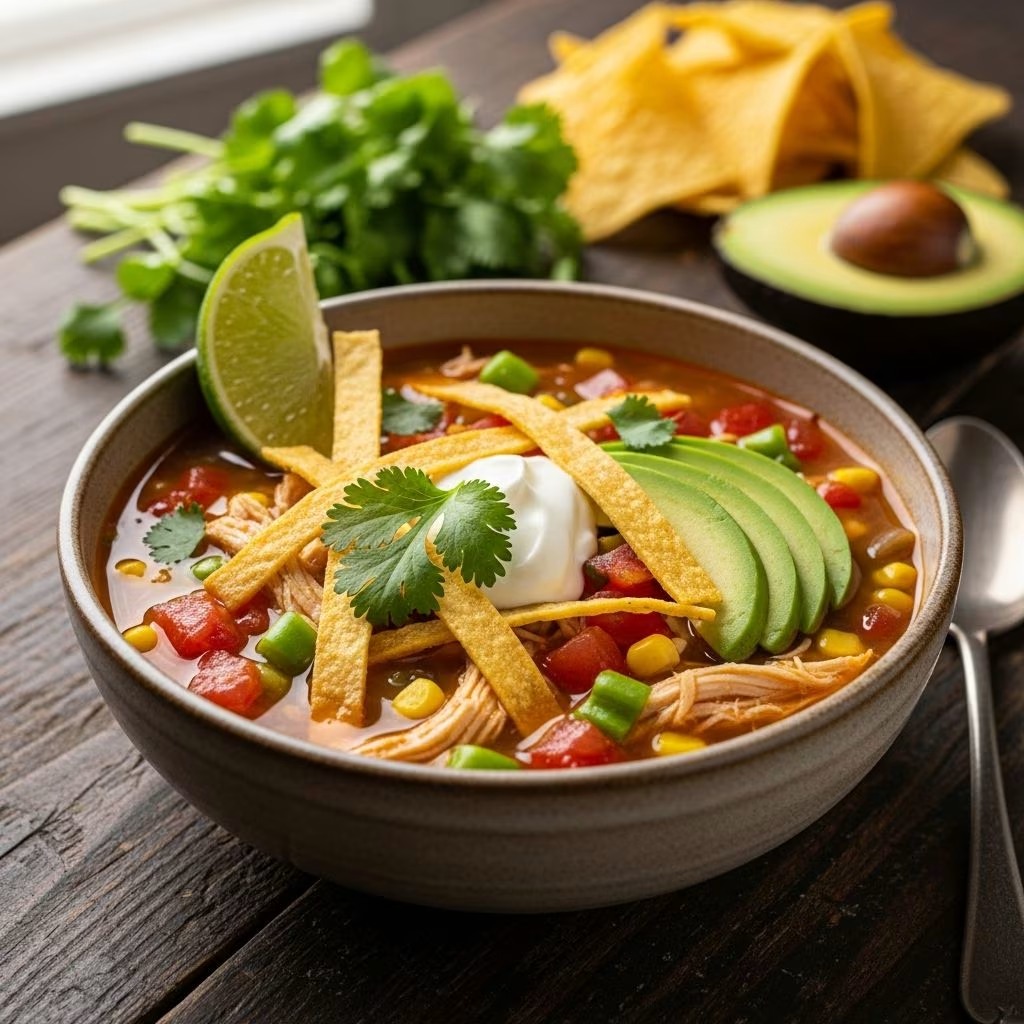
The interactive element of chicken tortilla soup centers on the toppings, which provide textural contrast and personalized flavor adjustments. Traditional garnishes include crispy tortilla strips, either homemade from fried tortilla sections or purchased from specialty markets. These strips add essential crunch that contrasts beautifully against the soup’s creamy consistency.
Fresh avocado, added at the moment of serving, contributes luxurious richness and cooling properties that balance the soup’s inherent spices. Shredded sharp cheddar cheese melts slightly into the warm soup, while sour cream dolloped on top provides tangy cooling relief. Fresh cilantro sprinkled across the surface adds brightness and aromatic complexity, while lime wedges allow individual diners to adjust acidity to their preference.
Additional topping options include sliced jalapeños for those seeking additional heat, diced red onion for sharp bite, and cotija cheese for authentic Mexican flavor and crumbly texture. The beauty of this soup lies in allowing each person to construct their perfect bowl, balancing heat, richness, and brightness according to individual preferences.
Practical Tips for Success
- Broth Quality Matters: Invest in quality chicken broth or make your own; this foundation determines the soup’s overall flavor satisfaction. Tasting at the end allows for seasoning adjustments.
- Timing Considerations: Do not rush the initial aromatics sautéing phase; this slow, gentle cooking develops the flavor foundation that distinguishes homemade soup from rushed preparations.
- Spice Gradation: Add spices gradually if unfamiliar with heat levels; it is easier to increase heat than to neutralize excess. Remember that toppings help moderate spiciness for sensitive palates.
- Lime Juice Application: Add fresh lime juice at the final stage rather than during cooking; heat diminishes its bright citrus character and aromatic compounds.
- Texture Preferences: For chunkier soup, leave beans whole; for creamier consistency, partially mash beans or add heavy cream in the final minutes.
- Make-Ahead Advantage: Prepare the broth base up to two days ahead, storing in the refrigerator; add fresh toppings and cilantro only upon reheating and serving.
Frequently Asked Questions
Can I prepare this soup in advance?
Absolutely. The soup stores beautifully in the refrigerator for up to four days in an airtight container. Reheat gently over medium heat, adding additional broth if the soup has thickened during storage. Prepare garnishes fresh at serving time for optimal texture and flavor.
What is the most efficient cooking method for busy weeknights?
Using a rotisserie chicken and a pressure cooker dramatically reduces active cooking time. Sauté aromatics, then add remaining ingredients and pressure cook for just fifteen minutes, achieving full flavor development in approximately thirty minutes total.
How should I adjust seasoning if the soup tastes bland?
Add a chicken bouillon cube for concentrated savory depth, increase lime juice gradually, or boost spices slightly. Remember that salt should be added incrementally, as it is easier to add more than to remove excess.
Are there protein alternatives to chicken?
Yes. Turkey offers similar flavor and texture, while fish creates a lighter seafood version. Vegetarian adaptations using additional beans and vegetables prove equally satisfying when the broth is adequately seasoned.
How do I prevent the soup from becoming too spicy?
Reduce or omit cayenne pepper and chipotle; start with smaller quantities of chili powder and paprika. The cooling properties of avocado, sour cream, and lime juice naturally moderate perceived heat for sensitive palates.
Nutritional Considerations and Health Benefits
This soup offers substantial nutritional value, combining lean protein from chicken with fiber from beans and vegetables. The broth base provides hydration and collagen-derived compounds associated with joint and digestive health. The addition of fresh cilantro and lime contributes vitamins and antioxidants, while the tomato component provides lycopene, a beneficial phytonutrient.
The soup accommodates various dietary approaches: removing toppings high in fat creates a lighter version suitable for health-conscious eating, while adding cream cheese and cheese produces a more indulgent variant. Black beans contribute plant-based protein and resistant starch, supporting digestive wellness.
Storage and Longevity Guidelines
Refrigerate prepared soup in airtight containers for up to four days. For extended storage, freeze in portions for up to three months, though certain components like avocado and cilantro should be added after thawing. Reheat gently without boiling to preserve ingredient integrity and flavor compounds.
Conclusion
Chicken tortilla soup represents an accessible yet sophisticated dish that bridges everyday cooking with restaurant-quality results. By understanding the foundational techniques of flavor building, ingredient selection, and thoughtful preparation, home cooks can create bowls of soup that rival professional preparations. The flexibility to customize both preparation method and toppings ensures this dish adapts to individual preferences, dietary requirements, and time constraints. Whether preparing a quick weeknight dinner or entertaining guests, this soup delivers comfort, nutrition, and satisfaction in a single pot.
References
- Chicken Tortilla Soup Recipe — Natasha’s Kitchen. Accessed 2026-04-09. https://natashaskitchen.com/chicken-tortilla-soup-recipe/
- Easy 30-Minute Homemade Chicken Tortilla Soup — Averie Cooks. Updated 2025-03-13. https://www.averiecooks.com/easy-30-minute-homemade-chicken-tortilla-soup/
- Best Chicken Tortilla Soup Recipe (Restaurant Style) — What’s Gaby Cooking. Accessed 2026-04-09. https://whatsgabycooking.com/chicken-tortilla-soup/
- Creamy Chicken Tortilla Soup — The Cozy Cook. Accessed 2026-04-09. https://thecozycook.com/creamy-chicken-tortilla-soup/
- Chicken Tortilla Soup (Instant Pot or Stovetop) — Feasting At Home. Accessed 2026-04-09. https://www.feastingathome.com/instant-pot-chicken-tortilla-soup/